Artwork
Page from Tales of a Parrot (Tuti-nama): text page
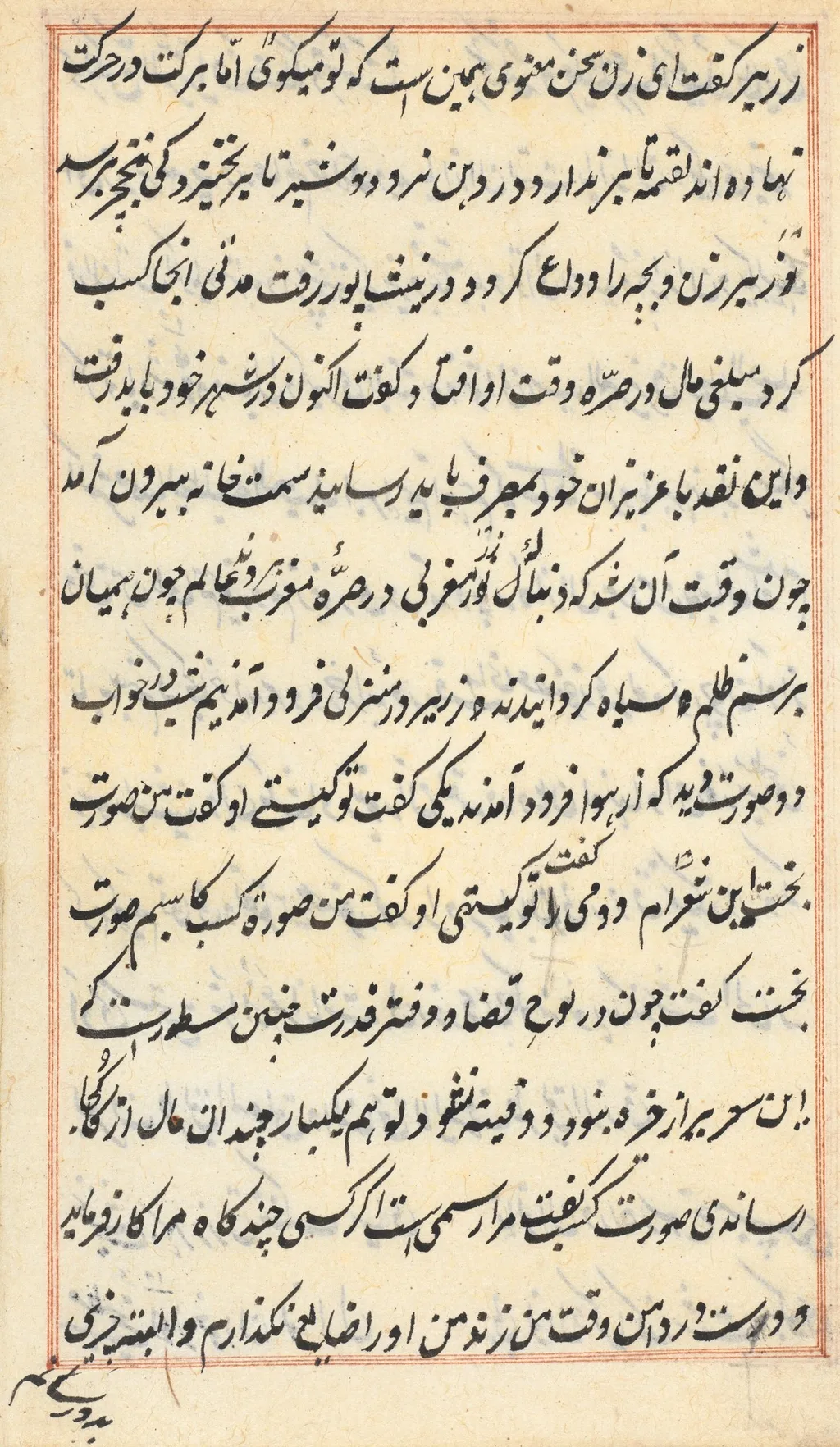
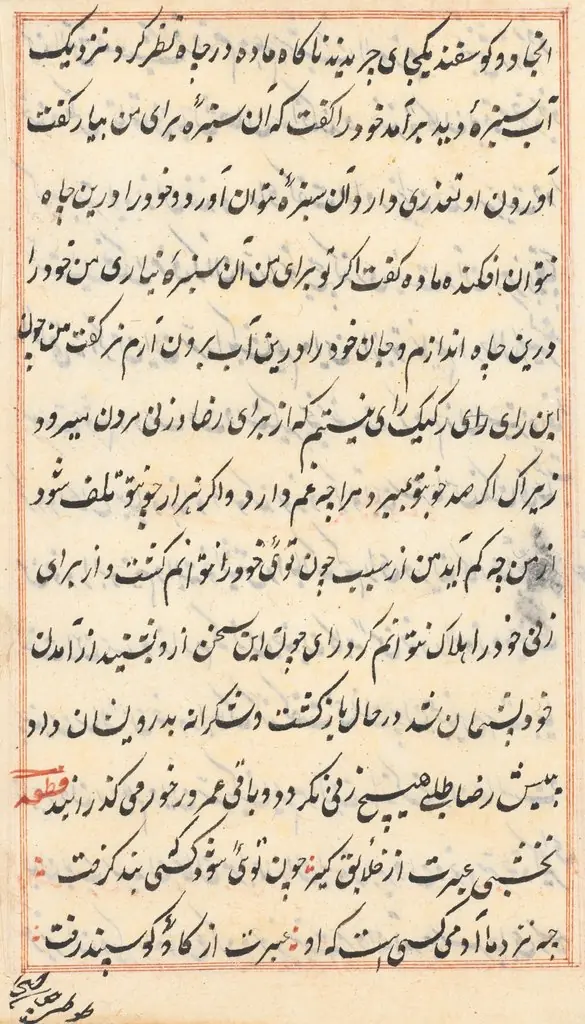
Page from Tales of a Parrot (Tuti-nama): text page is an unspecified painting. It dates from 1560 and is held in the collection of the Cleveland Museum of Art. This object is a single leaf from the illustrated manuscript known as *Tales of a Parrot* (Tuti‑nama).
About this work
Overview
This object is a single leaf from the illustrated manuscript known as *Tales of a Parrot* (Tuti‑nama). The page is covered entirely with black calligraphic script, accented by occasional blue highlights, and is framed by a narrow red border. The support is paper that has aged to a yellowed tone, bearing faint stains and surface marks that attest to its antiquity.
Subject & Meaning
The densely packed text appears to be narrative in nature, written in an elegant, looping hand that suggests a literary work rather than a purely documentary record. The title of the codex implies a story centered on a parrot, a motif often employed in Persian and South Asian literature to convey moral lessons or whimsical adventure.
Technique & Style
The calligraphy is executed in a flowing black ink, characteristic of the refined script styles used in manuscript production. Blue pigment is applied sparingly to emphasize particular words or passages, while a thin red line demarcates the page margin, a decorative convention that frames the text without overwhelming it.
History & Provenance
The leaf is part of a larger codex whose origins are not detailed here, but the material and stylistic attributes place it within the tradition of illustrated books produced for elite patrons. The page now belongs to the collection of the Cleveland Museum of Art, where it is displayed as an example of historic book art.
Context
Manuscript culture in the region that produced *Tales of a Parrot* often combined literary content with visual embellishment, using color and border motifs to enhance readability and aesthetic appeal. The use of blue and red alongside black ink reflects a palette typical of courtly manuscripts, where limited but striking coloration was preferred.
Artist & collection

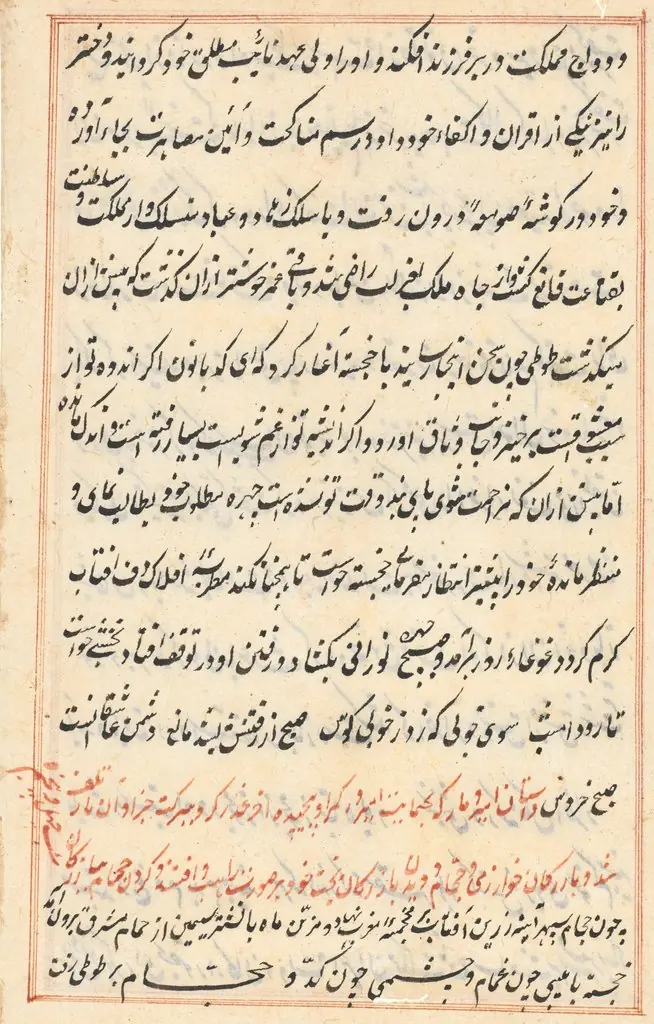 Page from Tales of a Parrot (Tuti-nama): text page
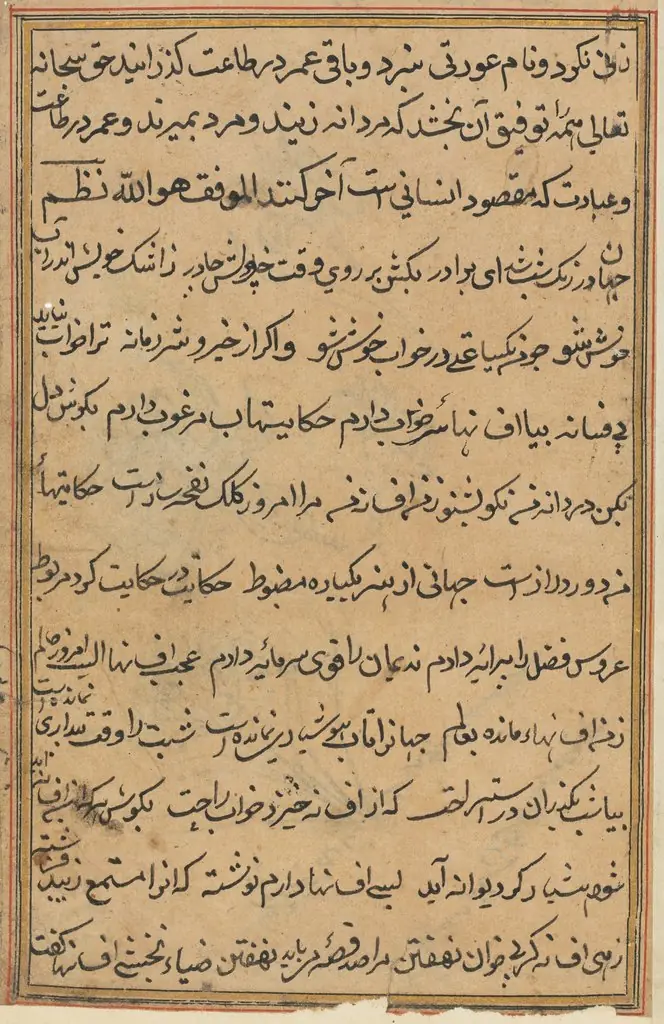 Page from Tales of a Parrot (Tuti-nama): text page
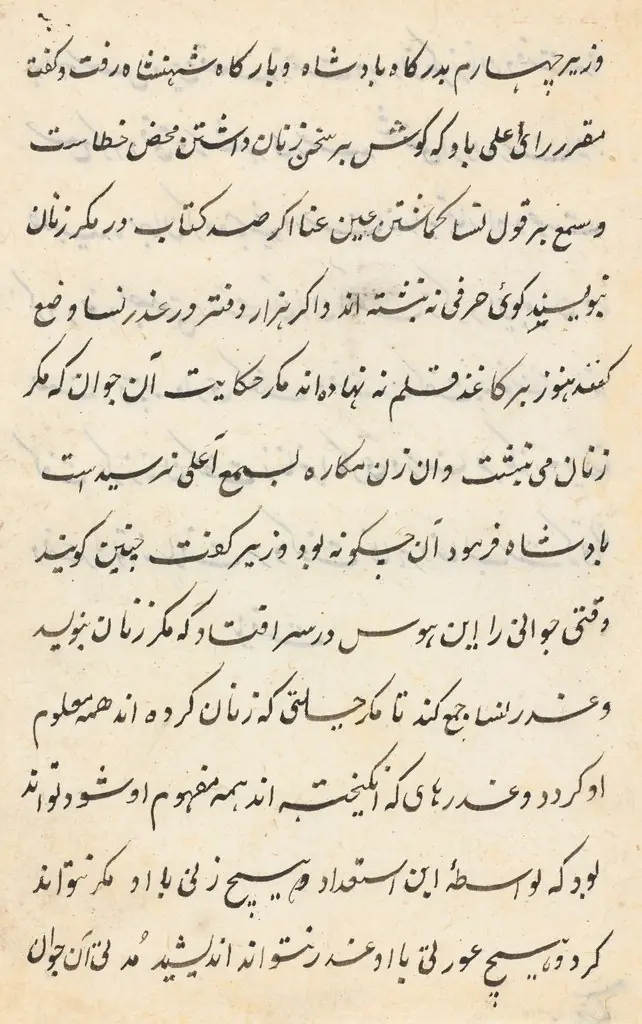 Page from Tales of a Parrot (Tuti-nama): text page
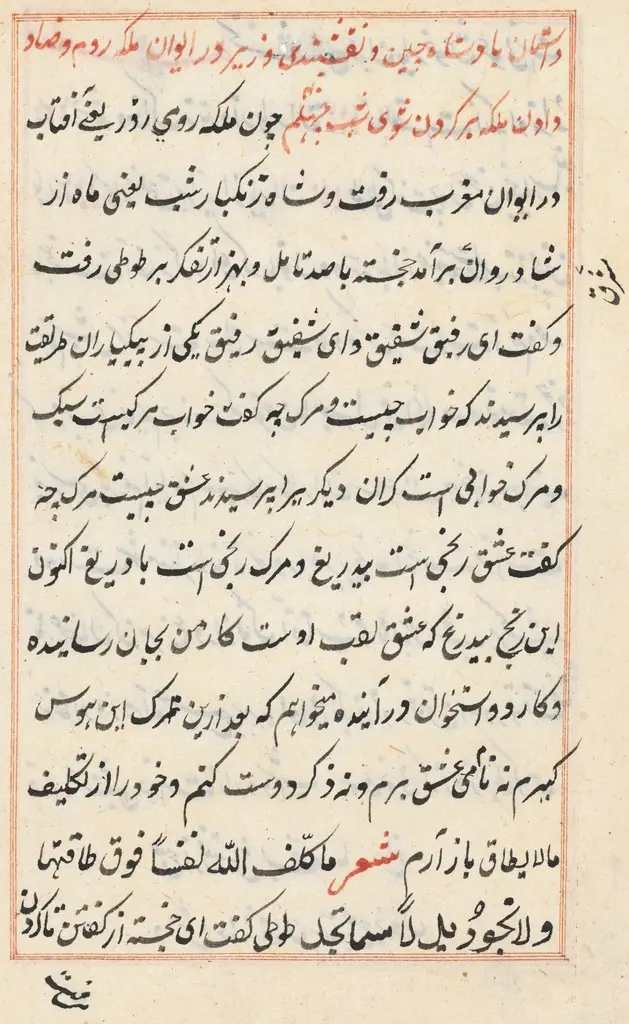 Page from Tales of a Parrot (Tuti-nama): text page
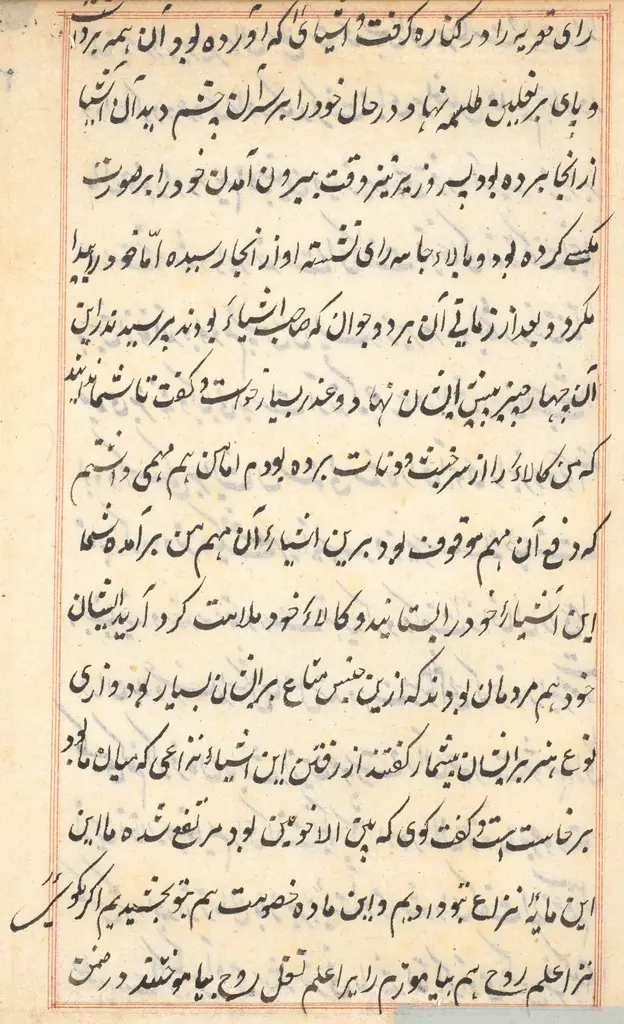 Page from Tales of a Parrot (Tuti-nama): text page
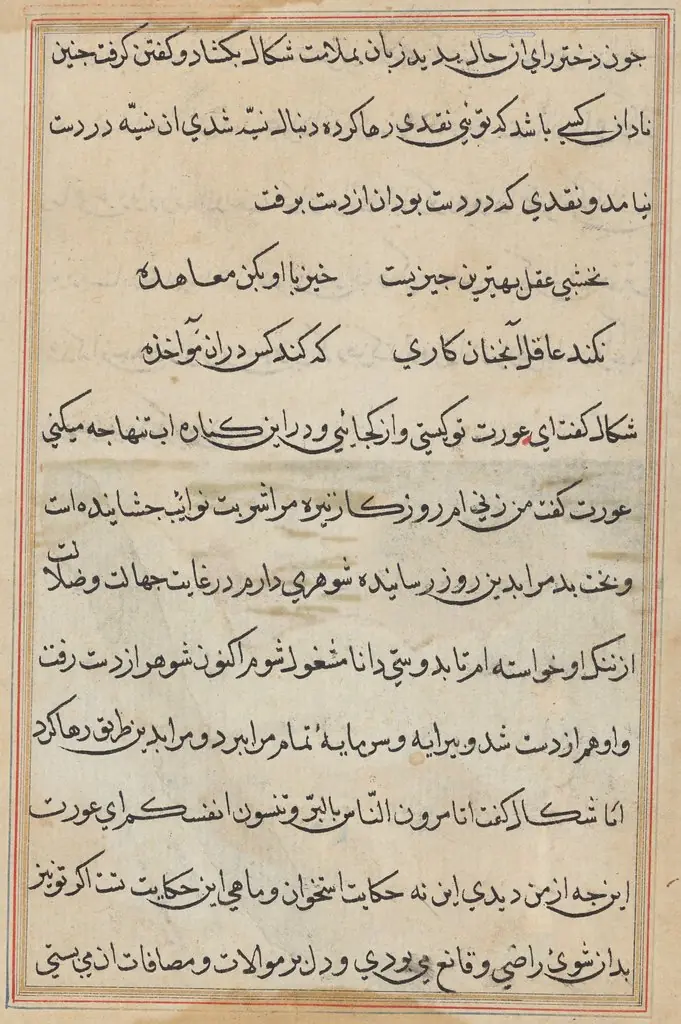 Page from Tales of a Parrot (Tuti-nama): text page
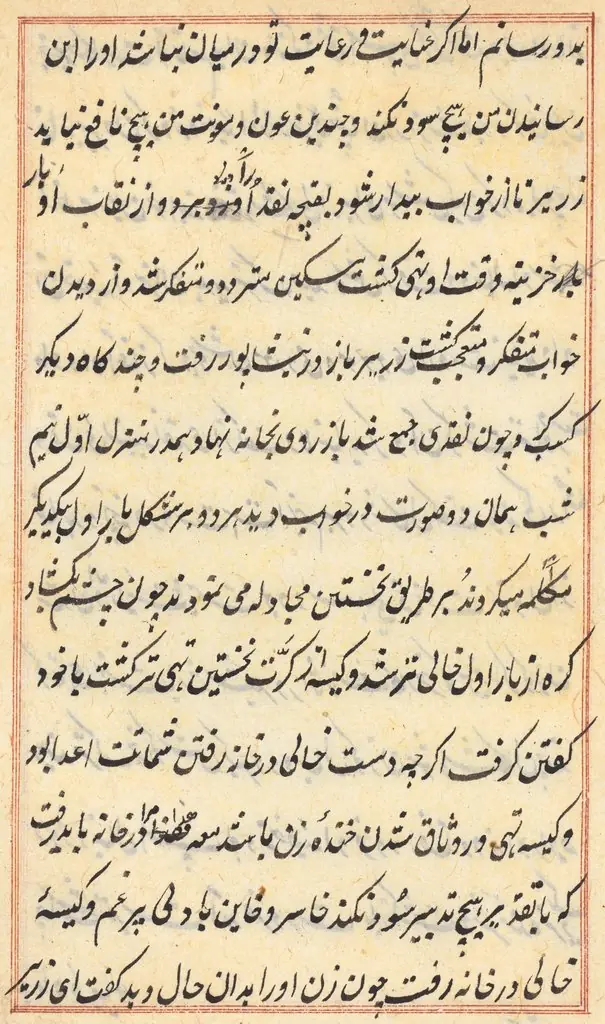 Page from Tales of a Parrot (Tuti-nama): text page
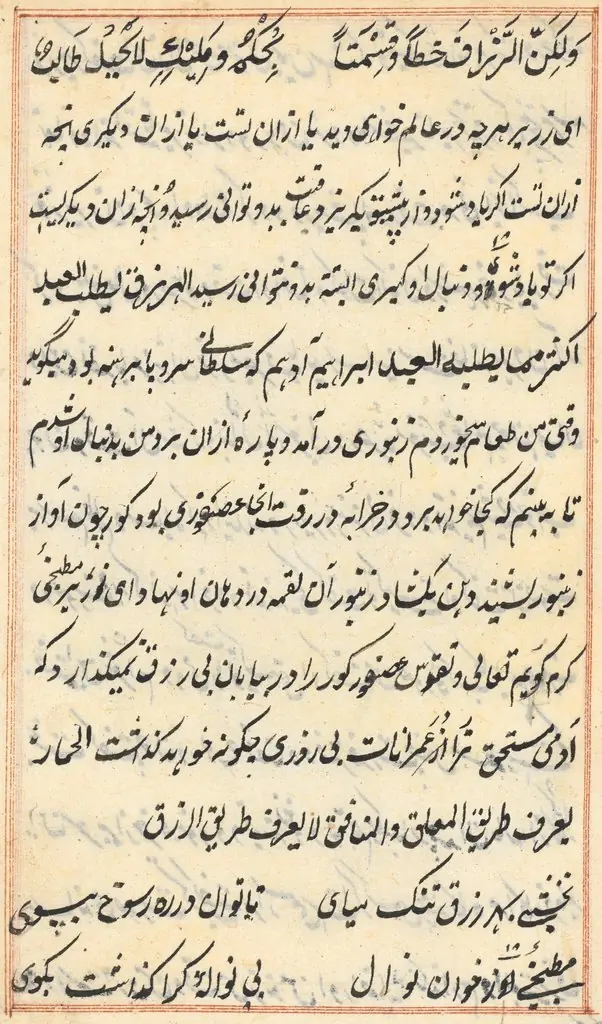 Page from Tales of a Parrot (Tuti-nama): text page
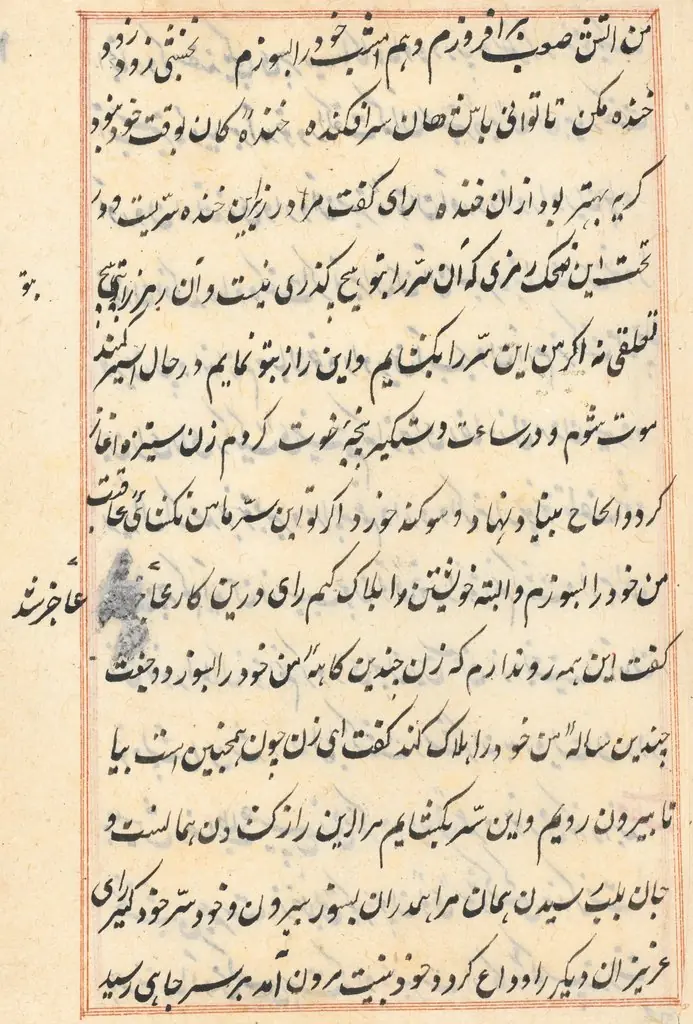 Page from Tales of a Parrot (Tuti-nama): text page
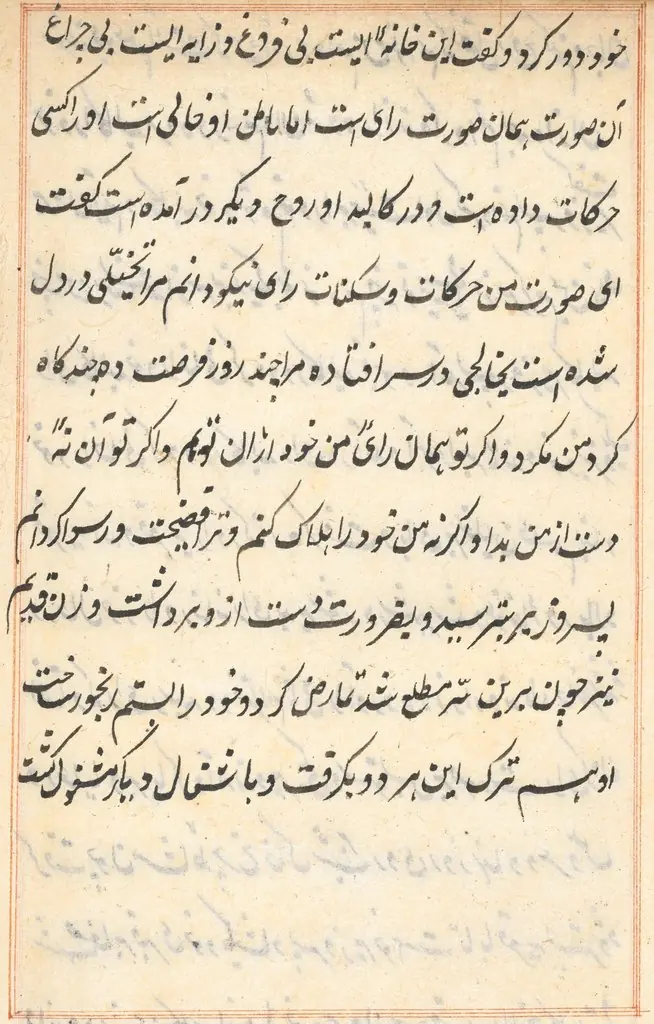 Page from Tales of a Parrot (Tuti-nama): text page
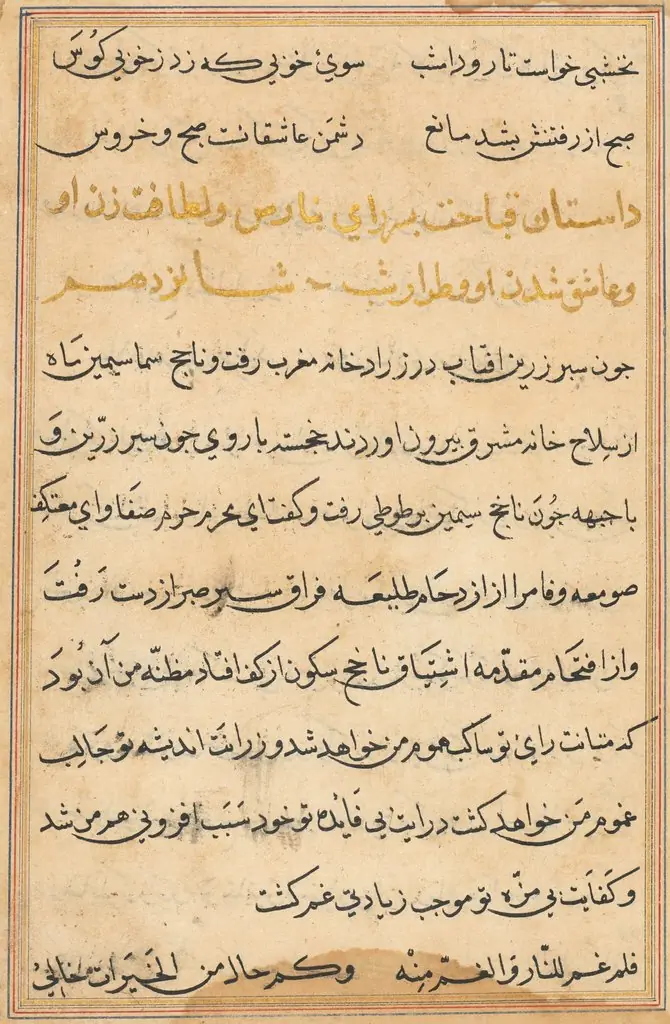 Page from Tales of a Parrot (Tuti-nama): text page
 Page from Tales of a Parrot (Tuti-nama): text page