Artwork
Page from Tales of a Parrot (Tuti-nama): text page
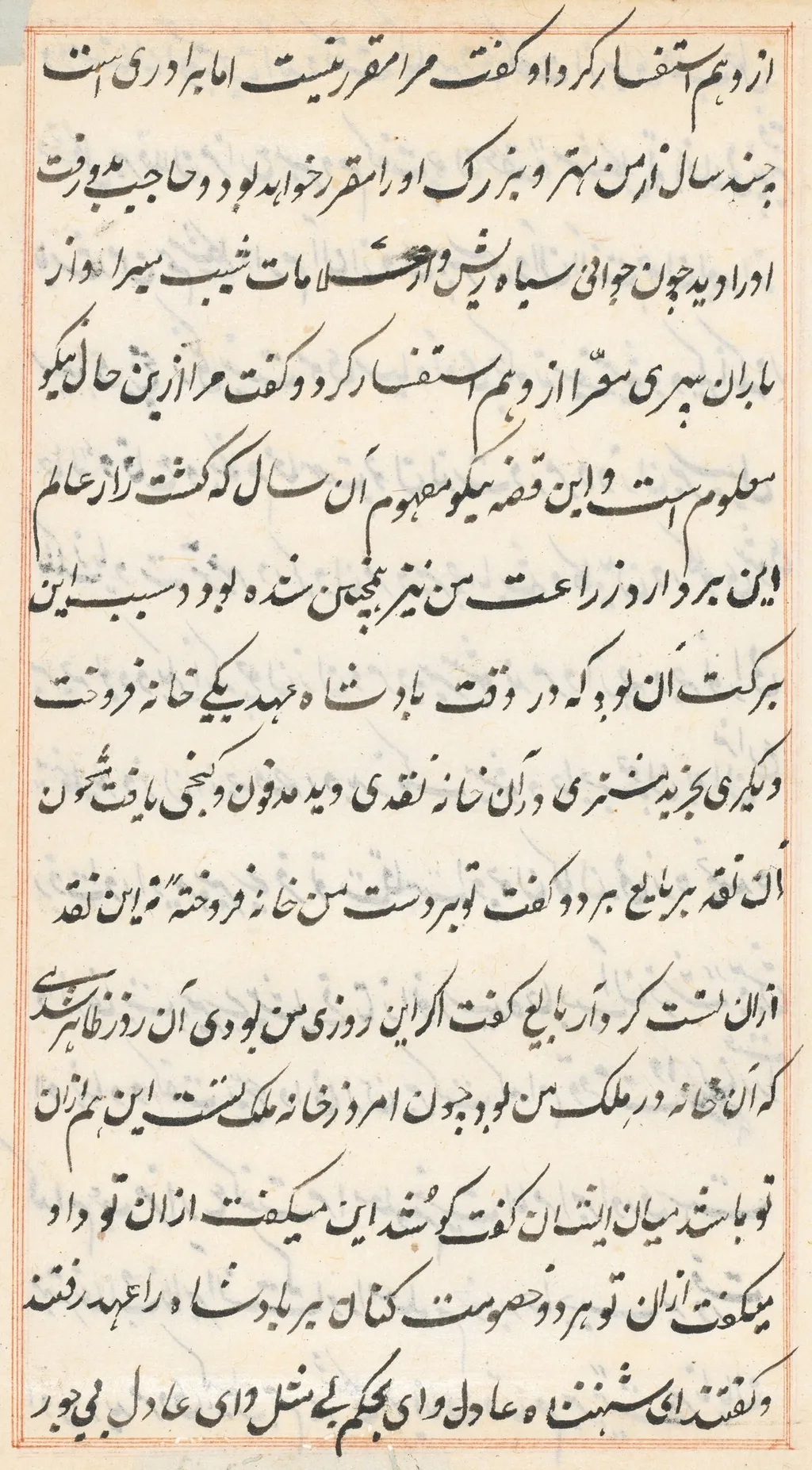
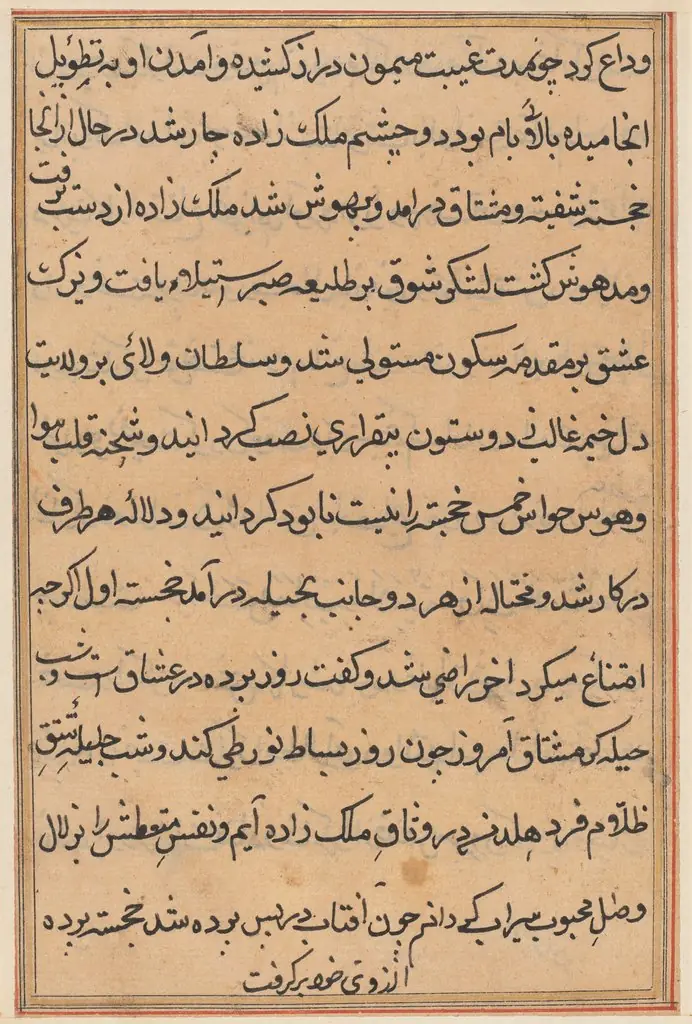
Page from Tales of a Parrot (Tuti-nama): text page is an unspecified painting. It dates from 1560 and is held in the collection of the Cleveland Museum of Art. This object is a painted page from the illustrated manuscript known as *Tales of a Parrot* (Tuti‑nama).
About this work
Overview
This object is a painted page from the illustrated manuscript known as *Tales of a Parrot* (Tuti‑nama). The surface is a light‑toned paper that has acquired a gentle yellow patina with age. Across the page runs dense black calligraphy, interspersed with a scattering of faint blue specks that resemble tiny stars against the background.
Subject & Meaning
The script conveys a narrative in the Persian‑Urdu literary tradition, presenting a story that forms part of the larger *Tuti‑nama* collection. The text itself is rendered in the elegant Nastaʿlīq hand, a style prized for its flowing, cursive quality, which adds a visual rhythm that mirrors the tale’s lyrical tone.
Technique & Style
Ink of varying thickness creates a dynamic visual texture: bold strokes emphasize certain characters while finer lines fill the spaces between, producing a sense of movement. The calligraphic lines curve gently across the page, each line joining the next in a seamless, dance‑like progression, while the subtle blue dots were likely applied as decorative accents or to suggest a celestial motif.
History & Provenance
The page originates from a manuscript tradition that flourished in the Indian subcontinent during the 18th and 19th centuries, when Persian and Urdu texts were often illuminated on paper. Though the precise origin of this particular leaf is not documented, such works were typically commissioned by aristocratic patrons and later entered museum collections through private sales or donations.
Context
Nastaʿlīq, the script employed here, emerged in the 14th century and became the dominant calligraphic style for Persian poetry and prose. Its graceful, slanted forms were especially suited to literary manuscripts, where the visual elegance of the writing was considered an integral part of the reading experience.
Legacy
Pages like this illustrate the convergence of literary art and visual design in South Asian manuscript culture. They continue to inform contemporary scholars of calligraphic practice, textual transmission, and the aesthetic values that shaped the production of Persian‑Urdu literature.
Artist & collection

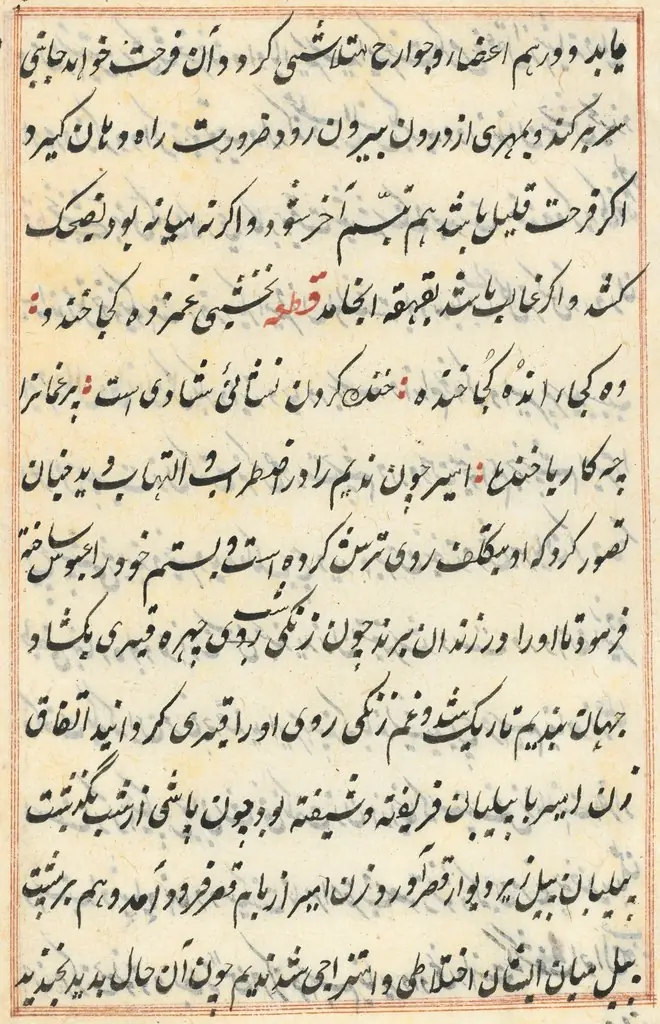 Page from Tales of a Parrot (Tuti-nama): text page
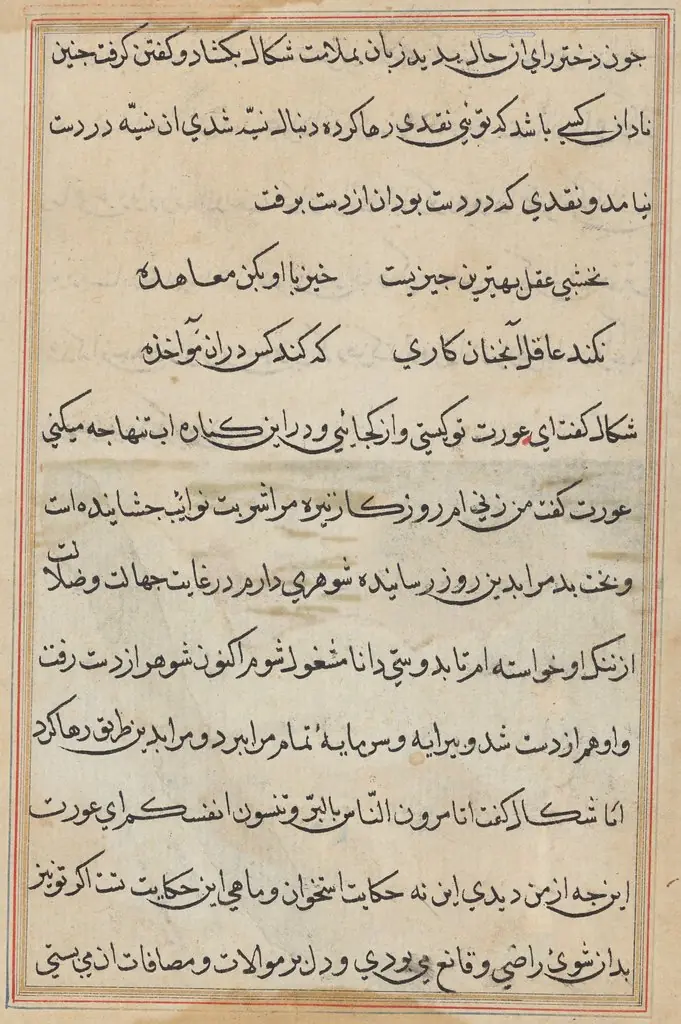 Page from Tales of a Parrot (Tuti-nama): text page
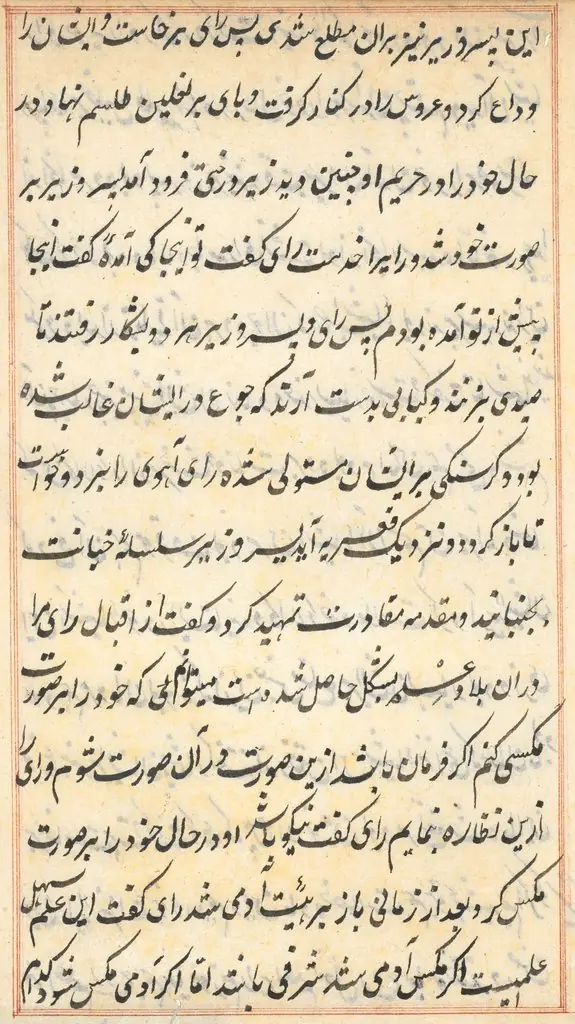 Page from Tales of a Parrot (Tuti-nama): text page
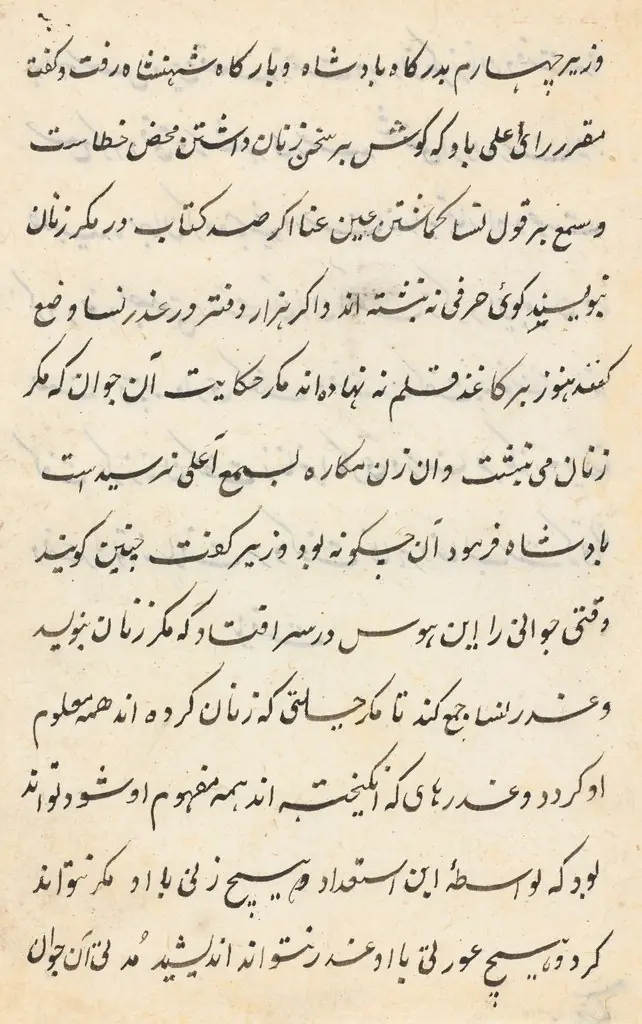 Page from Tales of a Parrot (Tuti-nama): text page
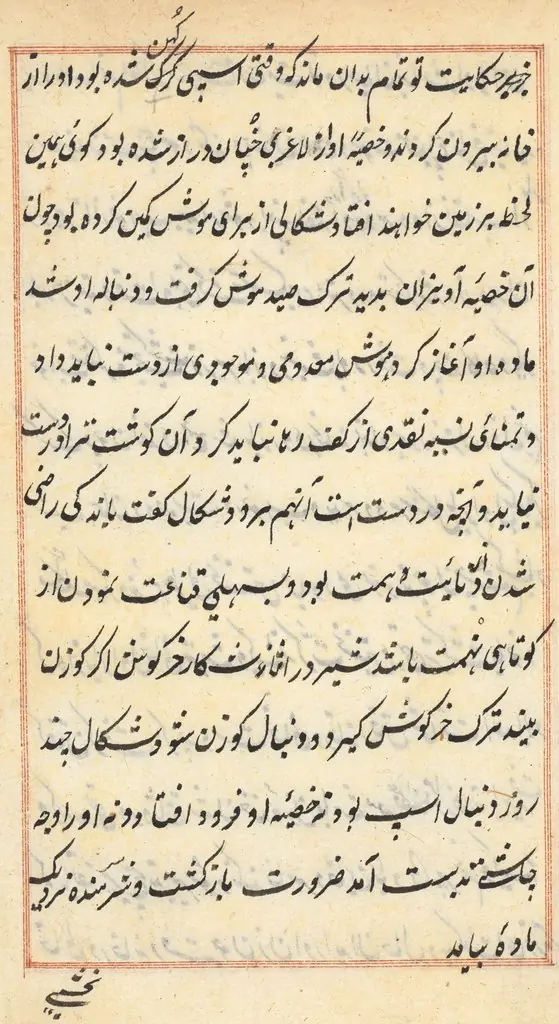 Page from Tales of a Parrot (Tuti-nama): text page
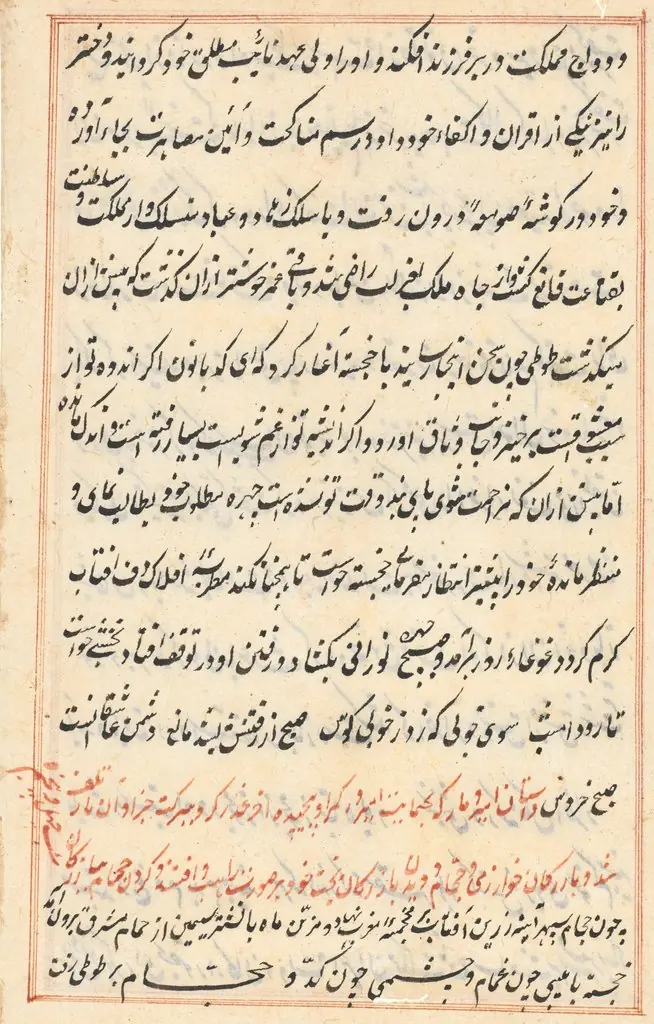 Page from Tales of a Parrot (Tuti-nama): text page
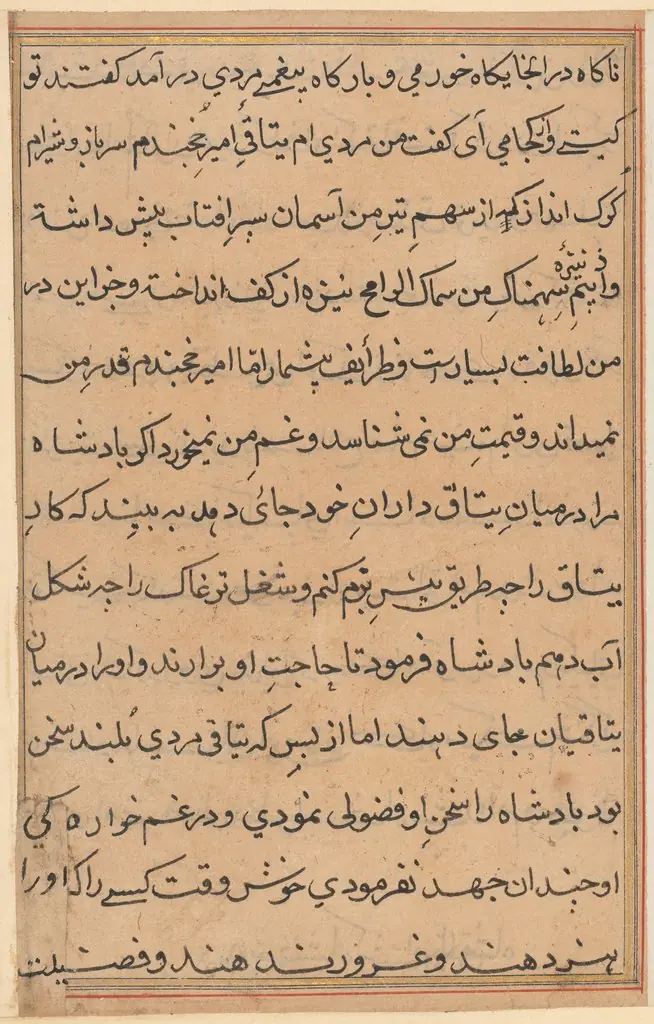 Page from Tales of a Parrot (Tuti-nama): text page
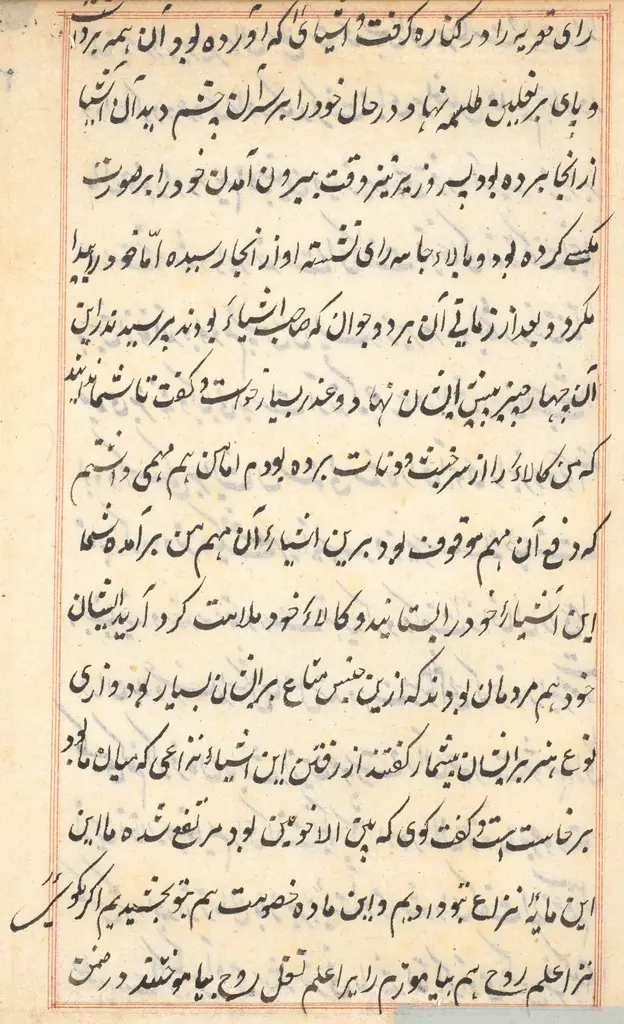 Page from Tales of a Parrot (Tuti-nama): text page
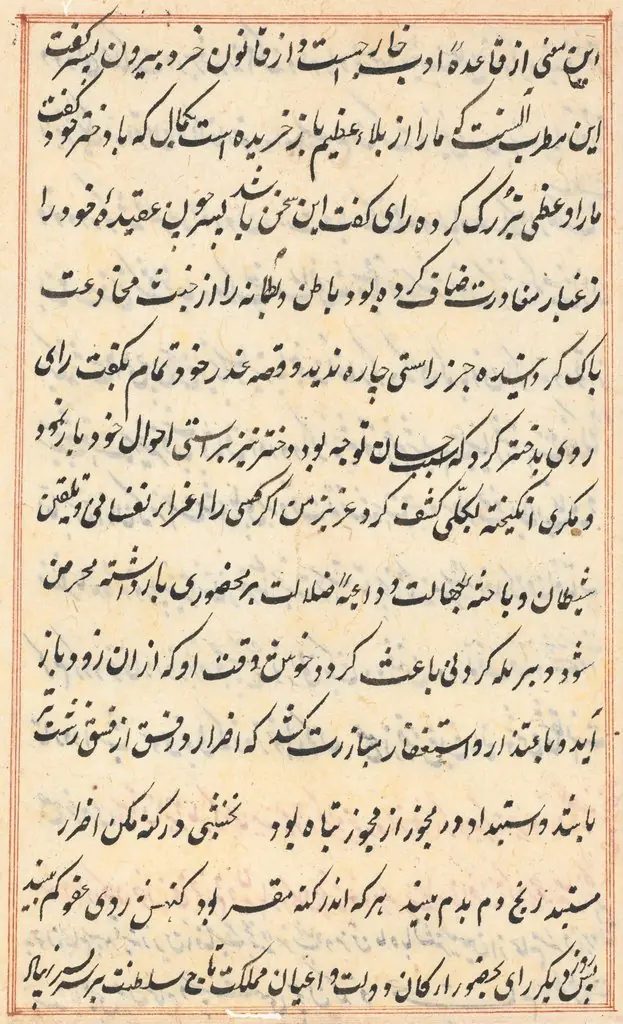 Page from Tales of a Parrot (Tuti-nama): text page
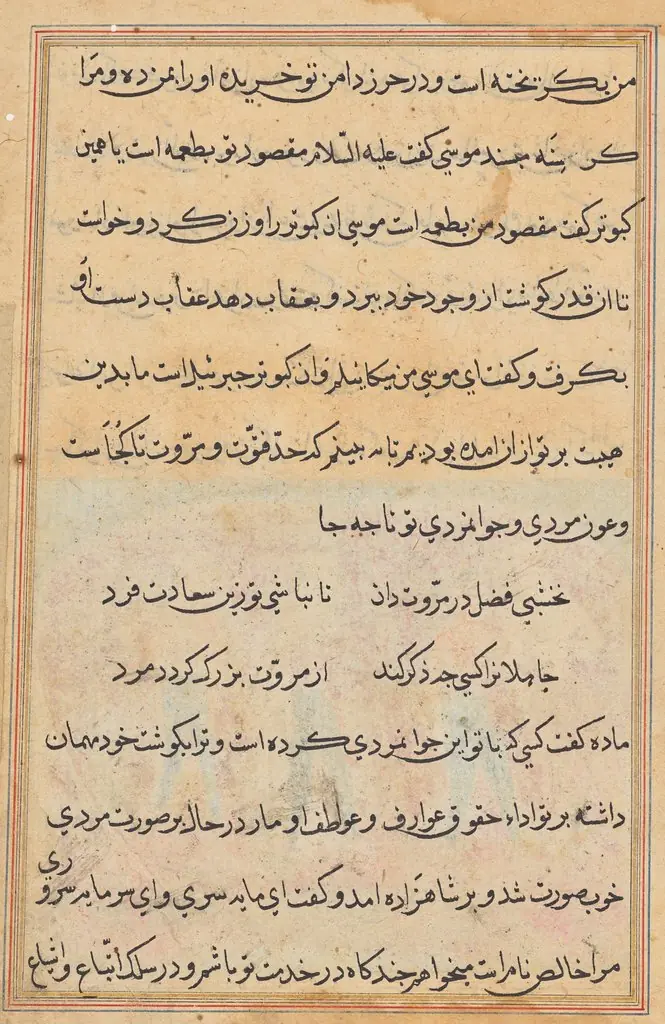 Page from Tales of a Parrot (Tuti-nama): text page
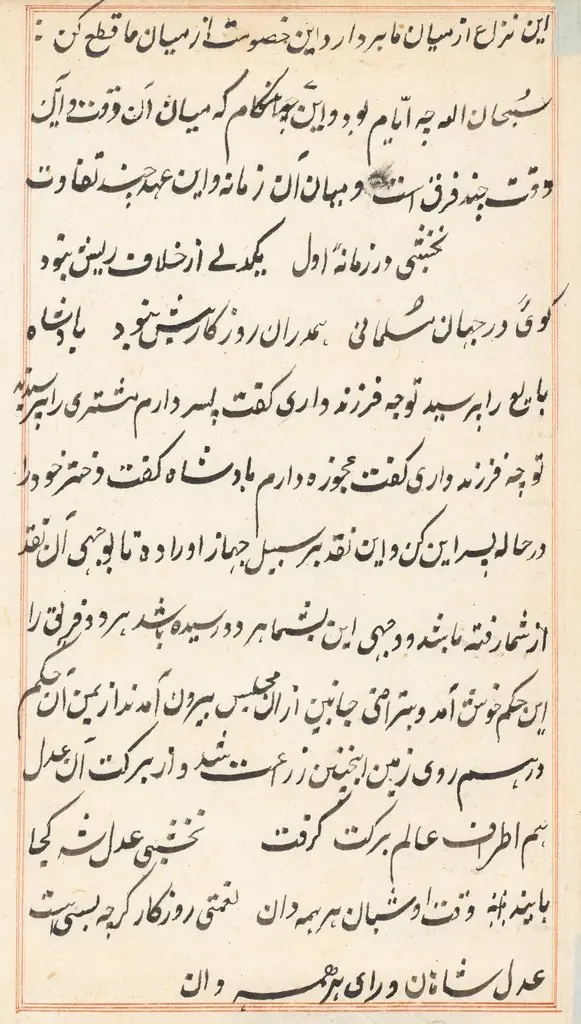 Page from Tales of a Parrot (Tuti-nama): text page
 Page from Tales of a Parrot (Tuti-nama): text page