Artwork
Swami Haridasa with Tansen and Akbar at Vrindavana
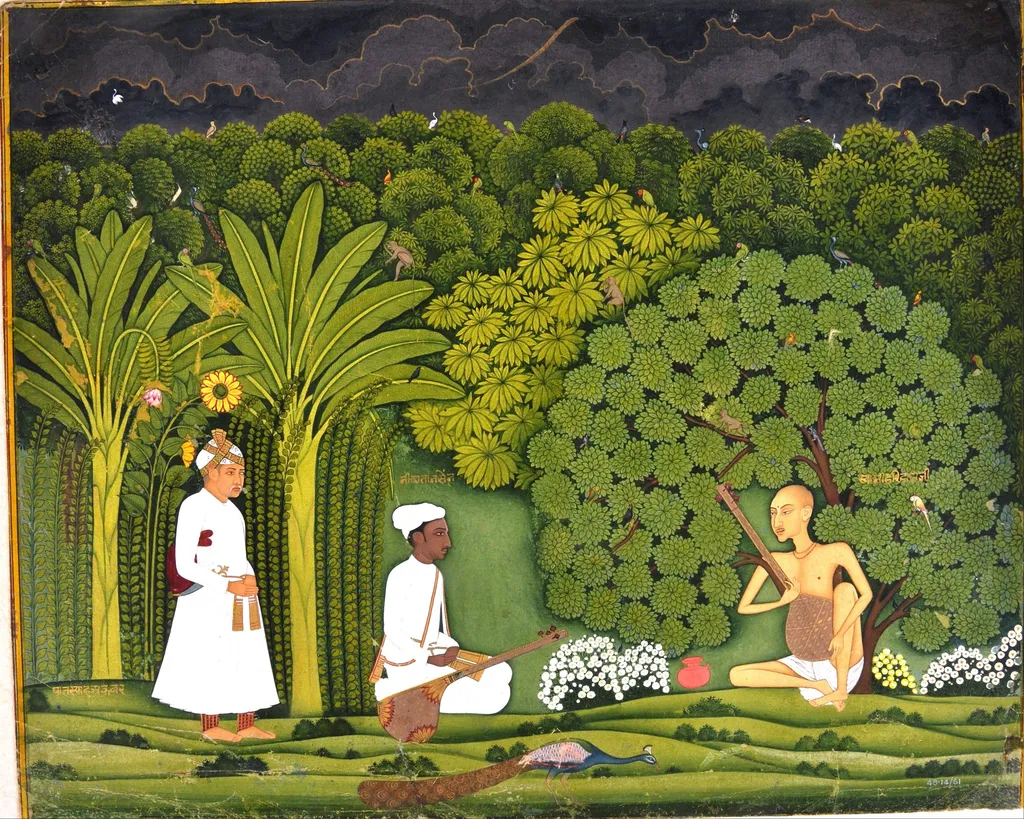
Swami Haridasa with Tansen and Akbar at Vrindavana is an unspecified painting by the Rococo painting artist Unknown. It dates from 1730 and is held in the collection of the National Museum. The work depicts a tranquil garden scene in which three figures are gathered among verdant foliage.
About this work
Overview
The composition is filled with trees, blossoms and birds, rendered in vivid greens, yellows and earth tones.
The work depicts a tranquil garden scene in which three figures are gathered among verdant foliage. A seated musician on the right strums a stringed instrument while clad only in a white loincloth. Adjacent, another seated player in a white robe and turban holds a similar instrument. A third figure, standing in a white robe and turban, watches the performers. The composition is filled with trees, blossoms and birds, rendered in vivid greens, yellows and earth tones.
Subject & Meaning
The painting brings together the legendary Hindu saint Swami Haridasa, the celebrated court musician Tansen, and the Mughal emperor Akbar, suggesting a moment of cultural exchange and shared devotion to music. By placing the three in a natural setting, the artist emphasizes harmony between spiritual, artistic, and political realms, underscoring music’s capacity to bridge diverse traditions.
Technique & Style
Executed in a bright palette, the artist employs layered washes to achieve depth in the foliage and a luminous quality in the sky. The figures are rendered with delicate line work and modest detailing, while the surrounding flora and fauna are stylized yet recognizable, creating a balanced interplay of figure and landscape typical of Indian courtly painting.
Context
The scene reflects a period when Mughal and Hindu artistic conventions intersected, likely during the late 16th or early 17th century when Akbar’s court patronized musicians from various backgrounds. The inclusion of Swami Haridasa and Tansen points to a narrative celebrating the emperor’s policy of religious tolerance and artistic synthesis.
Artist & collection

 Domestic Scene
 Giacomo and Cardinal Marco, investing Andrea, Abbot of San Zeno, with his Benefice
 The Nymph of Fontainebleau
 Portrait of a Woman
 Madonna and Child with Saints in the Enclosed Garden
 Venus and Minerva
 Family Group of Four on Sofa
 Wall painting from Room H of the Villa of P. Fannius Synistor at Boscoreale
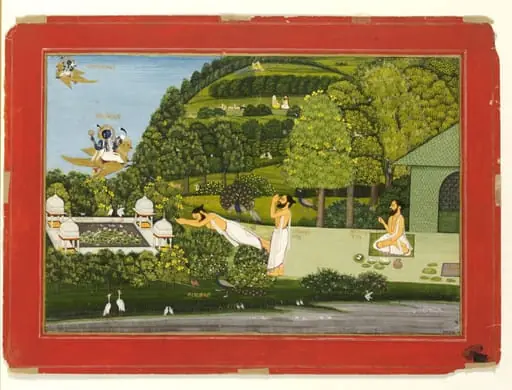 A yogi worshipping Vishnu on Garuda
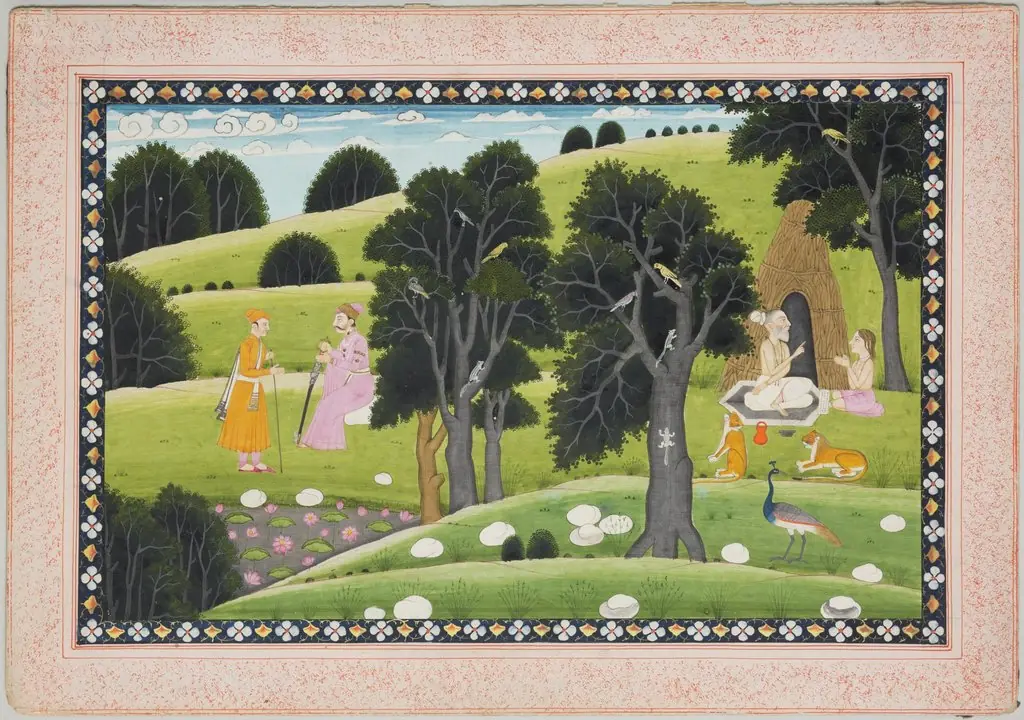 The Guru Discourses While Noblemen Wait
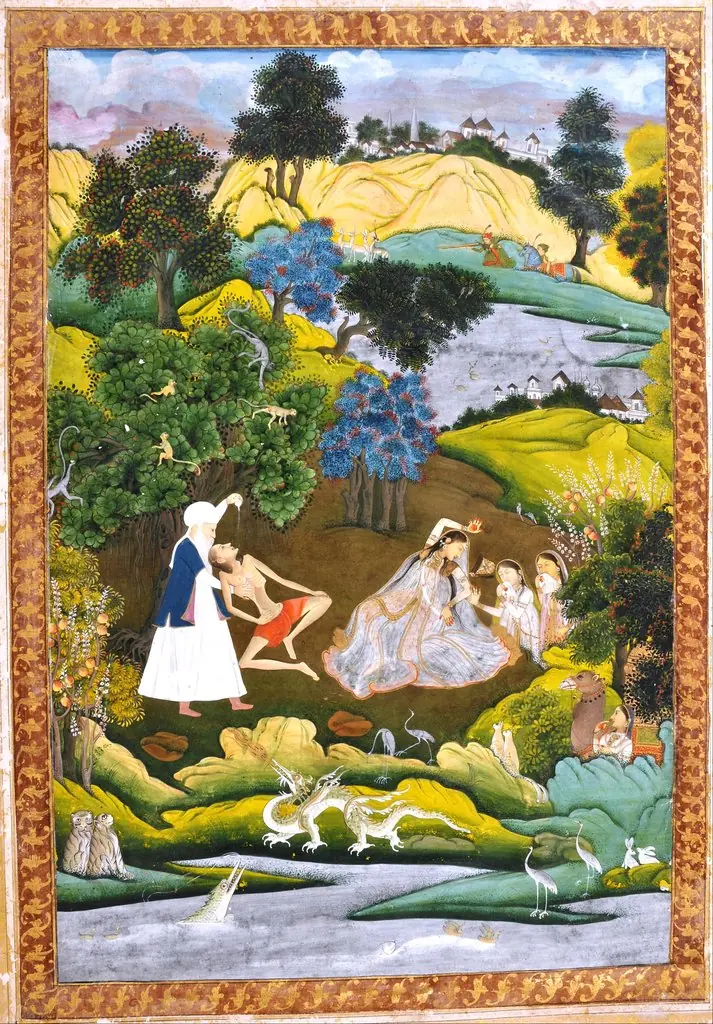 Fainted Laila and Majnun-Based on the Khamsa of Persian poet Nizami
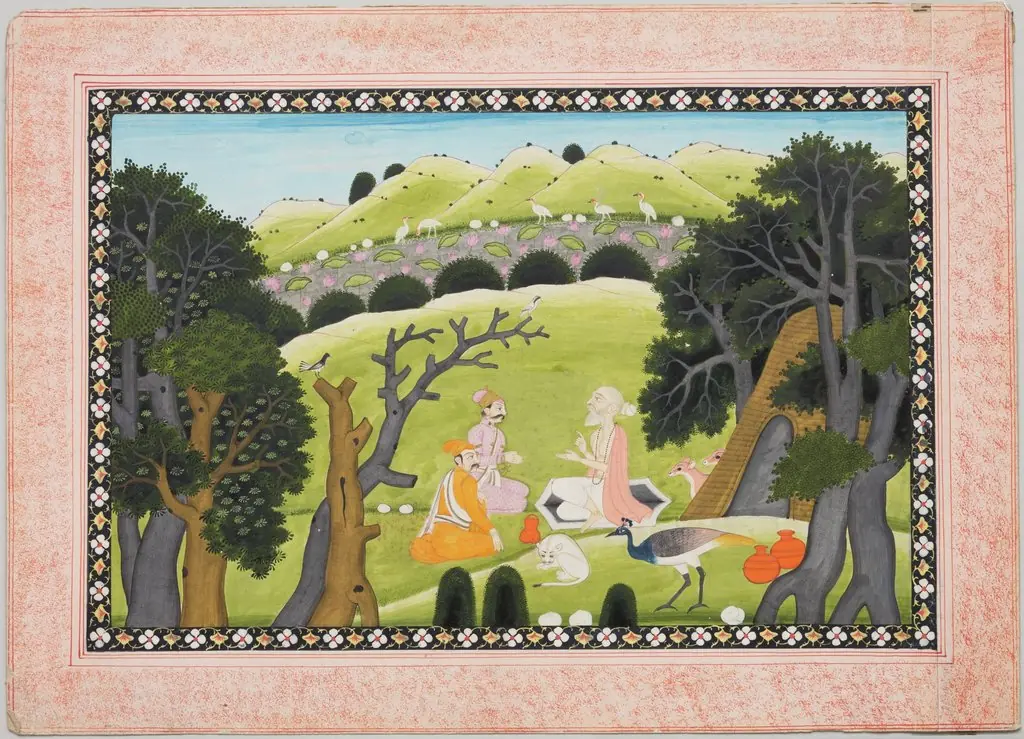 The Guru Giving Advice
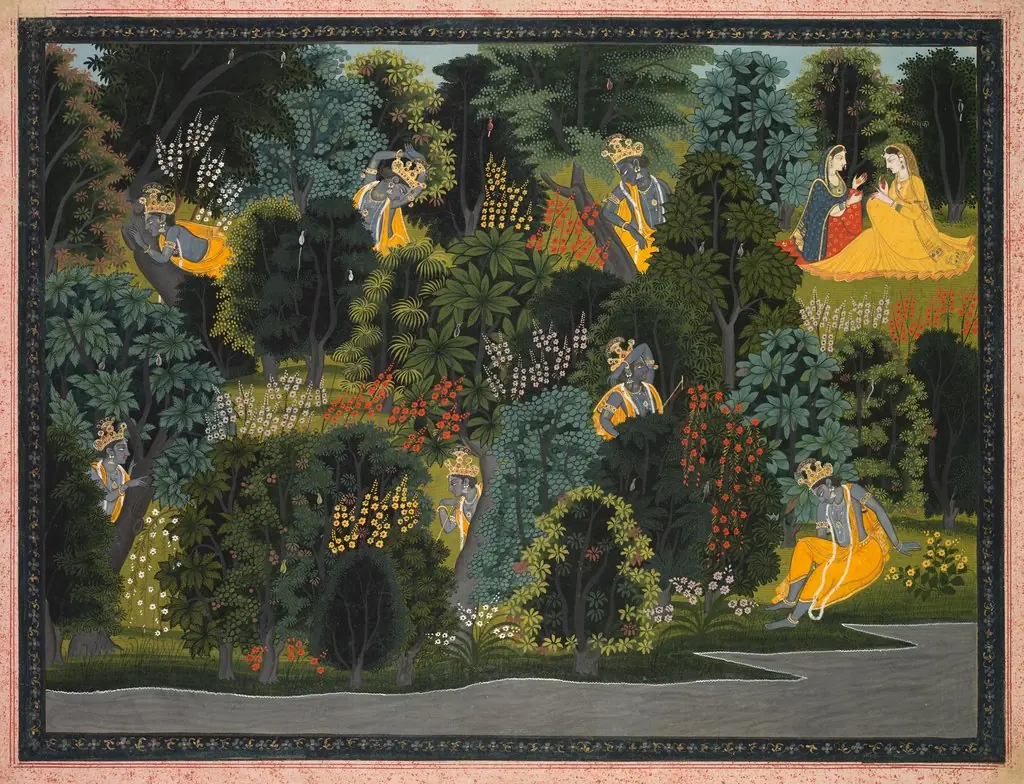 Krishna's Longing for Radha, from the Gita Govinda of Jayadeva
 Untitled
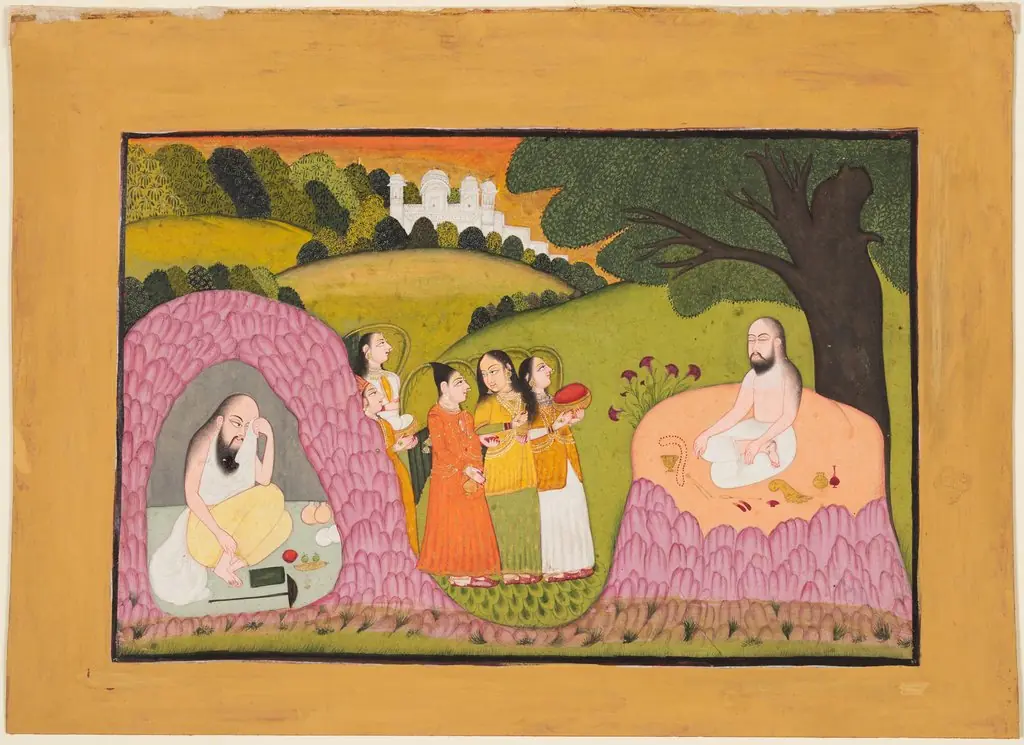 Sultan Ibrahim ibn Adham of Balkh Visited by Angels
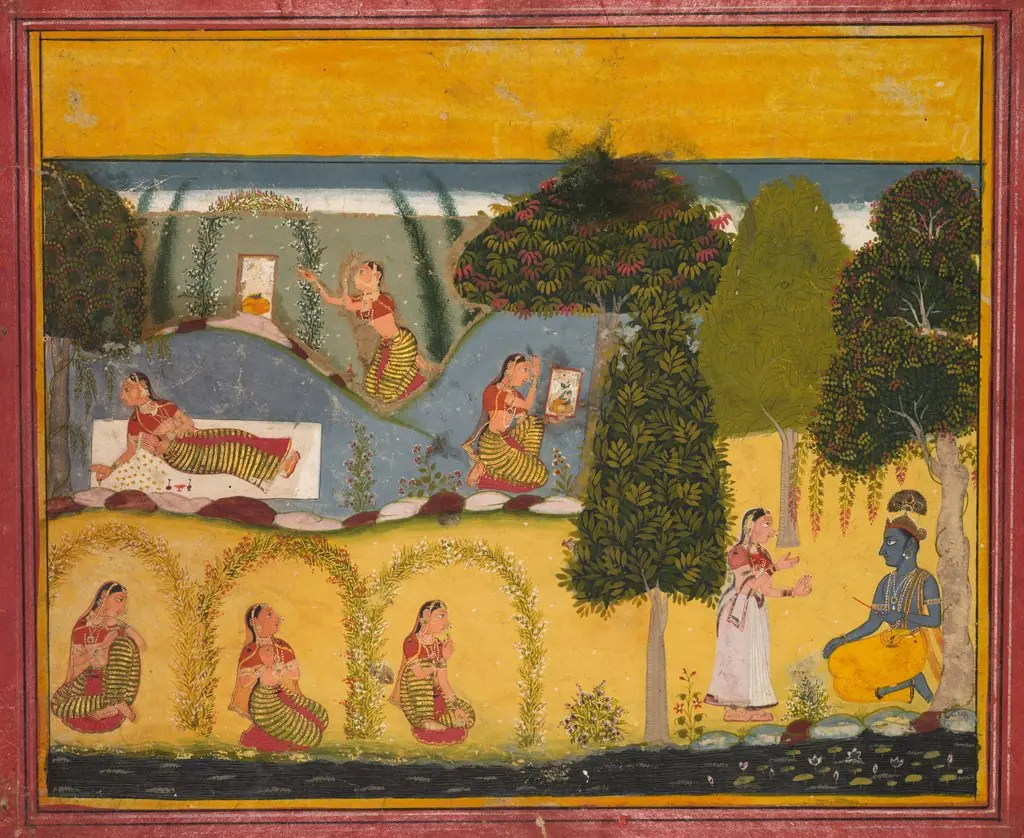 Radha Awaiting Reconciliation with Krishna, from a Gita Govinda of Jayadeva
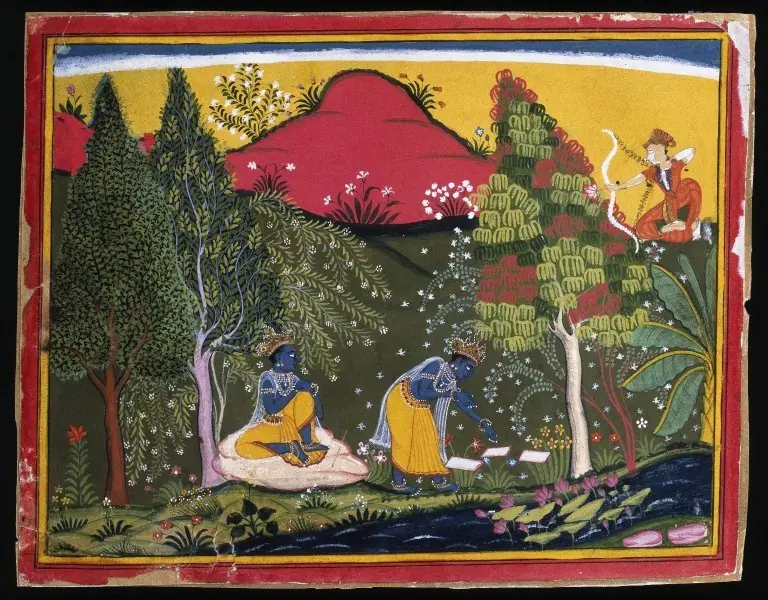 Cupid Disturbs Krishna's Penance, Page from a Gita Govinda
 Radha Awaiting Reconciliation with Krishna, from a Gita Govinda of Jayadeva