Artwork
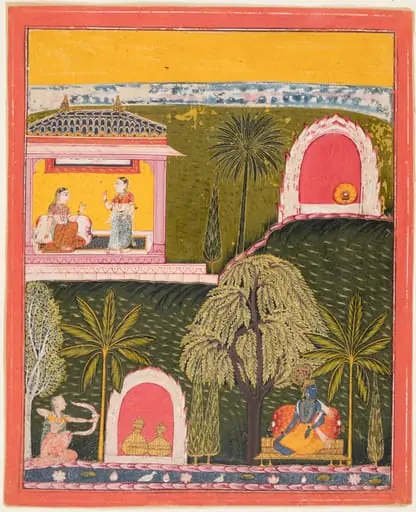
Cupid Disturbs Krishna's Penance, Page from a Gita Govinda
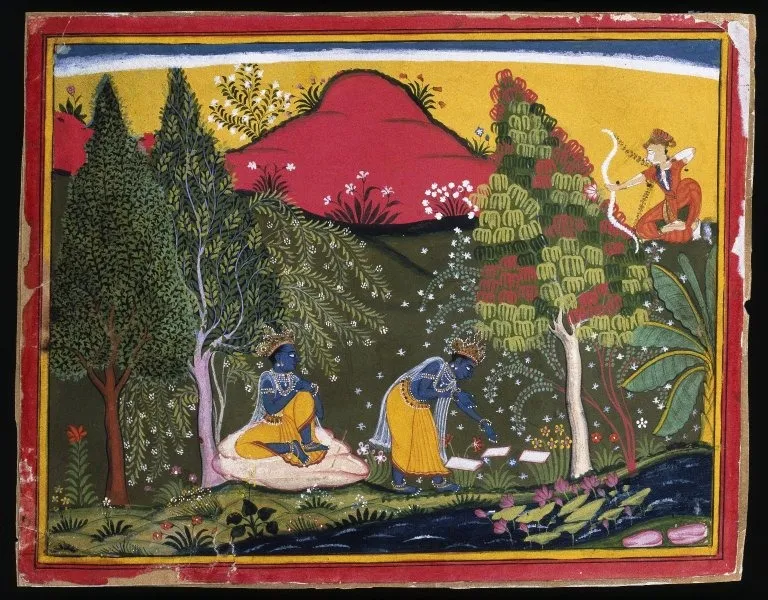
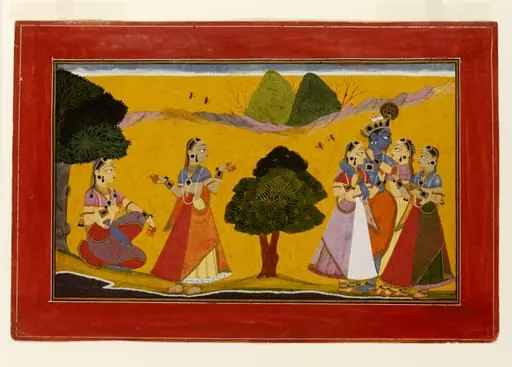
Cupid Disturbs Krishna's Penance, Page from a Gita Govinda is an unspecified painting by the Mughal Painting artist Unknown. It dates from 1650 and is held in the collection of the Brooklyn Museum.
About this work
Overview
The work is a miniature illustration taken from the 12th‑century devotional poem Gita Govinda, which narrates the love of Krishna and the gopi Radha. Rendered on paper, the scene shows two figures in yellow garments seated on a rock amid a verdant forest, with a distant red hill and a winged archer positioned in the upper right.
Subject & Meaning
The seated pair represent Krishna, crowned and playing a flute, and his companion in a meditative pose, embodying the divine pastime of love and spiritual yearning. The presence of an airborne figure with bow and wings alludes to the mischievous Cupid, whose intrusion disrupts the tranquil penance, symbolising the tension between desire and asceticism.
Technique & Style
Executed with fine brushwork characteristic of Indian miniature painting, the artist employs a vivid palette—bright yellows, deep reds, and lush greens—to model forms and suggest depth. Delicate lines delineate foliage and textiles, while subtle shading creates a sense of atmospheric perspective within the confined composition.
History & Provenance
The illustration originates from a manuscript of the Gita Govinda, a text composed by the poet Jayadeva in the 12th century and widely copied in royal courts of medieval India. The particular page has been conserved in a museum collection, having passed through private hands before being acquired by the institution in the early 20th century.
Artist & collection

 Domestic Scene
 Giacomo and Cardinal Marco, investing Andrea, Abbot of San Zeno, with his Benefice
 The Nymph of Fontainebleau
 Portrait of a Woman
 Madonna and Child with Saints in the Enclosed Garden
 Venus and Minerva
 Family Group of Four on Sofa
 Wall painting from Room H of the Villa of P. Fannius Synistor at Boscoreale
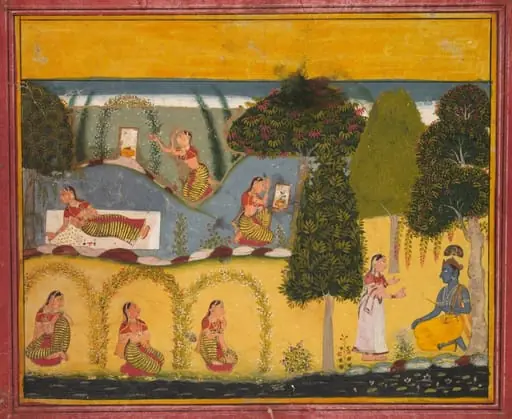 Radha Awaiting Reconciliation with Krishna, from a Gita Govinda of Jayadeva
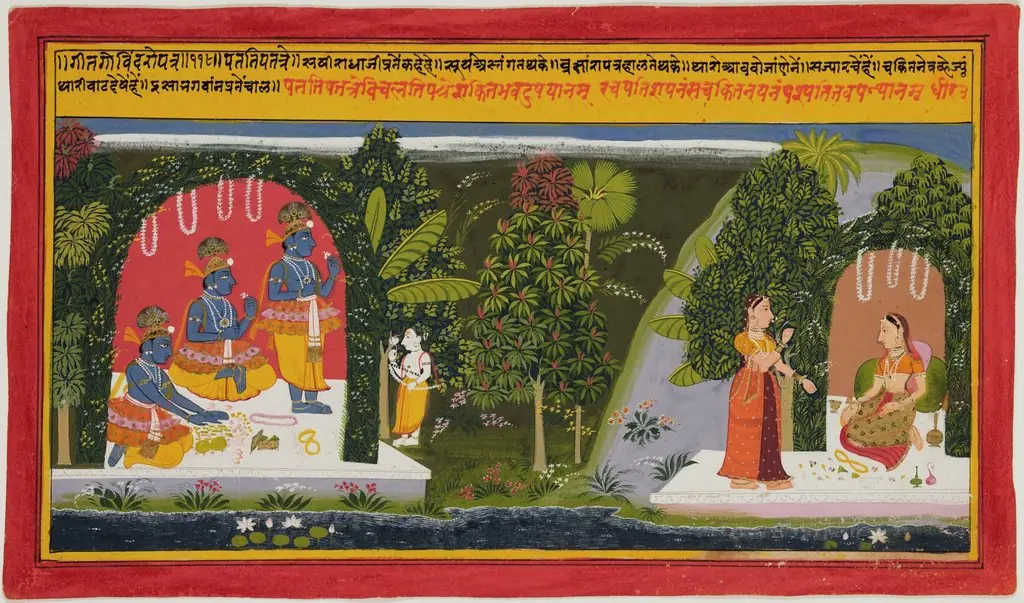 Krishna Prepares for Radha's Visit (page from the Gita Govinda)
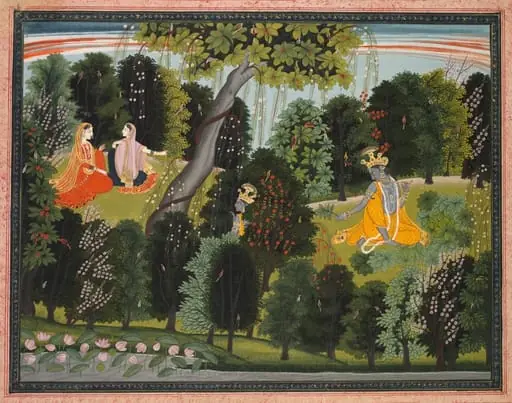 Sakhi persuades Radha to meet Krishna, from a Gita Govinda (Song of the Cowherd) of Jayadeva
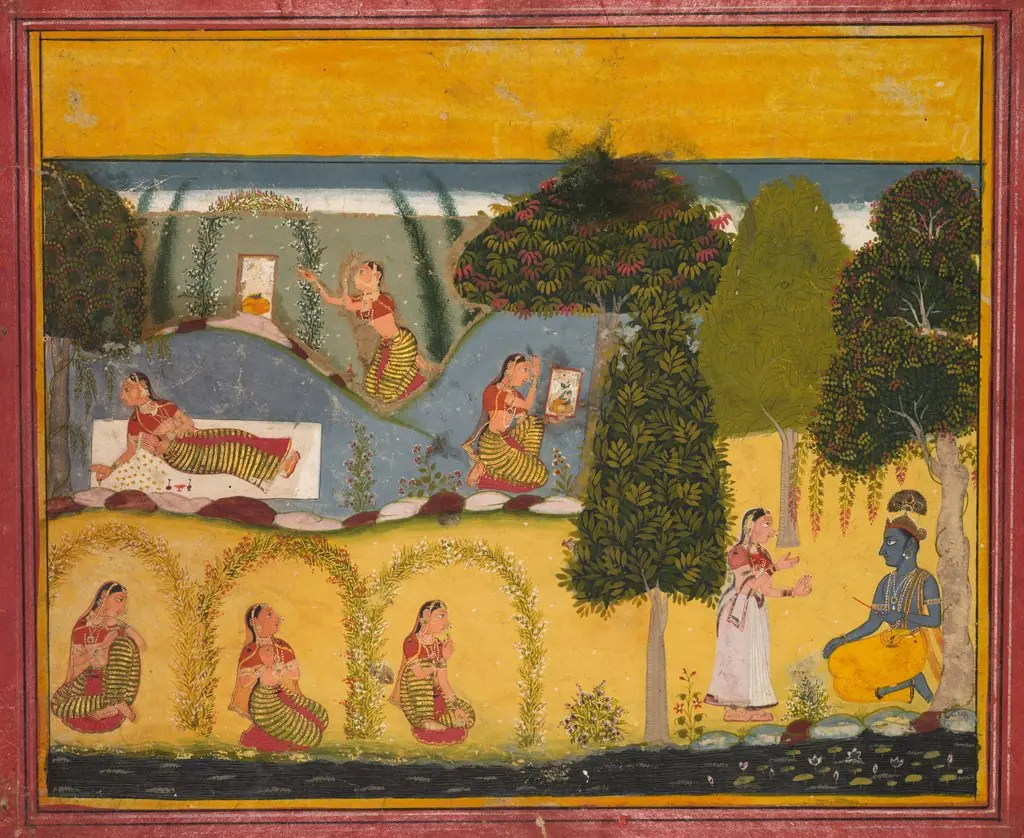 Radha Awaiting Reconciliation with Krishna, from a Gita Govinda of Jayadeva
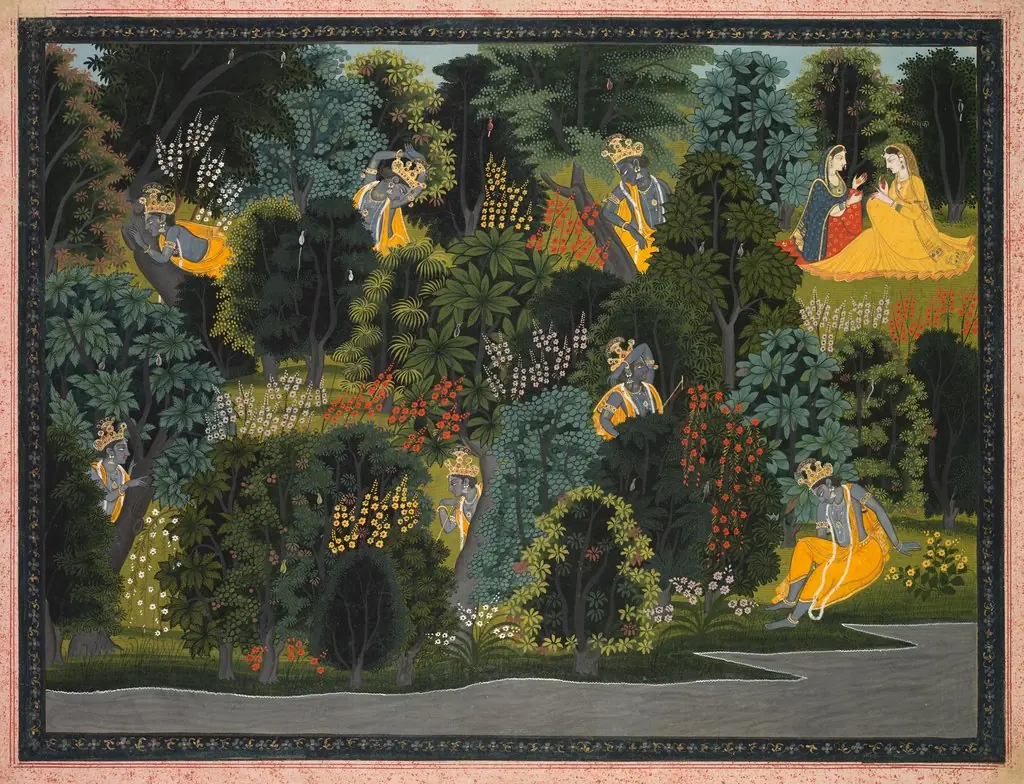 Krishna's Longing for Radha, from the Gita Govinda of Jayadeva
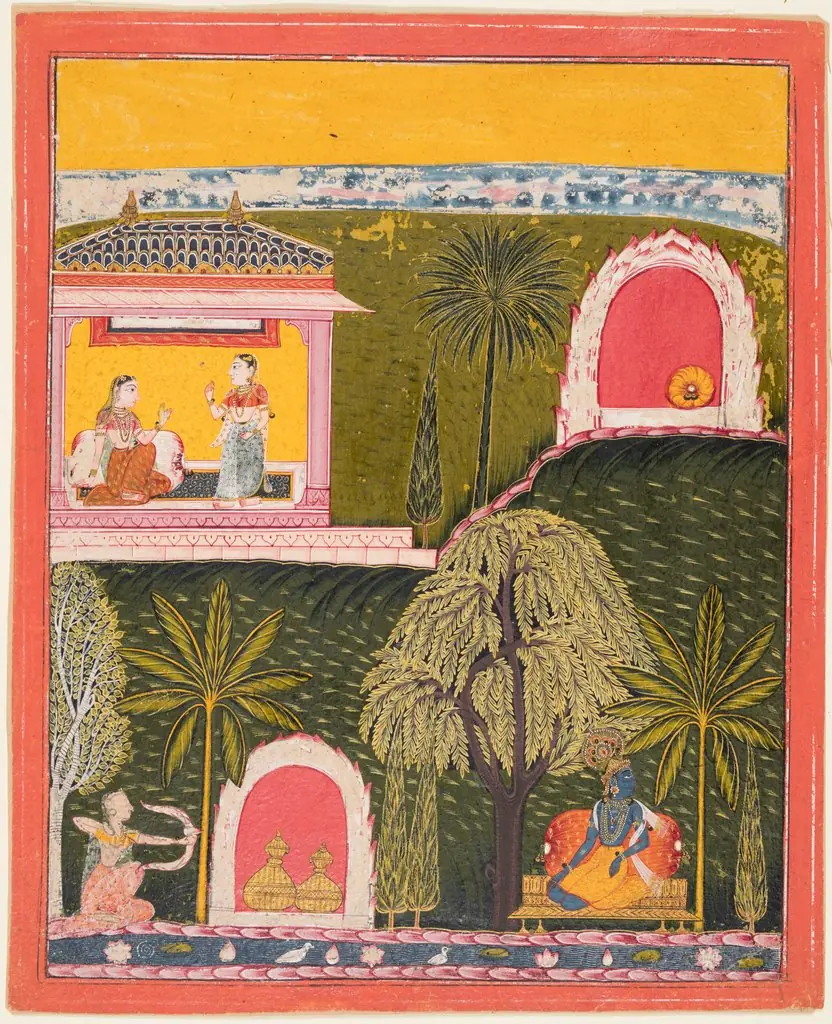 Rati, the Goddess of Erotic Love, Takes Aim at Krishna, from a Rasikapriya
 Krishna’s longing for Radha, from a Gita Govinda (Song of the Cowherd) of Jayadeva
 Rati, the Goddess of Erotic Love, Takes Aim at Krishna, from a Rasikapriya
 Krishna adorning the hair of a holy man
 Sakhi Persuades Radha to Meet Krishna, from a Gita Govinda (Song of the Cowherd) of Jayadeva
 Krishna Steals the Clothes of the Milkmaids and Expounds on the Virtue of Trees, from a Braj Bhagavata Purana
 Radha and Krishna