Artwork
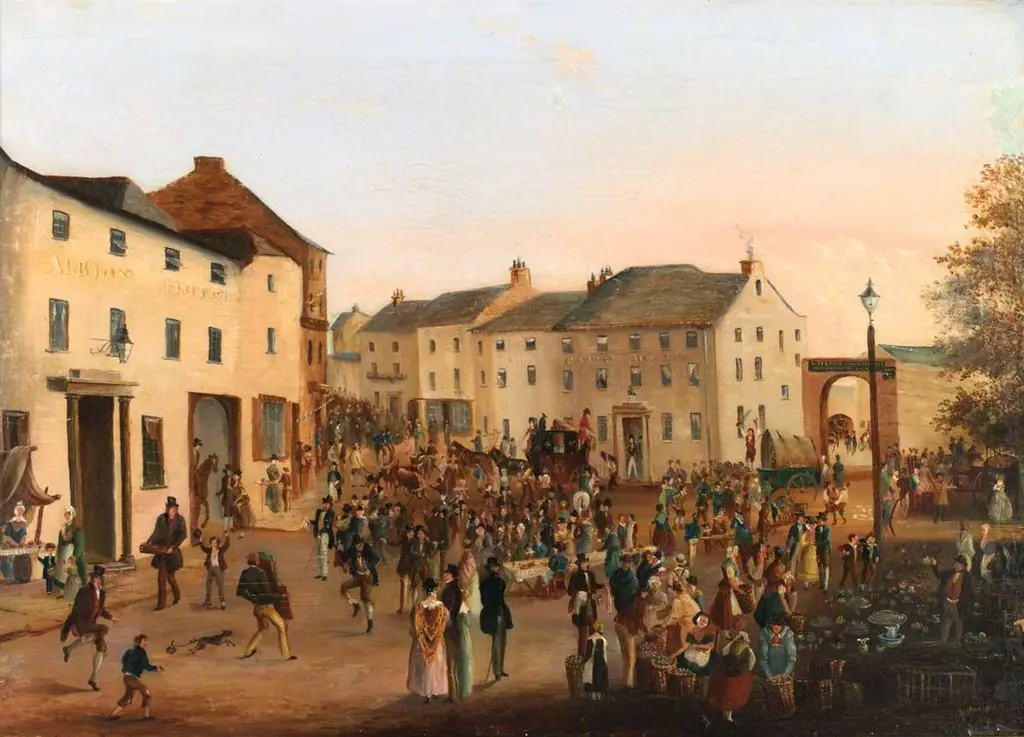
Cowbridge market hall and High Street
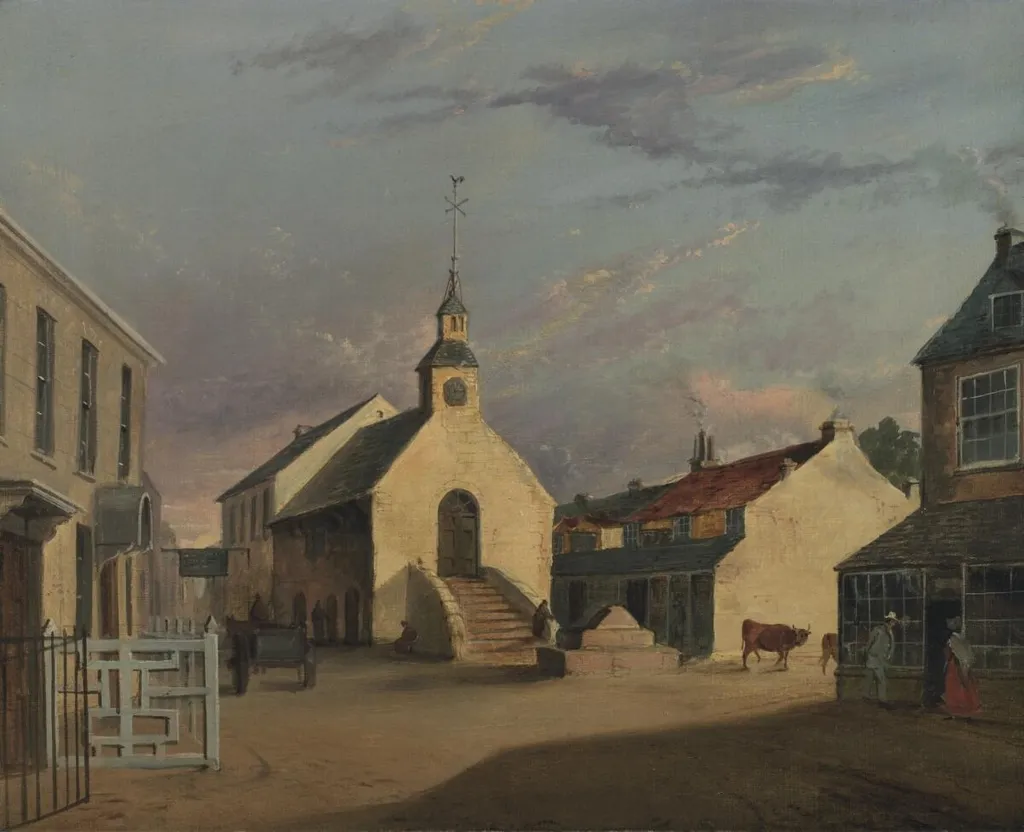
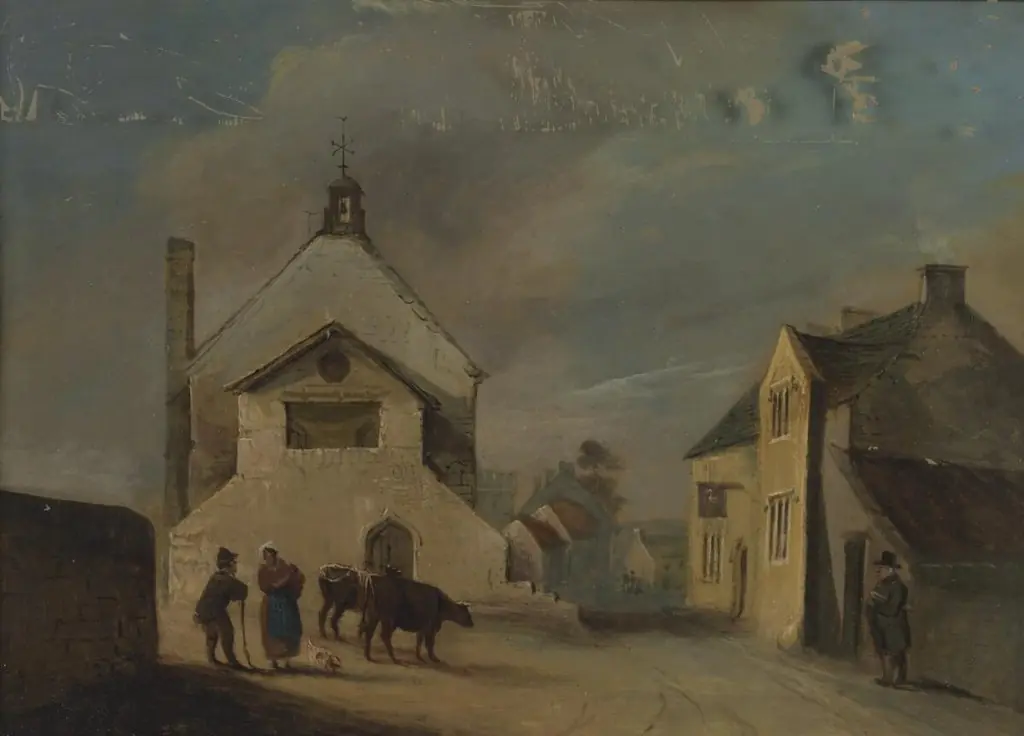
Cowbridge market hall and High Street is an oil painting by Unknown. It dates from 1820 and is held in the collection of the National Library of Wales. This oil painting depicts a modest Welsh town square centered on a market hall with a slender tower and weather vane.
About this work
Overview
This oil painting depicts a modest Welsh town square centered on a market hall with a slender tower and weather vane. Surrounding structures, some with elevated entrances, frame the scene. Figures and animals move through the space, suggesting daily commerce. The sky, overcast yet touched with faint warm hues, casts a subdued light over the composition, grounding it in quiet realism.
Subject & Meaning
The scene captures the functional heart of a rural community — a market hall as both architectural anchor and social hub. The presence of people and livestock implies routine trade and local activity. No grand events are shown; instead, the painting emphasizes the ordinary rhythm of town life, valuing quiet continuity over spectacle.
Technique & Style
Oil paint is applied with restrained brushwork, favoring clarity over dramatic texture. Forms are defined with gentle contrasts, and the gray sky is rendered with soft transitions, allowing subtle pink and orange streaks to suggest fleeting daylight. The composition is balanced, with the tower drawing the eye upward without dominating the scene.
History & Provenance
The painting’s origins are tied to local Welsh observation, likely created in the 19th or early 20th century by an artist familiar with Cowbridge. It was probably made for private or civic collection, reflecting regional pride rather than commercial ambition. Its survival suggests it was preserved within the community or by descendants of local patrons.
Context
Cowbridge, a market town in the Vale of Glamorgan, had long served as a regional hub for agriculture and trade. The hall’s architecture reflects vernacular design common in South Wales. The painting aligns with a broader tradition of documenting provincial life during a period when industrialization was reshaping rural economies.
Legacy
The work remains a quiet record of a specific place at a specific time, valued for its unembellished accuracy. It contributes to regional art history by preserving the visual character of a Welsh market town before modernization altered its streetscape. No major exhibitions have featured it, but it endures in local archives and private holdings.
Artist & collection

 Domestic Scene
 Giacomo and Cardinal Marco, investing Andrea, Abbot of San Zeno, with his Benefice
 The Nymph of Fontainebleau
 Portrait of a Woman
 Madonna and Child with Saints in the Enclosed Garden
 Venus and Minerva
 Family Group of Four on Sofa
 Wall painting from Room H of the Villa of P. Fannius Synistor at Boscoreale
 Looking up the High Street at Conway
 The Post House, Amboise
 Waltham Abbey
 Cottages in a landscape
 Pembrokeshire church
 Die Breite Gasse in Pirna
 Water Gate, Lower Close, Norwich
 High Street, Bangor
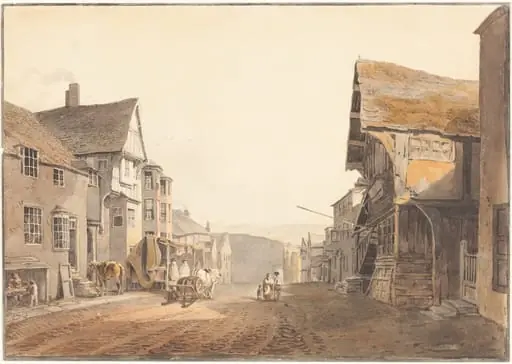 Conway in North Wales
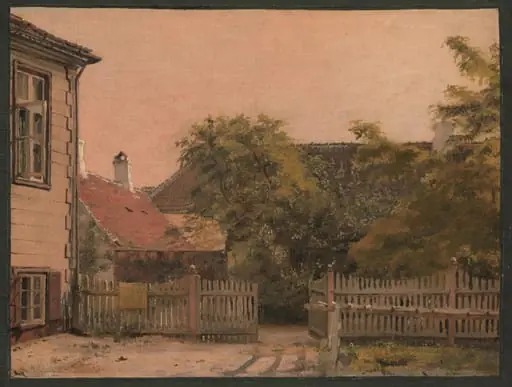 A Corner of the Artist´s Father's House
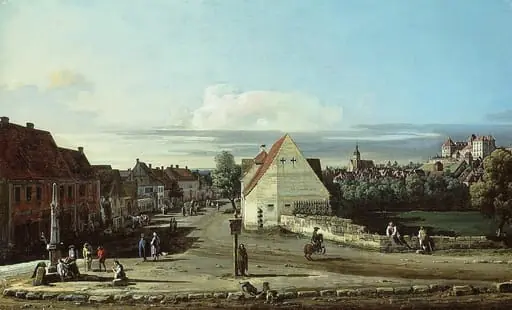 View of Pirna with the Fortress of Sonnenstein
 Llantwit market hall