Artwork
The Revd Dr Francis Randolph
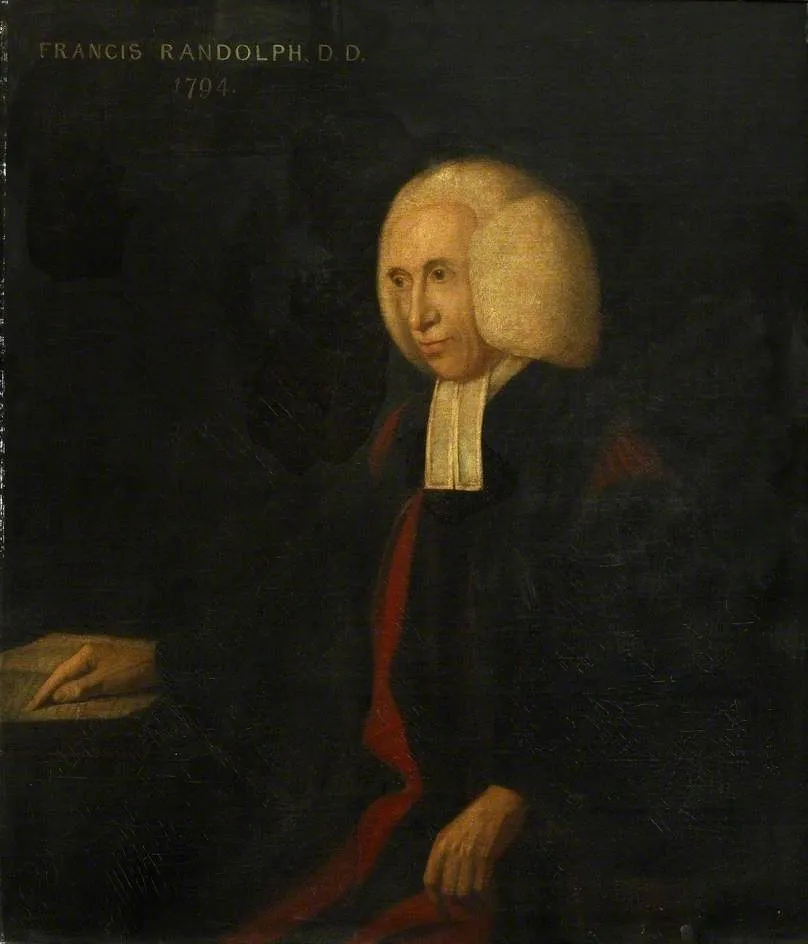
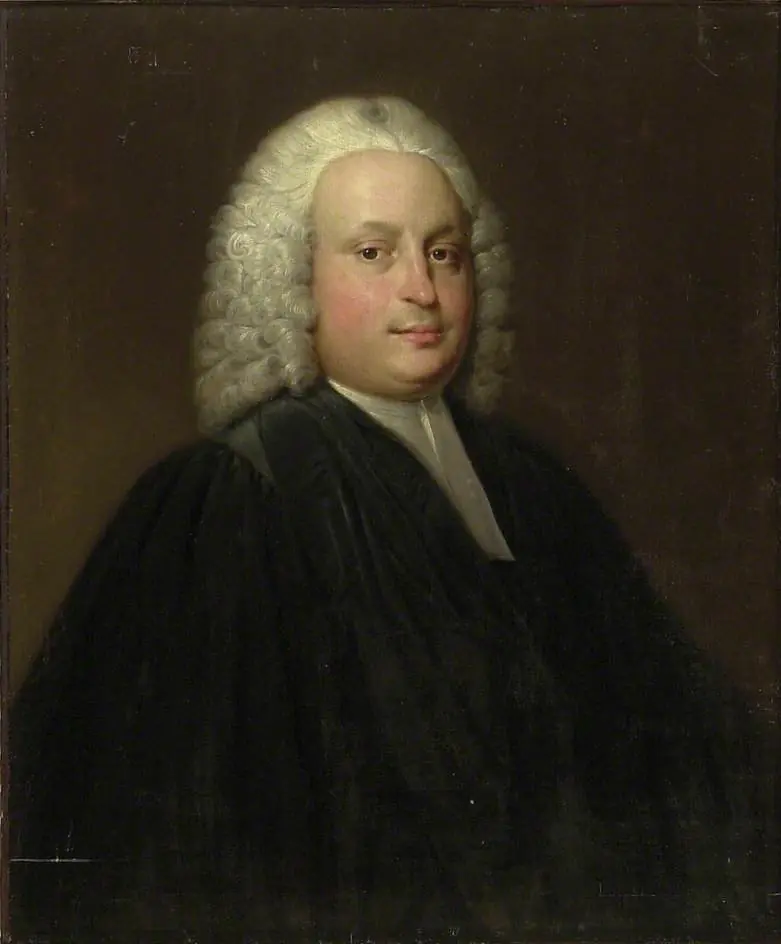
The Revd Dr Francis Randolph is an oil painting by Unknown. It dates from 1798 and is held in the collection of the Ashmolean Museum.
About this work
The subject's attire and the style of the painting suggest a formal portrait from the late 18th century.
The painting depicts a man with white hair, wearing a black coat with red lining and a white collar. He is seated with his right hand resting on a table, where a piece of paper lies. The background is dark, with the subject's name and date, "Francis Randolph, D.D. 1794," written in gold at the top left.
The subject's attire and the style of the painting suggest a formal portrait from the late 18th century. The use of dark colors and the focus on the subject's face create a sense of solemnity.
This portrait is reminiscent of the work of artists who specialized in chiaroscuro, a technique that uses strong contrasts between light and dark to create a sense of volume in depicted objects.
Overview
The Revd Dr Francis Randolph is a late 18th-century oil painting depicting a dignified, elderly clergyman in formal attire, set against a dark background with subtle gold lettering identifying the subject and date (1794).
Subject & Meaning
The subject, Francis Randolph, is portrayed in a contemplative pose, with his right hand resting on a table beside a piece of paper, conveying an air of introspection or scholarly demeanor. His attire, including a black coat with red lining and white collar, signifies his clerical status.
Technique & Style
The painting employs a somber color palette and strong contrasts between light and dark, characteristic of chiaroscuro, to create depth and emphasize the subject's face, imbuing the portrait with solemnity.
History & Provenance
Executed in 1794, the painting's style aligns with late 18th-century formal portraiture, though specific artist attribution is not provided in the available information.
Context
This work reflects the artistic preferences of its time, where dignified portraits of clergy and professionals were common, often using chiaroscuro to add emotional and intellectual depth to the subject.
Legacy
While not attributed to a specific renowned artist in the provided details, the painting exemplifies the enduring influence of chiaroscuro in portraiture, continuing to evoke a sense of solemn contemplation in viewers.
Artist & collection

 Domestic Scene
 Giacomo and Cardinal Marco, investing Andrea, Abbot of San Zeno, with his Benefice
 The Nymph of Fontainebleau
 Portrait of a Woman
 Madonna and Child with Saints in the Enclosed Garden
 Venus and Minerva
 Family Group of Four on Sofa
 Wall painting from Room H of the Villa of P. Fannius Synistor at Boscoreale
 John Eldred
 Rev. Robert Wynne
 Jan Baptist van Caukercken, Chaplain of the Guild of Saint Luke
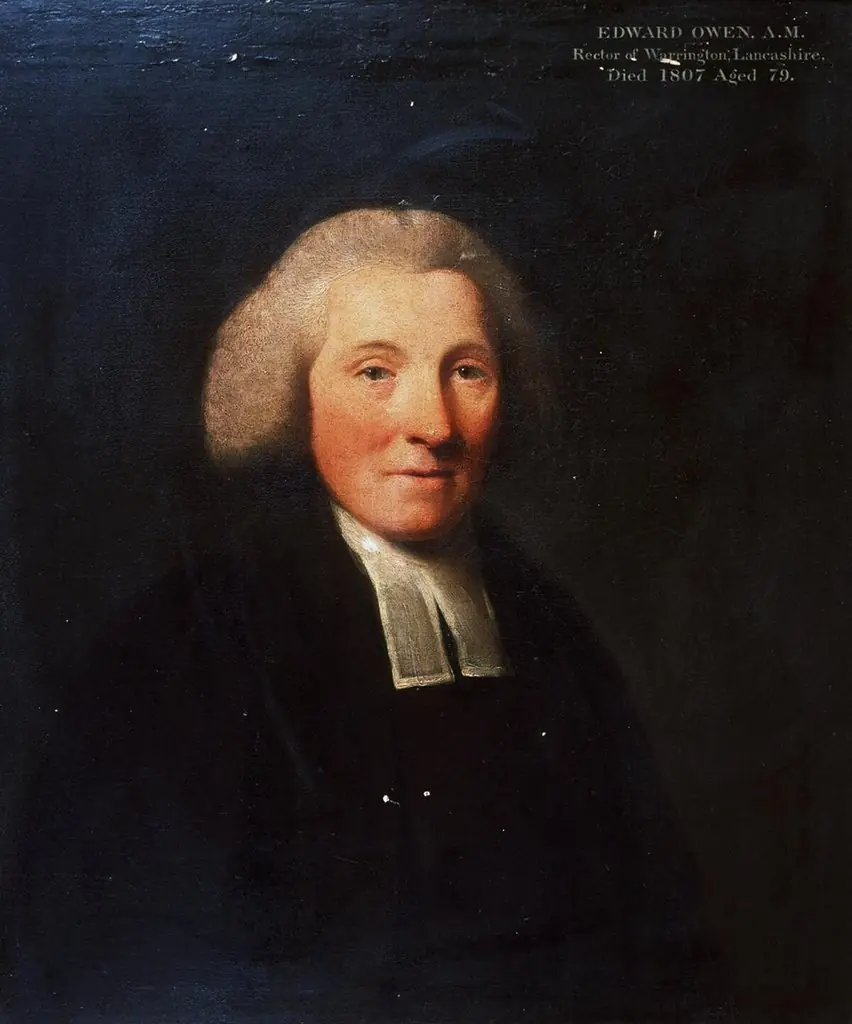 Edward Owen AM (died 1807)
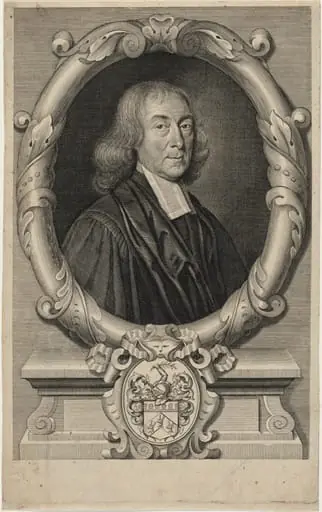 Benjamin Woodroffe, R.R.S., Canon of Christ Church, Oxford
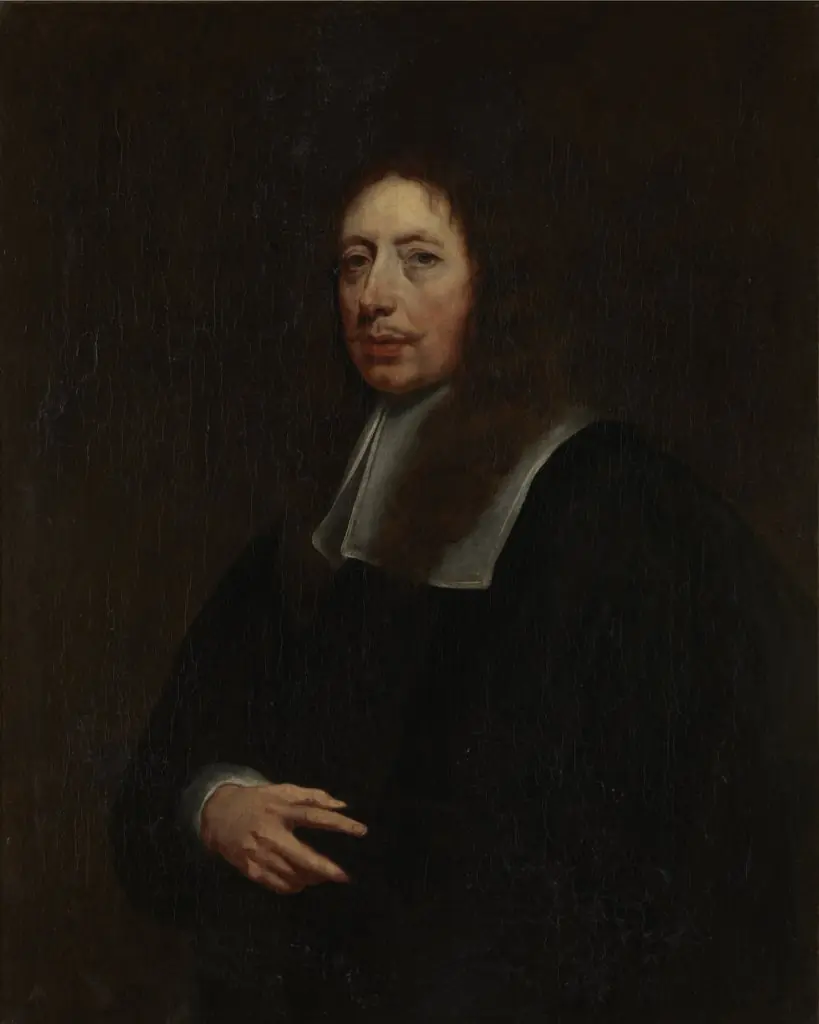 Maximus Gerardi
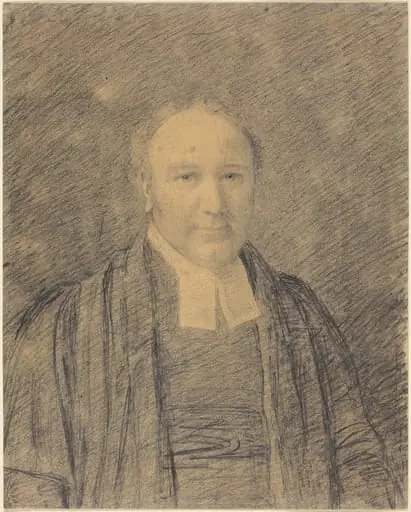 Half-Length Portrait of a Cleric
 Portrait of a Minister
 Thomas Leland (1722-1785)
 Portrait of a cleric
 Dr John Warren, Bishop of Bangor
 The Revd John Kinderley