Artwork
Bildnis des Herzogs Albrecht VI. von Bayern, der "Leuchtenberger" (1584-1666)
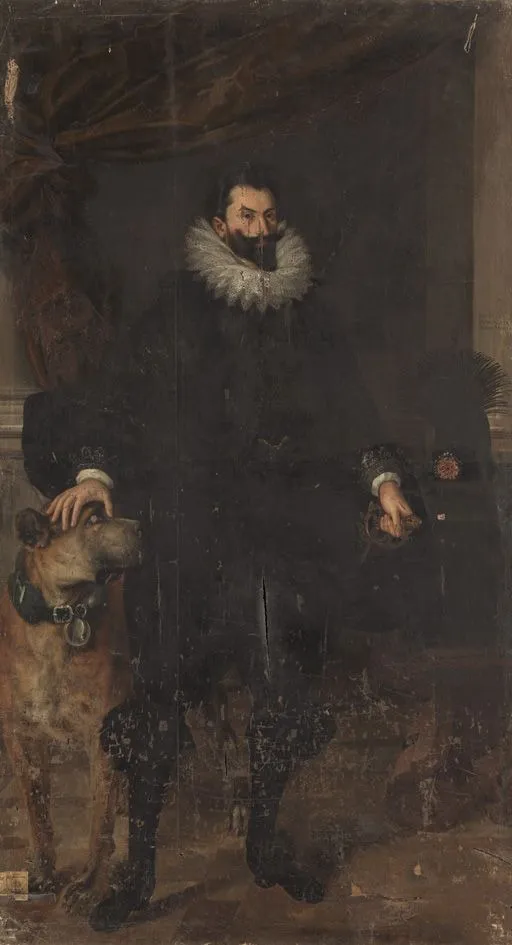
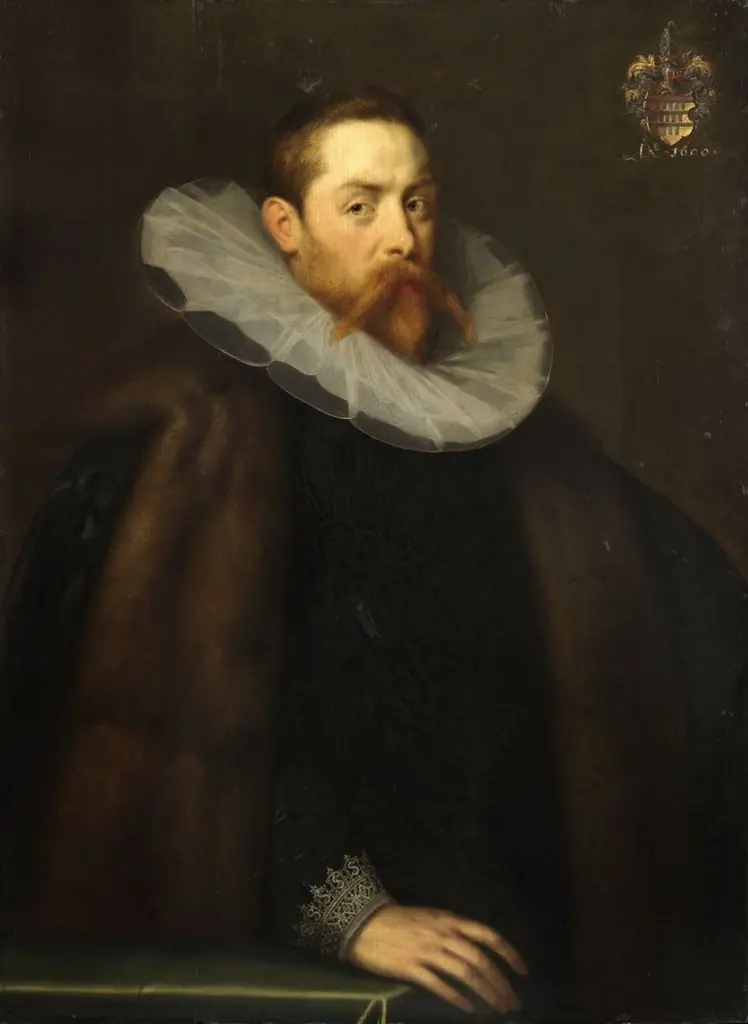
Bildnis des Herzogs Albrecht VI. von Bayern, der "Leuchtenberger" (1584-1666) is an unspecified painting by the Early Baroque Italian artist Unknown. It dates from 1619 and is held in the collection of the Bavarian State Painting Collections. The oil painting depicts Albrecht VI, Duke of Bavaria, known as the “Leuchtenberger,” positioned before a dark, draped backdrop.
About this work
Overview
The composition includes a large brown dog on his left and a small monkey perched on a ledge to his right, both rendered with careful attention.
The oil painting depicts Albrecht VI, Duke of Bavaria, known as the “Leuchtenberger,” positioned before a dark, draped backdrop. He is dressed in a black coat complemented by a prominent white ruff, his expression solemn, and his left hand grasping an unseen object. The composition includes a large brown dog on his left and a small monkey perched on a ledge to his right, both rendered with careful attention.
Subject & Meaning
Albrecht VI (1584‑1666) is presented as a figure of authority and refinement, his attire and posture reflecting the aristocratic conventions of early‑modern Europe. The inclusion of a dog—a traditional symbol of loyalty—and a monkey, often associated with curiosity or exotic wealth, serves to underscore the duke’s status and the cultured milieu of his court.
Technique & Style
Executed in oil on canvas, the work employs a restrained palette of deep shadows and muted highlights to emphasize the subject’s facial features and the texture of the ruff. The animal figures are rendered with a degree of naturalism that contrasts with the more formal, static pose of the duke, creating a subtle narrative tension within the portrait.
History & Provenance
The portrait was likely commissioned during the duke’s lifetime to commemorate his position within the Bavarian hierarchy. Documentation traces its ownership through several noble collections before entering a public museum setting, where it now serves as a representative example of 17th‑century Bavarian portraiture.
Context
In the early 1600s, the white ruff had become a hallmark of elite male fashion across the Holy Roman Empire, signifying both wealth and adherence to courtly dress codes. The presence of exotic animals such as monkeys in portraiture was fashionable among the European aristocracy, reflecting expanding trade networks and the desire to display worldly sophistication.
Artist & collection

 Domestic Scene
 Giacomo and Cardinal Marco, investing Andrea, Abbot of San Zeno, with his Benefice
 The Nymph of Fontainebleau
 Portrait of a Woman
 Madonna and Child with Saints in the Enclosed Garden
 Venus and Minerva
 Family Group of Four on Sofa
 Wall painting from Room H of the Villa of P. Fannius Synistor at Boscoreale
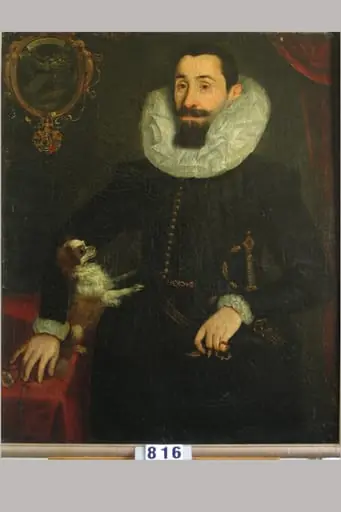 Necunoscut în costum german de curte (în Reg. Inv.: Necunoscut în costum german)
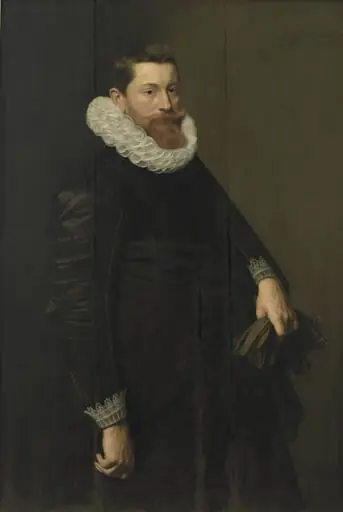 Portrait of a Gentleman
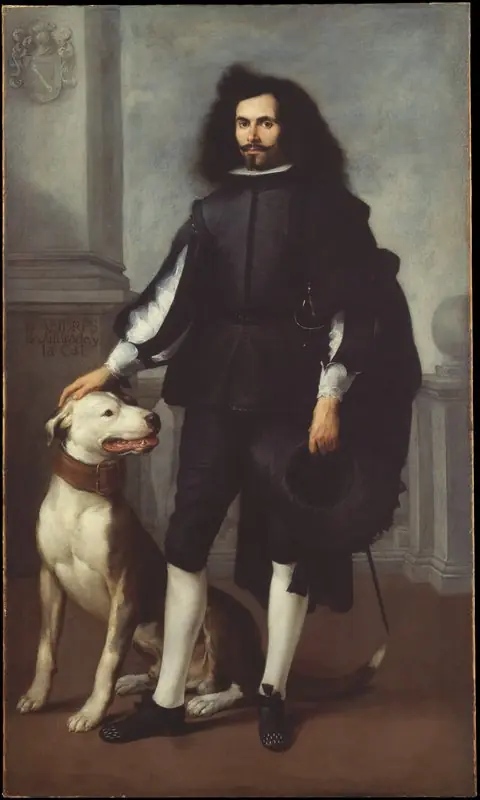 Don Andrés de Andrade y la Cal
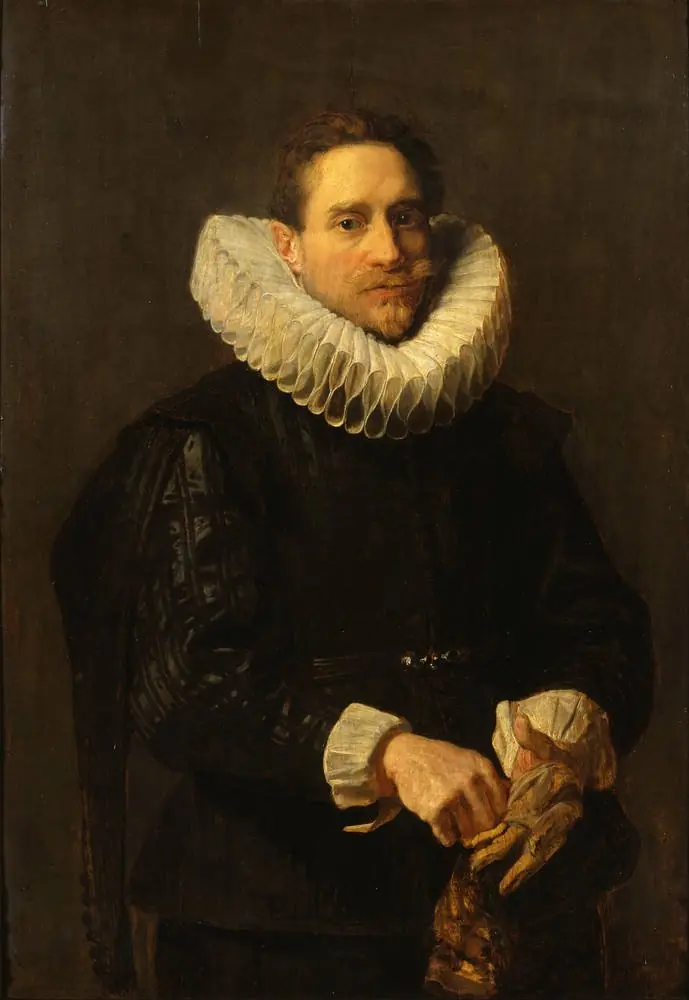 Portrait of a Man
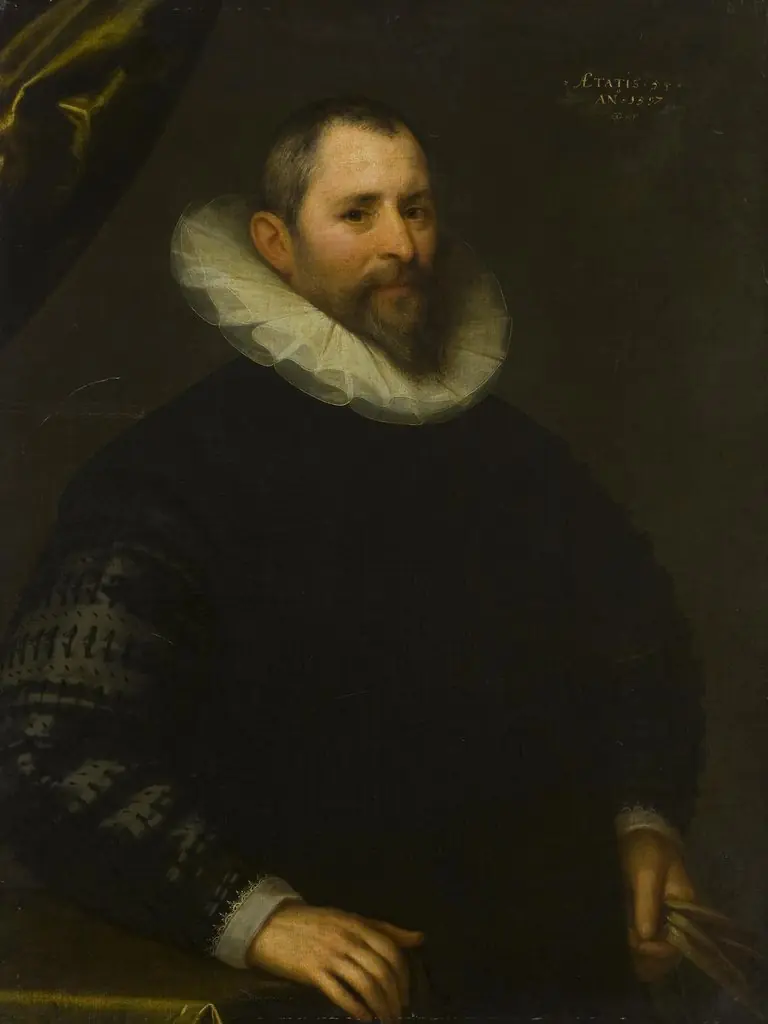 Portrait of Gottfried Hautappel
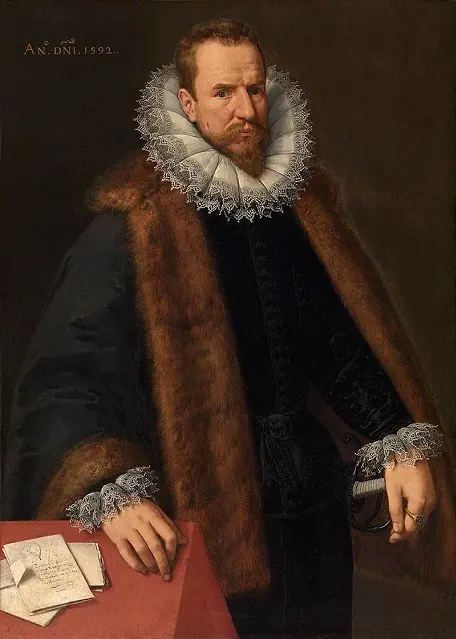 Portrait of Nicolas de Hellincx, counselor of the king
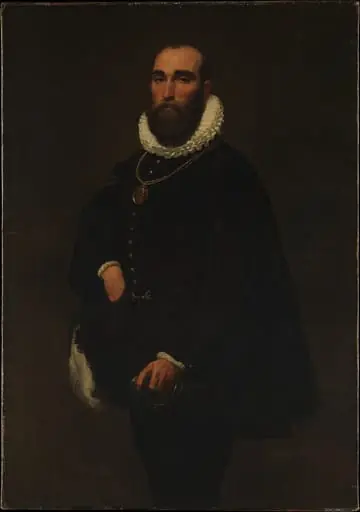 Worthington Whittredge
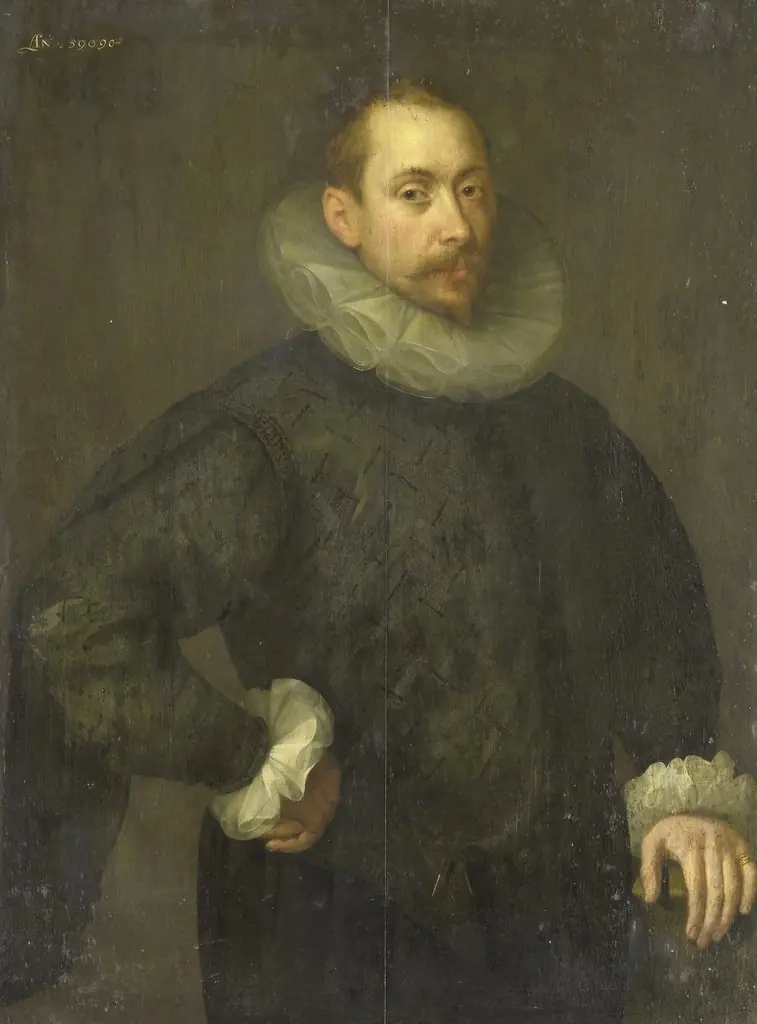 Portrait of Jean Fourmenois
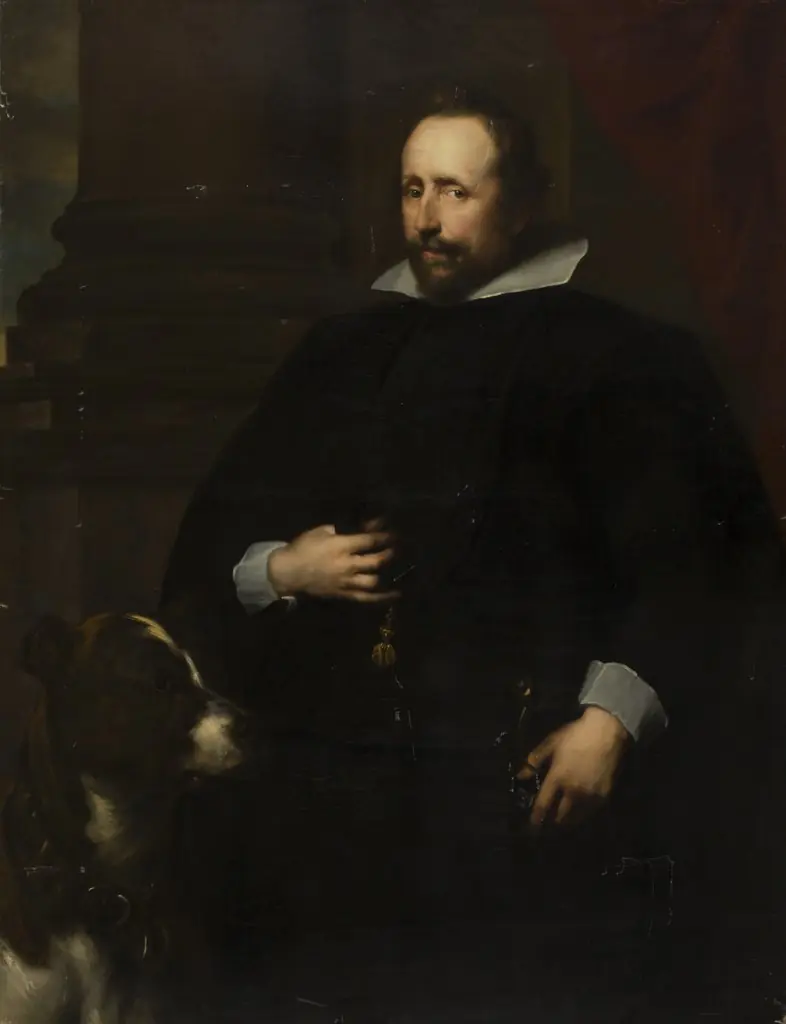 Wolfgang Wilhelm (1578-1653), count palatine of Neuburg, duke of Gulik and Berg
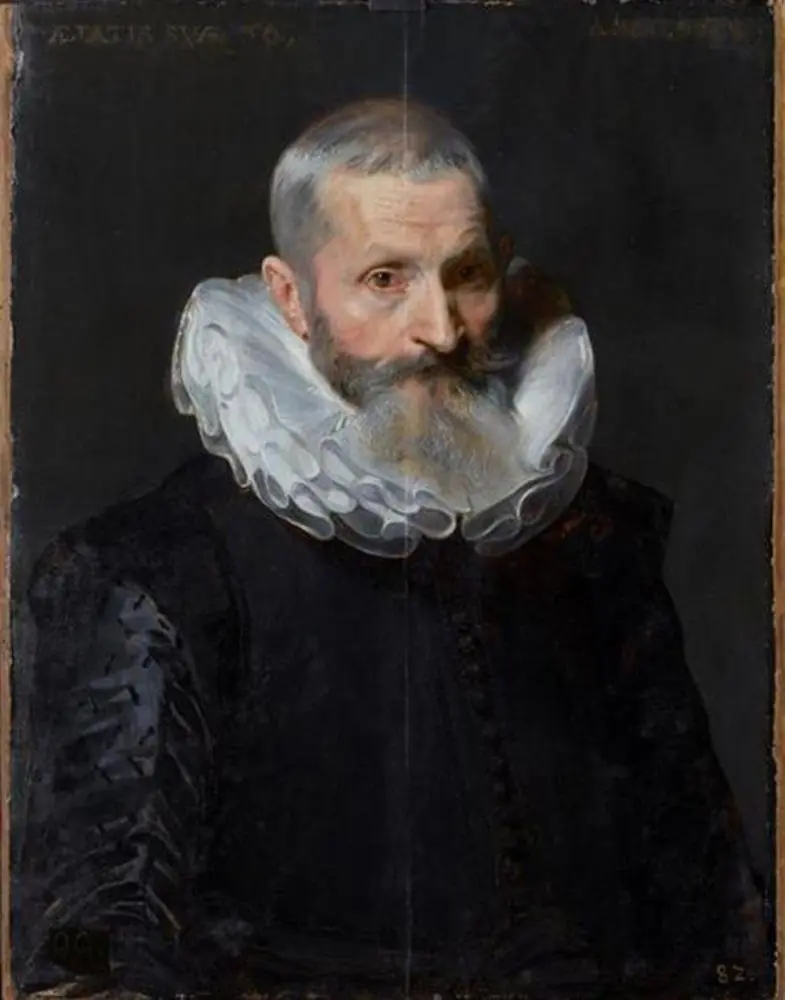 Portrait of a 60-year-old Man
 Portrait of Giovanni Battista Brignole
 Portrait of a Member of the Lyskirchen Family