Artwork
Livro de principios para aprender a dibuxar : sacado por las obras de Joseph de Rívera llamado (bulgarmte.) el Españoleto.
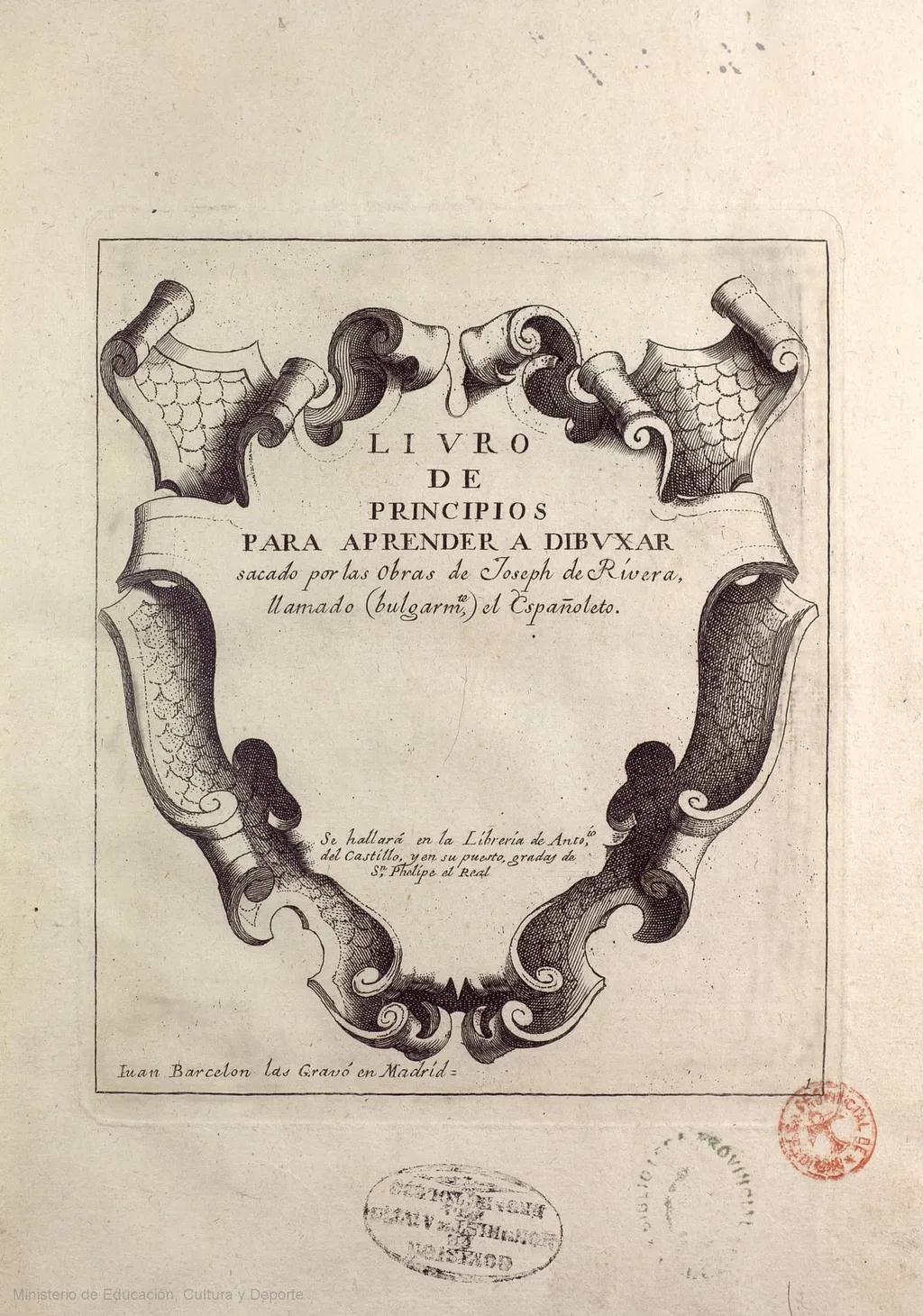
Livro de principios para aprender a dibuxar : sacado por las obras de Joseph de Rívera llamado (bulgarmte.) el Españoleto. is a photography by the Romanticist artist https://hispana.mcu.es/lod/oai:bvpb.mcu.es:488646#ent4. It dates from 1750 and is held in the collection of the Virtual Library of Bibliographical Heritage. This page comes from a mid-18th-century Spanish drawing manual titled 'Livro de principios para aprender a dibuxar,' compiled around 1750.
About this work
This is a 1750 guidebook page copied from José de Ribera’s drawings. It shows a man’s head in three angles, simple lines only. The book teaches drawing basics by tracing Ribera’s work.
Ribera was Spanish but worked in Italy. He drew strong, dark figures—no fancy colors. This copy keeps his bold style, not the original’s depth.
See more of Ribera’s drawings at the Museum of Ethnography.
Overview
The book was intended to teach foundational drawing techniques through direct emulation, relying on monochrome line work rather than color or shading.
This page comes from a mid-18th-century Spanish drawing manual titled 'Livro de principios para aprender a dibuxar,' compiled around 1750. It reproduces studies by José de Ribera, known as 'el Españoleto,' adapted for instructional use. The book was intended to teach foundational drawing techniques through direct emulation, relying on monochrome line work rather than color or shading. Its purpose was pedagogical, not artistic display.
Subject & Meaning
The image depicts a male head rendered in three standard views: frontal, profile, and three-quarter. These angles were standard in artistic training to convey anatomical structure and spatial orientation. The absence of ornamentation or background emphasizes form over narrative. The selection reflects a focus on observational accuracy, aligning with the manual’s goal of teaching draftsmanship through disciplined repetition.
Technique & Style
The drawing employs sparse, confident lines to define volume and contour, characteristic of Ribera’s approach. No tonal modeling or color is used; the effect is linear and economical. The copyist preserved Ribera’s boldness but omitted the atmospheric depth of his original ink studies. The result is a flattened, schematic version suited for tracing and replication by students.
History & Provenance
The manual was produced in Madrid between 1750 and 1800, likely by Antonio del Castillo or his circle. It repurposed Ribera’s earlier drawings—created during his time in Italy—as teaching tools. The book’s circulation suggests a growing demand for structured artistic education in Spain. Its survival indicates its utility in academies or workshops, though the original Ribera drawings remain distinct in their expressive intensity.
Context
During the 18th century, Spanish art institutions sought to standardize training by drawing on established masters. Ribera, though active in Italy, was claimed as a national exemplar. His stark, forceful style—rooted in Caravaggism—was deemed suitable for foundational instruction. This manual reflects a broader trend of compiling and disseminating artist studies to elevate technical literacy among emerging practitioners.
Legacy
The manual contributed to the transmission of Ribera’s compositional principles within Spanish art education, even as his original works faded from public view. While the copied drawings lack the emotional weight of the originals, they preserved his linear clarity for generations of students. Today, such manuals serve as historical records of pedagogical practices and the evolving role of reproduction in artistic training.
Artist & collection
Museum
Virtual Library of Bibliographical Heritage
Continue through works from the same source collection.
 Title Page for R.P. Jacobi Tirini's "Commentarius in Vetvs et Novvm Testamentvm"
 Collection of Various Caprices and New Designs of Cartouches and Ornaments
 New ABC Booklet: Title Page
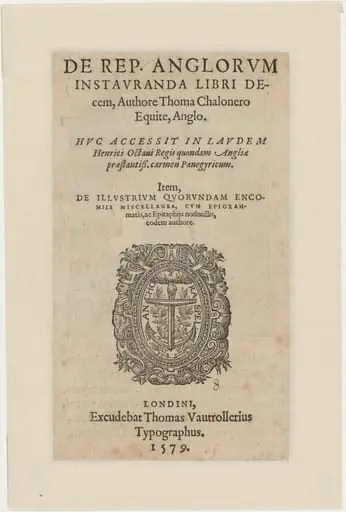 Title Page to De Republicae Anglorum by Thomas Chaloner
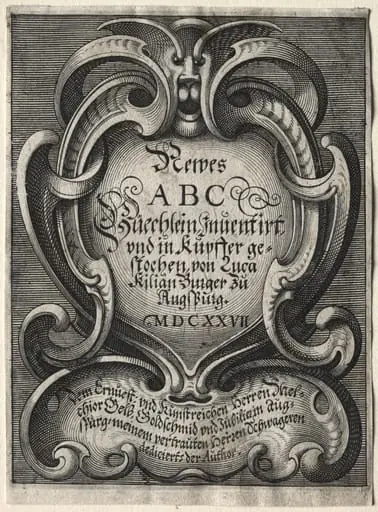 New ABC Booklet
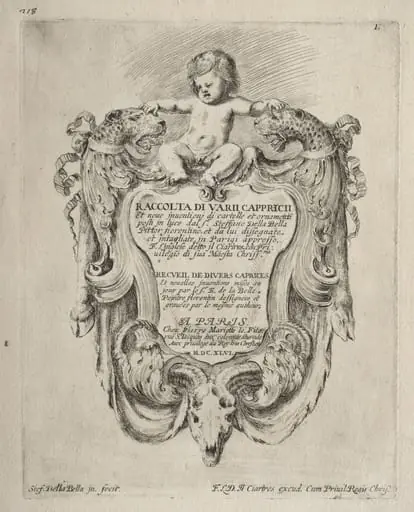 Collection of Various Caprices and New Designs of Cartouches and Ornaments: No 1, Title Page
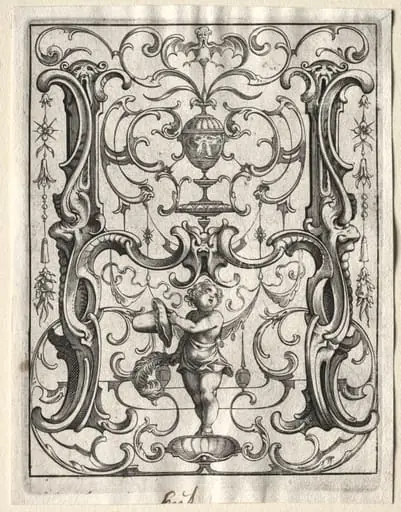 New ABC Booklet: H
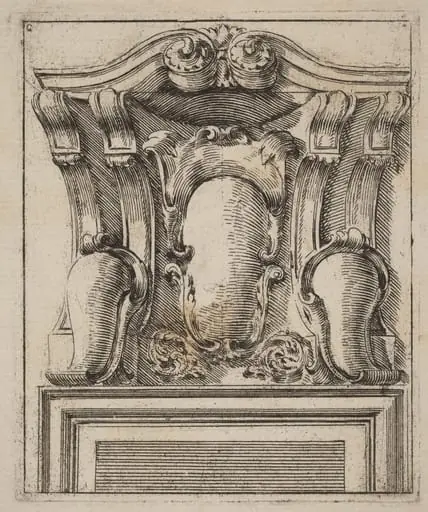 Architectural Motif with Three Shields
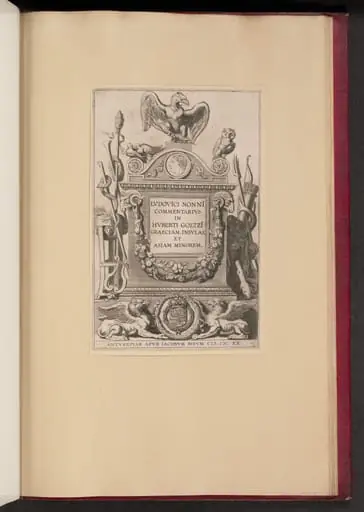 Title Page for Ludovicus Nonnius, Commentarius in Huberti Goltzi Graeciam, Insulas, et Asiam Minorem
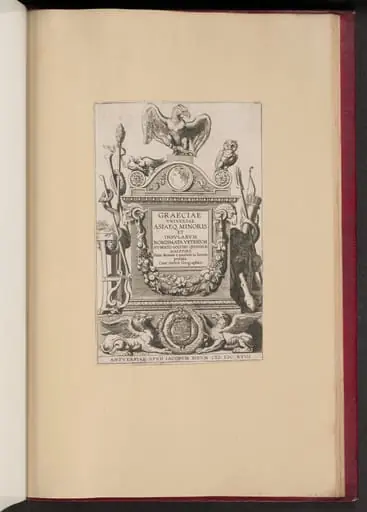 Title Page for Hubert Goltzius, Graeciae Vniversae Asiaeq. Minoris et Insularum Nomismata
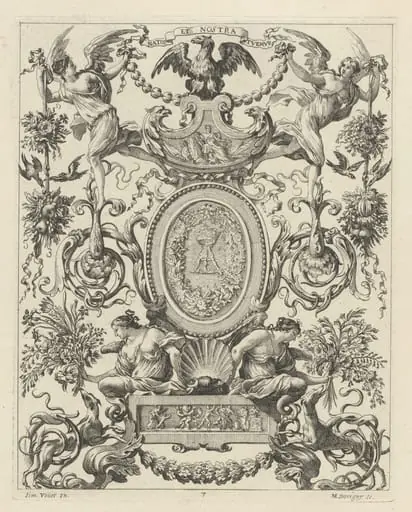 Ornamental Panel Surmounted by an Eagle and the Motto NATOS ET NOSTRA TUEMUR
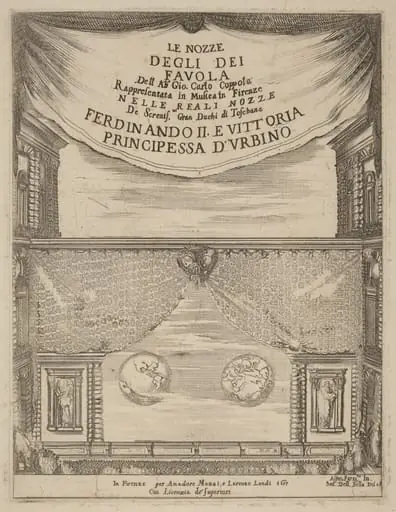 Le Nozze degli Dei: Frontispiece