Artwork
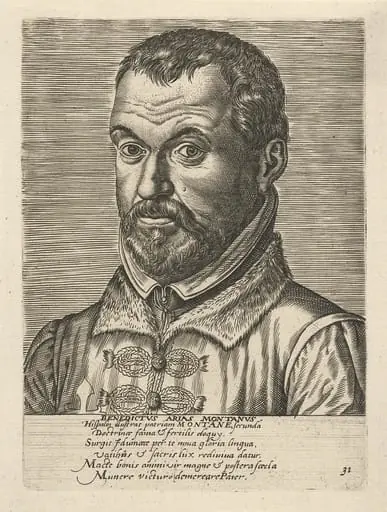
Portret van Benito Arias Montano
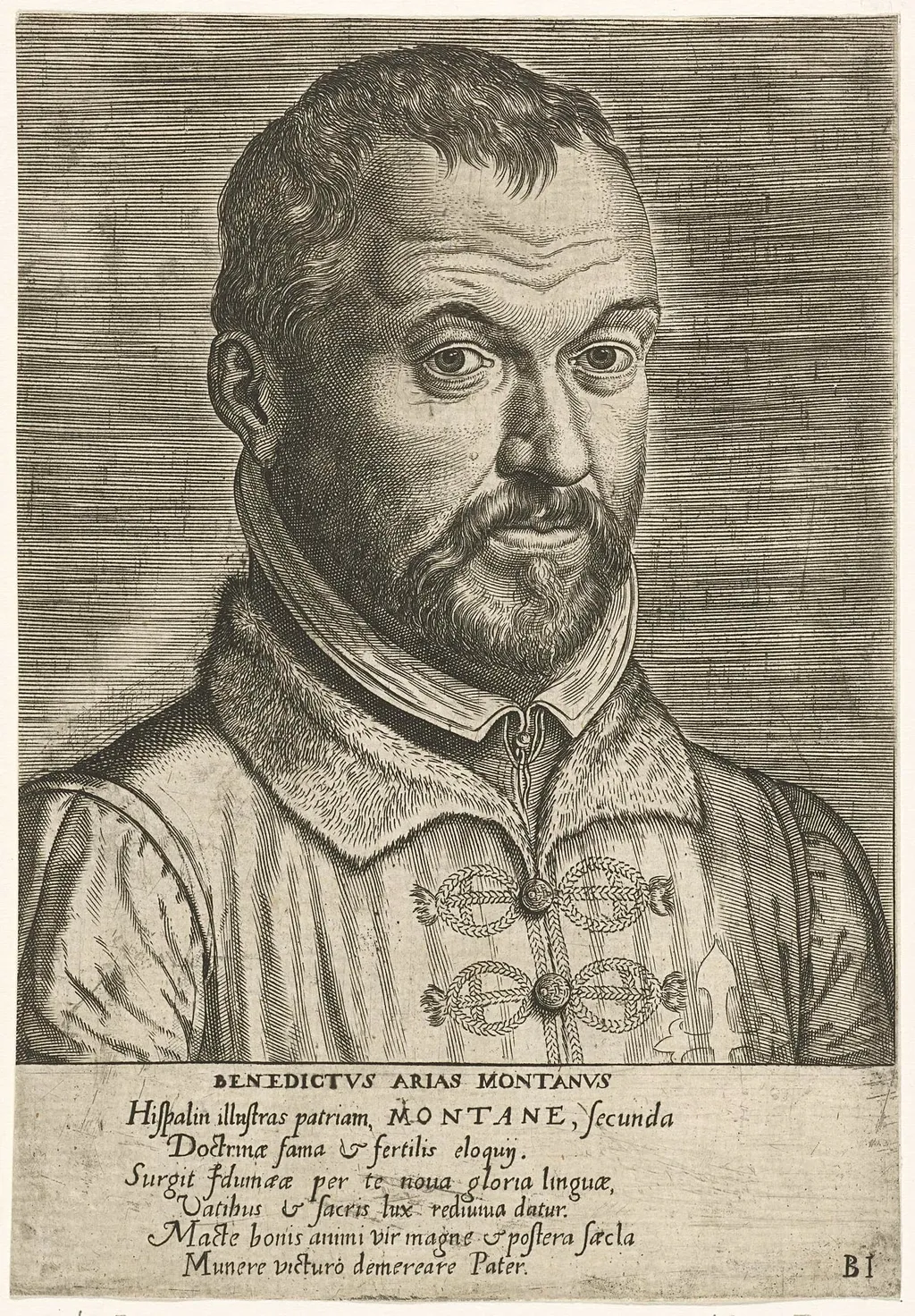
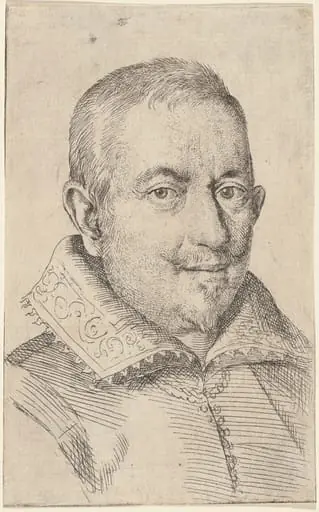
Portret van Benito Arias Montano is a photography by the Renaissance artist https://hispana.mcu.es/lod/oai:larramendi.es:13195#ent4. It dates from 1572 and is held in the collection of the Ignacio Larramendi Foundation. This portrait depicts Benito Arias Montano, a Spanish humanist and theologian, rendered in profile to the right.
About this work
Overview
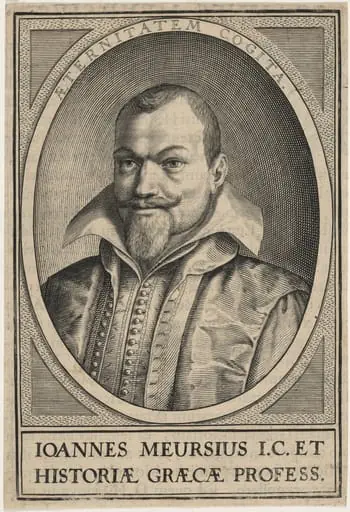
It belongs to a broader series of engraved portraits of prominent European scholars, each identified by a Latin inscription.
This portrait depicts Benito Arias Montano, a Spanish humanist and theologian, rendered in profile to the right. It belongs to a broader series of engraved portraits of prominent European scholars, each identified by a Latin inscription. The image is part of a 16th-century effort to visually document intellectual figures, emphasizing scholarly prestige through standardized portraiture rather than individualized expression.
Subject & Meaning
Benito Arias Montano was a key figure in Spanish religious scholarship, known for his editorial work on the Antwerp Polyglot Bible. The portrait presents him not as a religious authority but as a learned man, his dignified bearing and scholarly attire reflecting the Renaissance ideal of the erudite intellect. The Latin caption reinforces his identity within a pantheon of European thinkers, aligning him with humanist values of learning and textual authority.
Technique & Style
The portrait employs a restrained chiaroscuro to model the face and collar, creating subtle volume without dramatic contrast. Lines are precise, typical of engraved portraiture of the period, with attention to the texture of fabric and the contours of the face. The composition is frontal and formal, prioritizing clarity and recognition over emotional depth, consistent with the didactic purpose of the series.
History & Provenance
Created in the late 16th century, the portrait was likely produced as part of a printed collection commissioned to honor European intellectuals. It bears the designation B1, indicating its place in a numbered sequence. The work circulated widely through scholarly networks, serving both as a tribute and a reference tool for readers engaged with the intellectual currents of the time.
Context
During the Counter-Reformation, visual representations of scholars were used to legitimize religious and academic authority. This portrait emerged in Antwerp, a hub of printing and humanist exchange, where such series were compiled to celebrate intellectual achievement across national boundaries. The Latin inscriptions ensured accessibility to an international learned audience.
Legacy
The portrait contributes to a tradition of engraved scholarly portraiture that influenced later biographical collections and academic iconography. While not widely known today, it remains a documented artifact of how early modern Europe visually constructed the identity of the intellectual, linking textual authority with visual representation in a pre-photographic age.