Artwork
Voltaire's Morning
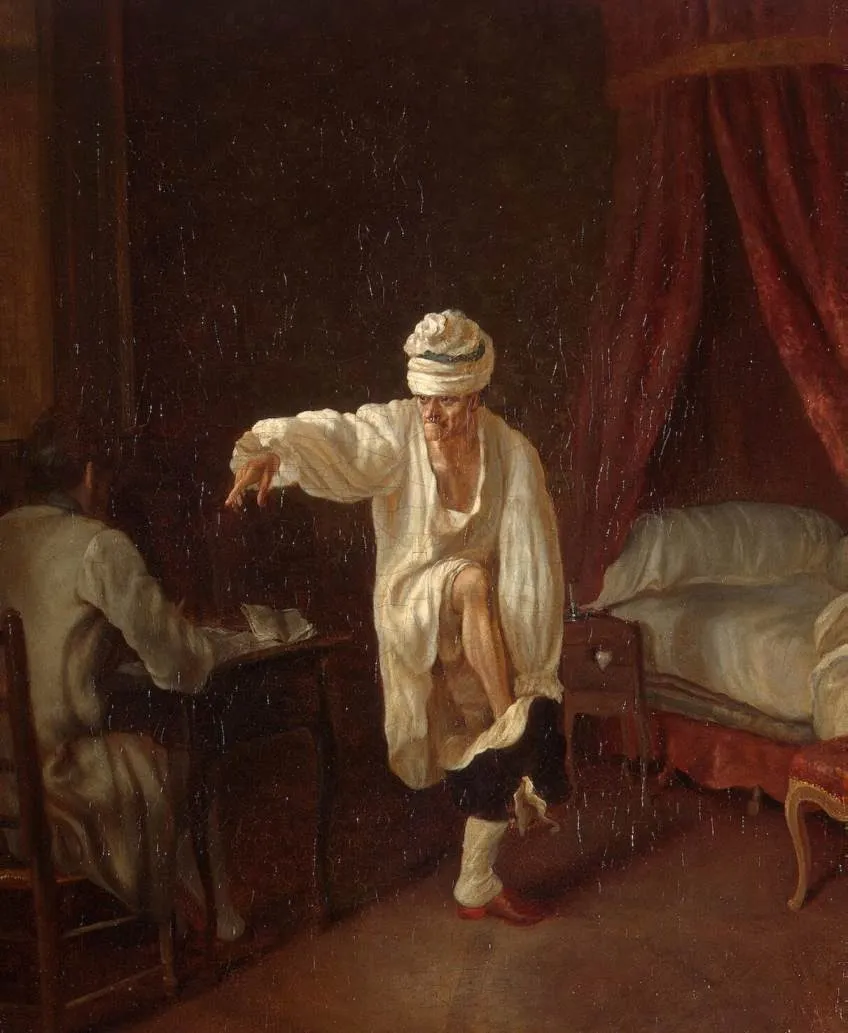
Voltaire's Morning is an oil painting by the Rococo painting artist Jean Huber. It dates from 1762 and is held in the collection of the Hermitage Museum.
About this work
Overview
Executed in the Rococo style, the painting is part of the State Hermitage Museum’s collection.
Painted in 1762 by Jean Huber, a Genevan artist with diverse pursuits in politics and literature, this oil work captures a quiet moment in the life of philosopher Voltaire. Executed in the Rococo style, the painting is part of the State Hermitage Museum’s collection. Unlike grand historical scenes common in the period, it focuses on an intimate, domestic setting, reflecting the intellectual culture of Enlightenment Europe through personal ritual rather than public spectacle.
Subject & Meaning
The painting portrays Voltaire in his private chamber, dressed in a white robe and turban, mid-gesture as if engaged in impassioned discourse. His raised leg and extended arm suggest physical animation, implying the mental vigor of his thought. The scattered papers on the table hint at his literary activity. The scene is not a formal portrait but a candid depiction of intellectual life—emphasizing the philosopher’s dynamic mind through bodily expression rather than symbolic attributes.
Technique & Style
Huber employs chiaroscuro to model Voltaire’s form against the dim interior, creating a dramatic interplay of light and shadow that enhances the sense of movement. The brushwork is precise yet fluid, capturing the texture of fabric and the soft glow of ambient light. The composition centers the figure dynamically, avoiding symmetry to reinforce spontaneity. These choices align with Rococo’s preference for intimacy and expressive gesture, while the lighting recalls Baroque influences adapted to a domestic scale.
History & Provenance
Created during Voltaire’s later years, the painting was likely commissioned by someone close to the philosopher or acquired through his circle. Jean Huber, known for his silhouette portraits, turned to oil for this more nuanced portrayal. The work entered the Hermitage collection in the 18th or early 19th century, possibly through imperial acquisitions of European art. Its survival and preservation reflect its value as a personal document of Enlightenment intellectual life.
Context
In 1762, Voltaire was a central figure in European intellectual circles, known for his wit and criticism of authority. Huber’s depiction aligns with a growing trend of portraying thinkers in private, unguarded moments—shifting focus from public authority to personal intellect. The turban, though not historically accurate, may reference Orientalist aesthetics popular in Rococo interiors, symbolizing exoticism and philosophical detachment rather than literal dress.
Legacy
Though not widely reproduced, the painting remains a rare visual record of Voltaire’s daily presence. It contributes to the understanding of how Enlightenment figures were imagined beyond their writings—through gesture, setting, and atmosphere. Huber’s blend of documentary observation and theatrical composition influenced later portrayals of intellectuals, emphasizing inner life through physical expression rather than idealized form.
Artist & collection
Artist
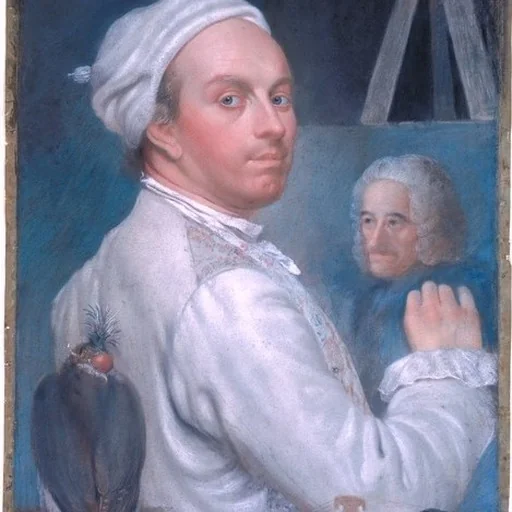
Jean Huber (13 February 1721 – 21 August 1786) was a Genevan painter, silhouettiste, soldier, politician and author, who was a citizen of the Republic of Geneva.

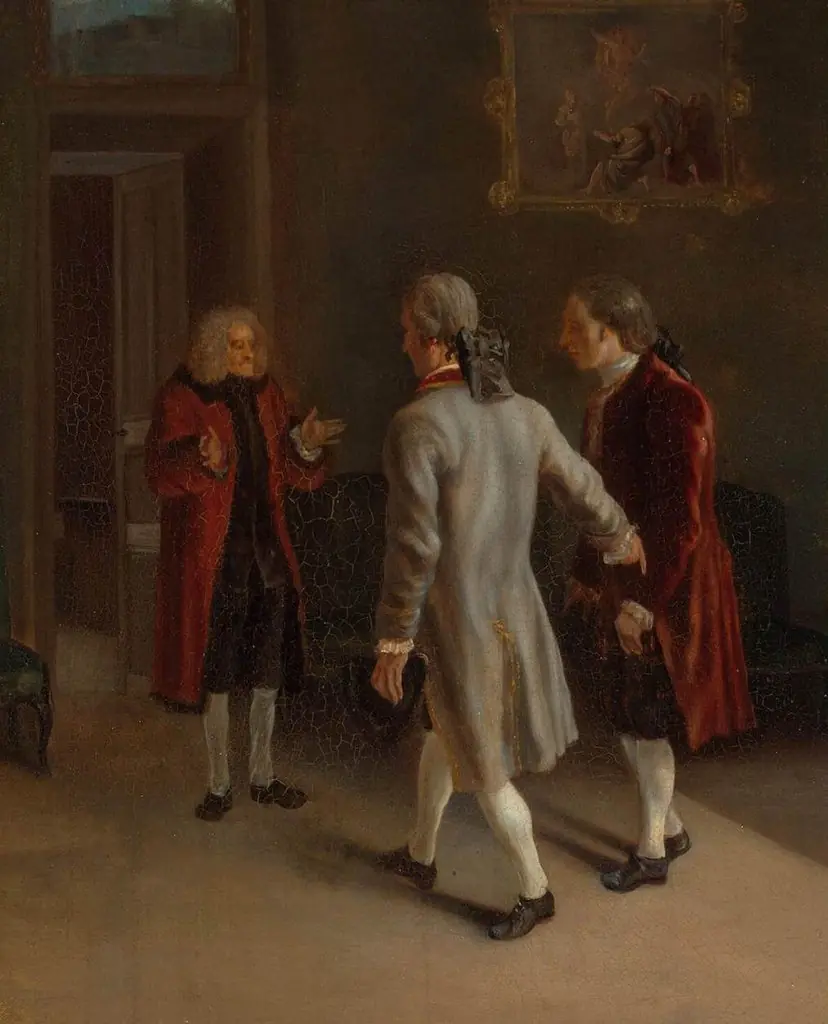
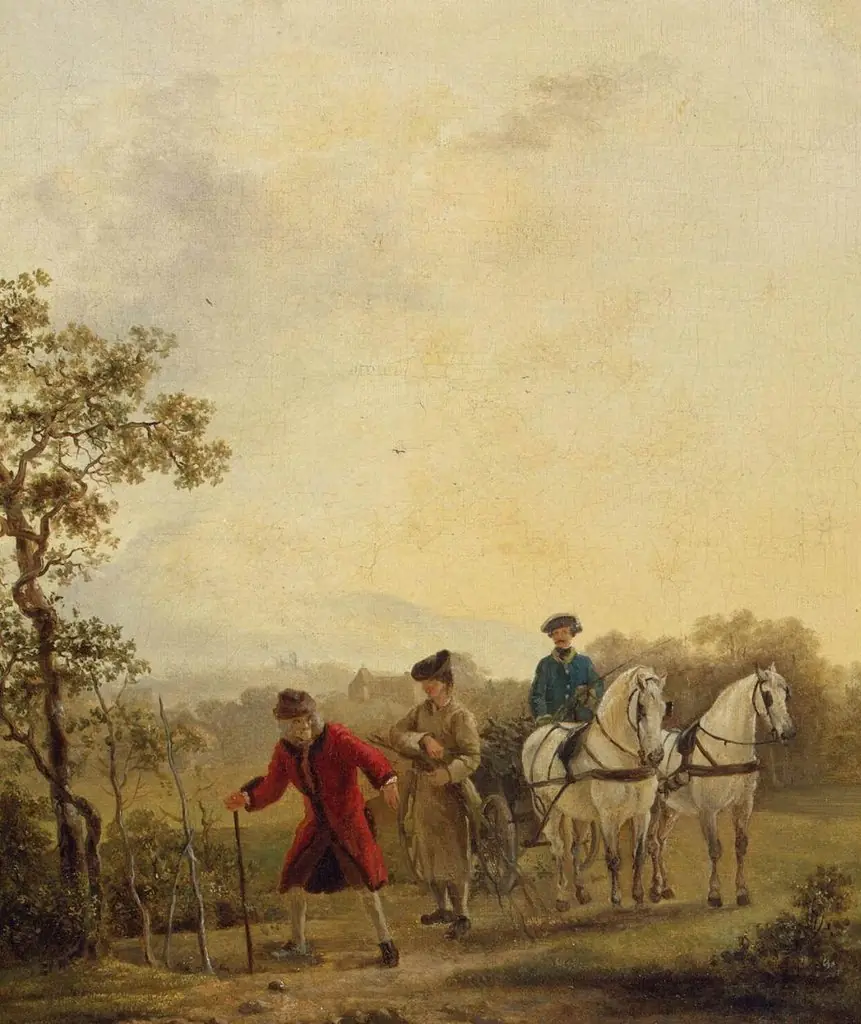
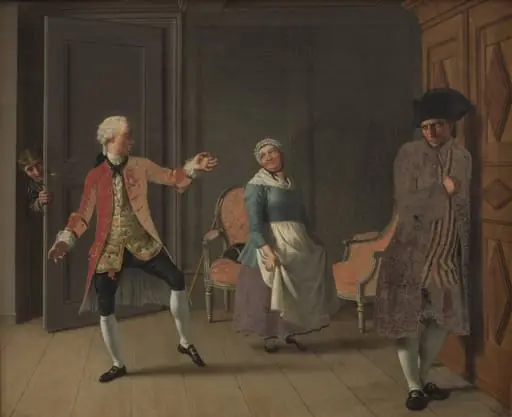 From Ludvig Holberg's "Jean de France", Act 1, Scene 6
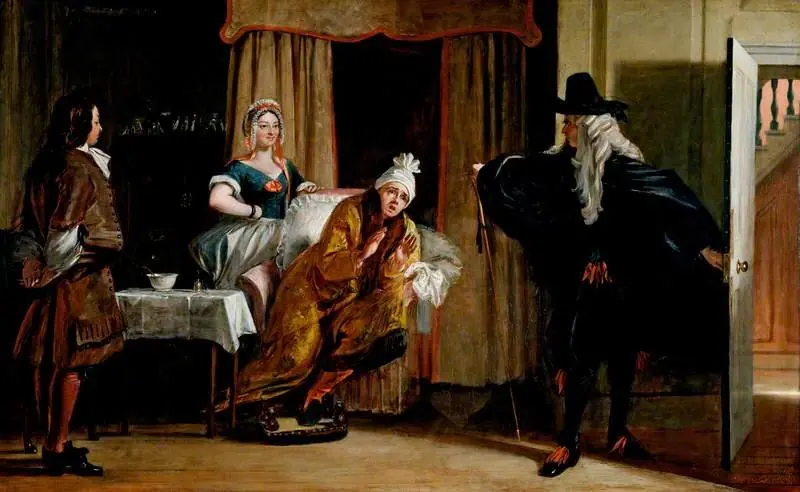 Le Malade Imaginaire
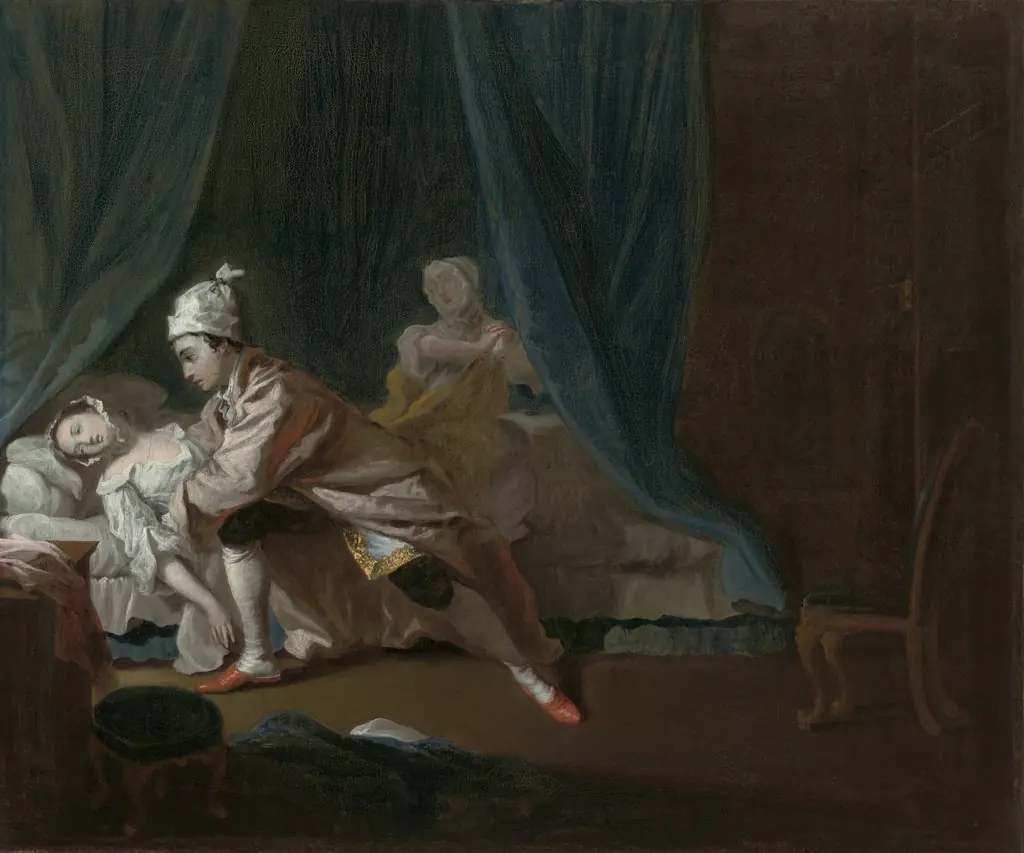 Pamela fainting
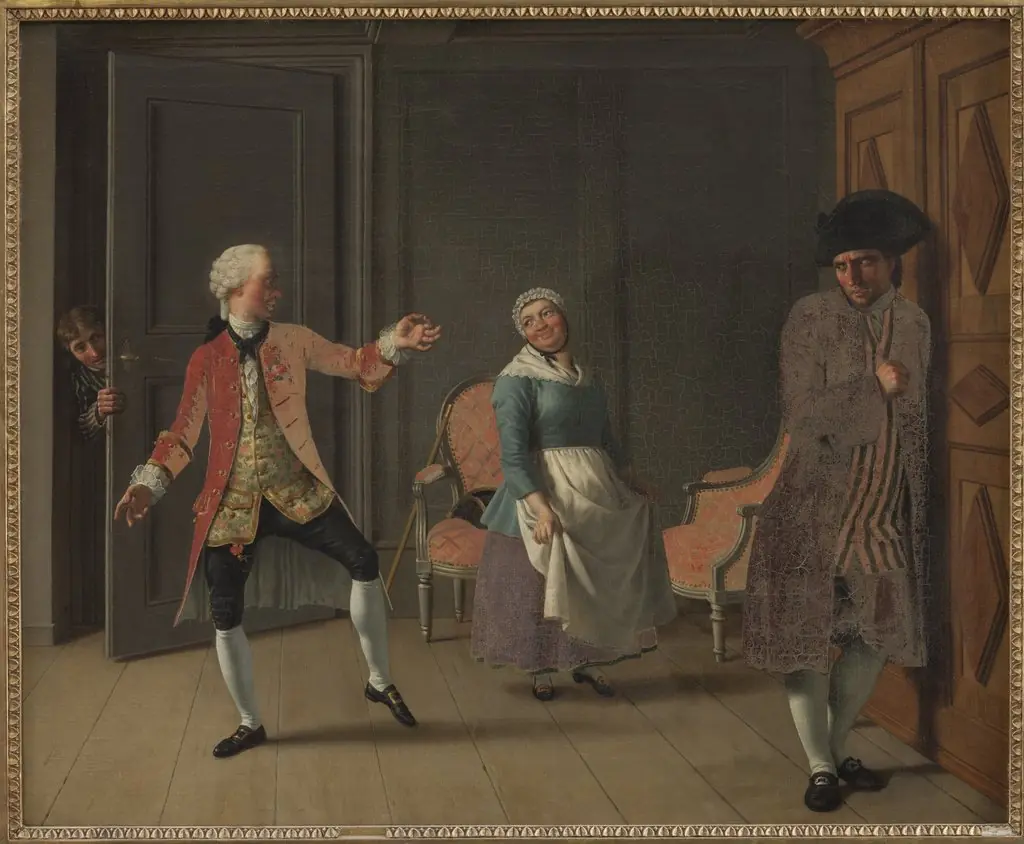 From Ludvig Holberg's "Jean de France", Act 1, Scene 6
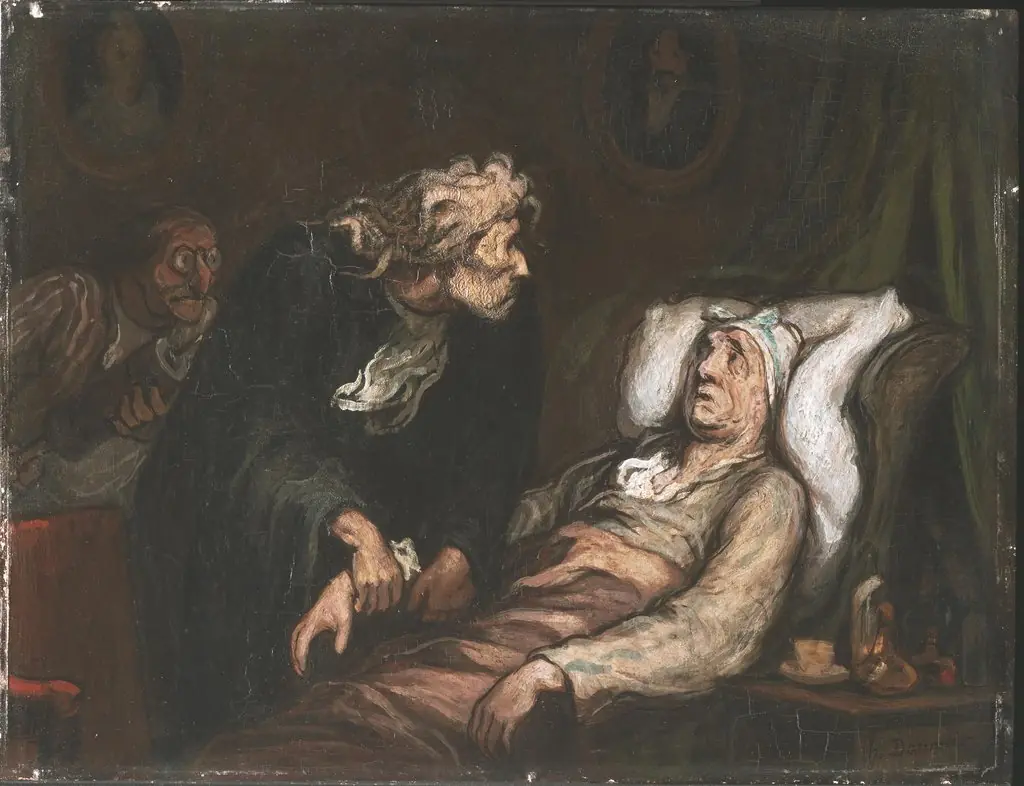 The Imaginary Illness
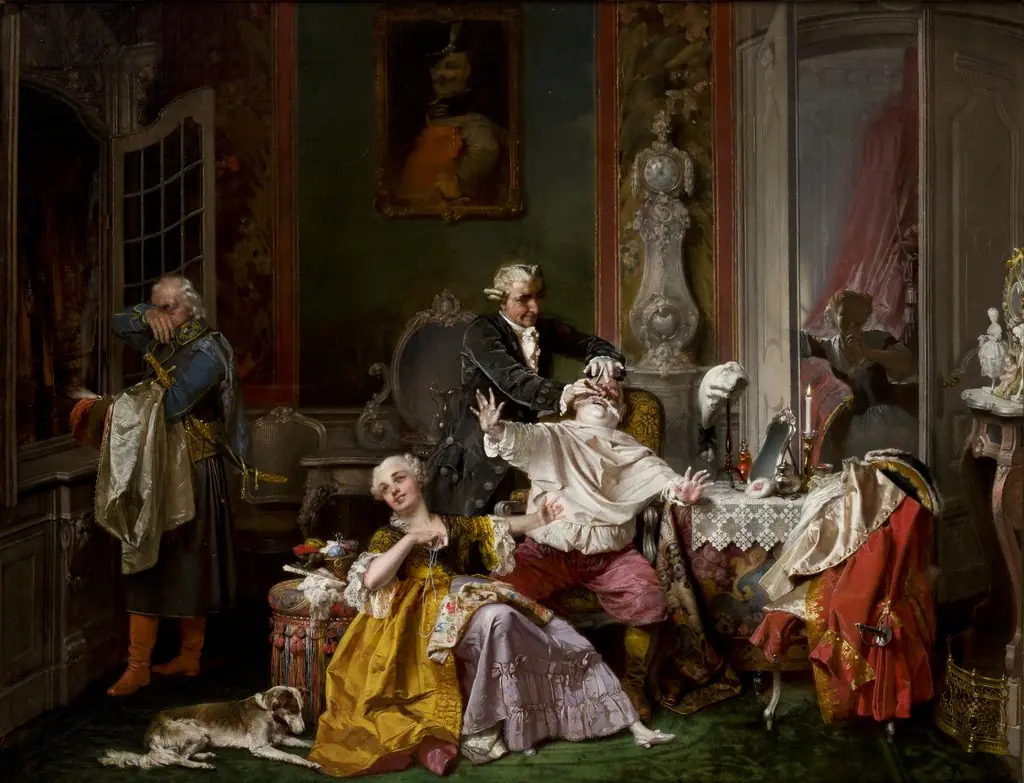 "What a Pity to Lose the Moustache"
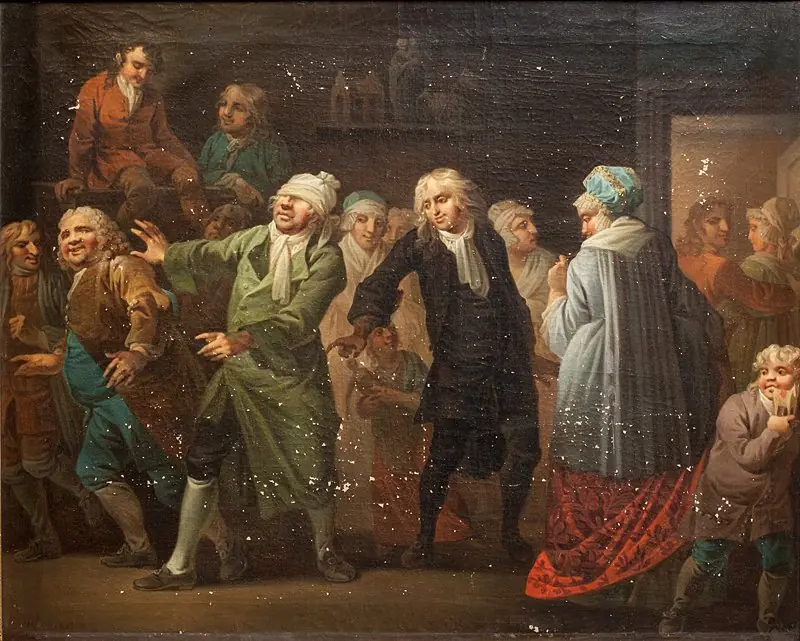 Julestuen, 13. scene
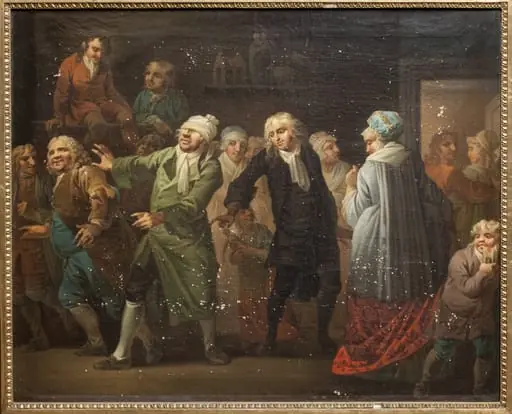 Julestuen, 13. scene
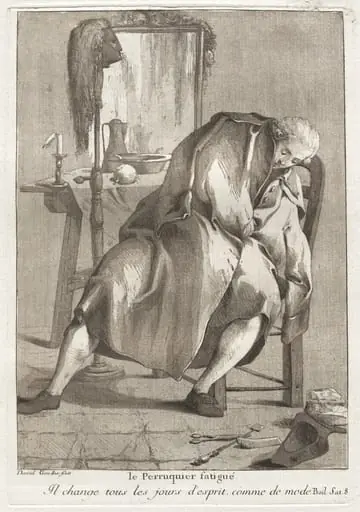 Le Perruquier fatigué (The Tired Wigmaker)
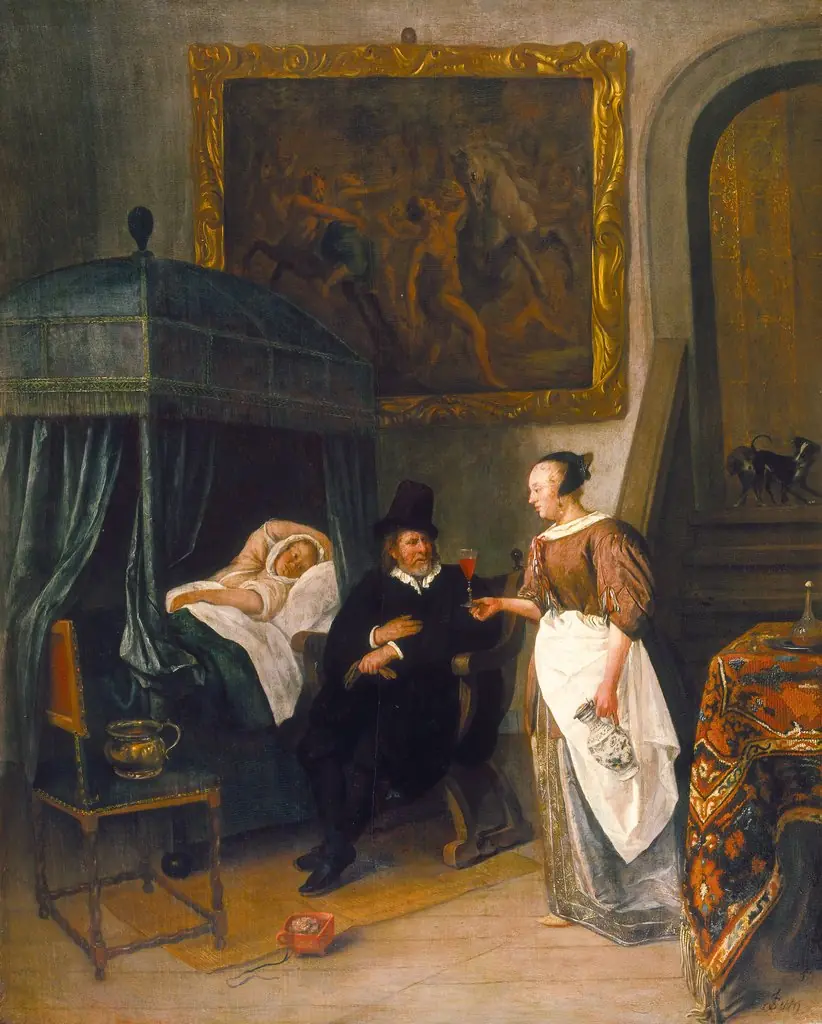 The Doctor's Visit
 Luare de sânge