Artwork
Voltaire
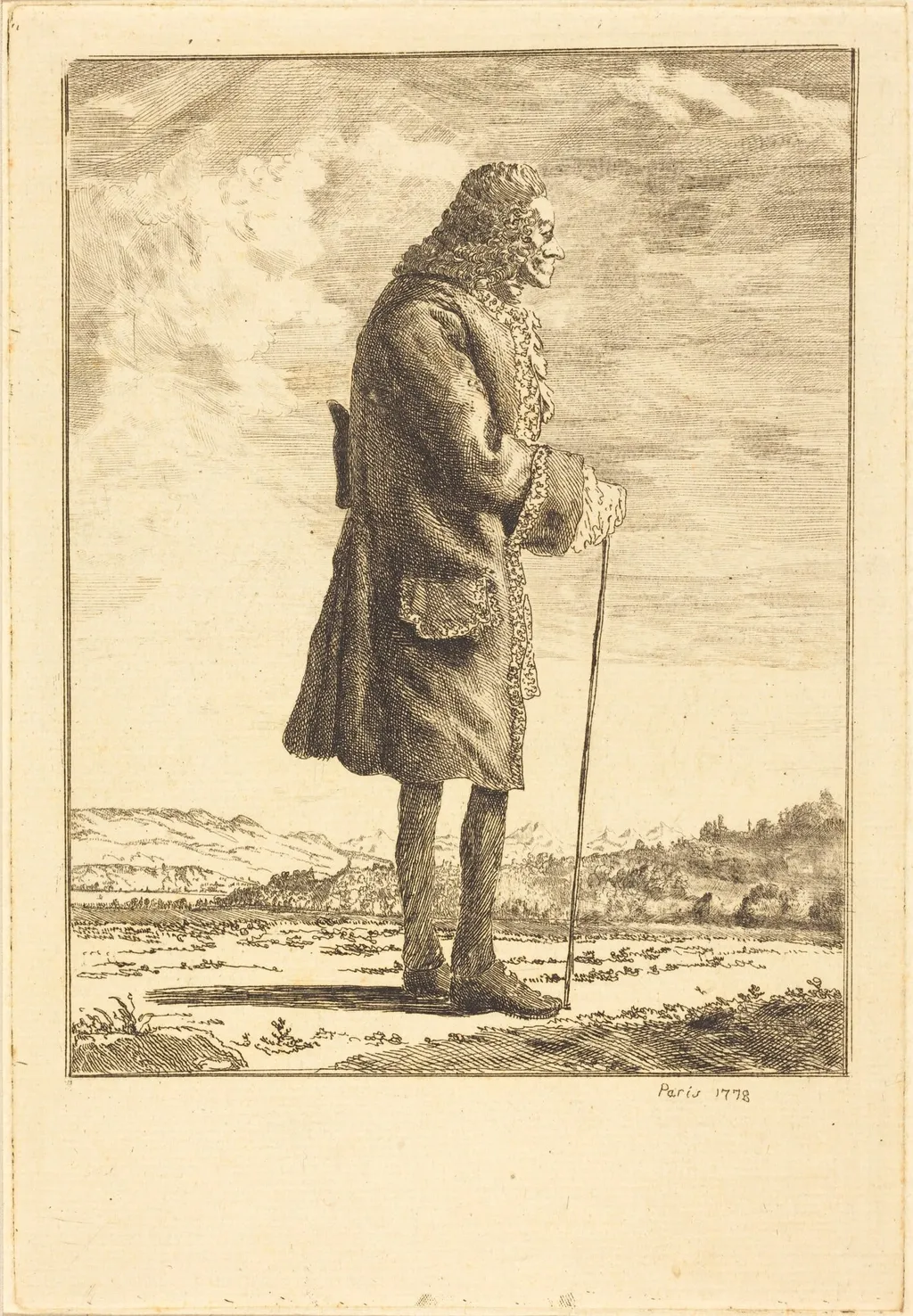
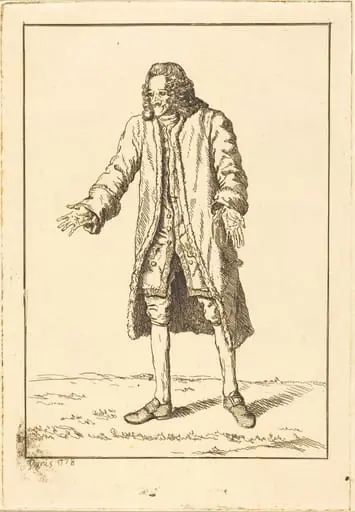
Voltaire is an ink print by the Romanticist artist Jean Huber. It dates from 1778 and is held in the collection of the National Gallery of Art.
About this work
The date "Paris 1778" is printed in the corner, but the scene itself feels quiet and thoughtful.
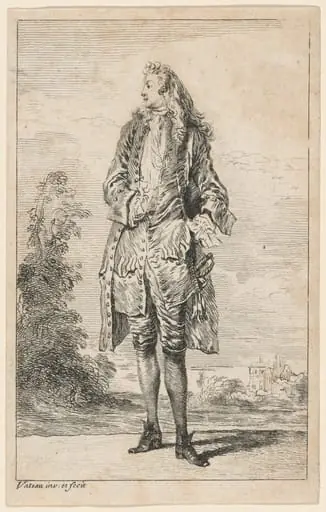
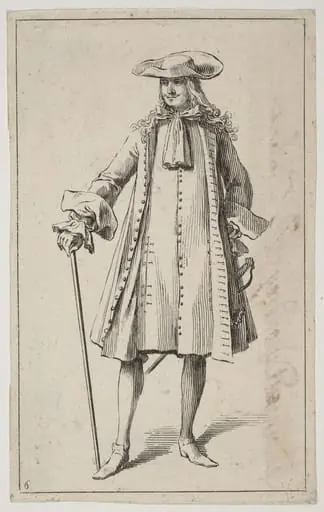
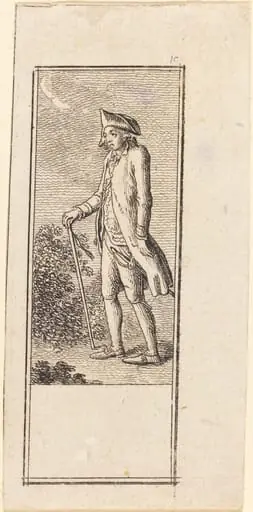
This etching shows an older man in a long, patterned coat and wig, leaning on a cane. He’s standing sideways, looking off to the left, with one hand tucked inside his coat. The background has a simple landscape—rolling hills and a distant horizon.
The artist used fine lines to show texture, like the folds in his coat or the fur collar. The date "Paris 1778" is printed in the corner, but the scene itself feels quiet and thoughtful.
Next, check out the technique: etching to see how artists like Huber made prints like this.
Overview
Jean Huber, a Genevan artist and public figure, produced this 1778 etching of Voltaire on laid paper. The portrait captures the philosopher in profile, standing beside a cane, dressed in a long coat with a fur collar and powdered wig. A subdued landscape of gentle hills frames the figure, reinforcing the quiet dignity of the subject. The print bears the inscription 'Paris 1778,' marking the year of Voltaire’s death and the artist’s engagement with his legacy.
Subject & Meaning
The portrait presents Voltaire not in action but in contemplation, his hand tucked into his coat—a gesture associated with thoughtful introspection. His aged features and formal attire reflect his status as a revered intellectual, while the calm background avoids distraction, focusing attention on his presence. The image conveys reverence without grandeur, aligning with Voltaire’s public persona as a rational, observant critic of dogma.
Technique & Style
Huber employed fine, controlled etching lines to render texture: the weave of the coat, the softness of the fur collar, and the delicate curls of the wig. The laid paper’s subtle texture enhances the tonal depth of the ink. The composition is restrained, with minimal background detail and no dramatic lighting, emphasizing clarity and quiet realism over theatricality. The precision of the lines suggests careful observation and technical discipline.
History & Provenance
Created in Paris in 1778, the year of Voltaire’s death, the etching likely responded to widespread public mourning and renewed interest in his image. Huber, known for his silhouette work, adapted his skill for detailed portraiture in this print. Though no early ownership records are documented, its survival suggests it was circulated among Enlightenment circles, possibly as a commemorative keepsake or scholarly reference.
Context
In 1778, Voltaire returned to Paris after years of exile, greeted as a national icon before his death. Artists across Europe rushed to capture his likeness, and Huber’s etching emerged within this wave of commemorative portraiture. Unlike formal oil paintings, this print offered an accessible, intimate view of the philosopher, aligning with the Enlightenment’s values of dissemination and intellectual accessibility.
Legacy
Huber’s etching endures as a modest but enduring record of Voltaire’s final years. Its understated style contrasts with more flamboyant depictions of the philosopher, offering instead a restrained, humanizing portrait. It remains a reference in studies of Enlightenment visual culture, valued for its fidelity to appearance and its quiet resonance with the philosopher’s enduring intellectual presence.
Artist & collection
Artist
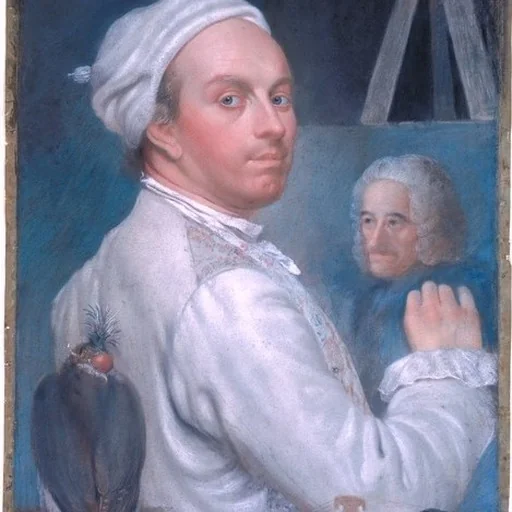
Jean Huber (13 February 1721 – 21 August 1786) was a Genevan painter, silhouettiste, soldier, politician and author, who was a citizen of the Republic of Geneva.