Artwork
A Bridge in Auvergne (Un pont en Auvergne)
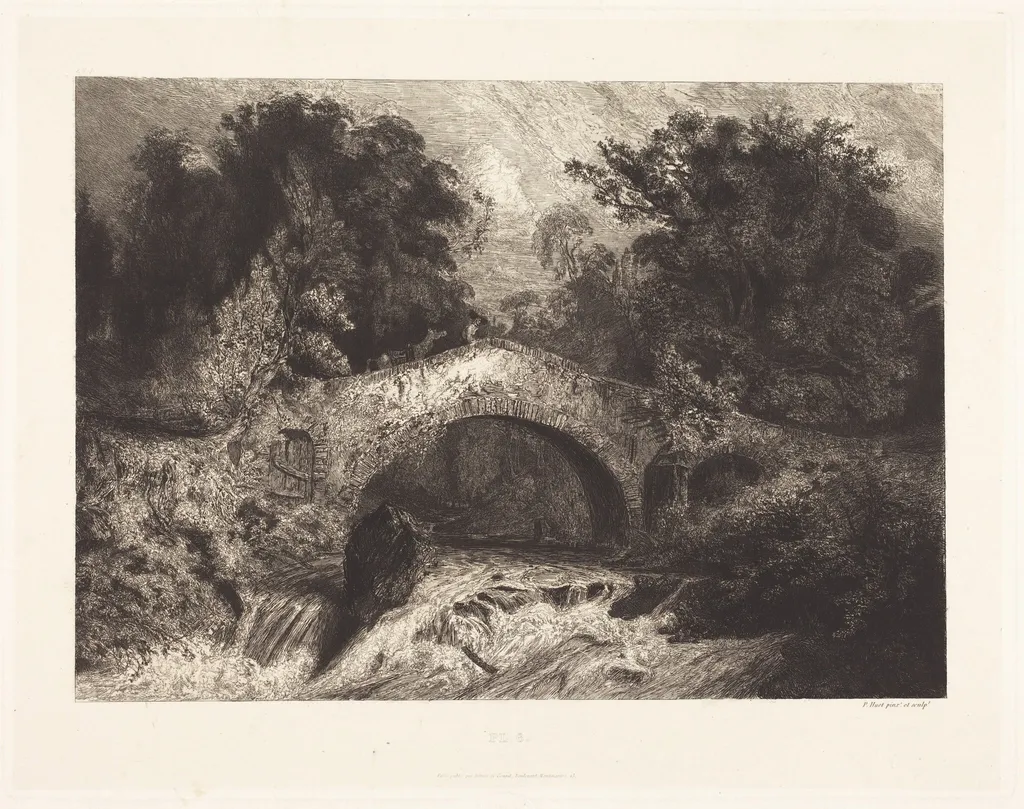
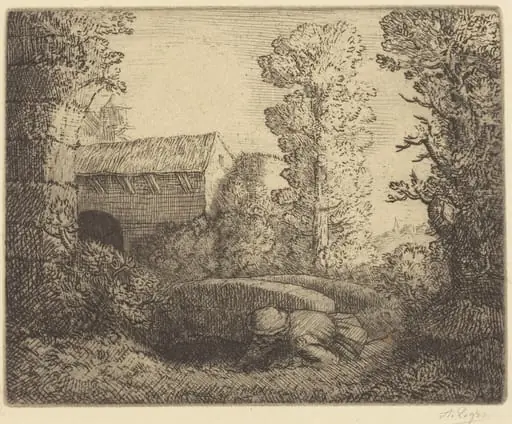
A Bridge in Auvergne (Un pont en Auvergne) is an ink print by the Romanticist artist Paul Huet. It dates from 1834 and is held in the collection of the National Gallery of Art.
About this work
Overview
The composition emphasizes natural harmony, with vegetation framing the structure and water suggesting gentle motion.
A Bridge in Auvergne, created in 1834 by Paul Huet, is an etching on chine appliqué with roulette detailing. It depicts a quiet rural scene in central France, centered on a stone arch bridge crossing a shallow river. The composition emphasizes natural harmony, with vegetation framing the structure and water suggesting gentle motion. The print’s delicate tonal range and fine line work reflect Huet’s interest in capturing atmospheric stillness.
Subject & Meaning
The bridge serves as both a literal passage and a symbolic threshold between wild and cultivated land. Surrounded by dense foliage and rocky riverbeds, the structure appears integrated into the landscape rather than imposed upon it. This reflects Romantic ideals of nature’s quiet dominance over human intervention, suggesting reverence for the land’s enduring forms rather than its utility.
Technique & Style
Huet employed etching for precise linear definition and roulette for textured tonal effects, particularly in foliage and stone. The use of chine appliqué allowed for thinner, more responsive paper to capture fine details. Light is modulated subtly to suggest dappled sunlight filtering through trees, enhancing depth without dramatic contrast. The technique prioritizes nuance over spectacle, aligning with quiet Romantic sensibilities.
History & Provenance
Created during Huet’s early period of landscape exploration in Auvergne, the print emerged from his travels through France’s central regions. It was likely produced in limited numbers for collectors interested in topographical and poetic natural scenes. No major institutional acquisition record is documented for the earliest impressions, but it circulated among French print enthusiasts of the 1830s.
Context
In the 1830s, French artists increasingly turned to regional landscapes as alternatives to classical or historical subjects. Huet’s work aligned with a growing interest in authentic, unidealized nature, influenced by Romantic writers and the rise of plein air sketching. This print reflects a broader cultural shift toward valuing local scenery as worthy of artistic contemplation.
Legacy
Though not widely exhibited today, A Bridge in Auvergne exemplifies Huet’s role in bridging early Romantic landscape traditions with later realist tendencies. Its restrained technique and focus on ordinary rural structures influenced subsequent generations of French printmakers who sought to portray nature without embellishment, contributing to the evolution of landscape printmaking in the 19th century.
Artist & collection


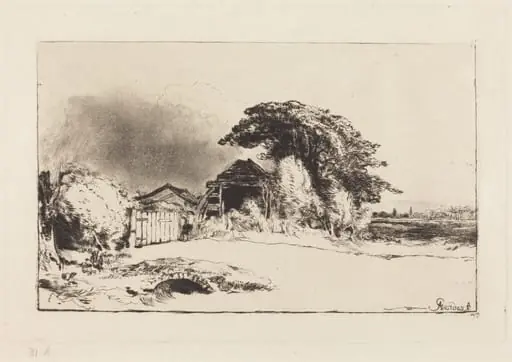 Peckham Rye
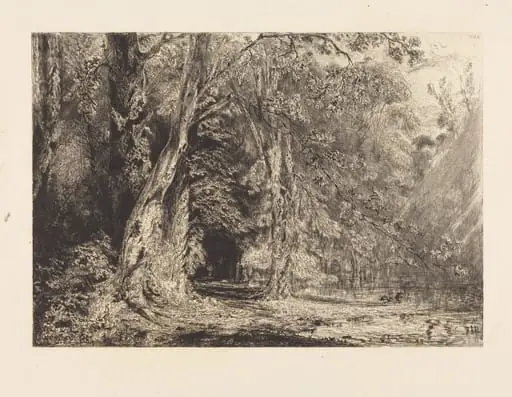 Flooding in the Forest of the Ile Séguin
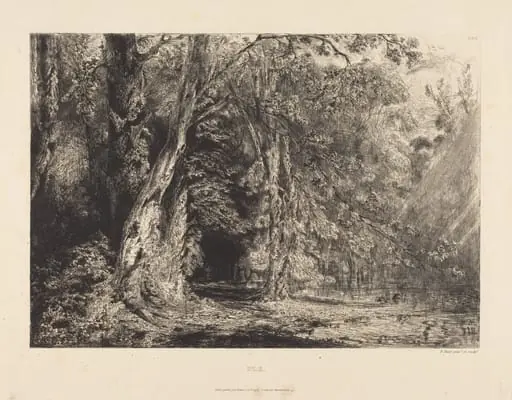 L'Ile Séguin in Flood
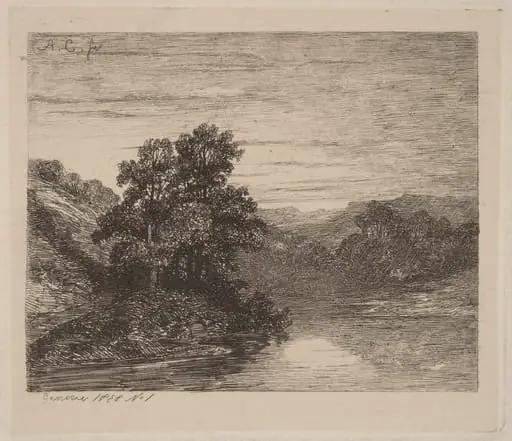 Trees by a River
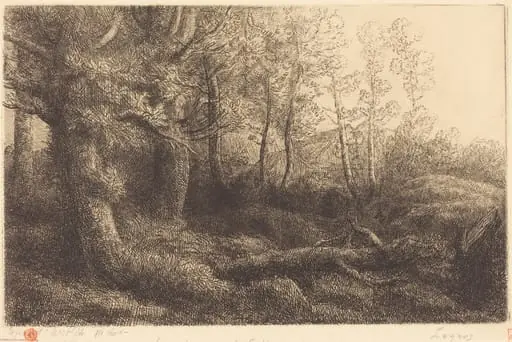 In the Forest (Lisiere de foret)
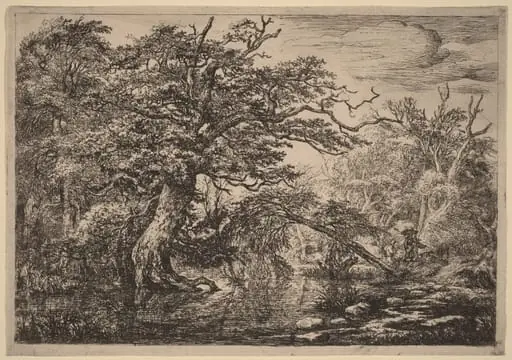 A Forest Marsh with Travelers on a Bank (The Travelers)
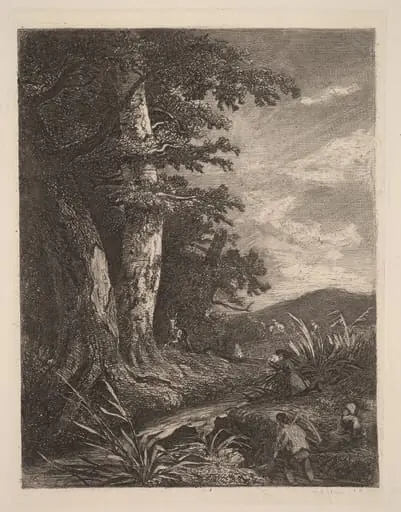 Deer by a Stream
 Little Devil's Bridge
 A RIVER SCENE IN DEVONSHIRE
 Devil's Bridge, Cardiganshire
 Mountain Stream
 Bridge at the Mill (Le pont du moulin)