Artwork
Designs for Tail-Pieces: pl. 7
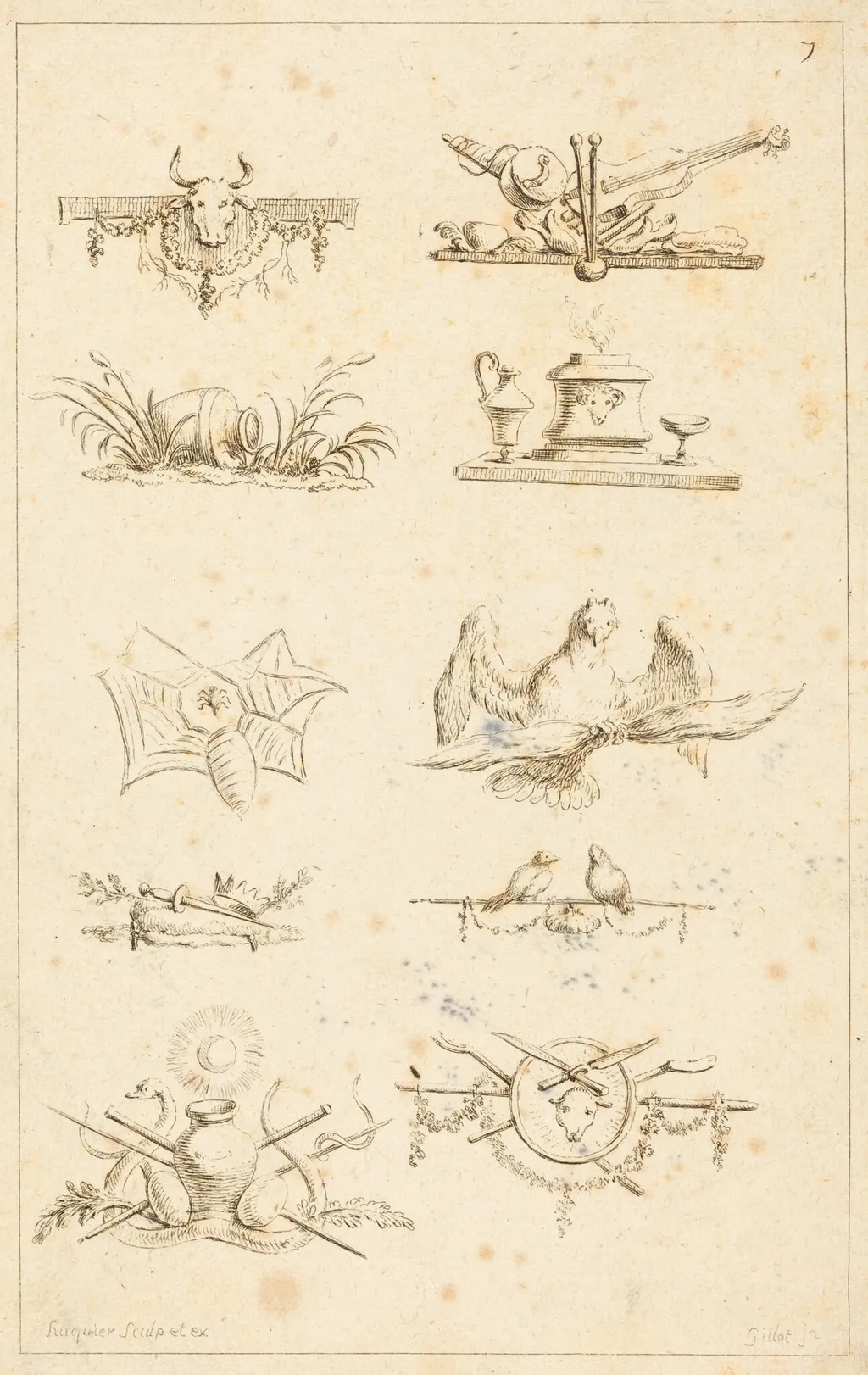
Designs for Tail-Pieces: pl. 7 is an ink print by the Baroque artist Gabriel Huquier. It dates from 1730 and is held in the collection of the National Gallery of Art.
About this work
Overview
Gabriel Huquier’s plate 7, part of his series of tail‑piece designs, is an early eighteenth‑century engraving executed on laid paper. Dated to around 1730, the print presents a set of nine ornamental motifs intended for decorative use in book illustration and ornamental printing.
Subject & Meaning
The nine individual designs vary widely, ranging from a bull’s head entwined with grapes and foliage to musical and domestic objects such as a violin and a teapot. Other motifs include botanical elements, avian figures with outstretched wings, and ornamental vases framed by sunbursts or plant sprays, each balanced to function as decorative borders or initials.
Technique & Style
Huquier employed fine line engraving to achieve a delicate, light‑brown impression on a beige‑toned laid paper. The hand‑cut lines create subtle shading and texture, while the overall composition reflects the Rococo taste for graceful, asymmetrical ornamentation and harmonious proportion.
History & Provenance
The plate belongs to a larger collection of tail‑piece designs produced by Huquier for French publishers in the early 1730s. Such prints were commonly sold as pattern books for engravers and bookbinders, and copies of plate 7 have appeared in several eighteenth‑century illustrated volumes.
Context
Tail‑pieces served as decorative fillers in printed works, bridging text and illustration. Huquier’s designs exemplify the period’s demand for versatile ornamental motifs that could be adapted to a range of printed materials, from luxury editions to scientific treatises.
Legacy
Although primarily functional, Huquier’s tail‑piece engravings influenced later decorative printmakers and contributed to the visual vocabulary of Rococo ornamentation that persisted in European book design throughout the eighteenth century.
Artist & collection


![Dousieme livre des Oeuvres de J. A. Messonnier [<i>sic</i>] Livre de Chandeliers de Sculpture en Argent, by Gabriel Huquier](https://artifactworldgallery.com/img/gabriel-huquier--dousieme-livre-des-oeuvres-de-j-a-messonnier-i-sic-i-livre-d--d48396ff912cb7bf-w320.webp)
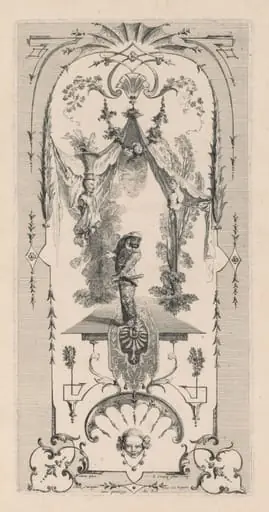 Harlequin, Arabesque
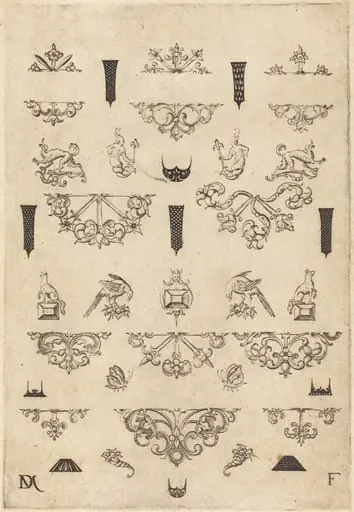 Eleven Different Studs and Twenty-Three Ornaments
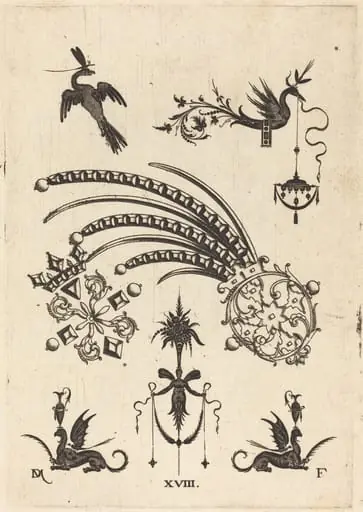 Two Brooches with Bird and Winged Snake at Top and Griffins with Vases at Bottom
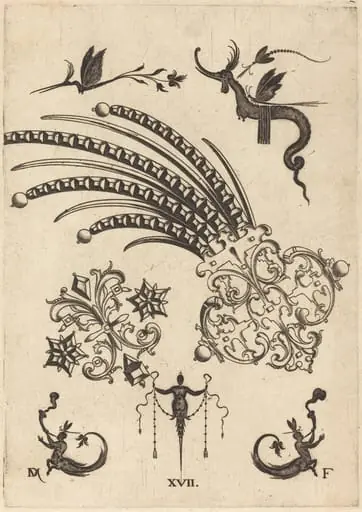 Two Brooches with Dragon and Insects at Top and Human Beings with Snake-like Tails atBottom
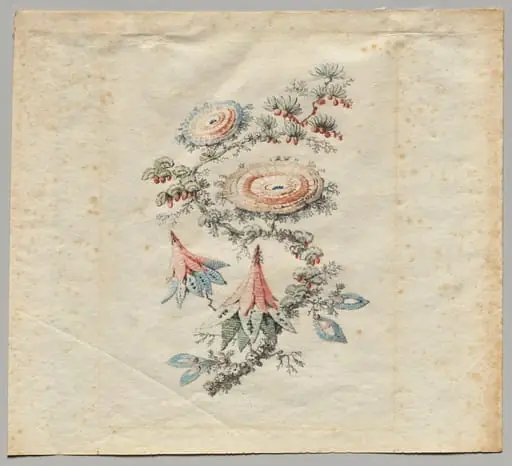 Flower Embroidery Design for Silk Manufactory of Lyon
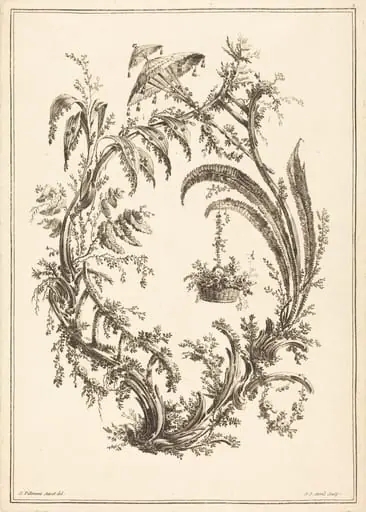 Ornament with Parasol and Hanging Basket
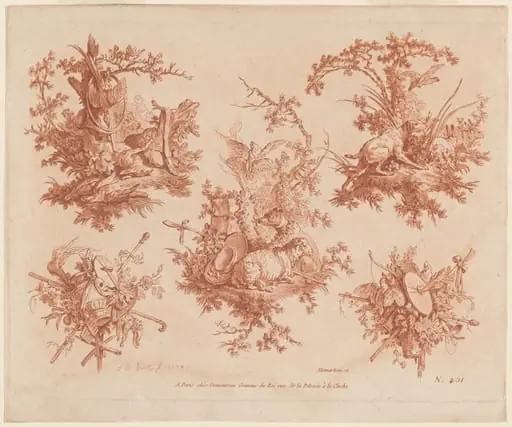 Five Trophies with Themes of Hunting, Love, and Folly
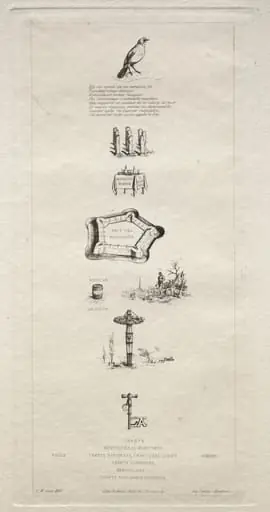 Rebus: "Beranger was not really strong for he never had the key to the fields"
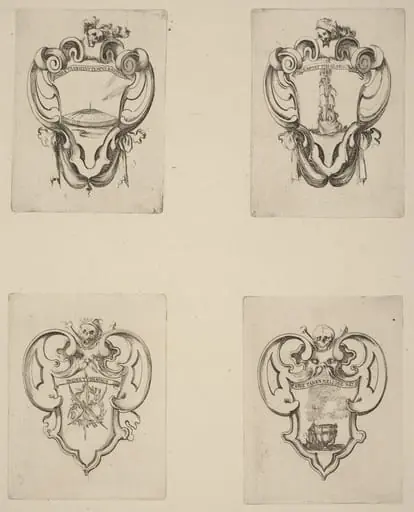 Four Emblems for the Funeral of Prince Francesco de Medici
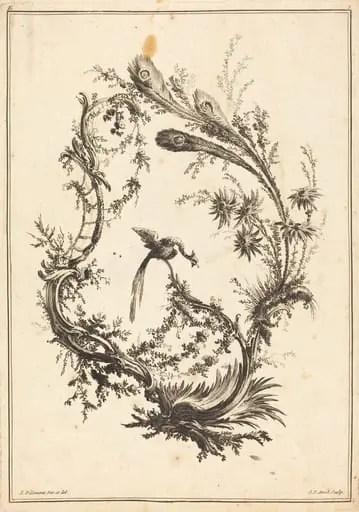 Ornament with a Peacock