Artwork
Two Brooches with Dragon and Insects at Top and Human Beings with Snake-like Tails atBottom
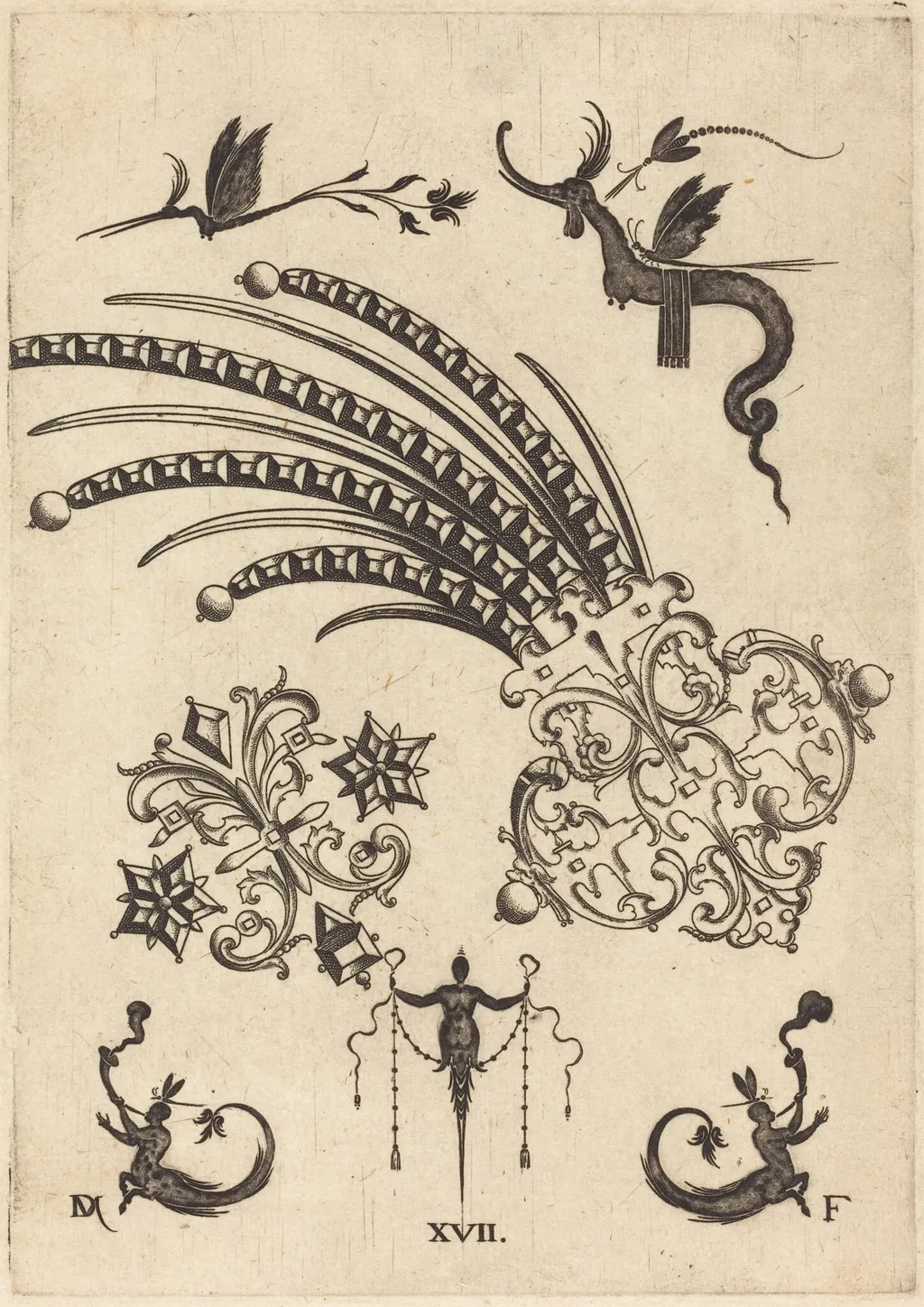
Two Brooches with Dragon and Insects at Top and Human Beings with Snake-like Tails atBottom is an ink print by the Renaissance artist Daniel Mignot. It dates from 1596 and is held in the collection of the National Gallery of Art.
About this work
Overview
Daniel Mignot’s 1596 engraving presents a pair of elaborate brooch designs. The upper motif depicts a winged dragon with an elongated tail, while the lower motif shows a humanoid figure whose lower half resembles a serpent. Both compositions are surrounded by intricate ornamental elements such as swirls, stars and miniature decorative shapes.
Subject & Meaning
The dragon and the snake‑tailed figure serve as allegorical or fantastical subjects, common in late‑Renaissance ornamental prints. The human figure, holding a staff, stands between the two brooches, perhaps indicating a narrative link or a symbolic juxtaposition of mythic and human realms.
Technique & Style
Mignot employs fine, cross‑hatched lines and subtle shading to render textures, notably the scales of the dragon and the feather‑like details of the surrounding motifs. The engraving’s precise line work creates a sense of depth and materiality within the decorative framework.
History & Provenance
Created in 1596, the print reflects the period’s interest in ornamental design for jewelry and decorative arts. It is attributed to French engraver Daniel Mignot, whose work contributed to the dissemination of decorative motifs across Europe during the late sixteenth century.
Context
The engraving belongs to a broader tradition of pattern books that supplied designers with imaginative motifs for metalwork, textiles and other applied arts. Such prints circulated among craftsmen, influencing the visual vocabulary of Renaissance ornamentation.
Artist & collection


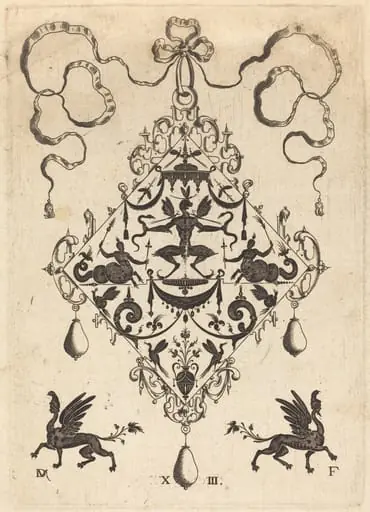 Large Pendant, Winged Fantasy Creature Holding Two Snakes
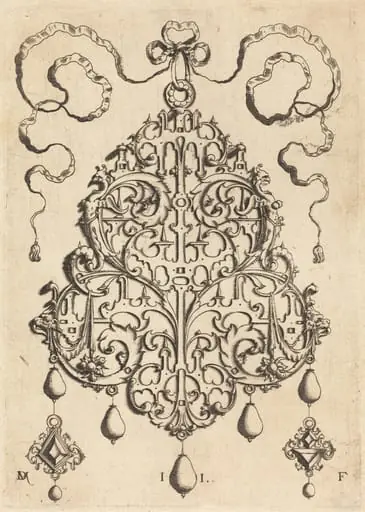 Large Strapwork Pendant with Two Hangers as Earrings at Left and Right
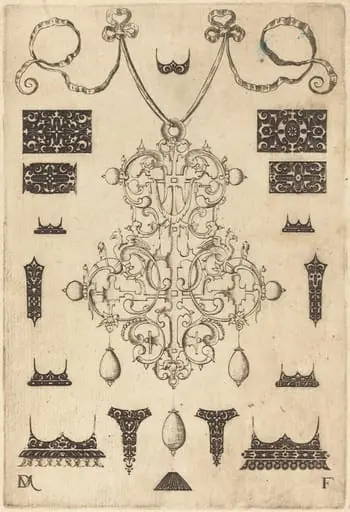 Large Pendant with Three Drops Below, Surrounded by Fifteen Different Studs
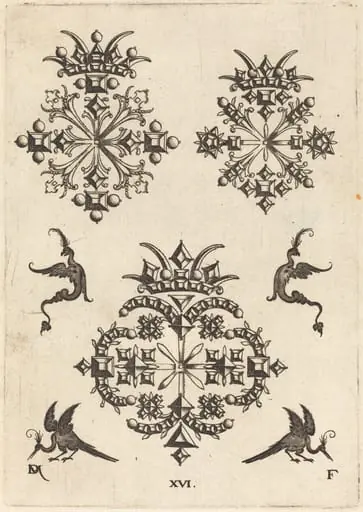 Three Brooches with Fantasy Birds at Left, Right, and Bottom
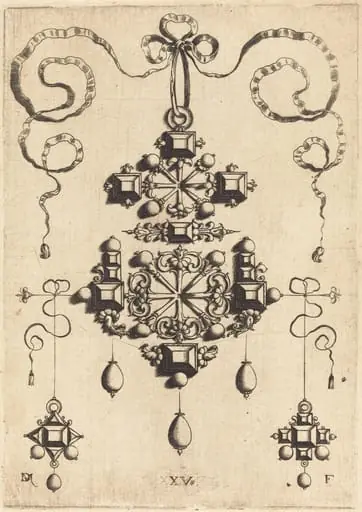 Pendant with Two Double Crosses, Surrounded by Four Diamond-Shaped Stones, Five Table-Stones, and Thirteen Pearls
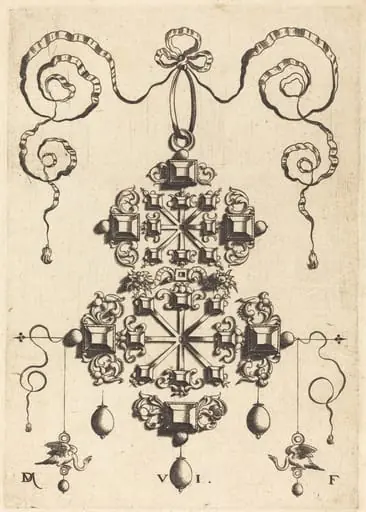 Large Pendant with Two Double Crosses, Surrounded by Six Large and Sixteen Small Table-Stones
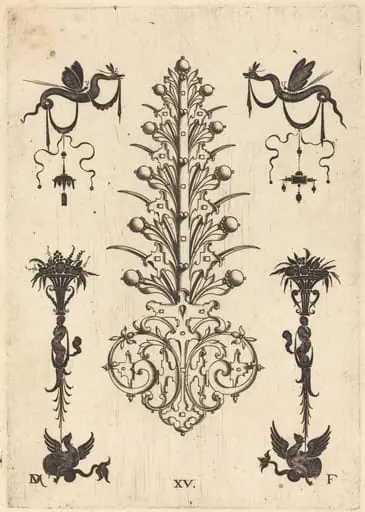 Hyacinth-Shaped Brooch with Winged Snakes at Top and Winged Animals at Bottom
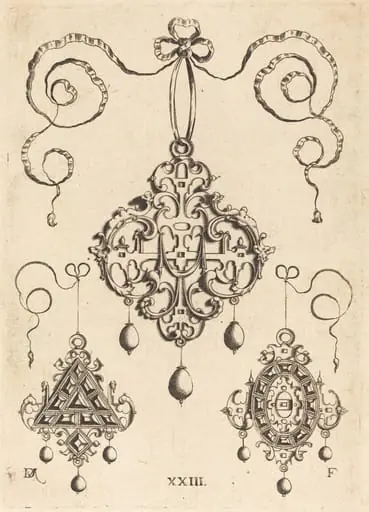 Three Strapwork Pendants, The Lower Ones Triangular and Oval
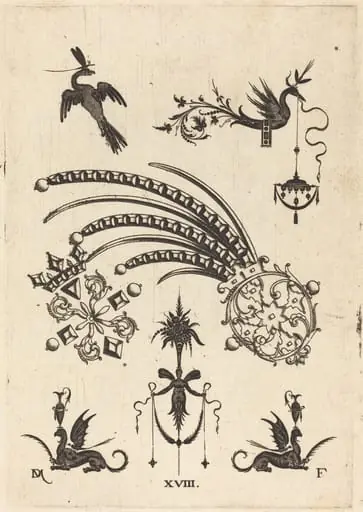 Two Brooches with Bird and Winged Snake at Top and Griffins with Vases at Bottom
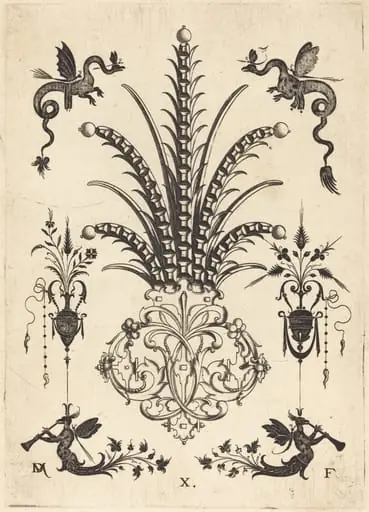 Brooch with Table-Stones, Dragons at Top, andWinged Monsters Blowing Horns at Bottom
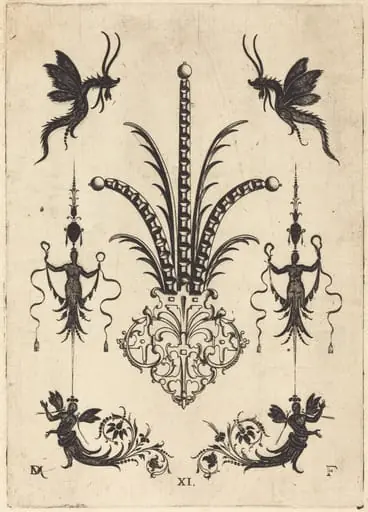 Brooch with Table-Stones, Winged Animals at Top, and Winged Human Beings at Bottom
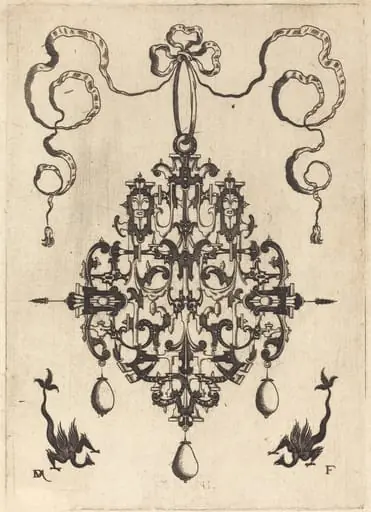 Large Pendant, Two Fantasy Creatures with Long Tails at Bottom
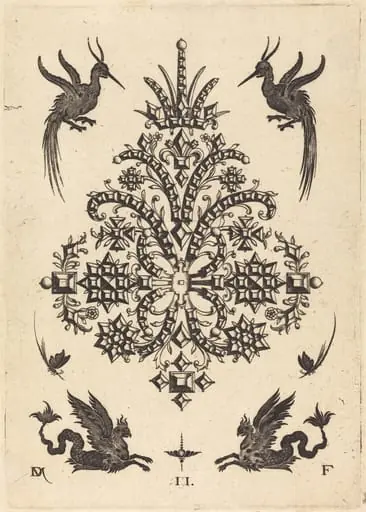 Brooch with Tablestones and Winged Griffins Above and at Bottom
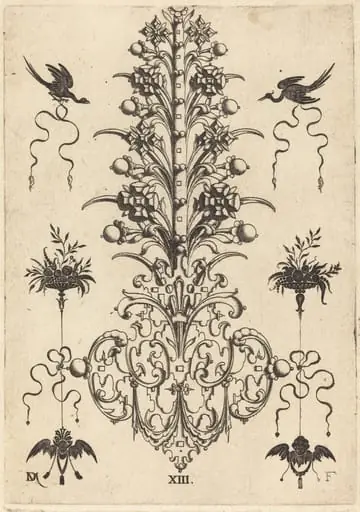 Hyacinth-Shaped Brooch with Birds at Top and Devil's- and Angel's-Head at Bottom
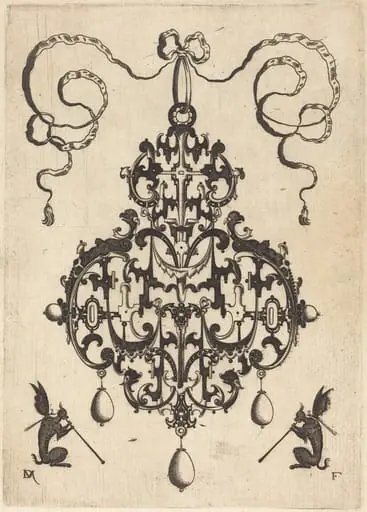 Large Pendant, Two Winged Fantasy Creatures with Trumpets at Bottom
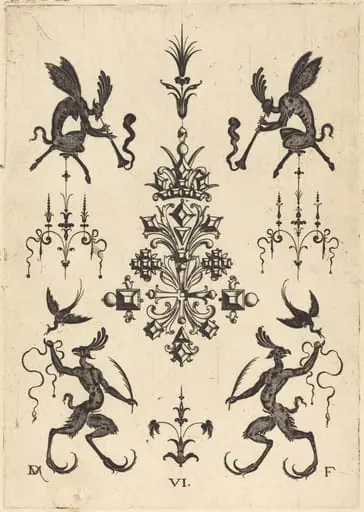 Brooch with Winged Fauns Blowing Trumpets at Top and Fantasy Creatures with Birds at Bottom
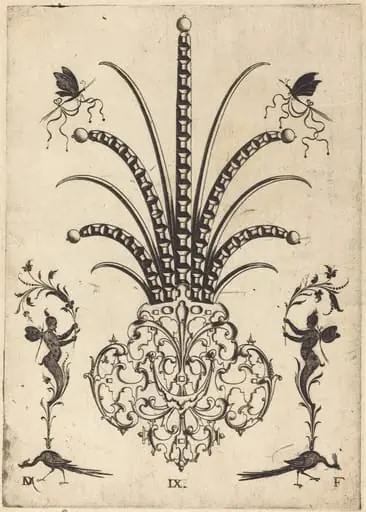 Brooch with Table-Stones, Butterflies at Top, and Peacocks and Hermes at Bottom