Artwork
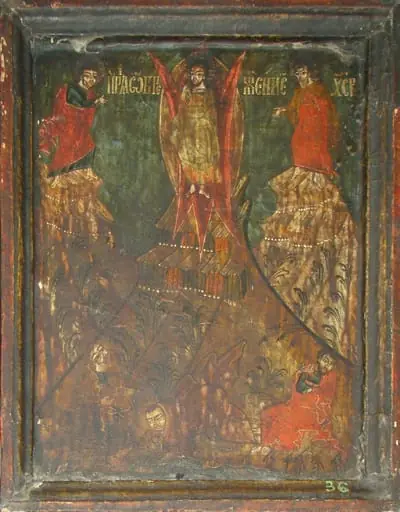
Coborârea la iad
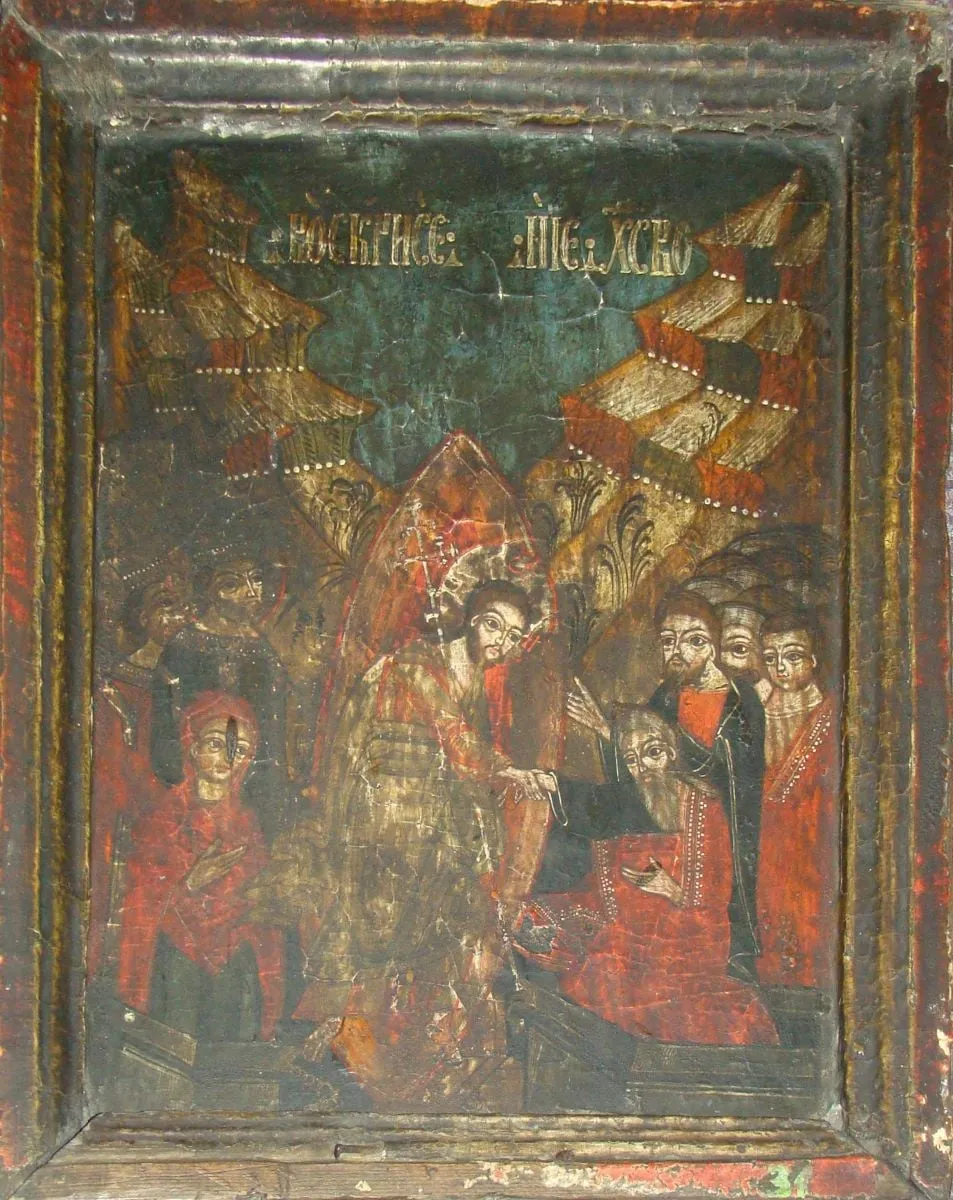
Coborârea la iad is an unspecified painting by Iacov Zugravul. It is held in the collection of the Alba Iulia Orthodox Archdiocese.
About this work
Overview
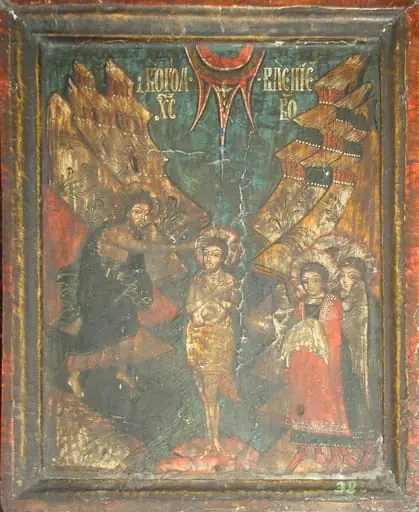
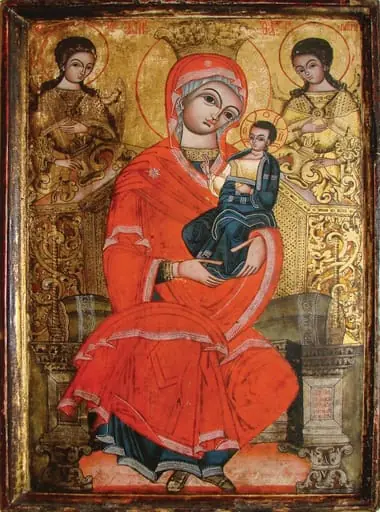
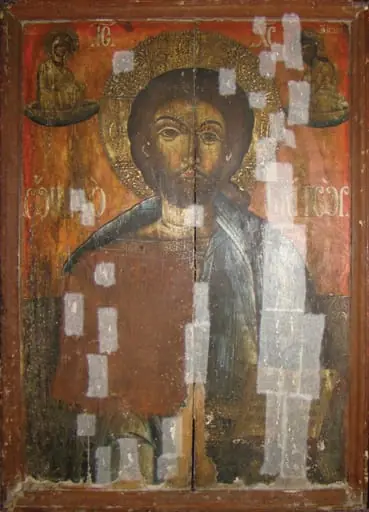
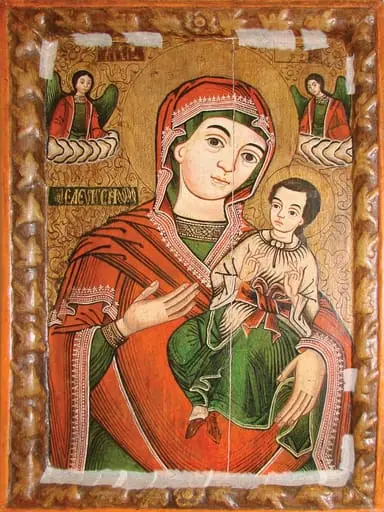
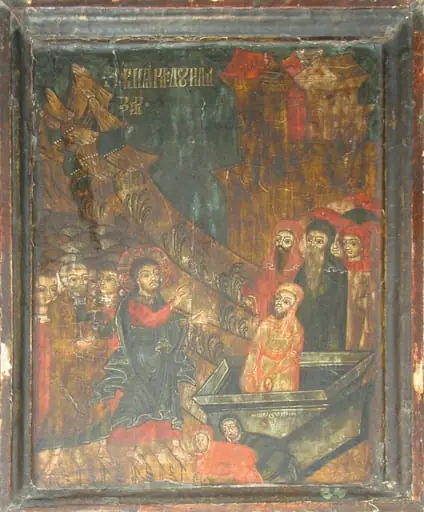
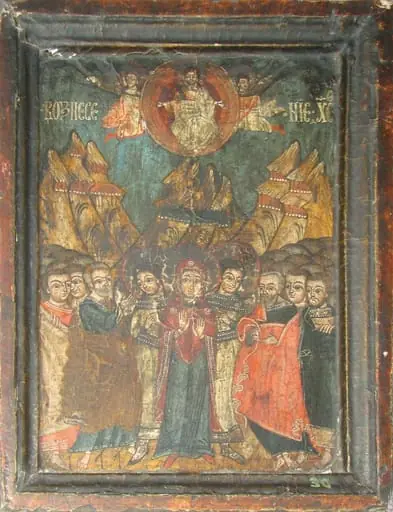
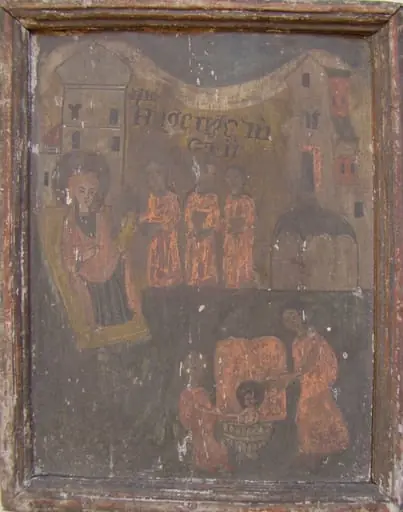
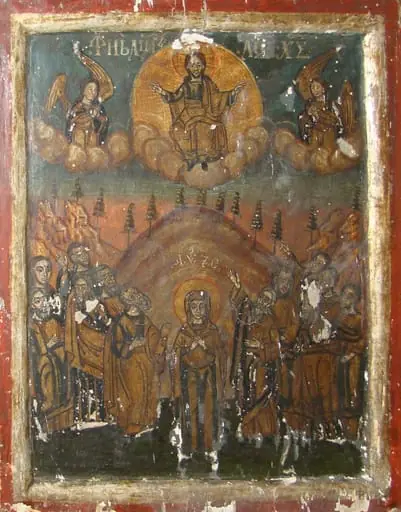
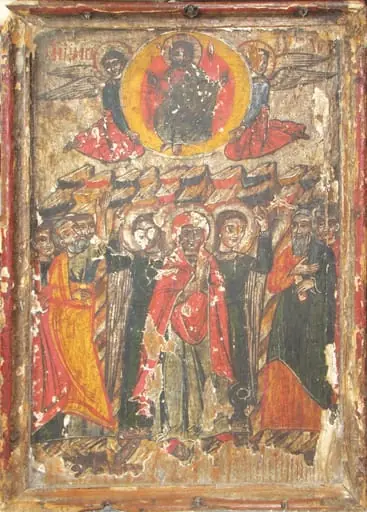
The work, titled *Coborârea la iad*, presents a clustered assembly of figures clothed in vivid red and gold garments. Central to the composition is a man distinguished by a halo and a book, set against a backdrop of muted golden wings and a dark, star‑speckled sky. The overall palette is deep, though the colors appear weathered.
Subject & Meaning
The scene suggests a religious narrative, likely depicting a descent into hell or a similar theological episode. The central haloed figure, holding a book, may represent a saint or divine authority, while another figure gestures upward, emphasizing a spiritual direction or revelation.
Technique & Style
The artist employs a strong contrast between the bright, saturated robes and the somber background, creating visual tension. Gold leaf or pigment is used for the wings and accents, and the composition is organized with a clear focal point around the haloed figure, following traditional hierarchical arrangements.
History & Provenance
The title and the inscription at the top are rendered in an archaic script, indicating the work’s origin in a historical context where such lettering was customary. No further provenance details are provided, but the stylistic elements align with Eastern European religious painting traditions.
Context
The painting reflects the iconographic conventions of devotional art, where halos, books, and celestial motifs convey sanctity and authority. The use of red and gold robes aligns with liturgical colors associated with martyrdom and divine glory, situating the work within a broader visual language of sacred representation.
Artist & collection
Artist
Iacov Zugravul’s small surviving body of work shows biblical scenes painted on wood or drawn in ink, made in the mid-1700s.