Artwork
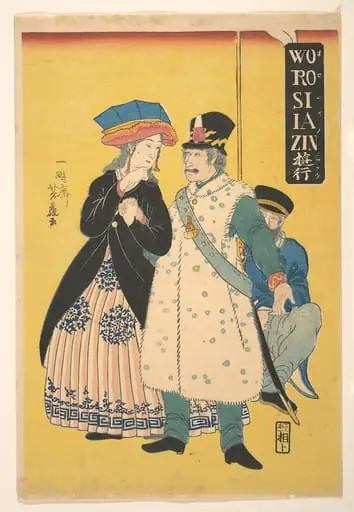
Worosiiazin yuko|魯西亜人遊行|Russians Strolling
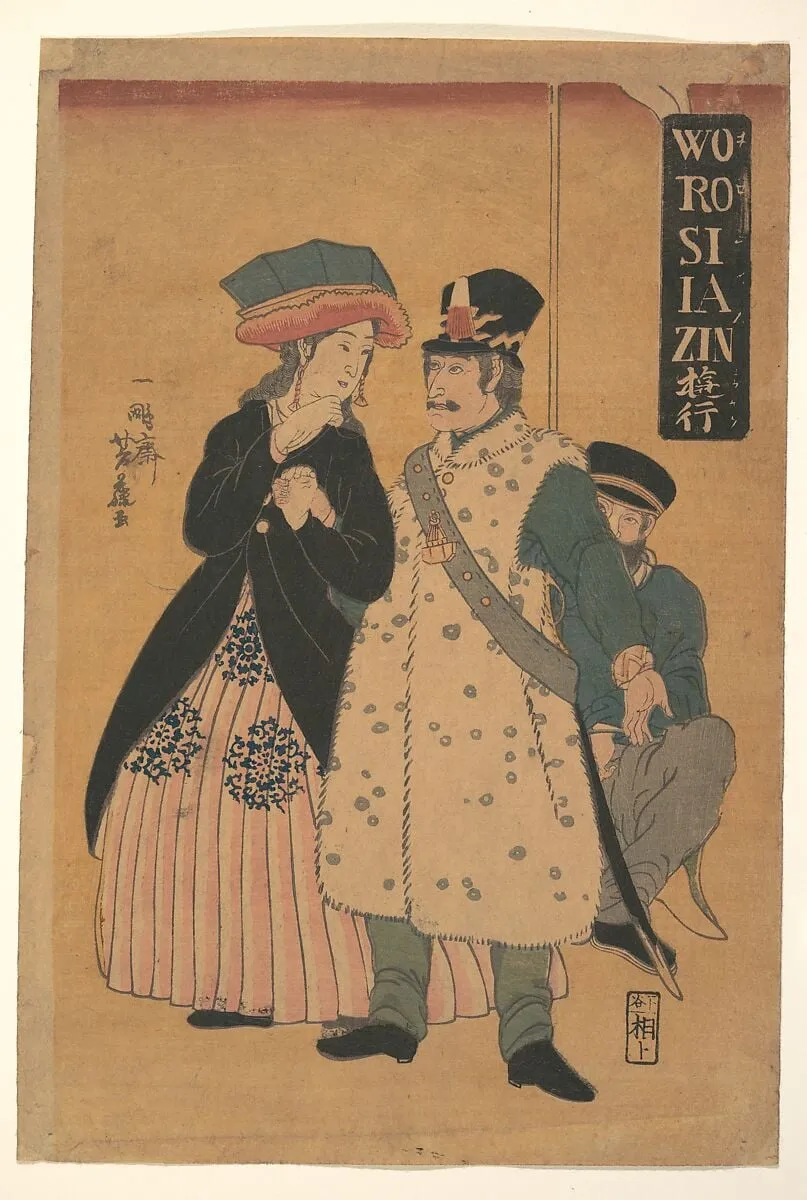
Worosiiazin yuko|魯西亜人遊行|Russians Strolling is an ink print by the Impressionist artist Utagawa Yoshifuji. It dates from 1861 and is held in the collection of the Metropolitan Museum of Art.
About this work
The woman is engaged in conversation with one of the men, while the other man sits behind them.
The painting depicts three individuals in traditional attire, with a woman on the left wearing a long dress and a hat, and two men on the right dressed in military uniforms. The woman is engaged in conversation with one of the men, while the other man sits behind them.
The scene is rendered in muted colors, with the figures set against a beige background. The artist's use of subtle shading and texture adds depth to the composition.
This woodblock print is a notable example of Japanese art from the 19th century. To explore more works like this, look up the artist Utagawa Yoshifuji.
Overview
Worosiiazin yuko (Russians Strolling) is a 1861 woodblock print by Utagawa Yoshifuji, currently in The Metropolitan Museum of Art's collection. Executed in ink and color on paper, it captures a serene scene of social interaction.
Subject & Meaning
The print depicts three figures in traditional attire: a woman in a long dress and hat on the left, and two men in military uniforms on the right. One man engages in conversation with the woman, while the other sits behind, suggesting a moment of casual, everyday interaction between Russians in Japan.
Technique & Style
Characterized by muted colors against a beige background, the work showcases subtle shading and textured effects, lending depth to the composition. These elements reflect the artist's skill in woodblock printing, a hallmark of 19th-century Japanese art.
History & Provenance
Created in 1861 by Utagawa Yoshifuji, the print is now part of The Metropolitan Museum of Art's collection, highlighting the museum's holdings in 19th-century Japanese woodblock prints.
Context
This work exemplifies the cultural exchange and fascination with Western subjects during Japan's late Edo period, particularly in the early 1860s when Western influence was increasingly visible.
Legacy
As a notable 19th-century Japanese woodblock print, Worosiiazin yuko contributes to the broader legacy of ukiyo-e art, influencing subsequent generations of artists in capturing everyday and foreign subjects.
Artist & collection


 Oroshiajin|Russian Soldier with His Family
 Untitled
 英吉利人之図|Illustration of English People (Igirisujin no zu)
 Orandajin|A Dutch Couple
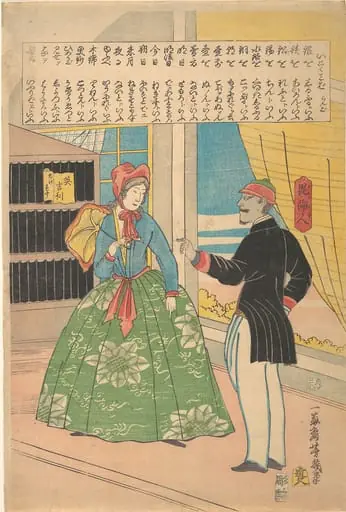 Igirisu to korombojin|English Woman with Black Man
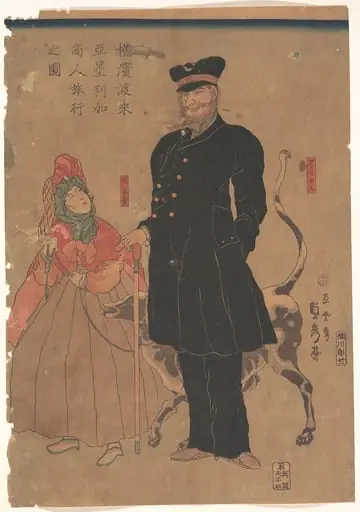 Yokohama torai Amerika shonin ryoko no zu|横浜渡來亜墨利加商人旅行之図|American Merchant Strolling in Yokohama
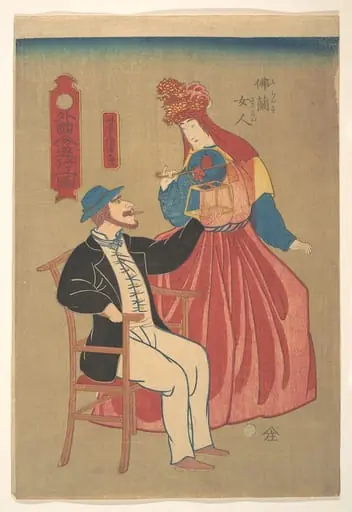 Furansu nyōjin|French Housewife and Her Husband
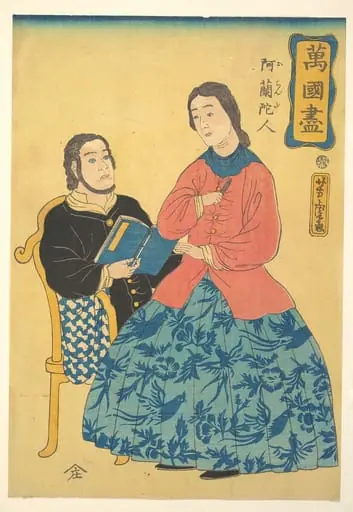 Orandajin|Dutchmen
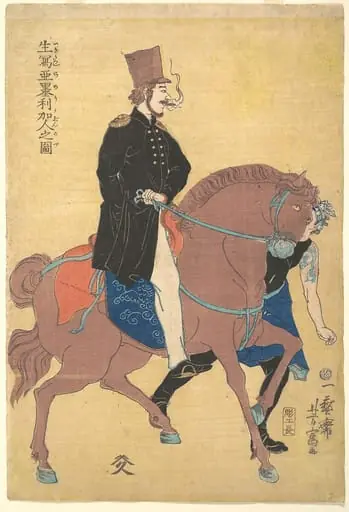 Ikiutsushi Americajin no zu|生写亜墨利加人之図|An American Drawn from Life