Artwork
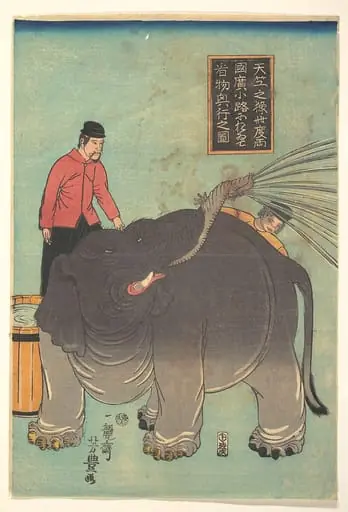
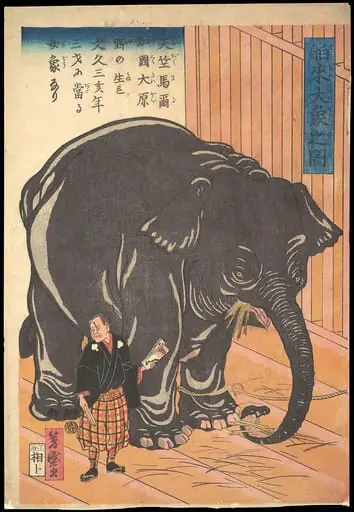
Chū tenjiku Maruka koku shūsshō daizō zu|Picture of an Elephant Born in Maruka in Central India
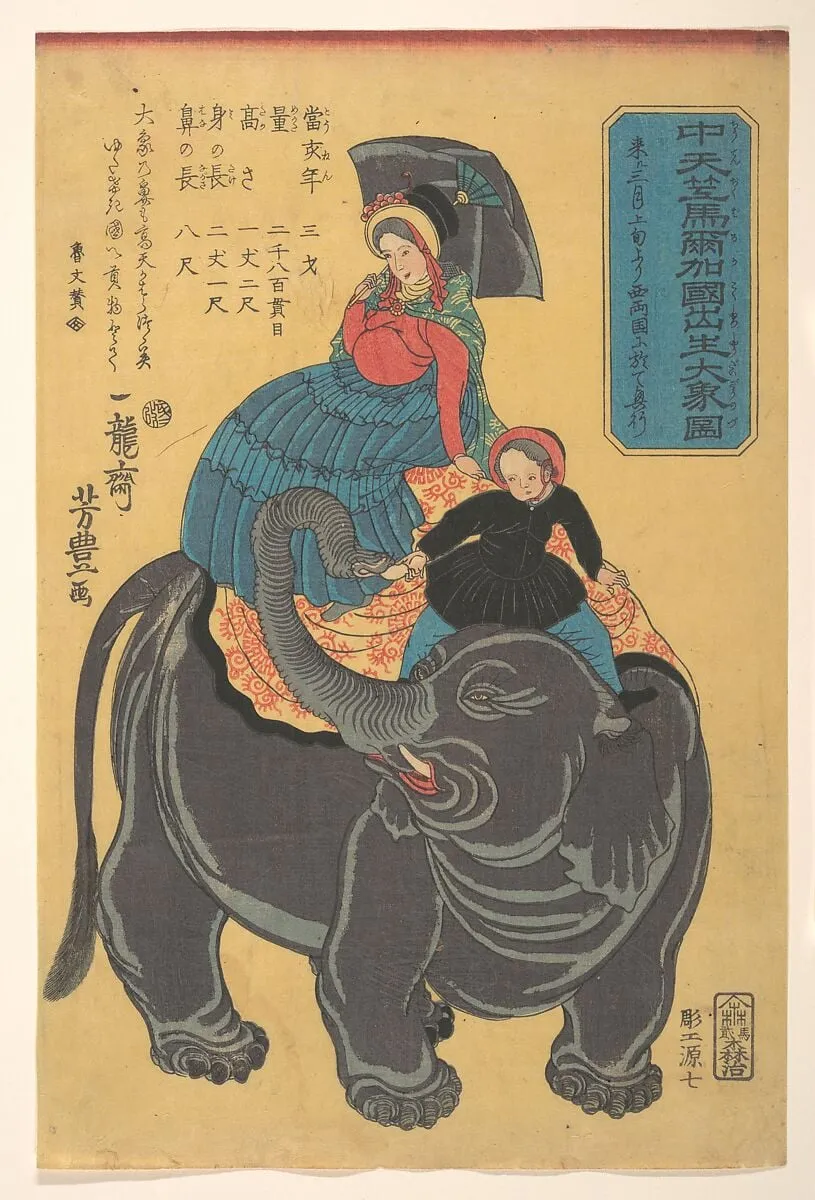
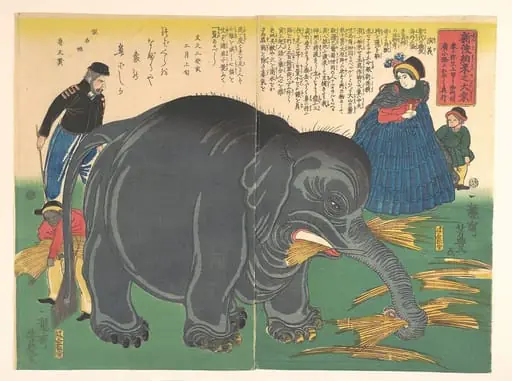
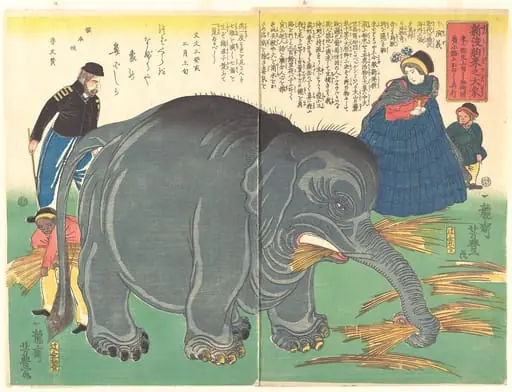
Chū tenjiku Maruka koku shūsshō daizō zu|Picture of an Elephant Born in Maruka in Central India is an ink print by the Impressionist artist Ichiryūsai Yoshitoyo. It dates from 2 and is held in the collection of the Metropolitan Museum of Art. This woodblock print, executed in ink and color on paper, depicts a ceremonial scene involving an elephant.
About this work
Overview
This woodblock print, executed in ink and color on paper, depicts a ceremonial scene involving an elephant. Created by Ichiryūsai Yoshitoyo, the work merges intricate linework with vibrant pigments to render both human figures and the animal in detail. The composition balances text and imagery, a common feature in Japanese prints of the period.
Subject & Meaning
The print portrays a woman in elaborate attire riding an elephant, accompanied by a child. Her formal garments and the raised parasol suggest a figure of status, possibly linked to a narrative or historical event. The elephant, adorned with a patterned saddle, may symbolize exoticism or a connection to Central India, as indicated by the accompanying text.
Technique & Style
Yoshitoyo employs cross-hatching to model the elephant’s form, creating texture through intersecting lines. The use of bold colors—red, blue, and gold—enhances the visual impact, while the precise outlines of the figures reflect traditional ukiyo-e techniques. The integration of Japanese script within the composition underscores the print’s narrative intent.
History & Provenance
The work resides in The Metropolitan Museum of Art, though its earlier ownership remains undocumented. Woodblock prints of this type were often produced in multiples, circulated among collectors or as souvenirs. The print’s title references Central India, hinting at its possible origins in a travel account or imported tale.
Context
During the period of its creation, Japanese artists frequently depicted foreign subjects, reflecting curiosity about distant lands. Elephants, rare in Japan, carried associations with power and exoticism. This print may have appealed to audiences interested in tales of travel, diplomacy, or the broader world beyond Japan’s borders.
Artist & collection