Artwork
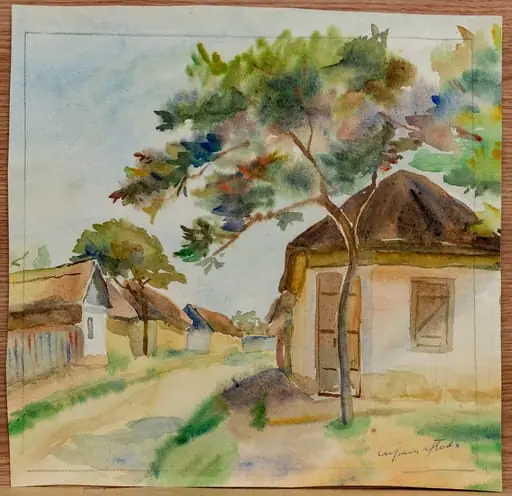
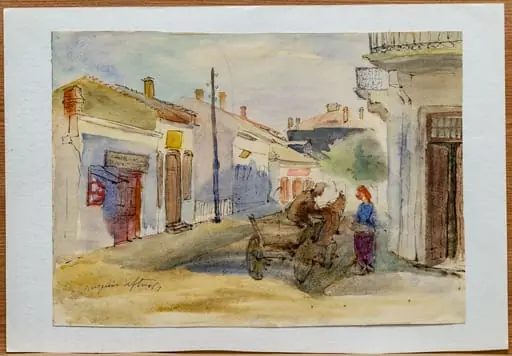
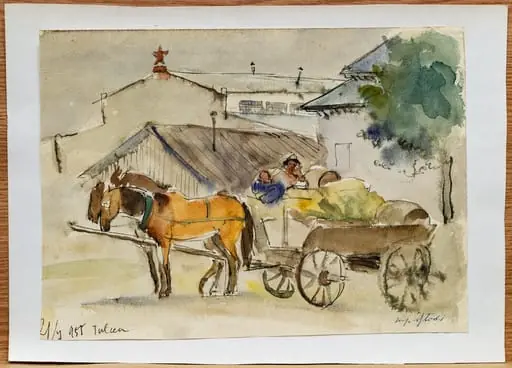
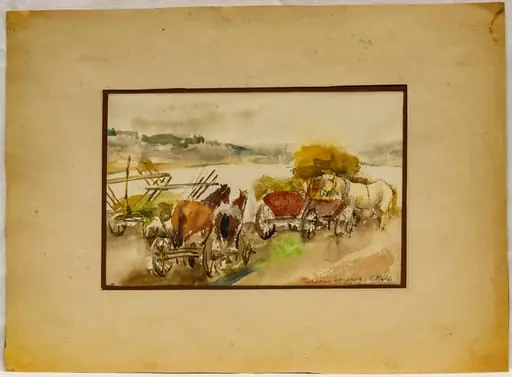
Șaretă la Tulcea
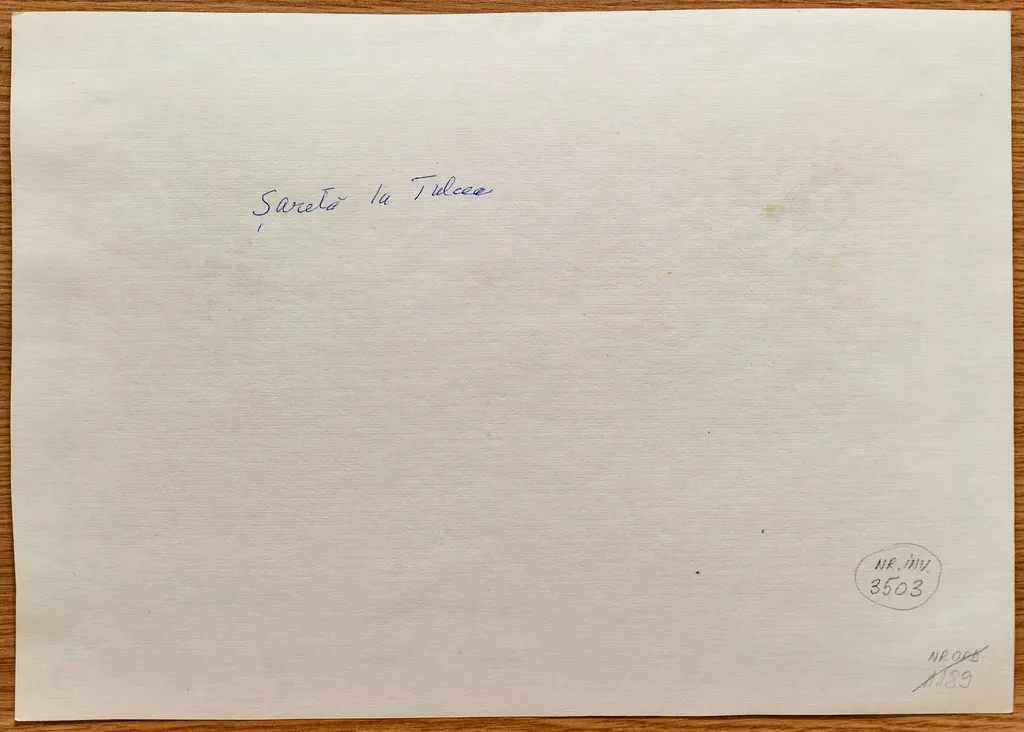
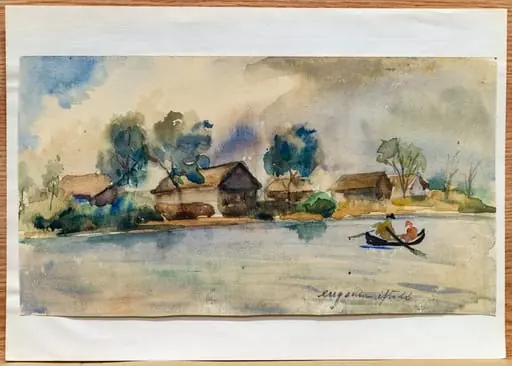
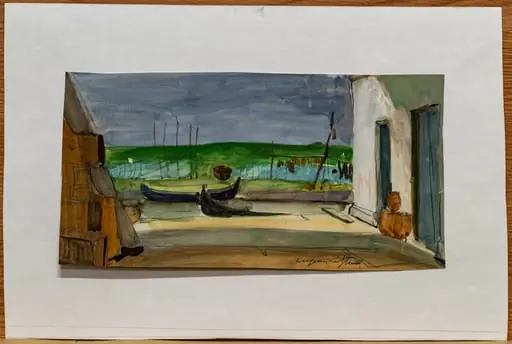
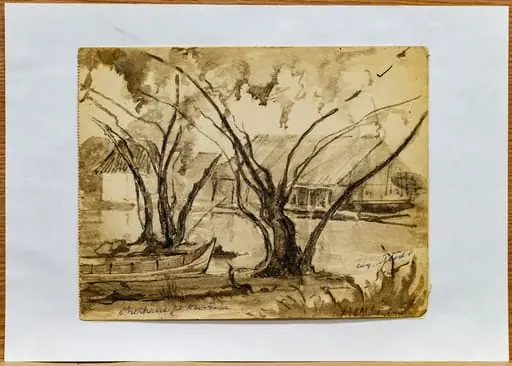
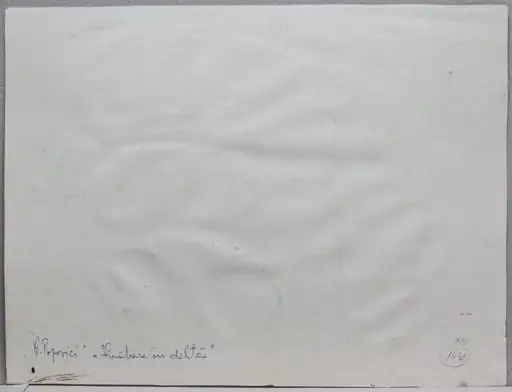
Șaretă la Tulcea is a print by Eugenia Iftodi. It is held in the collection of the Gavrila Simion Eco-Museum Research Institute Tulcea. The document is a modest white card, slightly yellowed with age, bearing a brief handwritten label in blue ink.
About this work
The paper is slightly yellowed, and the handwriting feels formal, like something from a catalog or archive.
This is a blank white card with just a few handwritten words in blue ink. At the top, it says *"Șaretă la Tulcea"* in a small, neat script. In the bottom right corner, there’s a small ink stamp with numbers: *"3503"* and *"1189"* next to *"Nr. inv."*
The card looks like an old museum label, likely for a print. The paper is slightly yellowed, and the handwriting feels formal, like something from a catalog or archive.
If you’re curious about where this might belong, check out the Museum of Ethnography.
Overview
The document is a modest white card, slightly yellowed with age, bearing a brief handwritten label in blue ink. The title “Șaretă la Tulcea” appears at the top in a tidy script, while the lower right corner contains an ink stamp marked “Nr. inv. 3503 1189.” The format resembles a museum catalogue entry, likely identifying a specific object in a collection.
Subject & Meaning
The phrase “Șaretă la Tulcea” refers to a traditional Romanian wooden sled, known locally as a şaretă, associated with the Tulcea region in the Danube Delta. Such sleds were historically used for transporting goods and people across the marshy terrain, reflecting the practical adaptations of local communities to their riverine environment.
Technique & Style
The label’s handwritten script is executed in a clear, formal hand typical of early‑to‑mid‑20th‑century archival records. The ink stamp, also in blue, provides a numeric inventory reference, suggesting systematic cataloguing practices employed by the institution responsible for the object’s documentation.
History & Provenance
The inventory numbers “3503” and “1189” indicate the item’s registration within a museum collection, most plausibly the Museum of Ethnography. The card’s material and style point to a period when paper labels were standard for recording ethnographic artifacts, likely dating from the mid‑1900s.
Context
Tulcea, situated at the mouth of the Danube, has a long tradition of water‑based transport, and the şaretă exemplifies the region’s material culture. Ethnographic collections often preserve such utilitarian objects to illustrate daily life, economic activity, and regional craftsmanship within the broader narrative of Romanian folk heritage.
Artist & collection
Artist
Eugenia Iftodi made prints and drawings of everyday life in mid-20th-century Romania.
Museum
Gavrila Simion Eco-Museum Research Institute Tulcea
Continue through works from the same source collection.