Artwork
A Lady Seen from Behind, Holding a Fan
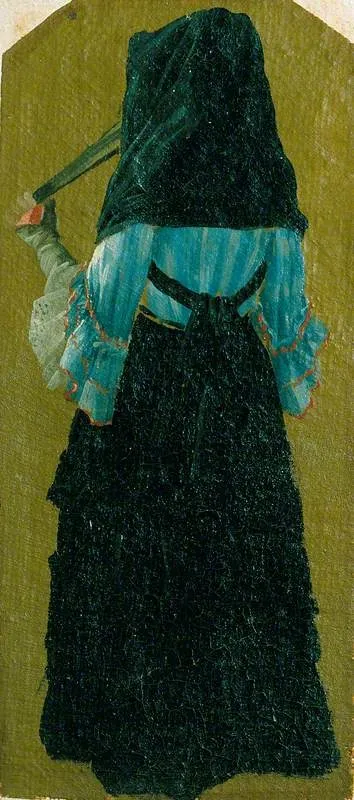
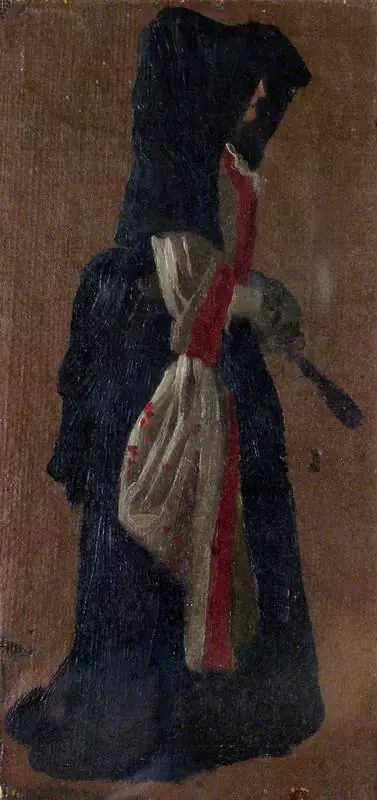
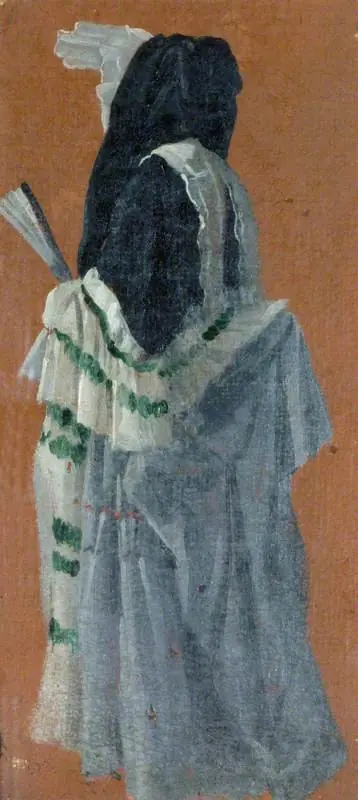
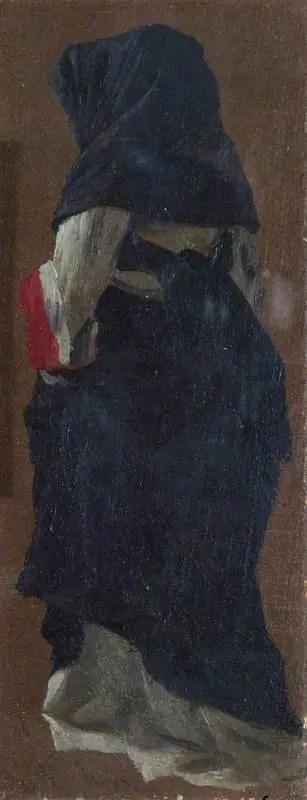
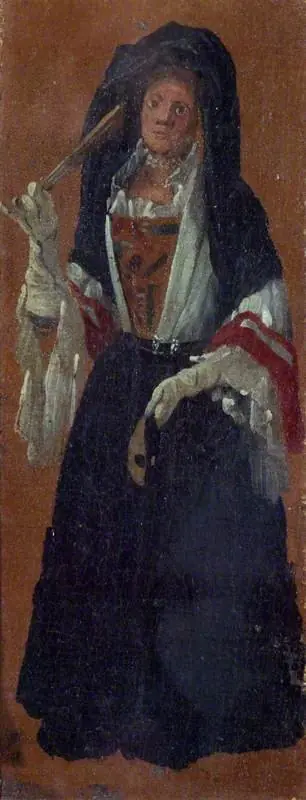
A Lady Seen from Behind, Holding a Fan is an oil painting by the Rococo painting artist Luca Carlevarijs. It dates from 1705 and is held in the collection of the Victoria and Albert Museum.
About this work
Overview
The piece resides in the Victoria and Albert Museum’s collection, where it contributes to the study of early 18th-century Venetian visual culture.
Painted in 1705 by Luca Carlevarijs, this oil-on-canvas work presents a solitary woman viewed from behind, holding a fan. Executed with quiet precision, the painting reflects Carlevarijs’s interest in capturing refined figures within atmospheric settings. Though small in scale, it exemplifies his engagement with Venetian portraiture beyond his more famous cityscapes. The piece resides in the Victoria and Albert Museum’s collection, where it contributes to the study of early 18th-century Venetian visual culture.
Subject & Meaning
The figure, anonymous and turned away, invites contemplation rather than narrative. Her poised posture and the fan—a symbol of social grace and modesty—suggest a woman of refinement, perhaps in a moment of quiet reflection. The absence of facial features shifts focus to gesture and attire, emphasizing decorum and the performative nature of aristocratic femininity. The stillness of the scene evokes the private rituals of elite Venetian life, detached from public spectacle.
Technique & Style
Carlevarijs employs subtle gradations of oil paint to render the folds and textures of the woman’s dark dress, with a blue bodice and black belt adding contrast. The fan’s intricate pattern is delicately indicated with fine brushwork, catching ambient light. The solid olive-green background isolates the figure, enhancing spatial depth without distraction. The style leans toward restrained elegance, aligning with early Rococo sensibilities before the movement’s full ornamental flourish.
History & Provenance
Created in Venice during Carlevarijs’s mature period, the painting entered the Victoria and Albert Museum’s collection through documented acquisitions in the 19th century. While not widely exhibited, it has been consistently cataloged as an example of the artist’s figure studies. Its survival and preservation reflect its value as a rare non-landscape work by an artist primarily known for urban views, offering insight into his broader artistic range.
Context
In early 18th-century Venice, depictions of elegantly dressed figures in private moments were uncommon compared to grand historical or religious scenes. Carlevarijs’s focus on a single woman, framed with attention to costume and gesture, aligns with a growing interest in intimate, everyday subjects among Venetian painters. This work anticipates later developments in genre painting, even as it remains rooted in the city’s aristocratic visual traditions.
Legacy
Though Carlevarijs is chiefly remembered for pioneering Venetian vedute, this painting reveals his skill in rendering human presence with subtlety. It stands as a quiet counterpoint to his bustling cityscapes, demonstrating his versatility. While not directly influential on major successors like Canaletto, it contributes to a broader understanding of how Venetian artists explored individuality and atmosphere beyond monumental themes.
Artist & collection
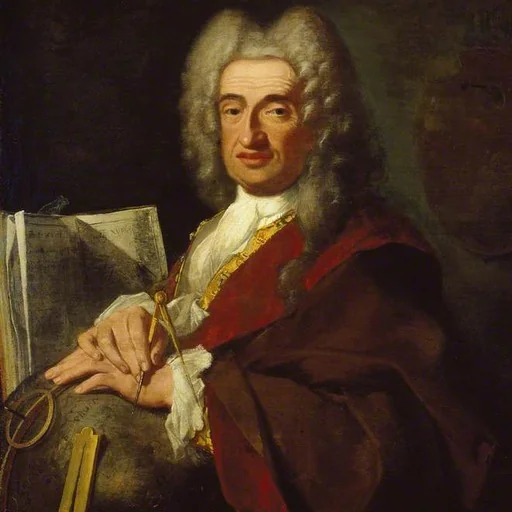
Artist
Luca Carlevarijs or Carlevaris (20 January 1663 – 12 February 1730) was an Italian painter and engraver working mainly in Venice.