Artwork
Fatme
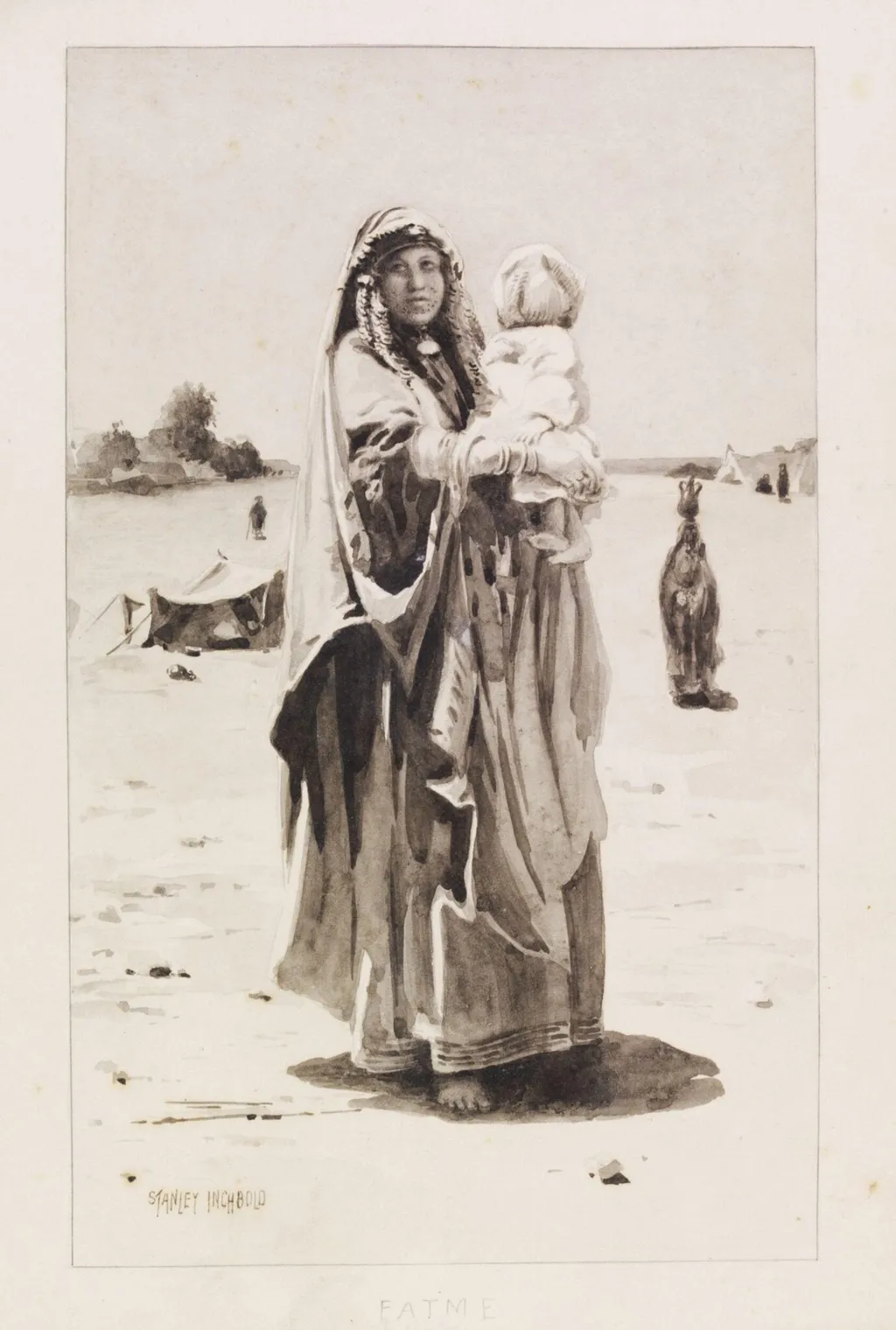
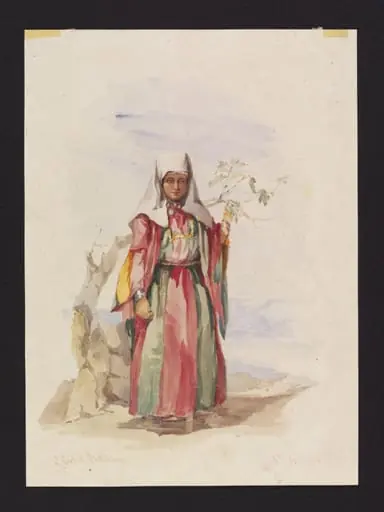
Fatme is a watercolor work on paper by the Post-Impressionist artist Edward Stanley Inchbold. It dates from 1906 and is held in the collection of the Victoria and Albert Museum.
About this work
Overview
Created in 1906, *Fatmé* is a watercolour by Edward Stanley Inchbold that captures a solitary woman on a Syrian coastline.
Created in 1906, *Fatmé* is a watercolour by Edward Stanley Inchbold that captures a solitary woman on a Syrian coastline. The work was published in the second volume of *Under the Syrian Sun*, accompanying text on page 368. It reflects Inchbold’s interest in documenting everyday life in the Levant during his travels. The piece entered a private collection in 1968 after being acquired from R. Appleby for £1.50, and is now held in the Victoria and Albert Museum’s collection.
Subject & Meaning
The figure, identified as Fatmé, stands with a child swaddled in a light shawl, her face obscured beneath a dark hood. Her posture conveys quiet vigilance, set against a tranquil seascape and distant tents. The absence of overt narrative suggests a moment of stillness rather than action, inviting contemplation of domestic life in a coastal Syrian setting. The child’s presence underscores themes of care and endurance, rendered without sentimentality.
Technique & Style
Inchbold employed delicate watercolour washes to model form and atmosphere, using soft blending to suggest the glow of daylight on sand and sea. The woman’s dark cloak and face stand in stark contrast to the pale sky and luminous background, drawing focus without sharp outlines. The brushwork remains restrained, avoiding detail in favour of tonal harmony. This approach reflects a sensitivity to light and mood over precise representation.
History & Provenance
The watercolour was published in 1906 as part of a travelogue documenting Inchbold’s time in Syria. It remained in private hands until July 1968, when it was acquired by a collector from R. Appleby for £1.50. The work’s journey from publication to museum collection reflects its modest initial reception and later recognition as a document of early 20th-century Orientalist observation. It is now part of the Victoria and Albert Museum’s permanent holdings.
Context
Inchbold’s work emerged during a period when British artists and writers were increasingly drawn to the Levant, often recording scenes of local life with ethnographic interest. *Fatmé* aligns with this trend, though it avoids exoticism by focusing on quiet, unadorned moments. The painting’s subdued palette and intimate composition contrast with more theatrical Orientalist works, suggesting a more personal, observational approach to the region’s people.
Legacy
Though not widely exhibited, *Fatmé* endures as a quiet example of Inchbold’s watercolour practice and his engagement with Syrian life. Its preservation in a major museum underscores its value as a historical record rather than a decorative object. The work contributes to a broader understanding of early 20th-century British artists who sought authenticity in their depictions of the Middle East, prioritizing atmosphere over spectacle.
Artist & collection
Artist
Edward Stanley Inchbold painted delicate watercolors at the turn of the 20th century, often blending soft figures with floral surroundings.