Artwork
Maic
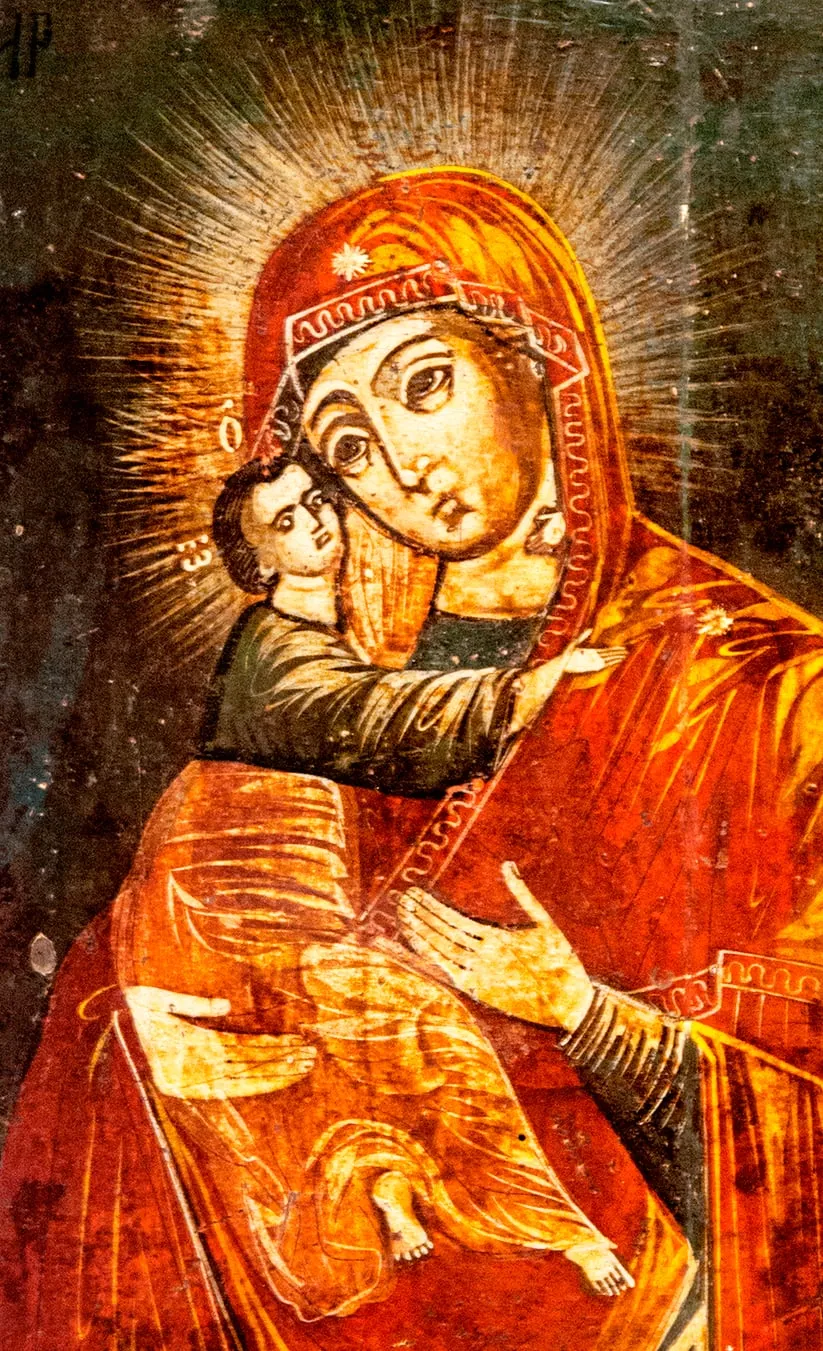
Maic is a drawing by Unknown. It dates from 1850 and is held in the collection of the "Dimitrie Gusti" National Village Museum. This work depicts a maternal figure seated with a child, rendered in a stylized, non-naturalistic manner.
About this work
Overview
This work depicts a maternal figure seated with a child, rendered in a stylized, non-naturalistic manner. Both figures are outlined in dark pigment, and their forms are defined by flat areas of color without modeling or depth. A radiant gold background features linear patterns suggesting divine energy, reinforcing the sacred nature of the scene.
Subject & Meaning
The woman, identified by her golden halo and crowned inner circle, is portrayed as a holy figure, likely the Virgin Mary. The child, reaching toward her face, suggests a moment of intimate connection, possibly symbolizing divine grace or human devotion. Their solemn expressions convey reverence rather than emotion, aligning with devotional traditions of the period.
Technique & Style
The figures are painted with bold, unmodulated colors and minimal detail, avoiding shading or perspective. Outlines define form sharply, while the gold background uses radiating lines to imply spiritual light. The absence of cross-hatching or texture emphasizes flatness, characteristic of early iconographic conventions focused on symbolic presence over realism.
History & Provenance
The style and iconography suggest origins in a medieval or early Renaissance religious context, possibly from a liturgical panel or devotional object. Though specific provenance is unrecorded, similar compositions appear in Byzantine and Italo-Byzantine traditions, where such imagery served as aids to prayer and theological instruction.
Context
In its time, this image would have been viewed within a religious setting, where visual symbols communicated doctrine to largely illiterate audiences. The use of gold, halos, and frontal poses were standardized to signify sanctity. The child’s gesture and the mother’s stillness reflect established iconographic codes meant to inspire awe and contemplation.
Legacy
This work exemplifies a visual language that persisted across centuries in Eastern and Western Christian art. Its emphasis on symbolic form over naturalism influenced later religious painting, even as Renaissance artists moved toward realism. The image remains a testament to the enduring power of simplified visual signs in spiritual representation.
Artist & collection
Museum
"Dimitrie Gusti" National Village Museum
Continue through works from the same source collection.
 Domestic Scene
 Giacomo and Cardinal Marco, investing Andrea, Abbot of San Zeno, with his Benefice
 The Nymph of Fontainebleau
 Portrait of a Woman
 Madonna and Child with Saints in the Enclosed Garden
 Venus and Minerva
 Family Group of Four on Sofa
 Wall painting from Room H of the Villa of P. Fannius Synistor at Boscoreale
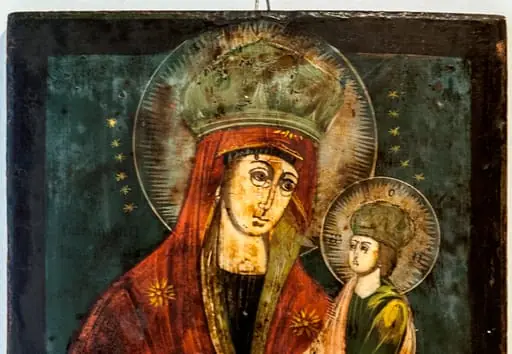 Maica Domnului cu Pruncul, tip derivat din Hodighitria(Călăuzitoarea), stil ce indică o școală rusească. Maria 3/4, ține Pruncul pe mâna stângă. Isus îi ține mâna dreaptă cu ambele mâini. Fecioara privește către Prunc cu cu o expresie de tristețe. Înveșmântată cu stolă albastră, cu blicuri de culoare mai deschisă, și decorațiune delicată la mâneci.Maforion roșu vișiniu, anticipând patimile.Pe margine decorație fină, la mânecă franjuri delicați. Pe frunte și pe umeri poartă stelele întreitei Feciorii, în formă de floare cu petale aciculare. Steaua de pe frunte este parțial acoperită de coroana împărătească de tip rusesc, închisă, mare. Aureola din raze alb galbene dispuse orizontal și încadrate de un cerc trasat cu un instrument. Isus poartă același tip de coroană, înconjurată de aureola cu raze, peste care au fost inscipționate însemnele nimbului cruciger. Chipul matur, sobru, trist, privind către Maica Sa. Fața rotundă, capul și mâinile de proporții mai mici în raport cu corpul.Înveșmântat cu un chiton verde cu blicuri galbene, peste care poartă, petrecut pe umărul drept un himation roșu orange cu blicuri alb aurii.Desculț. Nimburile sunt înconjurate de steluțe mici, aurii, dispuse pe fondul bleu închis la o mică distanță de linia de contur. Lângă umărul drept al Maicii apare o inscripție parțial șterasă, cu majuscule, în slavonă,.(SPOPUȘNIINÎ METȘA?). Chenar lat de culoare neagră, care este depășit de aura Fecioarei în partea de sus.
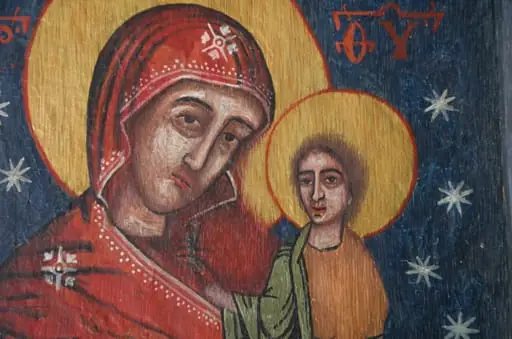 Icoana este pictată pe lemn și o reprezintă pe Maica Domnului „Îndrumătoarea” (Hodighitria), „Cea care arată calea”, cu Pruncul în brațe. Conform Tradiției Bisericii, tema a fost pictată pentru prima dată de Sfântul Apostol și Evanghelist Luca, în timpul vieții pământești a Fecioarei Maria. Maica Domnului poartă un maforion roșu și arată cu mâna dreaptă înspre Fiul său, acesta, la rândul Lui, arătând cu mâna stângă înspre Maica Sa. Pe fundal sunt pictate stele. Rama are trei chenare pictate în albastru, verde și roșu. Icoana prezintă în partea superioară câte o balama pe latura stângă și cea dreaptă, probabil deservind în trecut rolul de triptic. Cromatică: fond albastru închis; roșu; verde; portocaliu; galben; alb.
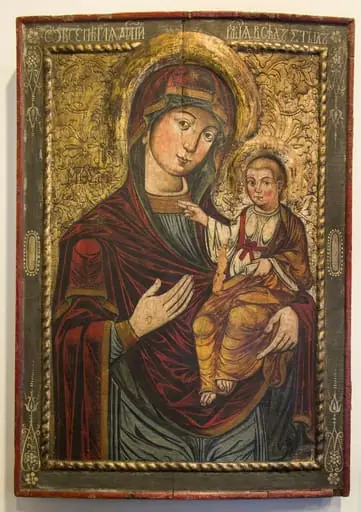 Maica Domnului cu pruncul; Icoană de catapeteasmă; Icoană împărătească
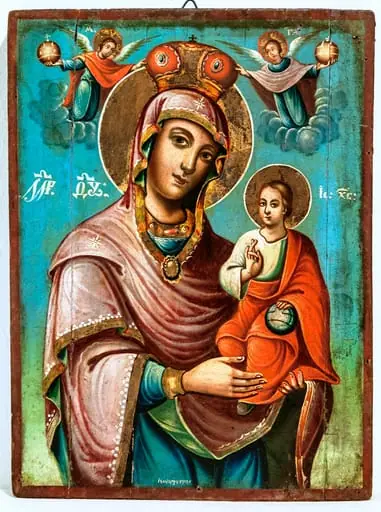 Tema
Tema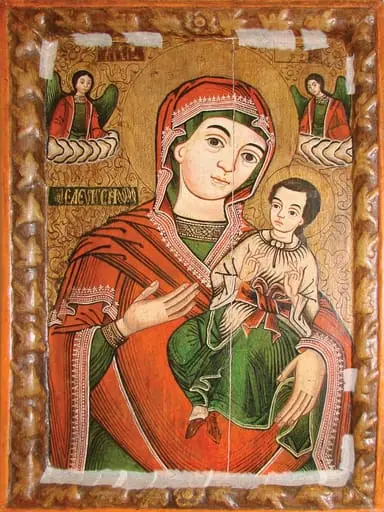 Maica Domnului cu Pruncul
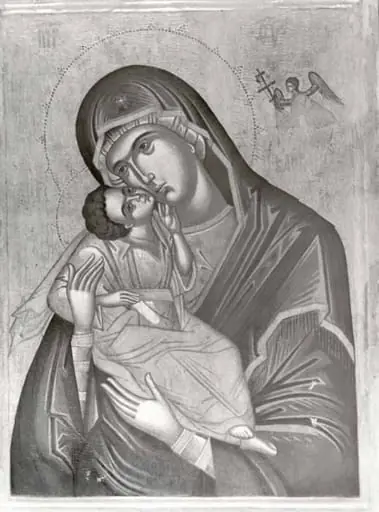 Maica Domnului cu Pruncul - Țealovanie
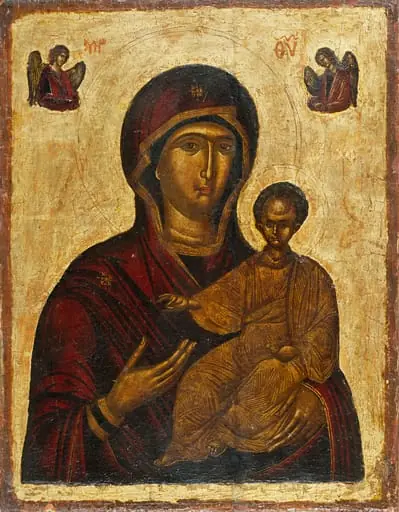 Jumalanäiti, Hodigitria - Tiennäyttäjä, bysanttilainen ikoni
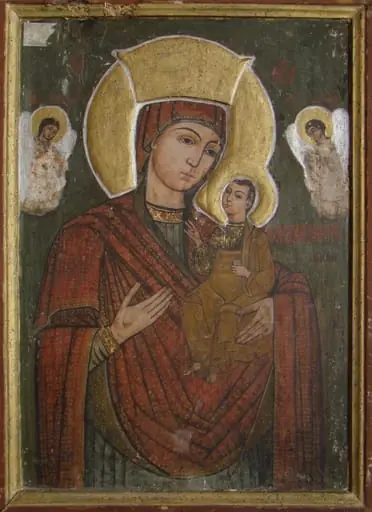 Maica Domnului cu Pruncul
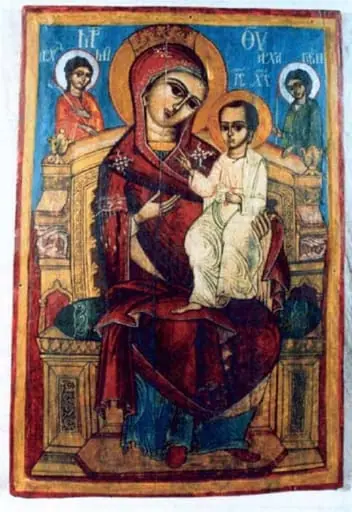 Maica cu Pruncul/Maica Împărăteasă-Doamnă
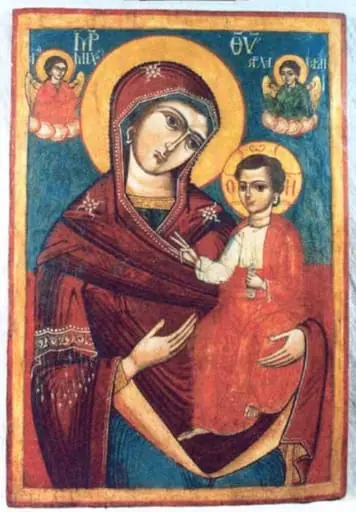 Maica cu Pruncul-Axionița