Artwork
Duminica Tomii
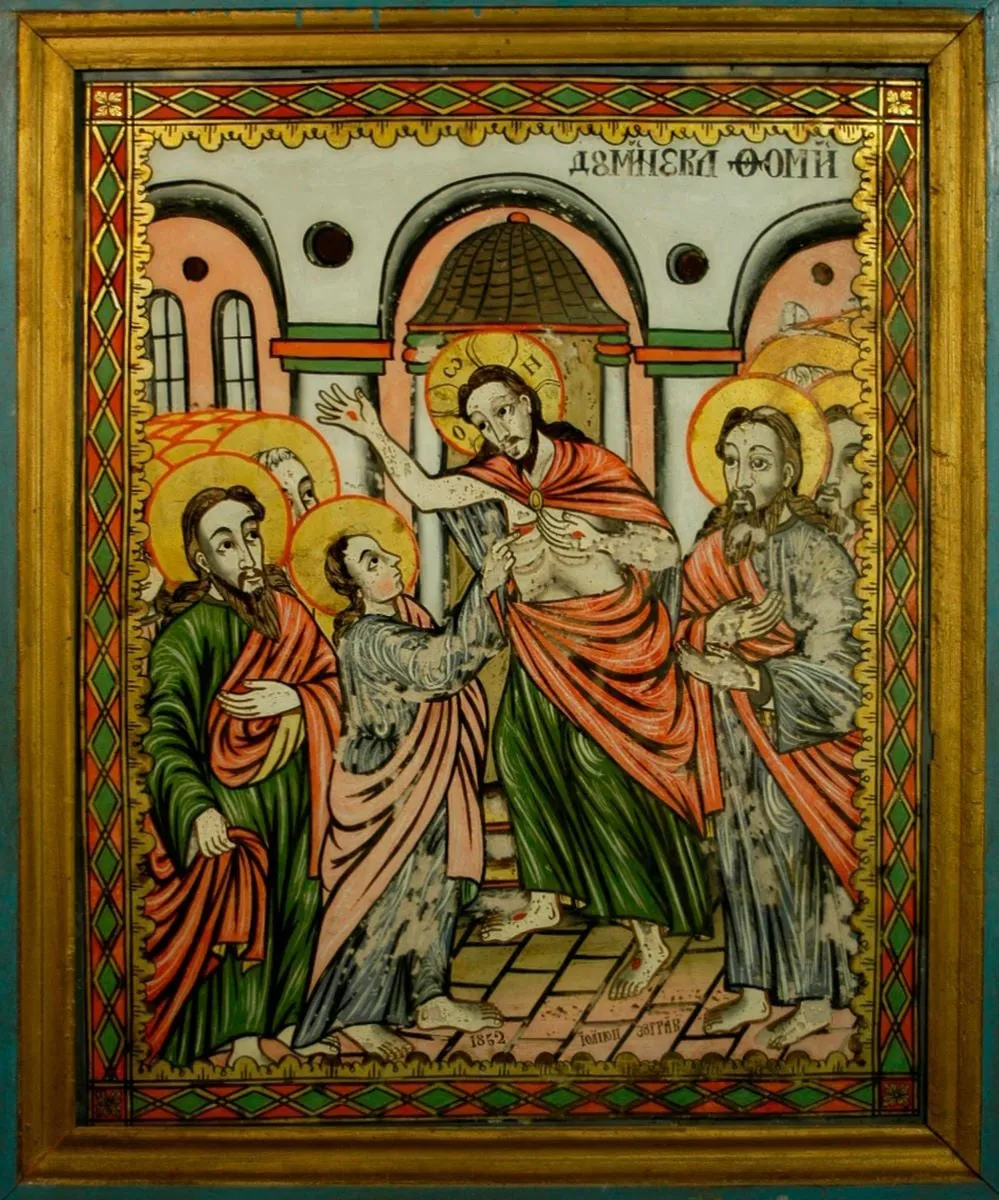
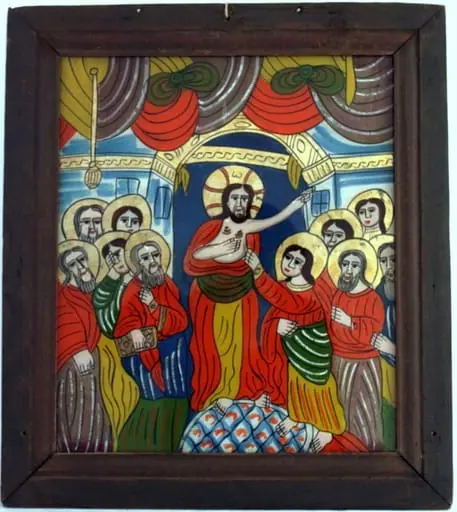
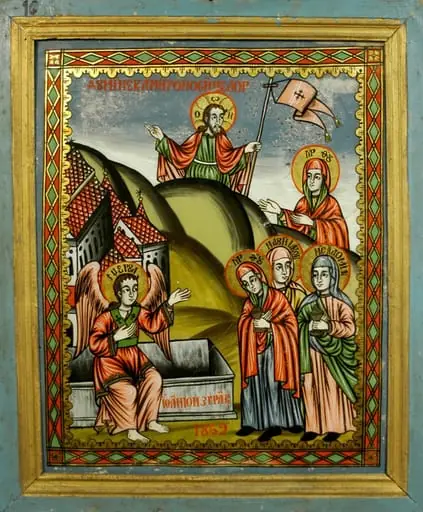
Duminica Tomii is a drawing by the Baroque artist Ioan Pop de la Făgăraș. It dates from 1852 and is held in the collection of the Alba Iulia Orthodox Archdiocese.
About this work
Overview
Created in 1852 by Ioan Pop de la Făgăraș, this drawing depicts a religious scene with five figures arranged before an arched structure. Rendered in vivid reds, greens, and golds, the work is held in the Museum of Ethnography. Its stylized forms and flat color planes reflect a devotional tradition distinct from Western naturalism, emphasizing symbolic presence over spatial realism.
Subject & Meaning
The central figure, clad in red and green, lifts a pale, lifeless body while others observe with clasped hands.
The central figure, clad in red and green, lifts a pale, lifeless body while others observe with clasped hands. Gold halos identify the figures as sacred, suggesting a moment of divine intervention or resurrection. The composition evokes a liturgical tableau, likely illustrating a miracle or saintly act, common in Eastern Christian iconography where spiritual power is conveyed through gesture and hierarchy.
Technique & Style
The drawing employs bold outlines and unmodulated color to define forms, avoiding shading or perspective. Figures appear rigid yet emotionally charged, their expressions simplified but clear. A decorative border with small motifs frames the scene, and the background’s patterned texture enhances its ritualistic tone. The script at the top, distinct from the visual language, may denote a liturgical inscription or title.
History & Provenance
The work was produced in 1852 by Ioan Pop de la Făgăraș, a Romanian artist active in Transylvania during a period of cultural revival. It entered the collection of the Museum of Ethnography, where it remains as part of a broader archive of religious folk art. Its survival reflects local efforts to preserve devotional imagery amid shifting political and religious landscapes.
Context
This piece emerges from a regional tradition of religious illustration, where painted or drawn icons served as aids to worship in communities with limited access to formal church art. Its stylistic choices—flatness, symbolic color, and frontal composition—align with Byzantine and folk influences, distinguishing it from contemporary academic painting while maintaining theological clarity.
Legacy
The drawing contributes to the understanding of 19th-century Romanian religious expression beyond canonical painting. It illustrates how local artists adapted sacred themes using accessible materials and visual codes, preserving communal faith practices. Today, it stands as a document of vernacular piety, valued for its cultural specificity rather than artistic innovation.
Artist & collection
Artist
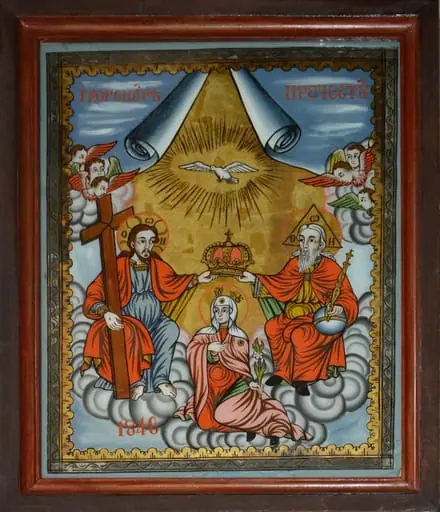
Ioan Pop de la Făgăraș painted religious scenes in the mid-1800s, like *Încoronarea Fecioarei* (1846) and *Duminica Floriilor*.
 Necredința lui Toma
 Schimbarea la față
 Schimbarea la față
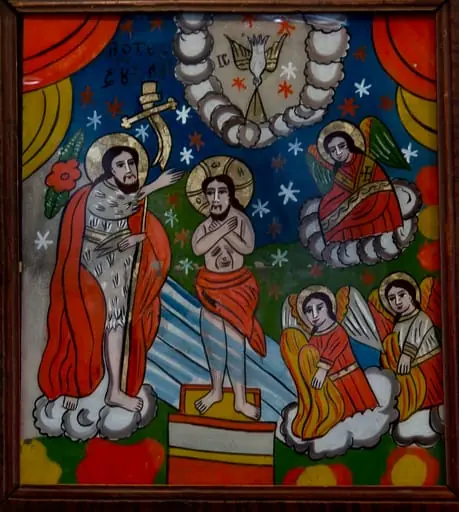 Botzezul lui IS HS
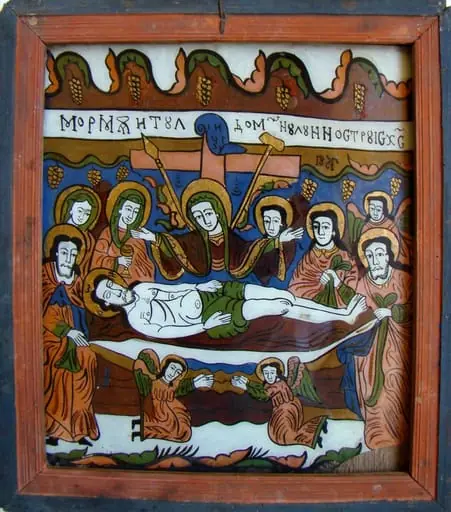 Prohodul lui Iisus
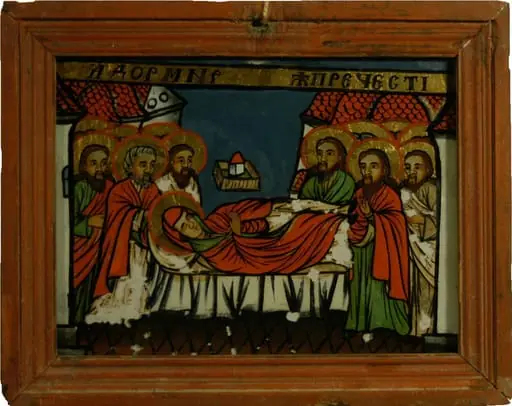 Adormirea Maicii Domnului
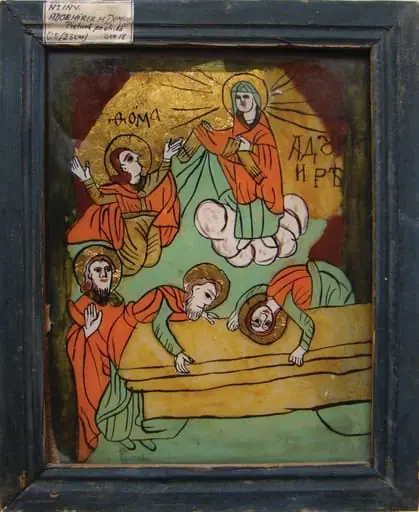 Înălțarea la cer a Maicii Domnului
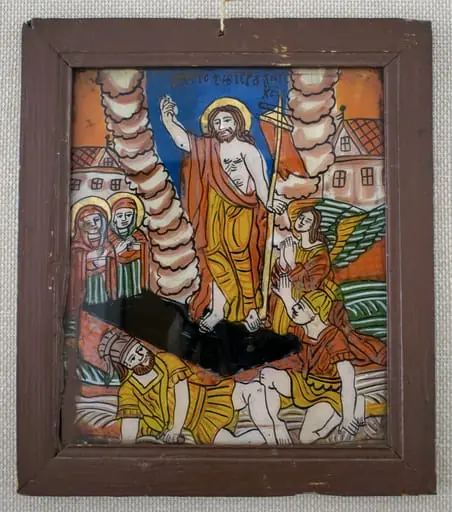 Suporhit
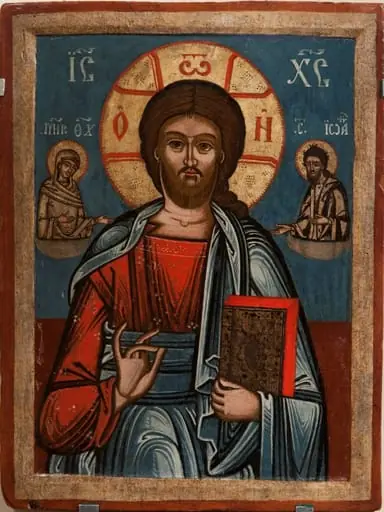 “Mica Deisis” ; Icoană împărătească Mica Deisis; Icoană împărătească
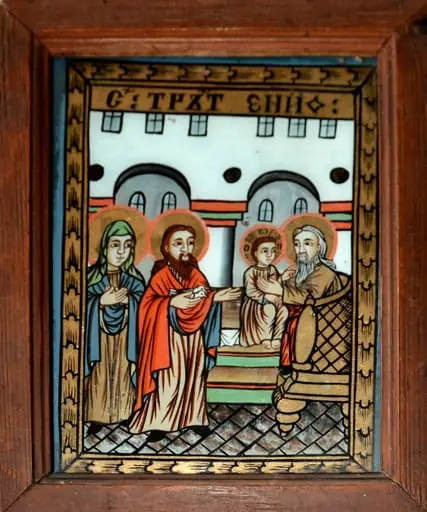 Întâmpinarea Domnului
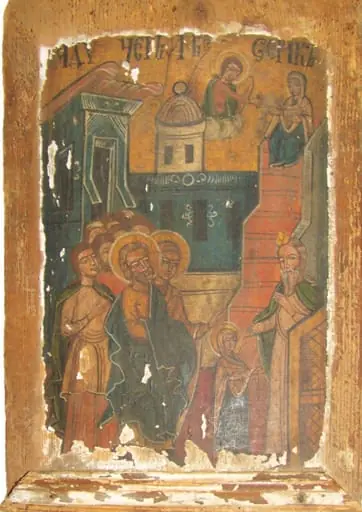 Intrarea în biserică a Maicii Domnului
 Duminica Mironosițelor