Artwork
Nașterea lui Iisus
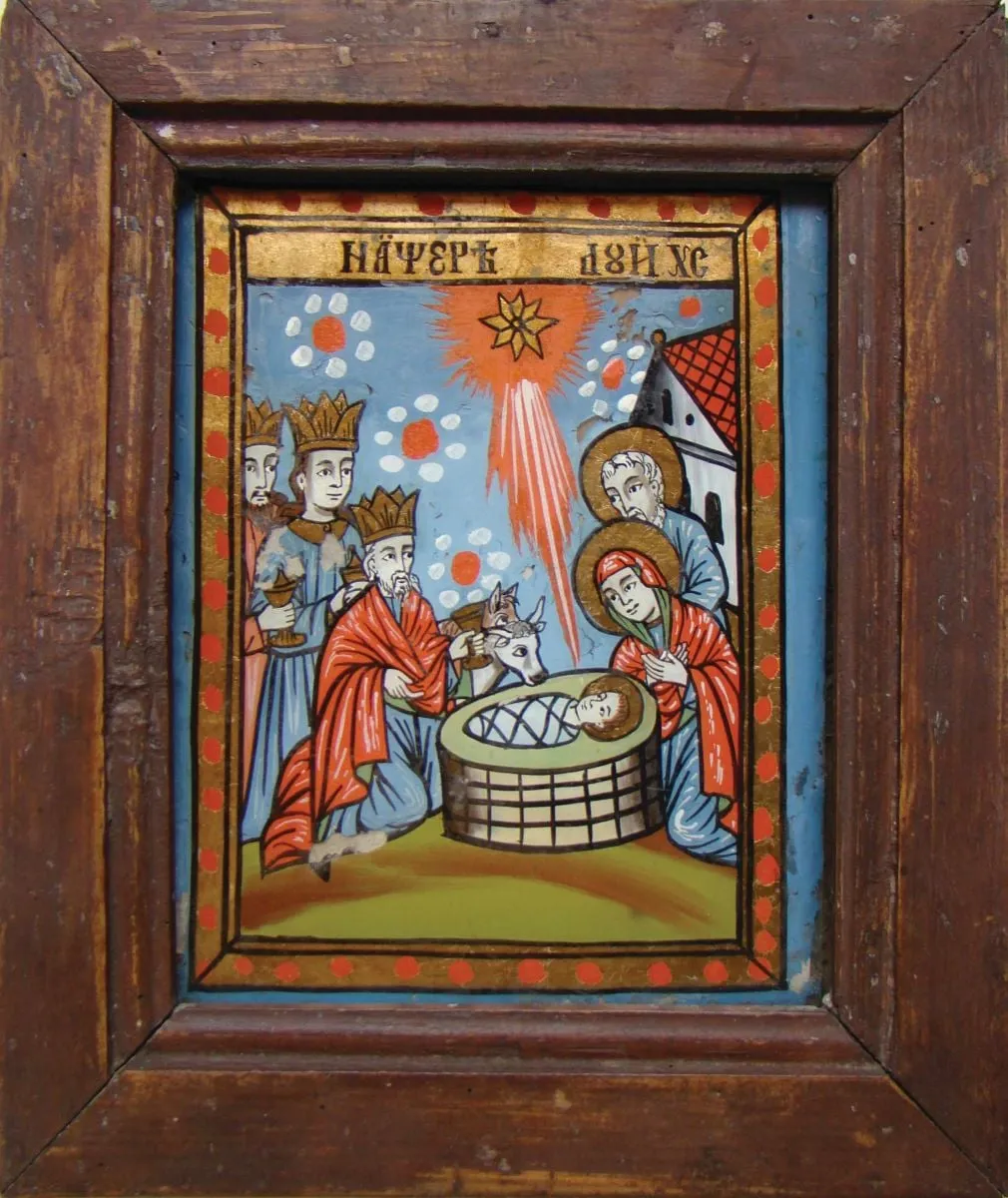
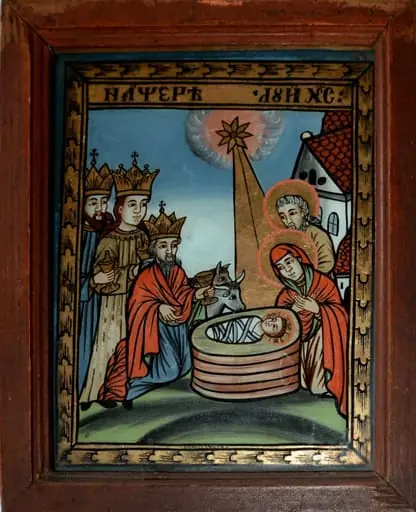
Nașterea lui Iisus is an unspecified painting by the Baroque artist Ioan Pop de la Făgăraș. It is held in the collection of the Alba Iulia Orthodox Archdiocese. The work titled *Nașterea lui Iisur* depicts a luminous tableau of the Nativity.
About this work
Overview
Two domestic animals stand nearby, while a small church rises in the distance beneath an orange‑toned sky punctuated by a radiant starburst.
The work titled *Nașterea lui Iisur* depicts a luminous tableau of the Nativity. Central to the composition is a modest basket containing an infant, surrounded by three regal figures in red garments and gold crowns who kneel beside a woman wearing a red headscarf. Two domestic animals stand nearby, while a small church rises in the distance beneath an orange‑toned sky punctuated by a radiant starburst.
Subject & Meaning
The scene illustrates the biblical birth of Jesus, emphasizing the adoration of the Magi and the presence of the Virgin Mother. The inclusion of the low basket and the humble setting underscores the theological theme of divine incarnation in modest circumstances, while the crowns and red robes signal the homage of earthly royalty to the newborn savior.
Technique & Style
Rendered with flat areas of color and bold outlines, the image adopts a simplified, symbolic visual language. The lack of chiaroscuro and the absence of intricate modeling create a graphic clarity that foregrounds narrative elements over naturalistic detail, aligning the work with folk or devotional illustration traditions.
Context
The piece belongs to a tradition of Eastern European religious art that often employed straightforward, didactic imagery for liturgical or instructional purposes. Its use of vivid reds and gold, as well as the stylized representation of figures, reflects a cultural aesthetic that prioritizes symbolic resonance over realistic portrayal.
Artist & collection
Artist
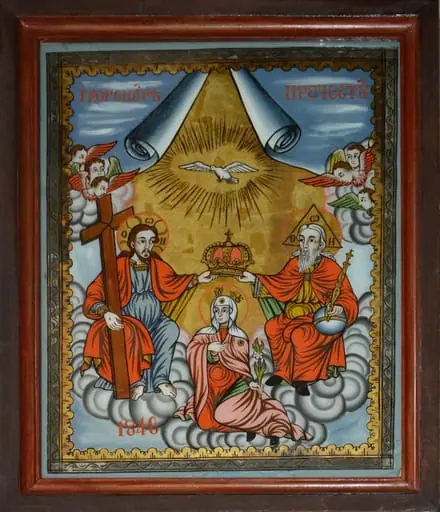
Ioan Pop de la Făgăraș painted religious scenes in the mid-1800s, like *Încoronarea Fecioarei* (1846) and *Duminica Floriilor*.
 Nașterea Domnului
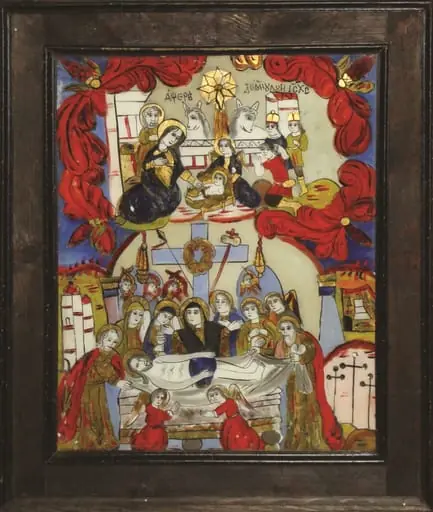 Nașterea și Prohodul lui Iisus
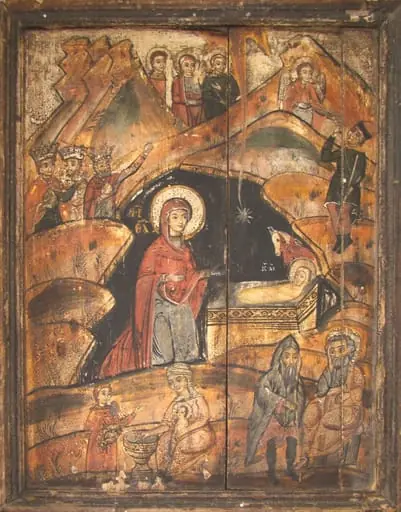 Nașterea lui Iisus
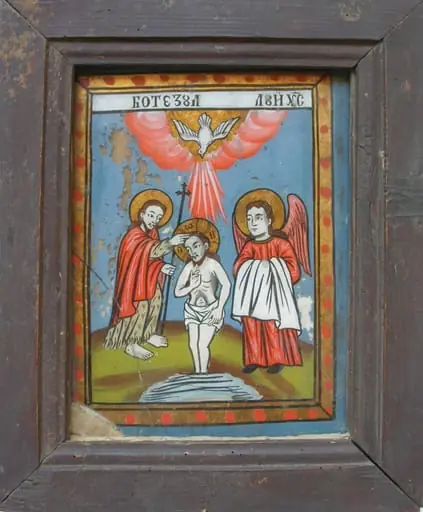 Botezul lui Iisus
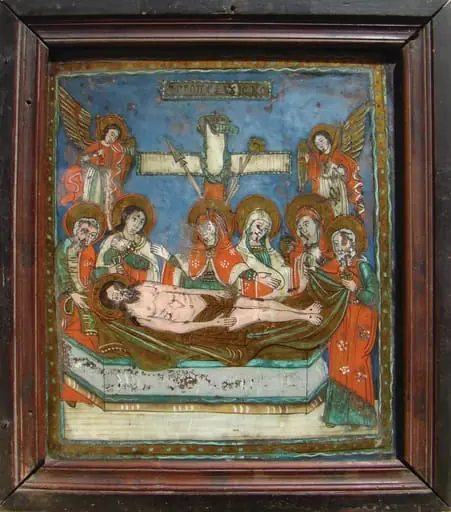 Prohodul lui Iisus
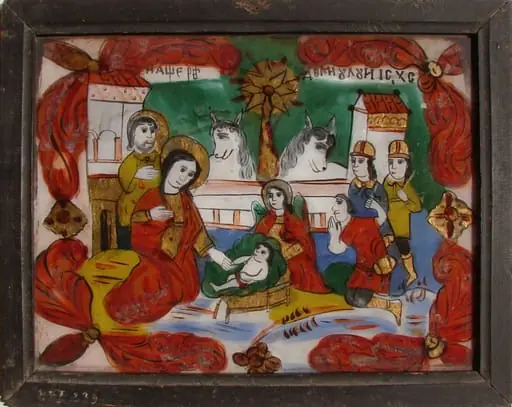 Nașterea lui Iisus
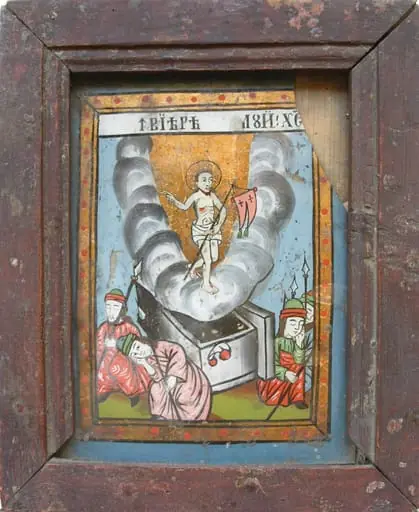 Învierea lui Iisus
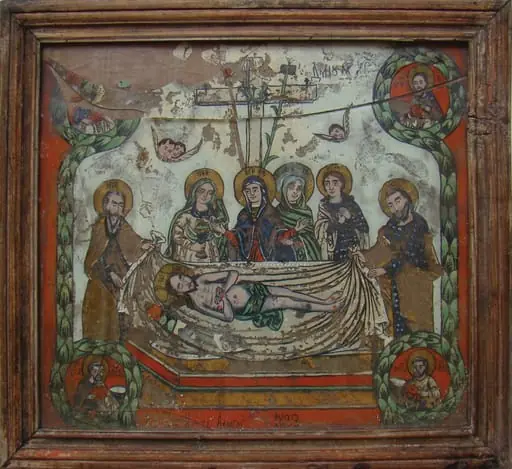 Prohodul lui Iisus
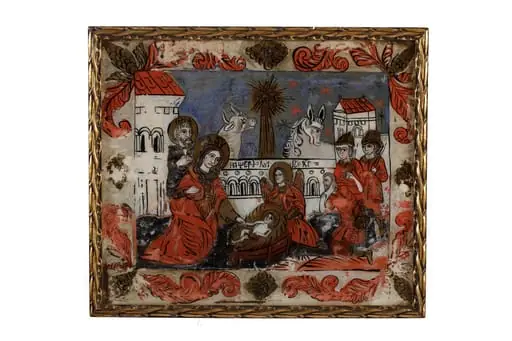 Icoană pe sticlă reprezentând scena Nașterii lui Iisus Hristos. Are ramă de lemn, aurie, sculptată. Pruncul este prezentat de un înger pe un strat auriu, care îl evidențiază. În stânga apar Iosif și Ana (?), iar în dreapta un bărbat îngenuncheat în roșu și doi soldați cu veșminte roșii și caschete aurii. Fundalul este constituit din clădiri albe, care se detașează pe cerul albastru cu stele roșii, negre și albe. Central se află steaua magilor, aurie, care luminează întreaga scenă și este încadrată de două capete de animale. Pe marginea de sus a clădirii centrale se află inscripția „Nașterea lui Iisus Hristos”. Scena întreagă este încadrată de un chenar cu frunze și flori roșii și aurii, pe fond alb-gri.
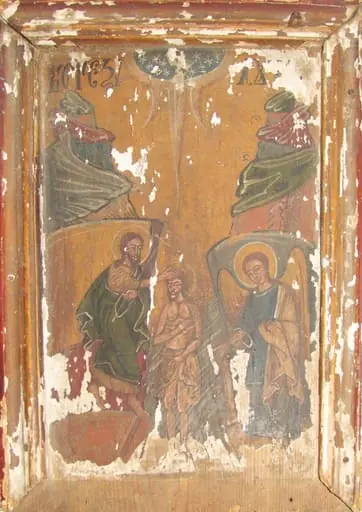 Botezul lui Iisus