Artwork
Untitled
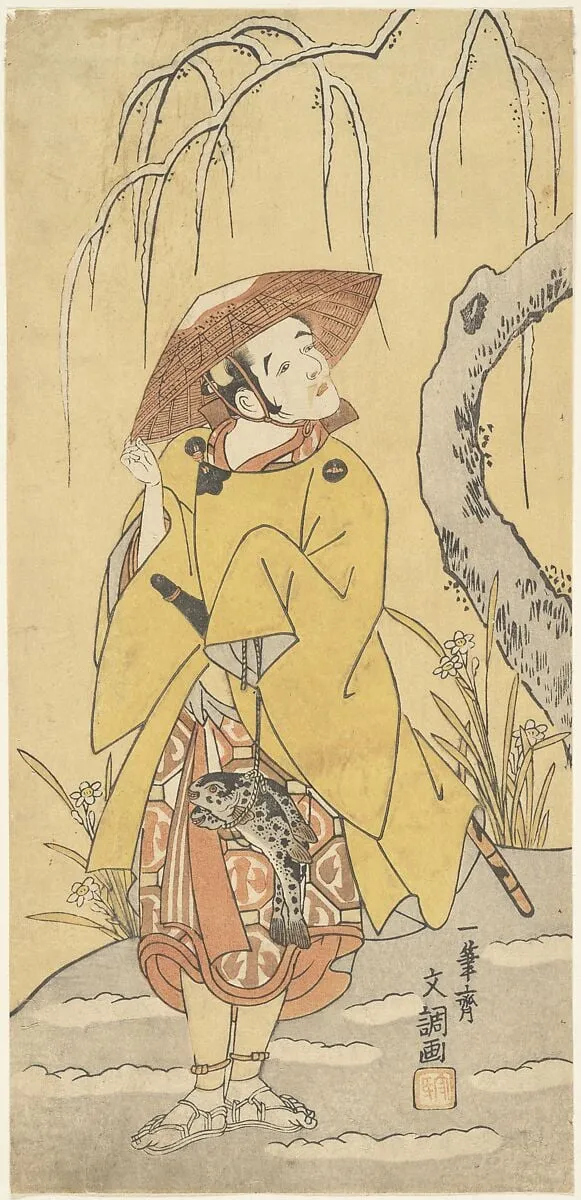
Untitled is an ink print by the Romanticist artist Ippitsusai Bunchō. It dates from 1790 and is held in the collection of the Metropolitan Museum of Art.
About this work
Overview
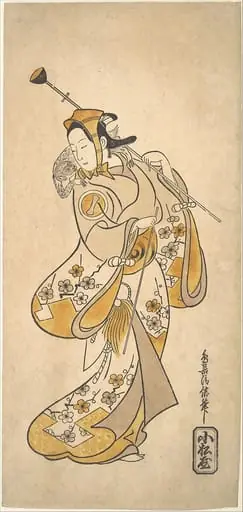
It depicts a solitary male figure in a vivid yellow robe and straw hat, carrying a fan and a long, shoulder-resting implement.
Created around 1790, this woodblock print by Ippitsusai Bunchō is rendered in ink and color on paper. It depicts a solitary male figure in a vivid yellow robe and straw hat, carrying a fan and a long, shoulder-resting implement. The composition is spare yet deliberate, with flat areas of color and minimal background detail. The print resides in The Metropolitan Museum of Art’s collection as part of its holdings in Edo-period Japanese prints.
Subject & Meaning
The figure, dressed in patterned red-and-black trousers and sandals, appears to be a traveler or itinerant performer. The fan and staff suggest movement or performance, possibly referencing theatrical archetypes common in Edo-period culture. The ambiguous setting—part grass, part cloudlike ground—enhances the sense of transience. No explicit narrative is given, leaving interpretation open to cultural context and visual cues rather than textual explanation.
Technique & Style
Bunchō employed traditional woodblock printing methods, using clean lines and unmodulated color fields. The robe and hat reveal fine detailing, contrasting with the broader, simplified forms of the figure and background. The absence of shading or perspective aligns with ukiyo-e conventions, emphasizing pattern and silhouette. The flatness of the composition directs attention to the figure’s posture and attire, reinforcing stylistic restraint.
History & Provenance
The print dates to the late 18th century, a period when woodblock prints flourished as affordable art for urban audiences. It entered The Metropolitan Museum of Art’s collection through documented acquisitions of Japanese prints, likely during the early 20th century. While its exact provenance before museum ownership is not fully recorded, its style and condition are consistent with prints produced in Edo for commercial circulation.
Context
This work reflects the Edo-period fascination with itinerant figures—actors, monks, and entertainers—who populated popular theater and folklore. The figure’s attire and props echo stage costumes, though the print lacks the overt theatricality of actor portraits. Its quiet demeanor suggests a shift from dramatic representation toward more contemplative, everyday imagery, aligning with broader trends in late ukiyo-e.
Legacy
Bunchō’s print contributes to a body of work that elevated ordinary or marginal figures into subjects of aesthetic interest. While not widely reproduced, it exemplifies the quiet precision of late 18th-century printmakers who balanced simplicity with nuanced detail. Its presence in a major Western museum underscores its role in shaping international appreciation for Japanese printmaking beyond its most famous genres.
Artist & collection


 Untitled
 Untitled
 Untitled
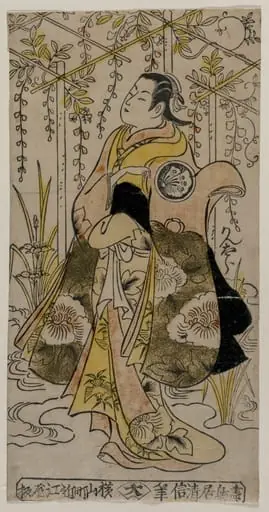 Sanjo Kantaro as a Young Woman Standing in a Wisteria Arbor
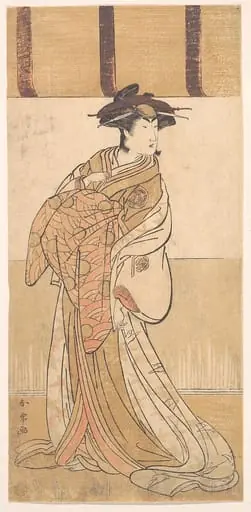 Untitled
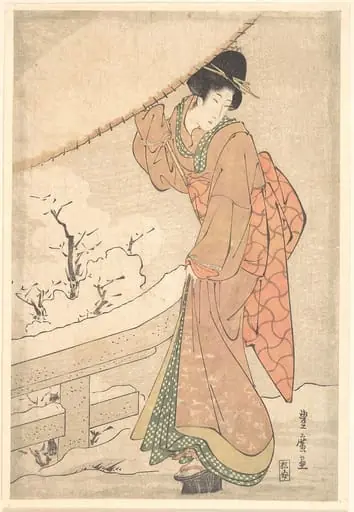 Untitled
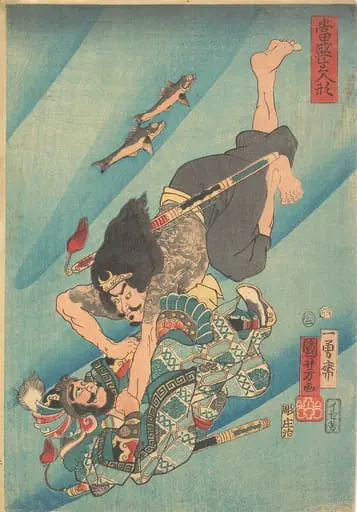 Untitled
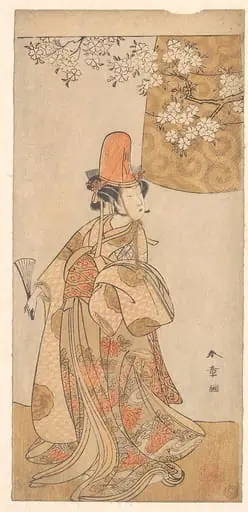 花形見風折烏帽子瀬川富三郎の娘道成寺|Segawa Tomisaburo in the Role of Musume Dojoji in "Hanagatami Kazaori Eboshi"
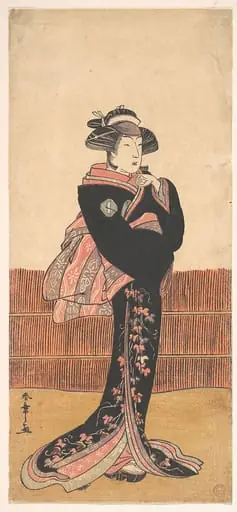 勝川春章画 三代目吾妻藤蔵|Kabuki Actor Azuma Tōzō III
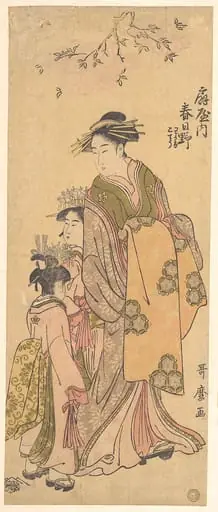 扇屋内春日野わかな こてう|The Oiran Kasugano of Ōgiya on Parade
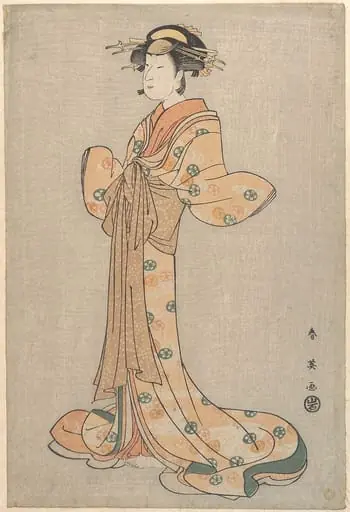 二代目中村二代目中村野塩のお軽|The Actor Nakamura Noshio II as the Courtesan Okaru