Artwork
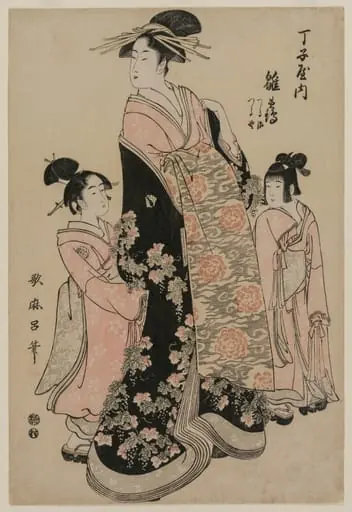
扇屋内春日野わかな こてう|The Oiran Kasugano of Ōgiya on Parade
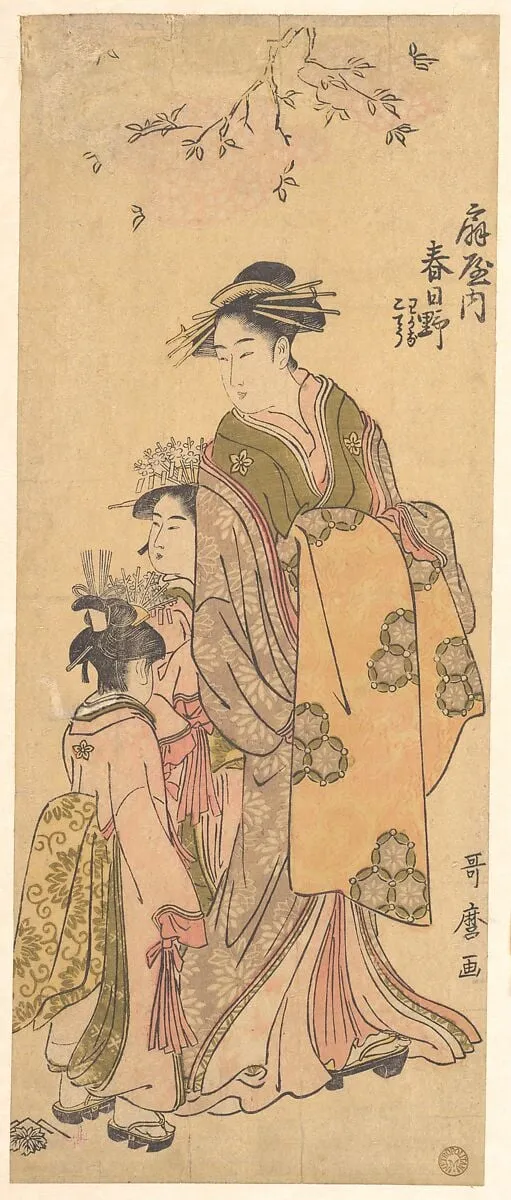
扇屋内春日野わかな こてう|The Oiran Kasugano of Ōgiya on Parade is an ink print by the Romanticist artist Kitagawa Utamaro. It dates from 1788 and is held in the collection of the Metropolitan Museum of Art.
About this work
Overview
Created around 1788 by the Edo‑period printmaker Kitagawa Utamaro, this multicolour woodblock portrait is part of the Metropolitan Museum of Art’s collection. It depicts a small procession of three women, the central figure identified as the Oiran Kasugano of Ōgiya, a celebrated courtesan of the time.
Subject & Meaning
The composition centers on the tallest woman, dressed in an elaborately patterned kimono and holding a parasol, suggesting her status as the principal courtesan. Flanking her are two attendants in simpler garments, indicating their supporting roles within the parade. The scene conveys the ritualised display of elegance associated with high‑ranking oiran.
Technique & Style
Utamaro employed the traditional ukiyo‑e method of carving separate woodblocks for each colour, then printing them in succession on paper. The delicate line work and subtle gradations of ink capture the folds of the kimono and the translucency of the parasol, while the light background with faint foliage provides a restrained setting for the figures.
History & Provenance
The print was produced in the late eighteenth century, a period when ukiyo‑e portraits of famous courtesans were popular among urban consumers. It entered the Metropolitan Museum of Art’s collection through a 20th‑century acquisition, where it remains catalogued as an example of Utamaro’s portraiture of celebrated women.
Context
During the Edo era, oiran were elite entertainers whose appearances were meticulously staged. Prints like this one functioned both as promotional images and as souvenirs for admirers, reflecting contemporary tastes for fashion, beauty, and the theatricality of the pleasure quarters.
Artist & collection


 Untitled
 Untitled
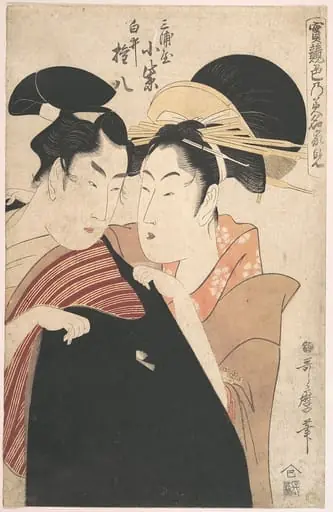 実競色乃美名家見 三浦屋小紫 白井権八|The Lovers Miura-ya Komurasaki and Shirai Gonpachi.
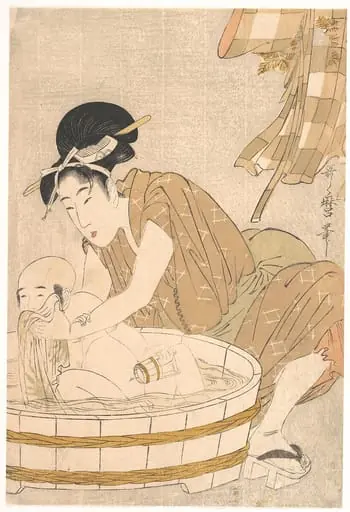 行水|Bathtime (Gyōzui)
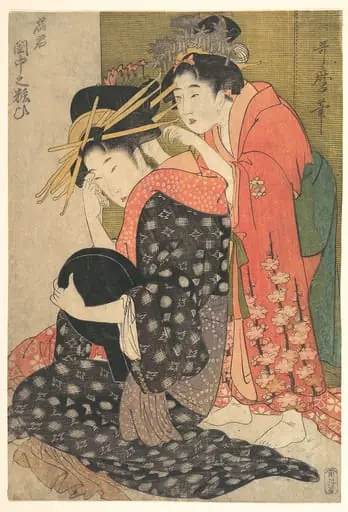 名君 閨中の粧ひ|The Oiran Yoso-oi Seated at Her Toilet
 Untitled
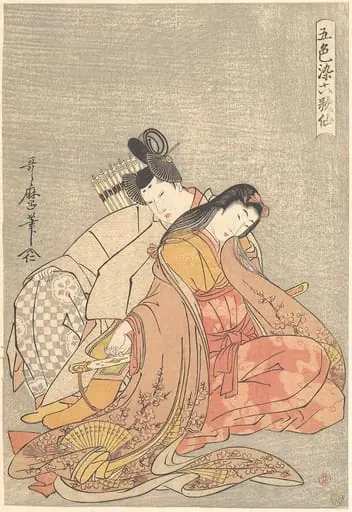 『五色染六歌仙』 在原業平と小野小町|“The Poet Ariwara no Narihira (825–880) and Ono no Komachi,” from the series Five Colors of Love for the Six Poetic Immortals (Goshiki-zome rokkasen)
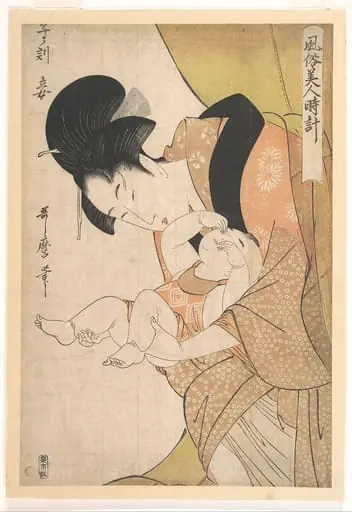 風俗美人時計 子ノ刻 妾|Midnight: Mother and Sleepy Child
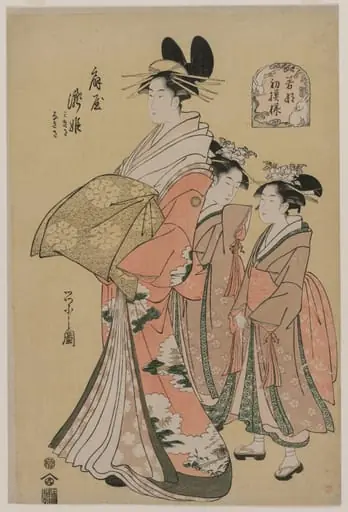 The Courtesan Takihime and Attendants (from the series New Patterns of Young Greens)
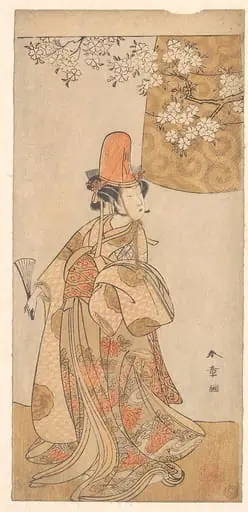 花形見風折烏帽子瀬川富三郎の娘道成寺|Segawa Tomisaburo in the Role of Musume Dojoji in "Hanagatami Kazaori Eboshi"
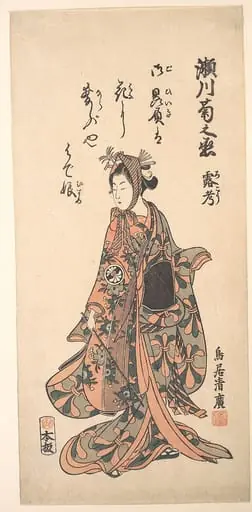 Untitled
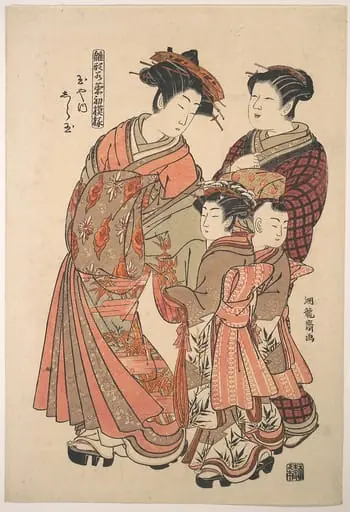 『雛形若菜初模様 玉や内 しら玉』|The Courtesan Shiratama of the Tamaya Brothel, from the series “A Pat-tern Book of the Year’s First Designs, Fresh as Spring Herbs” (“Hinagata wakana hatsu moyō”)
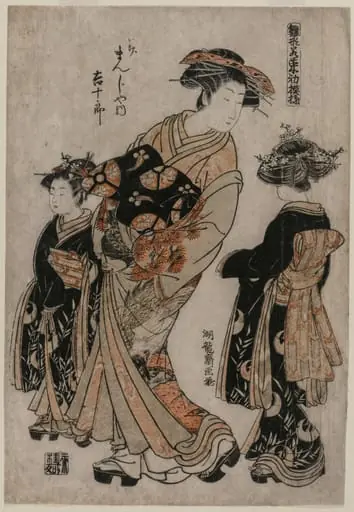 The Courtesan Kichijuro of Kage Manjiya with Two Kamuro (from the series Models for Fashions: New Designs as Fresh as Young Leaves)
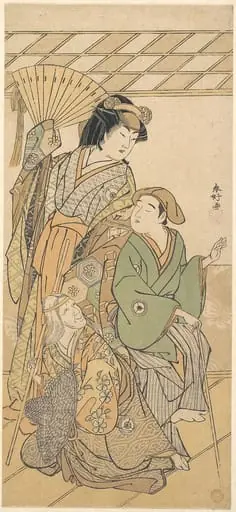 Untitled
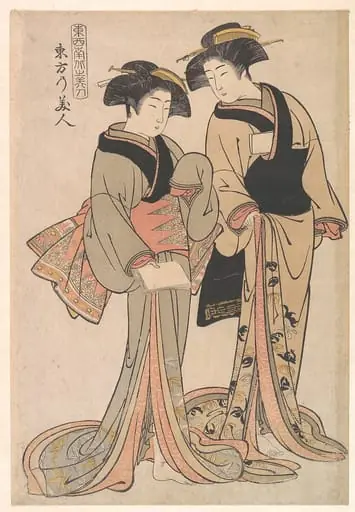 Untitled
 The Courtesan Hinazuru of Chojiya with her Attendants Tsuruji and Tsuruno
 Odari Kafu|Style of the Dancer
 Ukiyoe Ga|The Beauty of the Floating World