Artwork
The Virgin Appearing to a Lady Penitent
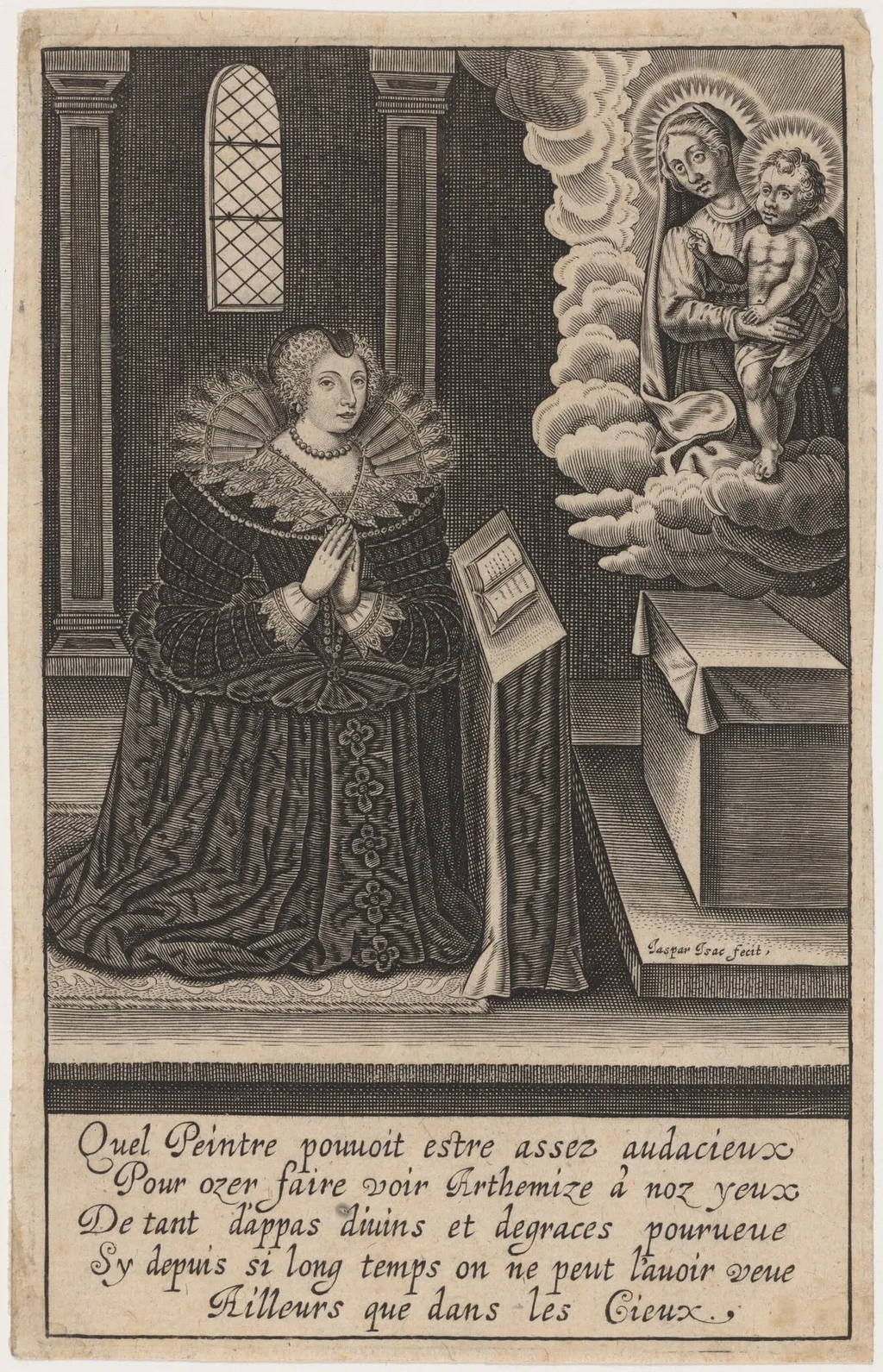
The Virgin Appearing to a Lady Penitent is an ink print by the Renaissance artist Jaspar Isacsz. It dates from 1614 and is held in the collection of the National Gallery of Art.
About this work
Overview
The Virgin Appearing to a Lady Penitent is a 1614 engraving by Jaspar Isacsz, depicting a mystical scene of divine apparition and personal devotion.
Subject & Meaning
The engraving portrays a kneeling lady in prayer, clad in dark, ruffled attire, with the ghostly figure of the Virgin Mary and Child appearing above her. A cross-shaped window and open book on a stand accompany the scene, suggesting themes of penitence, spiritual guidance, and possibly the challenge of artistically rendering the divine.
Technique & Style
Executed in engraving, the work showcases Isacsz's ability to carve detailed scenes into metal. The dreamlike quality is achieved through swirling clouds and the contrast between the lady's dark dress and the luminous apparition.
History & Provenance
Created in 1614, the engraving includes a French inscription that self-consciously queries the audacity of depicting such a bold, mystical moment, adding a layer of meta-commentary on artistic representation.
Context
Understanding the medium of engraving provides insight into the technical skill involved in creating such intricate, detailed works on metal during the early 17th century.
Artist & collection