Artwork
Untitled
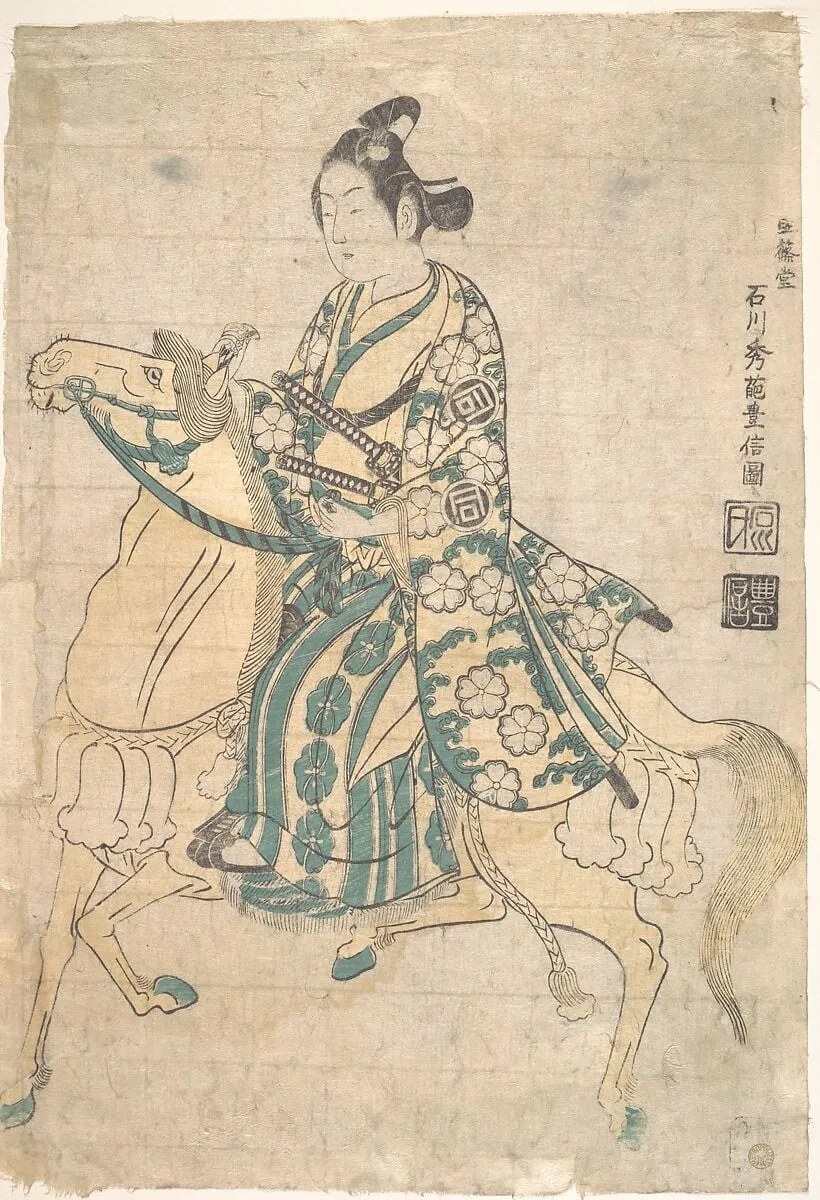
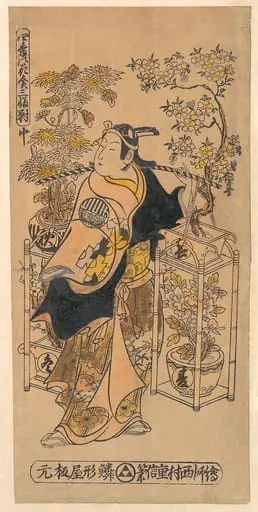
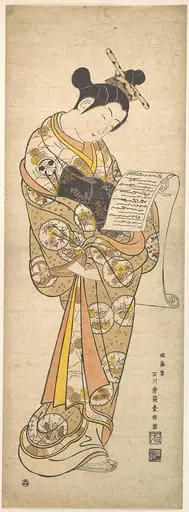
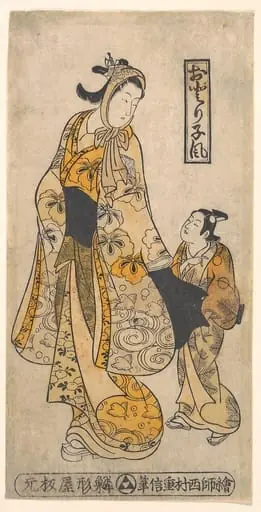
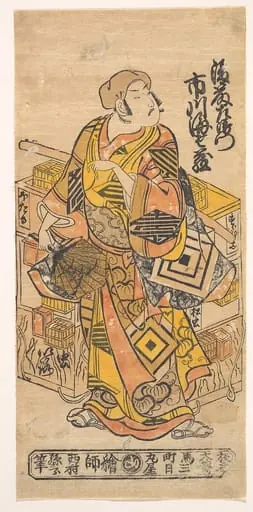
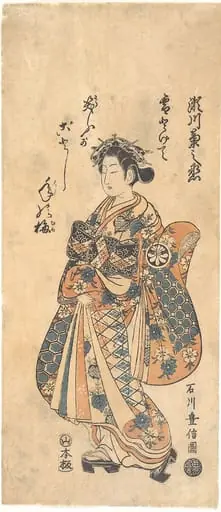
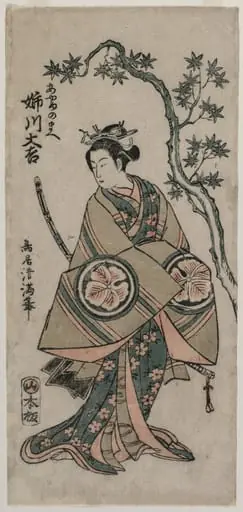
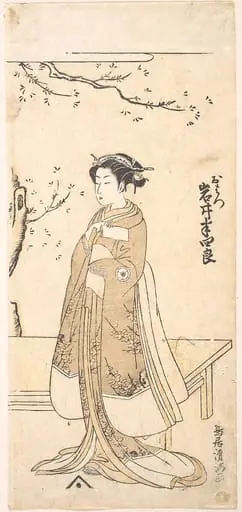
Untitled is an ink print by the Baroque artist Ishikawa Toyonobu. It dates from 1748 and is held in the collection of the Metropolitan Museum of Art.
About this work
Overview
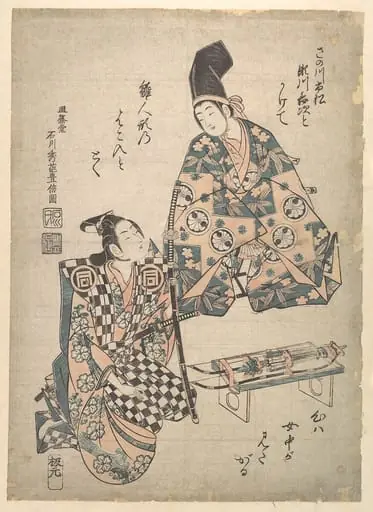
This woodblock print, dated 1748, is the work of Ishikawa Toyonobu, a Japanese artist active during the Edo period. Executed in ink and color on paper, it belongs to the ukiyo-e tradition of mass-produced prints. The piece is part of the collection at The Metropolitan Museum of Art, where it is cataloged as an example of early to mid-18th-century Japanese printmaking.
Subject & Meaning
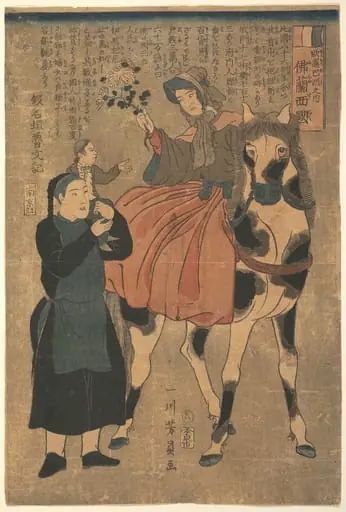
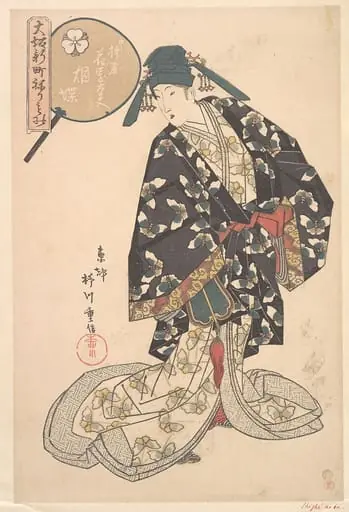
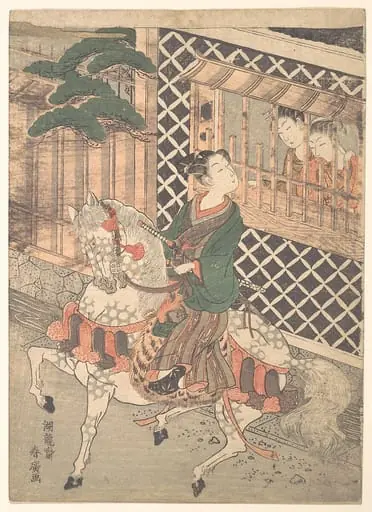
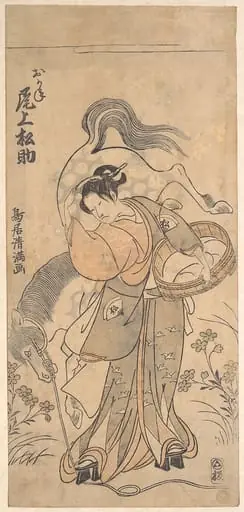
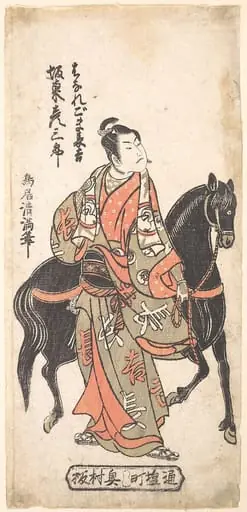
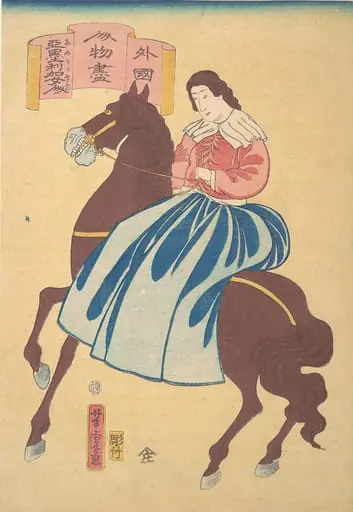
The image depicts a woman riding a horse sideways, a pose suggesting movement and poise. Her attire, adorned with blue floral and cloud motifs, hints at aristocratic or theatrical dress, possibly referencing a historical or literary figure. The calm grip on the reins and composed posture convey control rather than urgency, suggesting a narrative of dignified transit rather than flight or battle.
Technique & Style
The artist employs bold outlines and flat areas of color typical of ukiyo-e, with subtle gradations achieved through careful ink application.
The artist employs bold outlines and flat areas of color typical of ukiyo-e, with subtle gradations achieved through careful ink application. The horse’s musculature is rendered with rapid, expressive lines, evoking energy without detailed realism. The background is left largely unworked, directing attention to the figures. Cross-hatching and layered washes suggest depth and texture without overwhelming the composition’s simplicity.
History & Provenance
Created in 1748, the print emerged during a period of flourishing print culture in Edo. Toyonobu, known for his depictions of beauties and actors, produced this work as part of a broader market for affordable, collectible imagery. It entered The Metropolitan Museum of Art’s collection through documented acquisitions, likely in the early 20th century, as Western institutions began systematically collecting Japanese prints.
Context
In mid-18th century Japan, woodblock prints served as popular visual media, capturing scenes from urban life, theater, and literature. Equestrian imagery, though less common than courtesans or kabuki actors, occasionally appeared in prints associated with historical tales or female warriors. This work reflects the era’s interest in dynamic, stylized figures and the blending of realism with decorative convention.
Legacy
Though not among Toyonobu’s most widely reproduced works, this print exemplifies the technical precision and aesthetic restraint characteristic of his output. It contributes to scholarly understanding of how gender, movement, and costume were visually negotiated in ukiyo-e. Its preservation in a major Western museum underscores its role in bridging Japanese artistic traditions with global art historical discourse.
Artist & collection
Artist
Ishikawa Toyonobu spent his life in Edo, now Tokyo, where he carved and printed the everyday scenes of city life.