Artwork
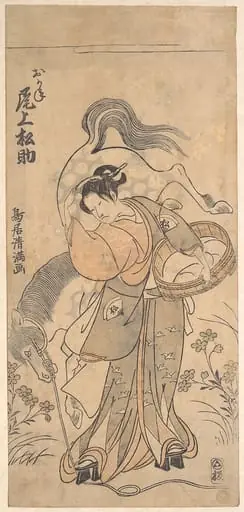
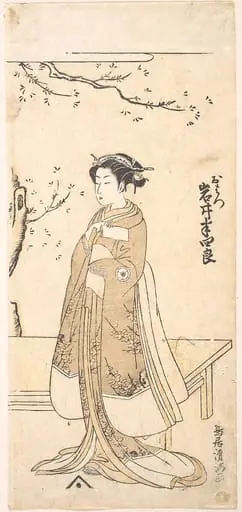
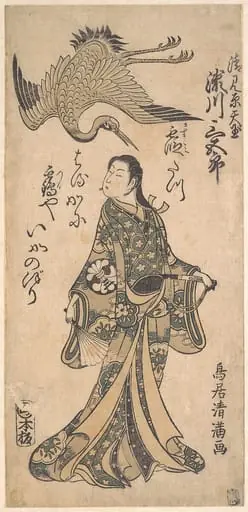
Anekawa Daisuke as Ayame-no-mae
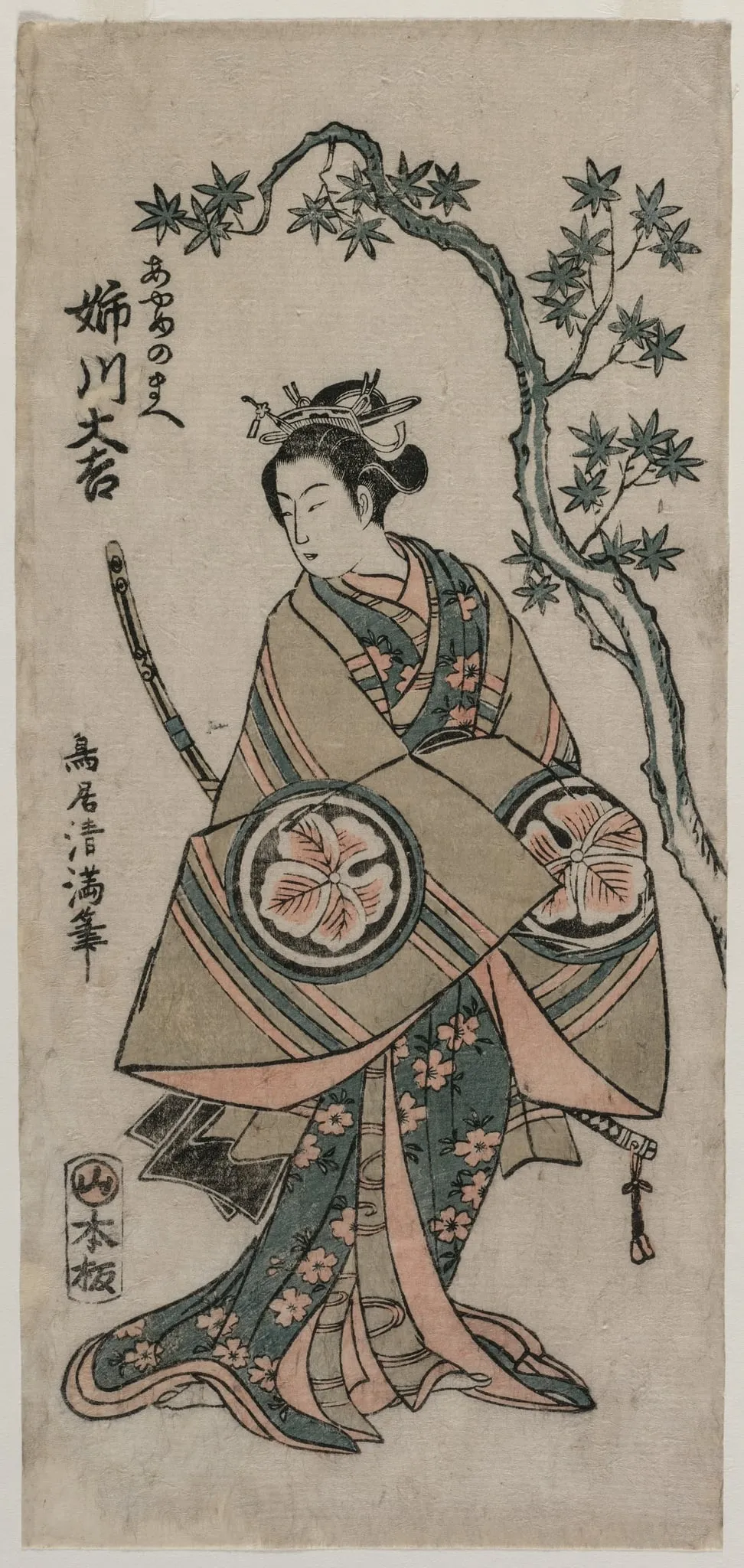
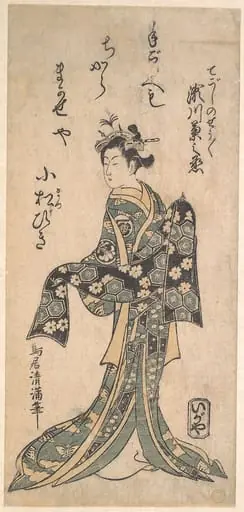
Anekawa Daisuke as Ayame-no-mae is a print by the Romanticist artist Torii Kiyomitsu. It dates from 1760 and is held in the collection of the Cleveland Museum of Art.
About this work
Overview
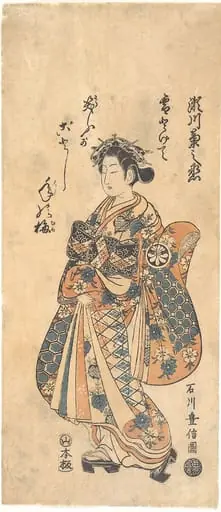
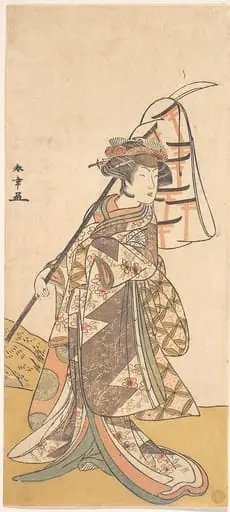
Created in 1760 by Torii Kiyomitsu, this woodblock print depicts the actor Anekawa Daisuke in the role of Ayame-no-mae, a female character from kabuki theater.
Created in 1760 by Torii Kiyomitsu, this woodblock print depicts the actor Anekawa Daisuke in the role of Ayame-no-mae, a female character from kabuki theater. The print is part of the Cleveland Museum of Art’s collection and exemplifies the ukiyo-e tradition of portraying theatrical figures with elegance and precision. Its restrained palette and clean composition reflect the aesthetic priorities of mid-18th century Japanese printmaking.
Subject & Meaning
The figure represents Ayame-no-mae, a refined female role often performed by male actors in kabuki. The elaborate robe, ornate headdress, and fan suggest aristocratic grace, while the floral motifs and branching tree evoke seasonal change and poetic association. The image does not depict a specific narrative but rather captures the idealized presence of the character, emphasizing beauty and theatricality over storytelling.
Technique & Style
Kiyomitsu employed fine, controlled lines to define form and texture, with soft washes of pink, green, and brown creating subtle tonal variation. The background is left largely unadorned, directing focus to the figure and the delicate branch overhead. The robe’s central floral emblem and wide sleeves are rendered with careful detail, while the use of minimal color and open space aligns with the refined sensibilities of Torii school aesthetics.
History & Provenance
The print was produced during the height of ukiyo-e’s popularity in Edo-period Japan, when actor portraits were widely circulated among theater audiences. It entered the Cleveland Museum of Art’s collection through established acquisition channels, likely as part of a broader effort in the 20th century to preserve Japanese prints. Its condition and attribution remain consistent with known works by Kiyomitsu from this period.
Context
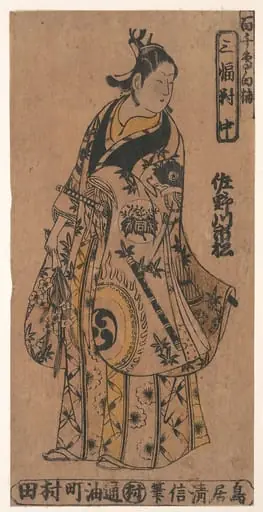
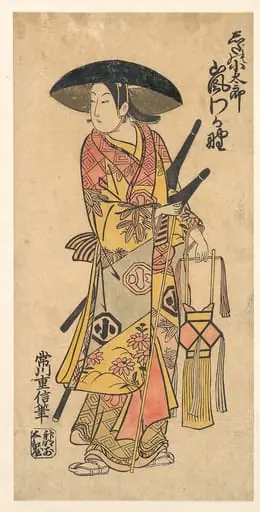
This print belongs to a genre of actor portraiture that flourished in the 1750s–1770s, when the Torii school dominated kabuki advertising through woodblock prints. Kiyomitsu’s style bridged earlier boldness with emerging delicacy, reflecting changing tastes among urban audiences. The emphasis on costume and posture, rather than facial expression, aligns with conventions of the time, where identity was conveyed through attire and gesture.
Legacy
Kiyomitsu’s work helped shape the visual language of kabuki portraiture, influencing later artists in both technique and composition. While less widely known than some contemporaries, his prints are valued for their restraint and attention to textile detail. This piece contributes to the understanding of how theater and print culture intersected in Edo Japan, preserving the aesthetics of performance for later generations.
Artist & collection