Artwork
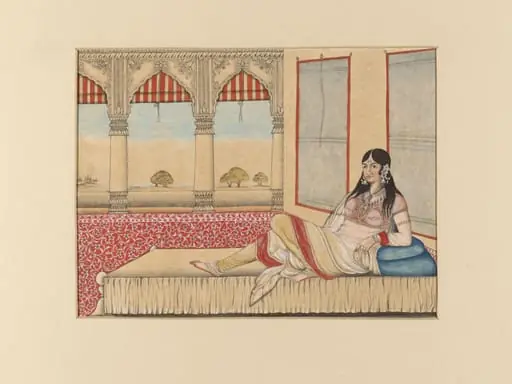
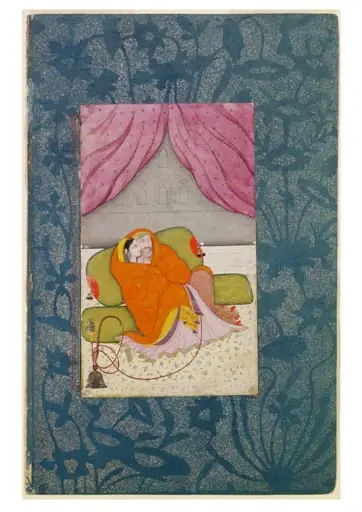
A lady lying on cushions
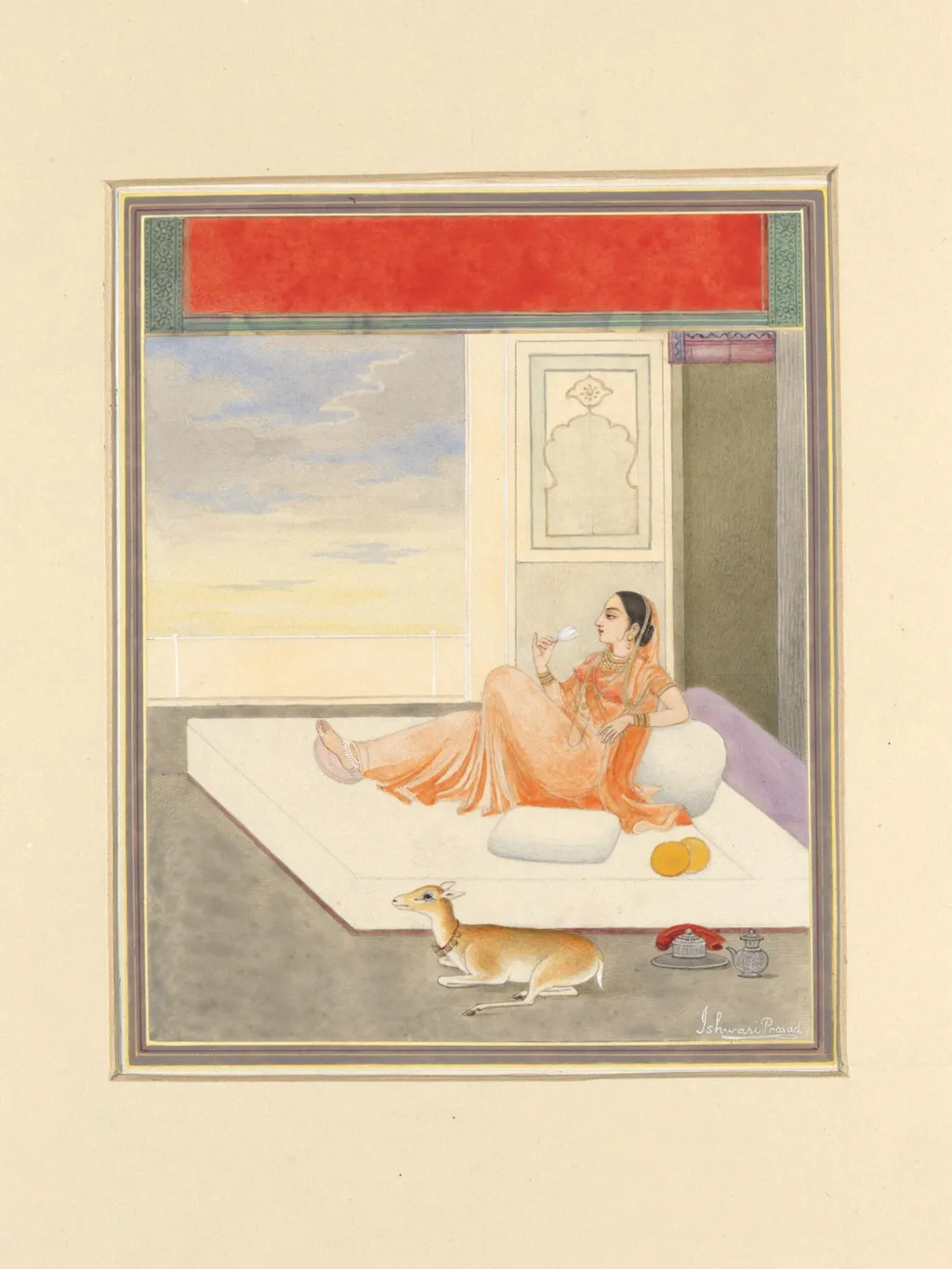
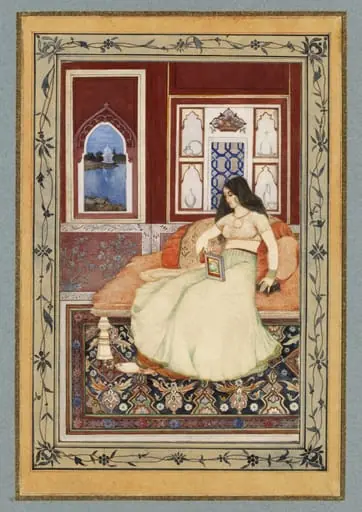
A lady lying on cushions is a paint painting by Ishwari Prasad. It dates from 1940 and is held in the collection of the Victoria and Albert Museum. This watercolor painting depicts a serene interior scene with a woman reclining on cushions near an open window.
About this work
Overview
The artist, Ishwari Prasad, signs his name in the lower corner, affirming authorship within a tradition of intimate, domestic imagery.
This watercolor painting depicts a serene interior scene with a woman reclining on cushions near an open window. The composition is subtly framed by a red border at the top and soft, muted tones throughout. A deer rests outside the window, and modest household items—a pitcher, fruit, and cushions—anchor the quiet atmosphere. The artist, Ishwari Prasad, signs his name in the lower corner, affirming authorship within a tradition of intimate, domestic imagery.
Subject & Meaning
The figure, dressed in bright orange, holds a small object—possibly a lotus—suggesting symbolic associations with purity or contemplation. Her relaxed posture and the presence of the deer imply a tranquil, almost meditative state. The deer, often linked to gentleness in South Asian visual culture, enhances the sense of harmony between human and natural worlds. The scene evokes quietude rather than narrative, inviting reflection rather than interpretation.
Technique & Style
Executed in watercolor, the painting employs delicate washes and soft edges to convey light and texture. The palette is restrained, with warm tones dominating the figure and cooler hues in the background. Details like the folds of fabric and the deer’s fur are suggested with minimal brushwork, emphasizing atmosphere over precision. The flat, decorative border at the top reflects influences from manuscript illumination and regional decorative traditions.
History & Provenance
The painting is attributed to Ishwari Prasad, an artist active in northern India during the late 19th or early 20th century. It likely originated in a courtly or aristocratic setting where personal, intimate subjects were valued. The work entered the Victoria and Albert Museum’s collection through documented acquisition, preserving its connection to a broader tradition of Indian watercolor painting that blended indigenous aesthetics with emerging colonial-era tastes.
Context
Created during a period of cultural transition in India, the painting reflects a blend of traditional Mughal and Rajput miniature influences with newer, more naturalistic approaches encouraged by British art education. While European realism was gaining ground, artists like Prasad maintained a focus on stillness, symbolism, and domestic intimacy. This work stands as an example of how local aesthetics persisted in private, non-official commissions.
Legacy
Though not widely exhibited, the painting contributes to the understanding of lesser-known Indian watercolorists who worked outside major artistic centers. Its preservation in the Victoria and Albert Museum underscores its value as a document of personal expression within a broader artistic milieu. It continues to inform scholarship on the quiet, domestic dimensions of Indian art during the colonial era.
Artist & collection