Artwork
Raja Bhup Singh
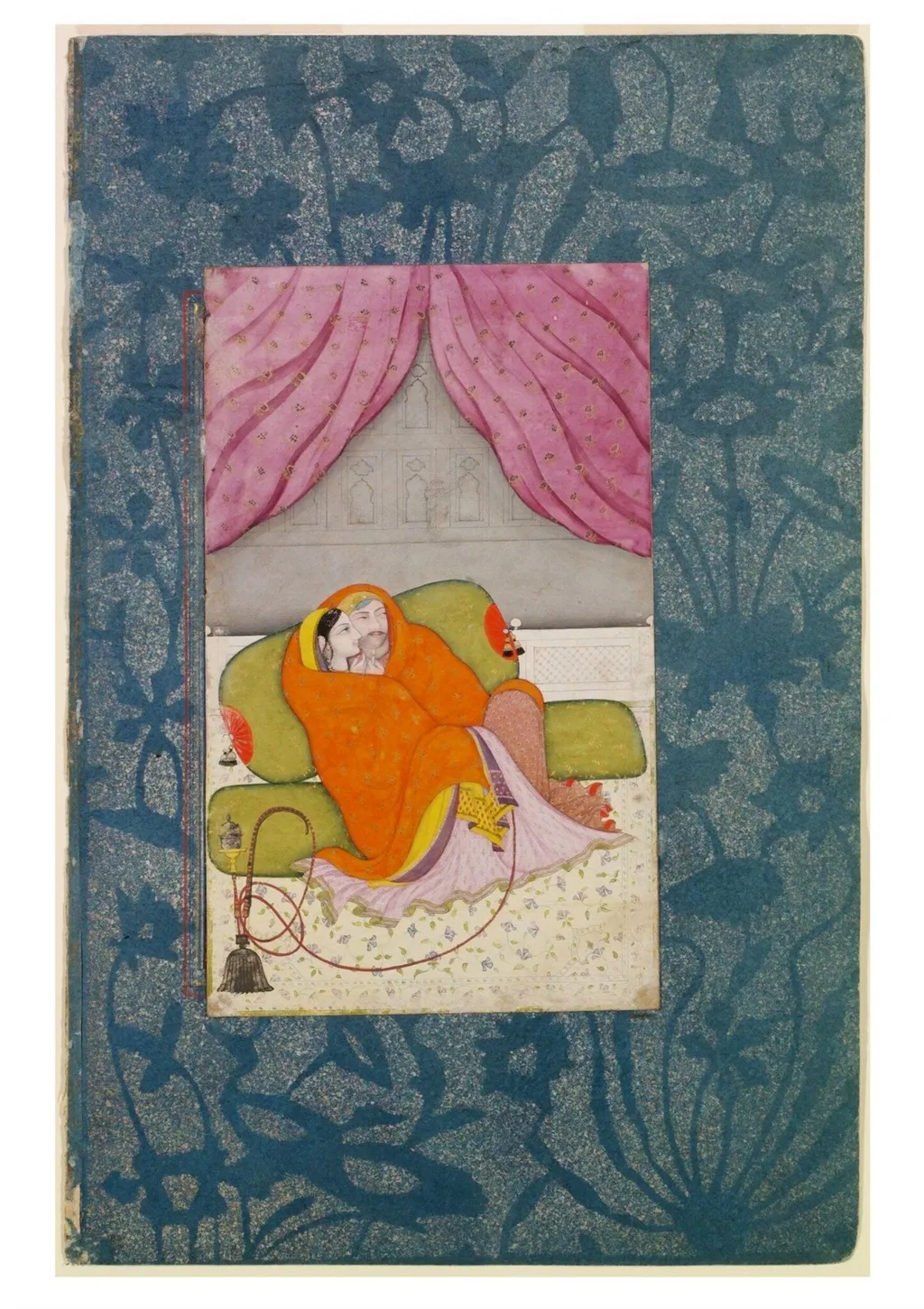
Raja Bhup Singh is a paint painting by the Patna School of Painting artist Unknown. It dates from 1795 and is held in the collection of the Victoria and Albert Museum.
About this work
Overview
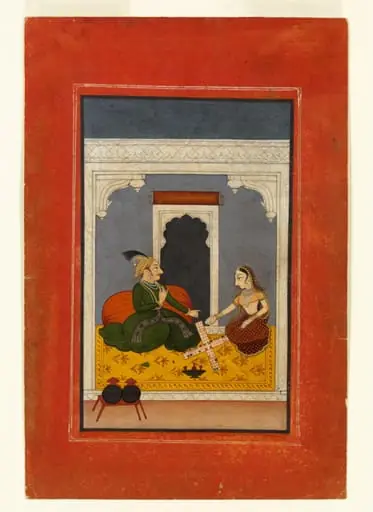
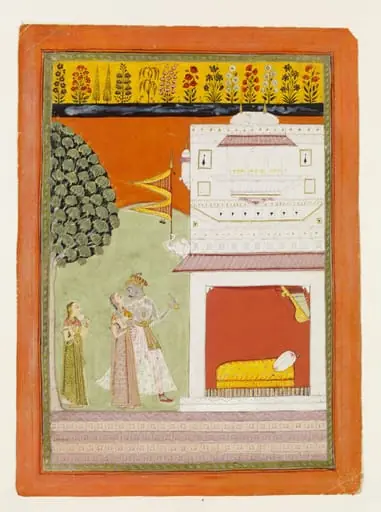
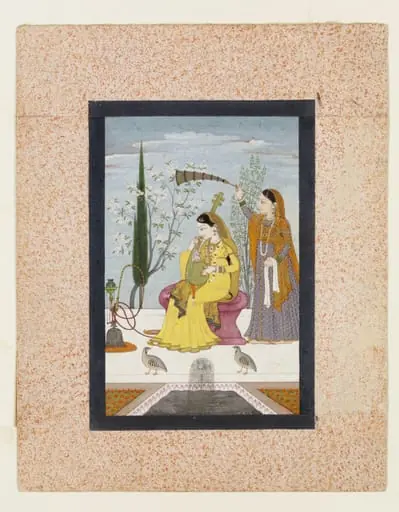
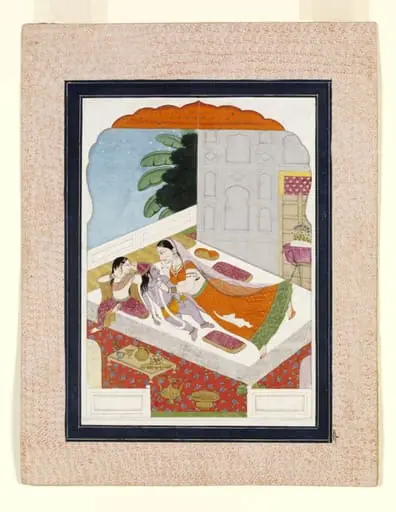
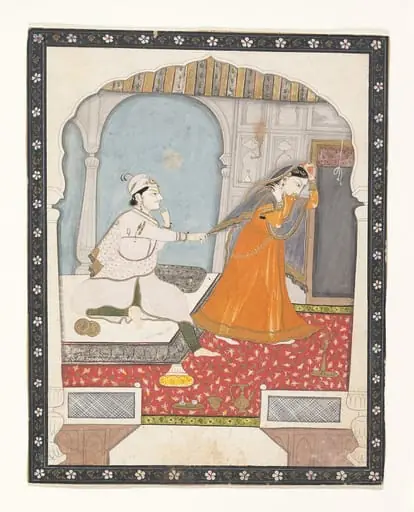
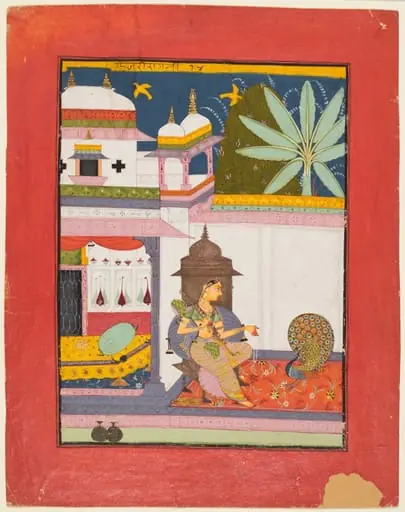
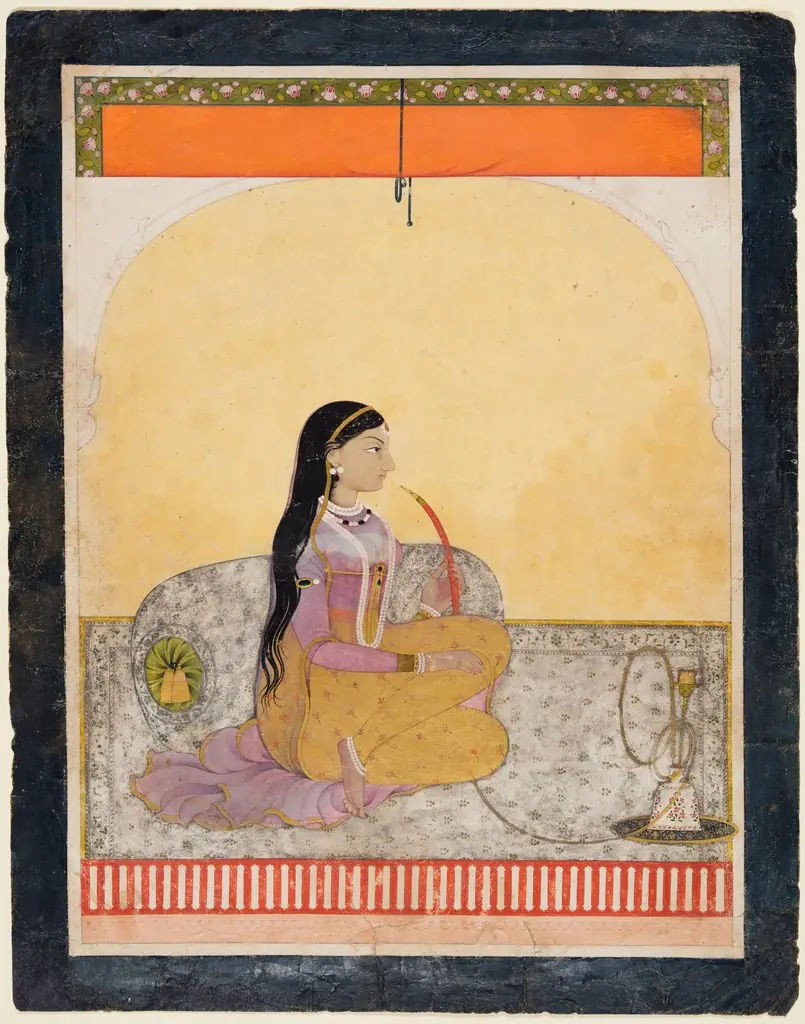
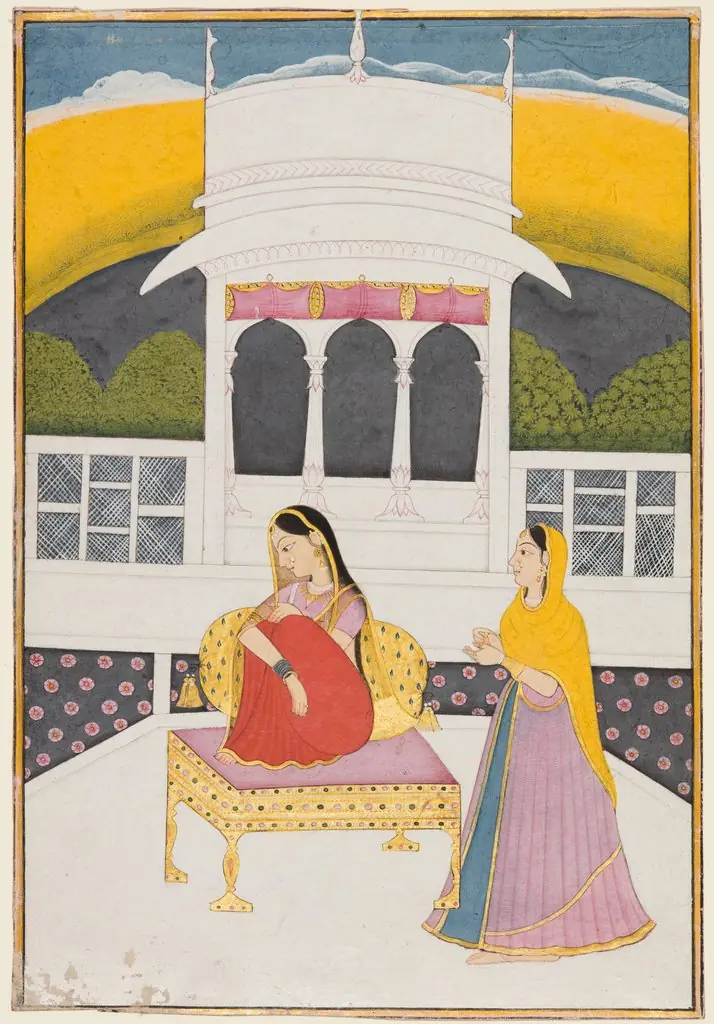
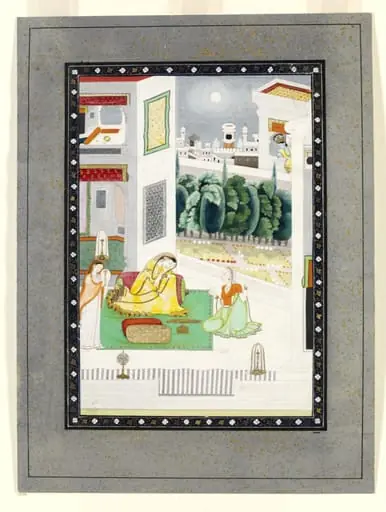
The work portrays Raja Bhup Singh of Guler reclining beside a woman on a green couch, both swathed in vivid orange and soft pink textiles. A sage‑green bolster supports them, while a huqqa pipe rests nearby. A window with pink curtains admits light onto a white, arched wall, and a patterned rug covers the floor. Executed in opaque watercolour on paper, the piece is dated 1795.
Subject & Meaning
The scene captures an intimate domestic moment, suggesting a private leisure setting within a princely residence. The ruler’s relaxed posture, the shared fabric, and the presence of a water pipe convey a sense of personal comfort and informal hospitality, offering insight into the lifestyle and social customs of late‑18th‑century Indian aristocracy.
Technique & Style
Rendered with opaque watercolour, the artist employs flat, saturated hues and minimal shading, characteristic of contemporary court painting. The bold orange and mauve fabrics contrast sharply with the muted green of the couch, while the composition emphasizes decorative pattern over realistic depth, reflecting a stylised aesthetic prevalent in the period.
Context
Created in 1795, the painting belongs to the late Mughal‑influenced tradition that persisted in northern Indian courts such as Guler. During this era, regional rulers commissioned works that blended indigenous iconography with Persianate courtly conventions, often using watercolour on paper for its quick execution and vivid colour.
Legacy
As a visual document, the painting provides valuable evidence of elite domestic interiors and the material culture of the Guler kingdom. Its preservation contributes to understanding the diffusion of artistic practices across Indian princely states in the twilight of Mughal artistic dominance.
Artist & collection

 Domestic Scene
 Giacomo and Cardinal Marco, investing Andrea, Abbot of San Zeno, with his Benefice
 The Nymph of Fontainebleau
 Portrait of a Woman
 Madonna and Child with Saints in the Enclosed Garden
 Venus and Minerva
 Family Group of Four on Sofa
 Wall painting from Room H of the Villa of P. Fannius Synistor at Boscoreale