Artwork
Courtesan in a Room Overlooking Edo Bay
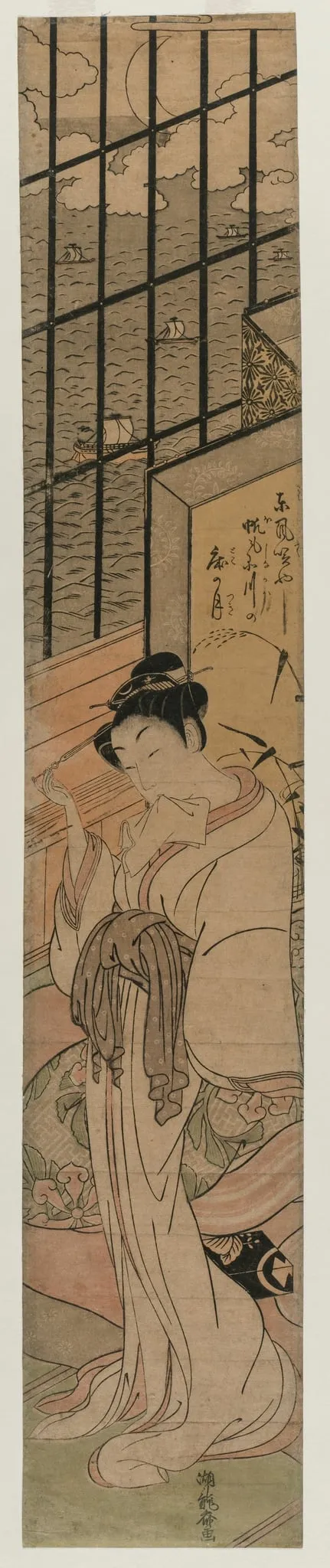
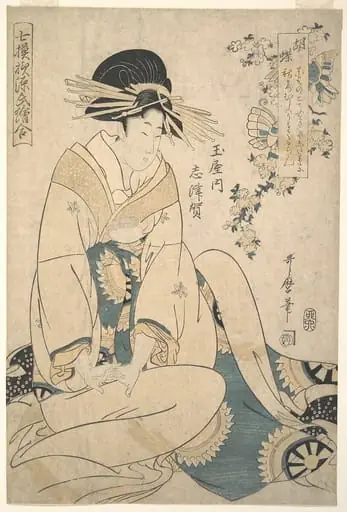
Courtesan in a Room Overlooking Edo Bay is a print by the Romanticist artist Isoda Koryūsai. It dates from 1770 and is held in the collection of the Cleveland Museum of Art.
About this work
Overview
Created around 1770 by Isoda Koryūsai, this woodblock print depicts a courtesan in a domestic interior with a view of Edo Bay. The work is part of the Cleveland Museum of Art’s collection and exemplifies the ukiyo-e tradition of capturing fleeting moments of urban life. Its composition balances intimate interior space with the distant horizon, inviting quiet contemplation.
Subject & Meaning
The figure, a high-ranking courtesan, stands near a window, holding a fan and gazing outward. Her posture suggests introspection rather than performance, subtly shifting the focus from spectacle to solitude. The view of the bay and idle boats implies a pause in her daily rhythm, hinting at the tension between public role and private thought in Edo-period pleasure quarters.
Technique & Style
Koryūsai employed delicate lines and muted pigments to suggest atmosphere rather than detail. Light falls softly across the woman’s face, creating subtle chiaroscuro effects without heavy contrast. The exterior landscape is rendered with minimal strokes, leaving much to the viewer’s imagination. This restraint reflects a refined aesthetic favoring suggestion over literalism.
History & Provenance
The print was produced during the late 18th century, a period when woodblock prints of courtesans were widely circulated among urban elites. It entered the Cleveland Museum of Art’s collection in the 20th century, likely through early Western acquisitions of Japanese prints. Its preservation reflects its status as a representative example of Koryūsai’s genre scenes.
Context
In Edo-period Japan, courtesan imagery was central to ukiyo-e, often celebrating beauty and fashion. Yet this print diverges by emphasizing stillness over display. The quiet bay, visible through a simple wooden frame, contrasts with the bustling pleasure districts, offering a rare glimpse into moments of solitude within a highly regulated social world.
Legacy
Koryūsai’s work contributed to the evolution of ukiyo-e by moving beyond overt eroticism toward psychological nuance. This print influenced later artists who sought to convey inner life through composition and light. Its restrained style remains a touchstone for understanding how everyday moments were elevated in Japanese printmaking.
Artist & collection

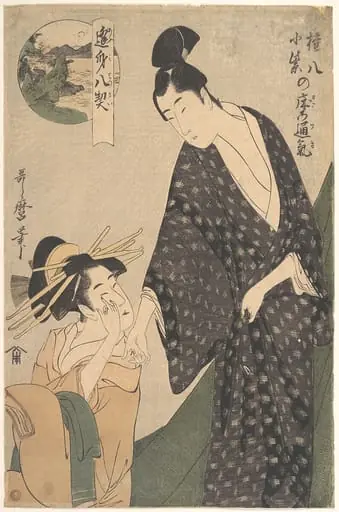 逢身八契 権八小紫の床の通気|Gonpachi ni Komurasaki no Toko no Tsuki
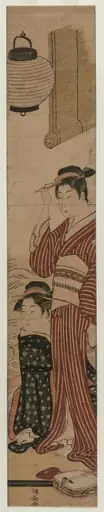 Two Geisha on a Balcony
 Untitled
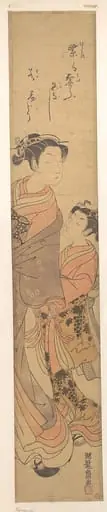 Untitled
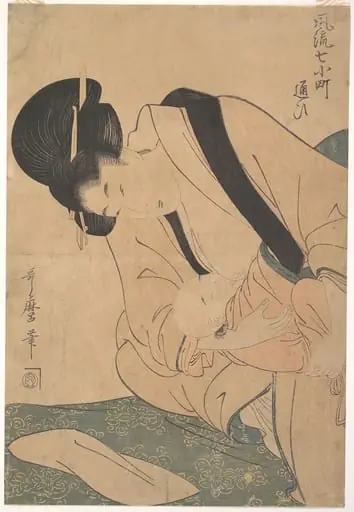 風流七小町 通ひ|Young MotHer Nursing Her Baby
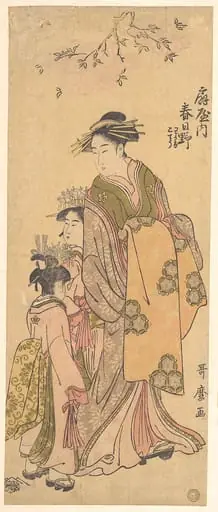 扇屋内春日野わかな こてう|The Oiran Kasugano of Ōgiya on Parade
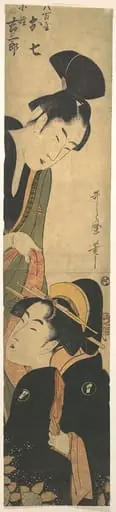 八百屋お七 寺小姓吉三郎|O Shichi and Kichisaburo
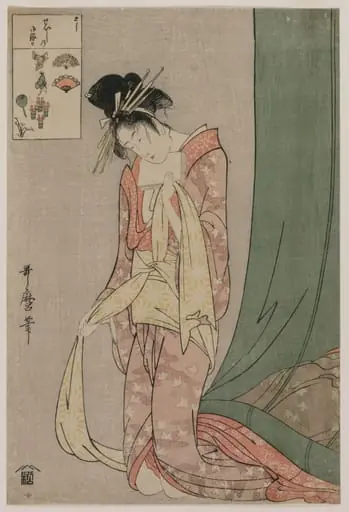 Hanaōgi of Ōgiya from the series Picture Puzzles
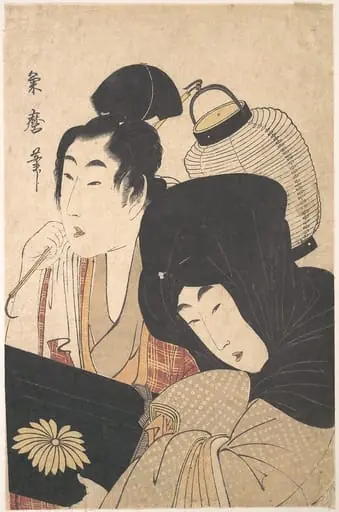 Untitled
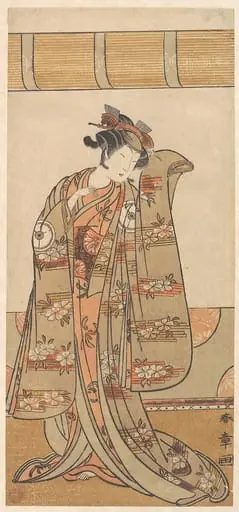 Untitled
 Untitled
 玉屋内 志津賀|A Courtesan