Artwork
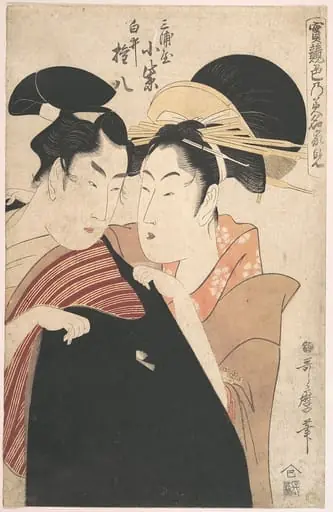
逢身八契 権八小紫の床の通気|Gonpachi ni Komurasaki no Toko no Tsuki
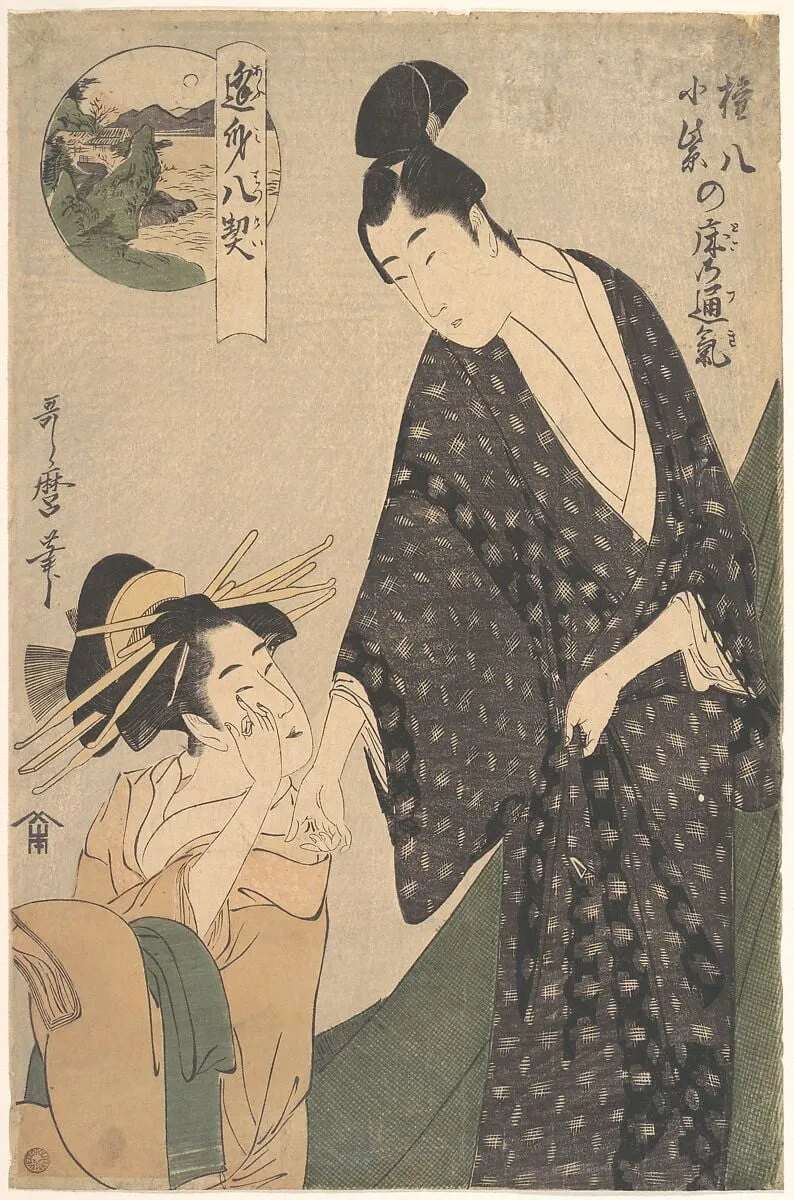
逢身八契 権八小紫の床の通気|Gonpachi ni Komurasaki no Toko no Tsuki is an ink print by the Romanticist artist Kitagawa Utamaro. It dates from 1795 and is held in the collection of the Metropolitan Museum of Art.
About this work
Overview
This woodblock print, dated around 1795, is attributed to Kitagawa Utamaro, a prominent figure in Japanese ukiyo-e. Executed in ink and color on paper, it depicts an intimate interior scene. The composition balances figural interaction with subtle decorative elements, characteristic of the artist’s exploration of private moments within urban life.
Subject & Meaning
The presence of a small landscape painting and calligraphic inscription on the wall introduces themes of transience and emotional resonance.
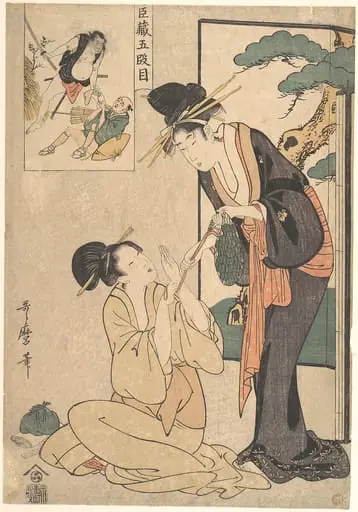
The scene portrays two individuals in a subdued domestic setting, their postures suggesting a moment of quiet connection. One figure kneels, gazing downward while holding a fan, while the other stands, clad in an elaborate robe and tall hat, gently grasping the seated person’s hand. The presence of a small landscape painting and calligraphic inscription on the wall introduces themes of transience and emotional resonance.
Technique & Style
Utamaro employs delicate linework and layered pigments to achieve depth and texture. The standing figure’s robe is rendered with cross-hatching—a method of intersecting lines—to create tonal variation and dimensionality. This technique, combined with restrained coloration, enhances the print’s atmospheric quality while adhering to the conventions of ukiyo-e portraiture.
History & Provenance
Produced during the late Edo period, the print reflects the cultural flourishing of woodblock printing in Japan. It entered the collection of The Metropolitan Museum of Art, where it remains part of the institution’s holdings on Japanese graphic arts. Its preservation offers insight into the aesthetic and social preoccupations of its time.
Context
The work belongs to a genre of ukiyo-e that focused on private, often romanticized scenes of urban life. Such prints were circulated among a literate merchant class, serving as both decoration and narrative vignettes. Utamaro’s portrayal of fleeting human interactions aligns with the broader artistic interest in capturing ephemeral beauty.
Artist & collection


 Untitled
 Untitled
 実競色乃美名家見 三浦屋小紫 白井権八|The Lovers Miura-ya Komurasaki and Shirai Gonpachi.
 行水|Bathtime (Gyōzui)
 名君 閨中の粧ひ|The Oiran Yoso-oi Seated at Her Toilet
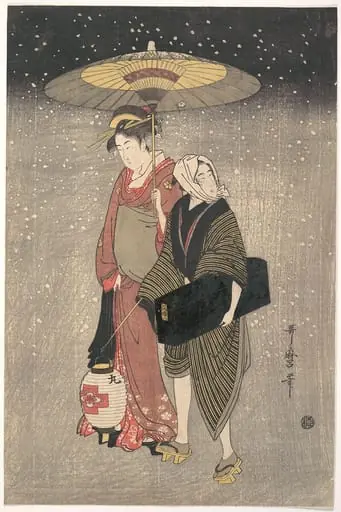 Untitled
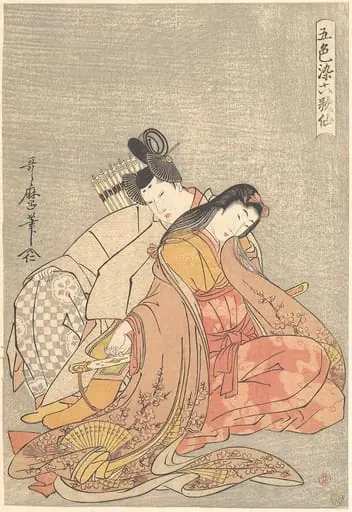 『五色染六歌仙』 在原業平と小野小町|“The Poet Ariwara no Narihira (825–880) and Ono no Komachi,” from the series Five Colors of Love for the Six Poetic Immortals (Goshiki-zome rokkasen)
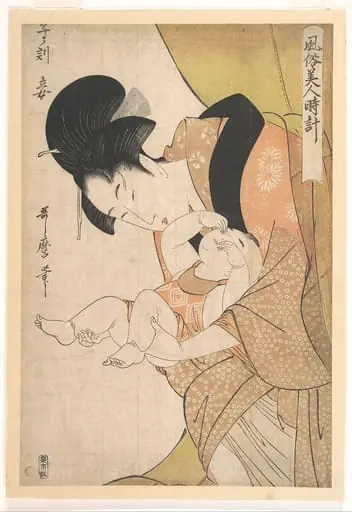 風俗美人時計 子ノ刻 妾|Midnight: Mother and Sleepy Child