Artwork
『雛形若菜の初模様 扇屋内 七越』|The Courtesan Nanakoshi of the Ōgiya Brothel, from the series “A Pat-tern Book of the Year’s First Designs, Fresh as Spring Herbs” (“Hinagata wakana no hatsu moyō”)
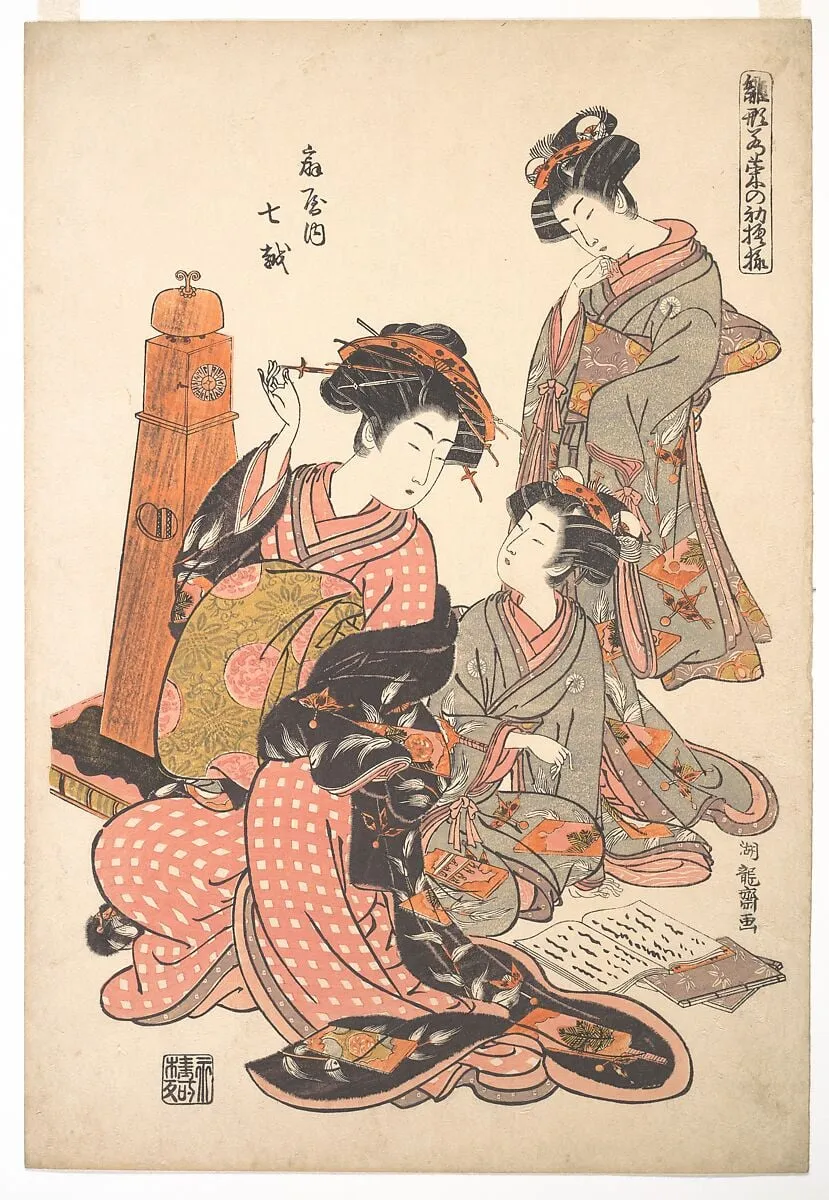
『雛形若菜の初模様 扇屋内 七越』|The Courtesan Nanakoshi of the Ōgiya Brothel, from the series “A Pat-tern Book of the Year’s First Designs, Fresh as Spring Herbs” (“Hinagata wakana no hatsu moyō”) is an ink print by the Romanticist artist Isoda Koryūsai. It dates from 1778 and is held in the collection of the Metropolitan Museum of Art.
About this work
Overview
Created in 1778 by the ukiyo-e artist Isoda Koryūsai, this multicolored woodblock print belongs to a series that presented the latest fashions of the year.
Created in 1778 by the ukiyo-e artist Isoda Koryūsai, this multicolored woodblock print belongs to a series that presented the latest fashions of the year. It portrays three elegantly dressed women inside the Ōgiya brothel, each adorned in vivid kimono patterns. The work is part of the Metropolitan Museum of Art’s collection and exemplifies the commercial print culture of late‑eighteenth‑century Edo.
Subject & Meaning
The three figures are identified as courtesans, professional entertainers who combined performance, conversation, and refined aesthetics. One holds a folding fan and a small lacquered box, another rests a scroll on her lap, while the third leans her head on her hand, suggesting a moment of relaxed intimacy or private dialogue. The setting and accessories hint at leisurely storytelling or the presentation of seasonal motifs.
Technique & Style
Executed with traditional woodblock methods, the image combines black line work with layered pigments of red, pink, and earth tones. Koryūsai employs bold outlines to define the intricate kimono designs, while subtle cross‑hatching adds depth to the figures and background. The composition balances flat decorative surfaces with a sense of three‑dimensional space, characteristic of late Edo period prints.
History & Provenance
The print was produced for a pattern book that circulated new designs among merchants and patrons of fashion. After circulating in Japan, it entered the Western art market in the early twentieth century and was acquired by the Metropolitan Museum of Art, where it remains on view as part of the museum’s Japanese prints collection.
Context
During the 1770s, the Ōgiya brothel was one of several licensed pleasure houses in Edo that served as hubs for cultural exchange. Prints like this served both as advertisements for the establishments and as visual records of contemporary dress. Koryūsai’s work reflects the growing consumer appetite for fashionable imagery and the role of ukiyo-e in documenting urban life.
Artist & collection

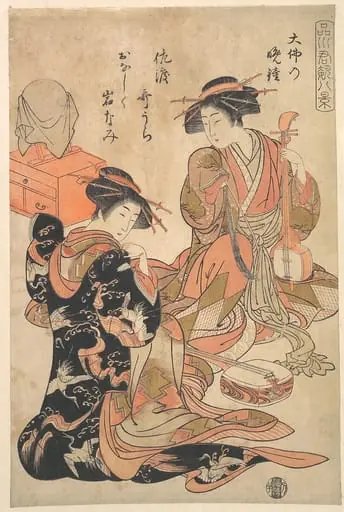 Daibutsu no bansho|Vesper Bell of the Temple of Great Buddha
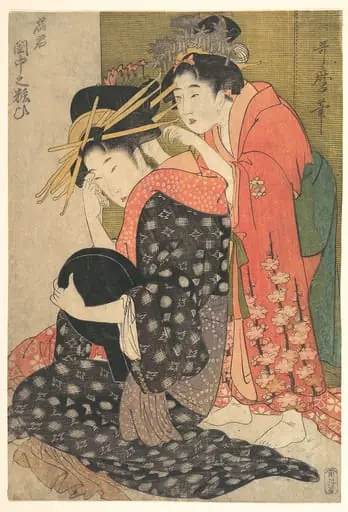 名君 閨中の粧ひ|The Oiran Yoso-oi Seated at Her Toilet
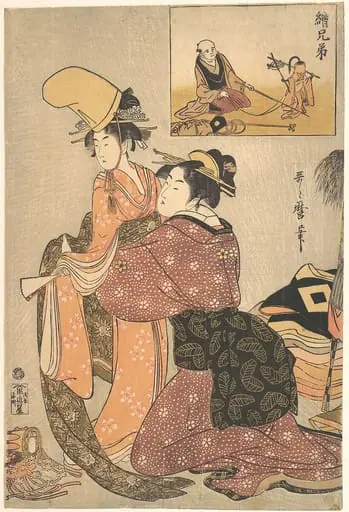 喜多川歌麿画 絵兄弟娘道成寺 見立猿廻し 「絵兄弟」|A Woman Dressing a Girl for a the Kabuki Dance “Musume Dojōji,” with “Brother Picture” (E-kyōdai) of a Monkey Trainer
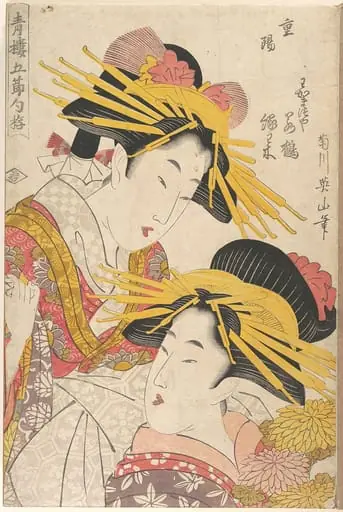 Untitled
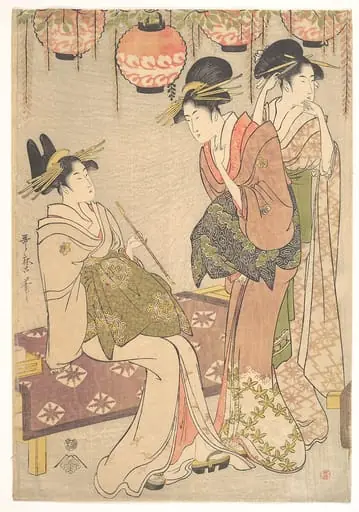 Untitled
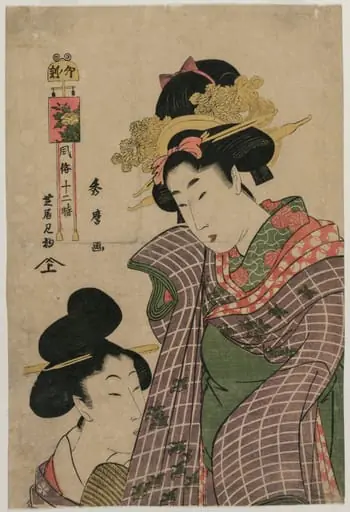 Going to the Kabuki Theater in the Hour of the Hare (From the Series The Twelve Hours with Daily Events)
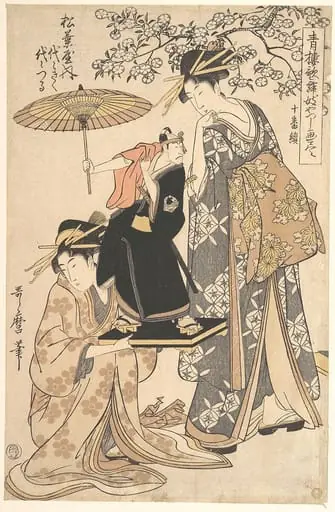 青楼歌舞妓やつし画尽 十番続|The Oiran Yoyogiku of Matsubaya Standing under a Cherry Tree