Artwork
Untitled
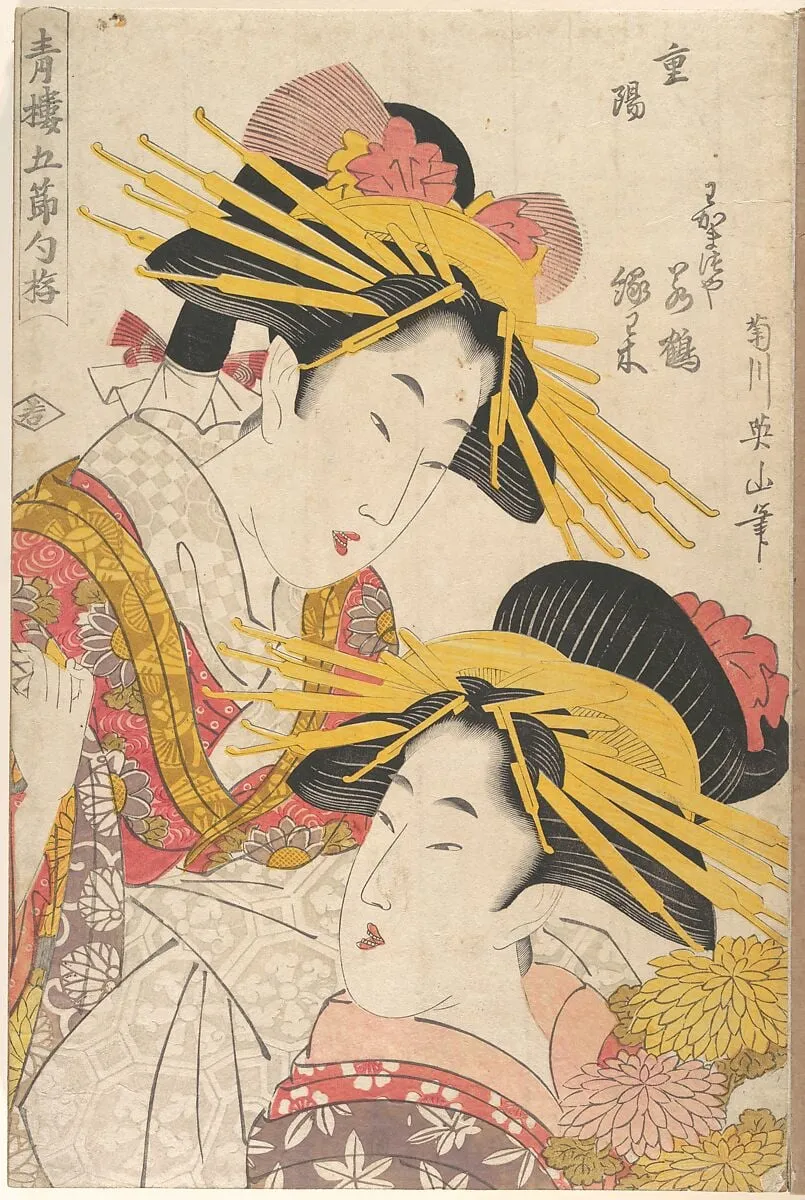
Untitled is an ink print by the Romanticist artist Kikugawa Eizan|Utagawa Kunisada|Utagawa Kunimaru. It dates from 1834 and is held in the collection of the Metropolitan Museum of Art.
About this work
Overview
This album of twenty-four woodblock prints, created by Kikugawa Eizan in 1834, presents a series of figures rendered in ink and color on paper.
This album of twenty-four woodblock prints, created by Kikugawa Eizan in 1834, presents a series of figures rendered in ink and color on paper. Each sheet captures intimate moments of women in Edo-period dress, emphasizing elegance through restrained color and precise line work. The entire set is held in the collection of The Metropolitan Museum of Art, where it serves as an example of late ukiyo-e portraiture focused on everyday beauty rather than theatrical scenes.
Subject & Meaning
The prints depict women of the urban elite, likely courtesans or high-status entertainers, engaged in quiet, contemplative poses. Their elaborate hairstyles and ornate kimonos suggest social standing, while the absence of narrative context invites focus on personal demeanor. The fan, held by one figure, may imply refinement or a subtle gesture of restraint, common in depictions of female interiority during the period.
Technique & Style
Eizan employed layered washes of ink and color to achieve subtle tonal variation, avoiding flat areas despite limited palettes. Sharp, angular lines define hair and fabric folds, creating volume through cross-hatching and controlled shadowing. Gold accents and bold reds contrast against dark backgrounds, enhancing the figures' presence without overwhelming the composition. The technique reflects a shift toward refined, intimate portraiture within the ukiyo-e tradition.
History & Provenance
Produced in 1834 during the late Edo period, this album was likely commissioned for private collectors rather than mass distribution. It entered The Metropolitan Museum of Art’s collection through documented acquisition, preserving its original format as a bound set. The survival of all twenty-four sheets is uncommon, as such albums were often disbound or damaged over time.
Context
Eizan worked during a time when ukiyo-e shifted from dramatic actor and landscape prints toward more personal, domestic scenes. His focus on women’s attire and demeanor aligns with growing interest in fashion and private life among Edo’s merchant class. The album reflects the aesthetic values of its era: understated luxury, attention to detail, and the quiet dignity of daily existence.
Legacy
Though less widely known than contemporaries like Hokusai or Hiroshige, Eizan’s work contributed to the evolution of female portraiture in Japanese printmaking. His emphasis on texture, pattern, and subtle expression influenced later artists who sought to capture the nuance of individual presence over spectacle. This album remains a key reference for understanding the quiet sophistication of early 19th-century Japanese print culture.
Artist & collection

Artist
Kikugawa Eizan|Utagawa Kunisada|Utagawa Kunimaru
Utagawa Kunisada, also known as Utagawa Toyokuni III, was a Japanese ukiyo-e artist.

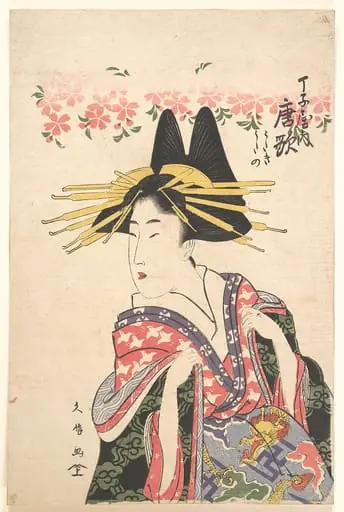 Untitled
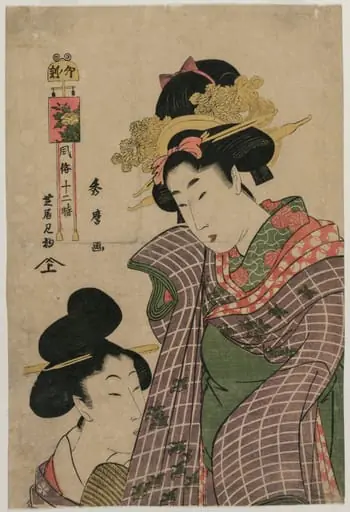 Going to the Kabuki Theater in the Hour of the Hare (From the Series The Twelve Hours with Daily Events)
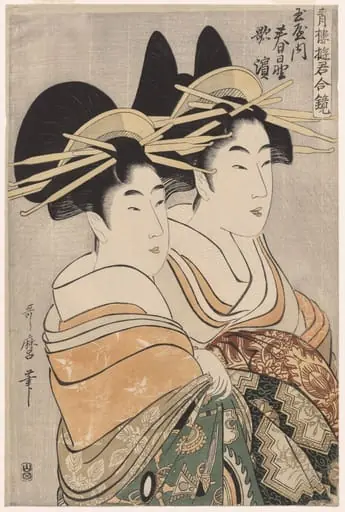 The Courtesans Kasugano and Utahama of Tamaya, from Courtesans of the Pleasure Quarters in Double Mirrors
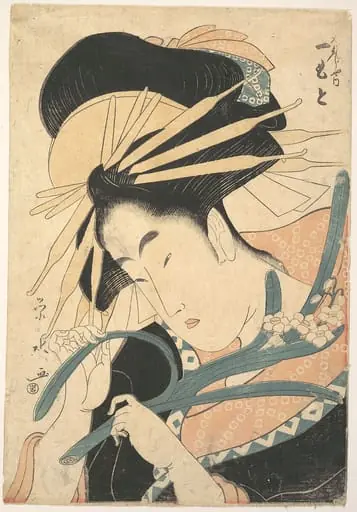 Untitled
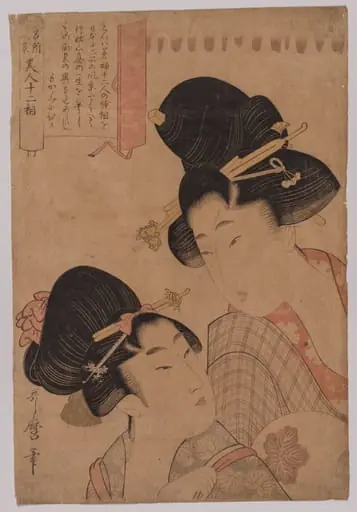 Two Courtesans
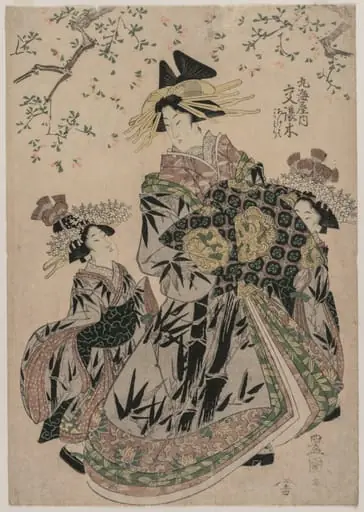 The Courtesan Katakoshigi (?) of Maruebiya with her Kamuro Ageha and Midori
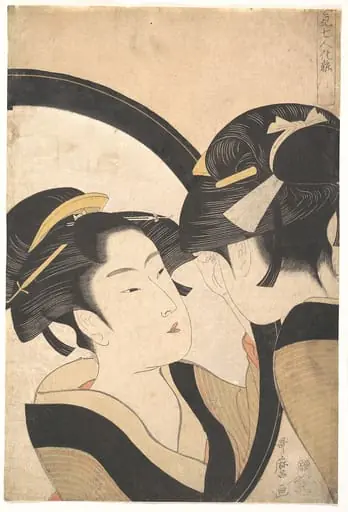 姿見七人化粧|Naniwa Okita Admiring Herself in a Mirror
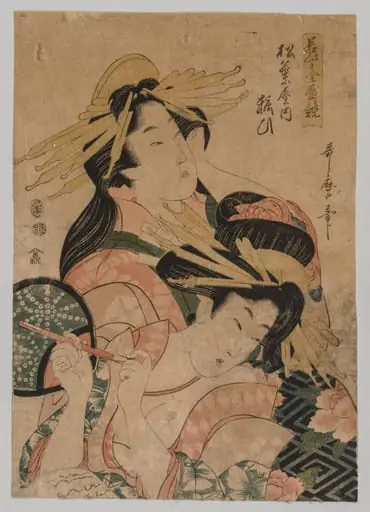 Half-length Portrait of Two Courtesans
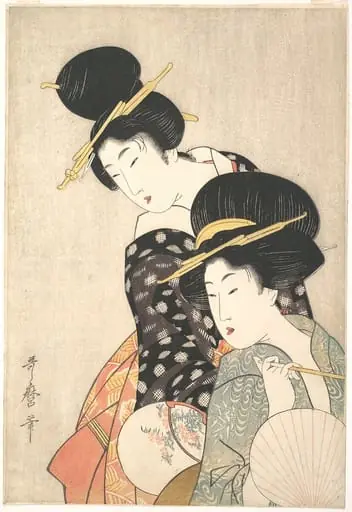 Untitled
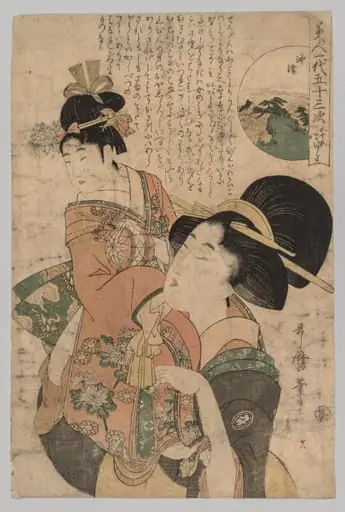 Nakatsu, from the series Fifty-three Stations in the Life of a Beauty
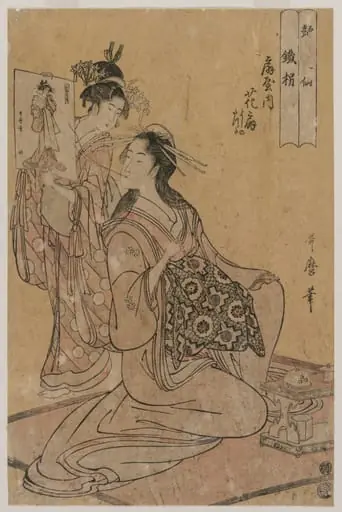 The Courtesan Hana-ogi of Ogiya as the Sennin Tekkai (from the series Eight Immortals of Sensuality)
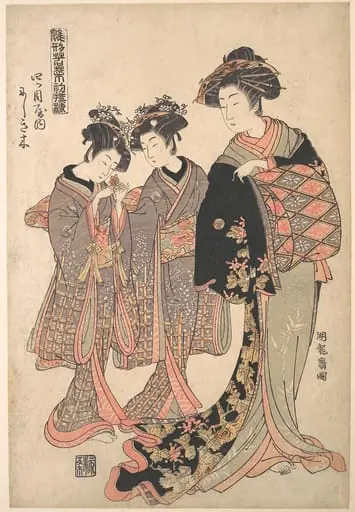 『雛形若菜初模様 四ツ目屋内 にしき木』|The Courtesan Nishikigi of the Yotsumeya Brothel, from the series “A Pattern Book of the Year’s First Designs, Fresh as Spring Herbs” (“Hinagata wakana hatsu moyō”)