Artwork
喜多川歌麿画 絵兄弟娘道成寺 見立猿廻し 「絵兄弟」|A Woman Dressing a Girl for a the Kabuki Dance “Musume Dojōji,” with “Brother Picture” (E-kyōdai) of a Monkey Trainer
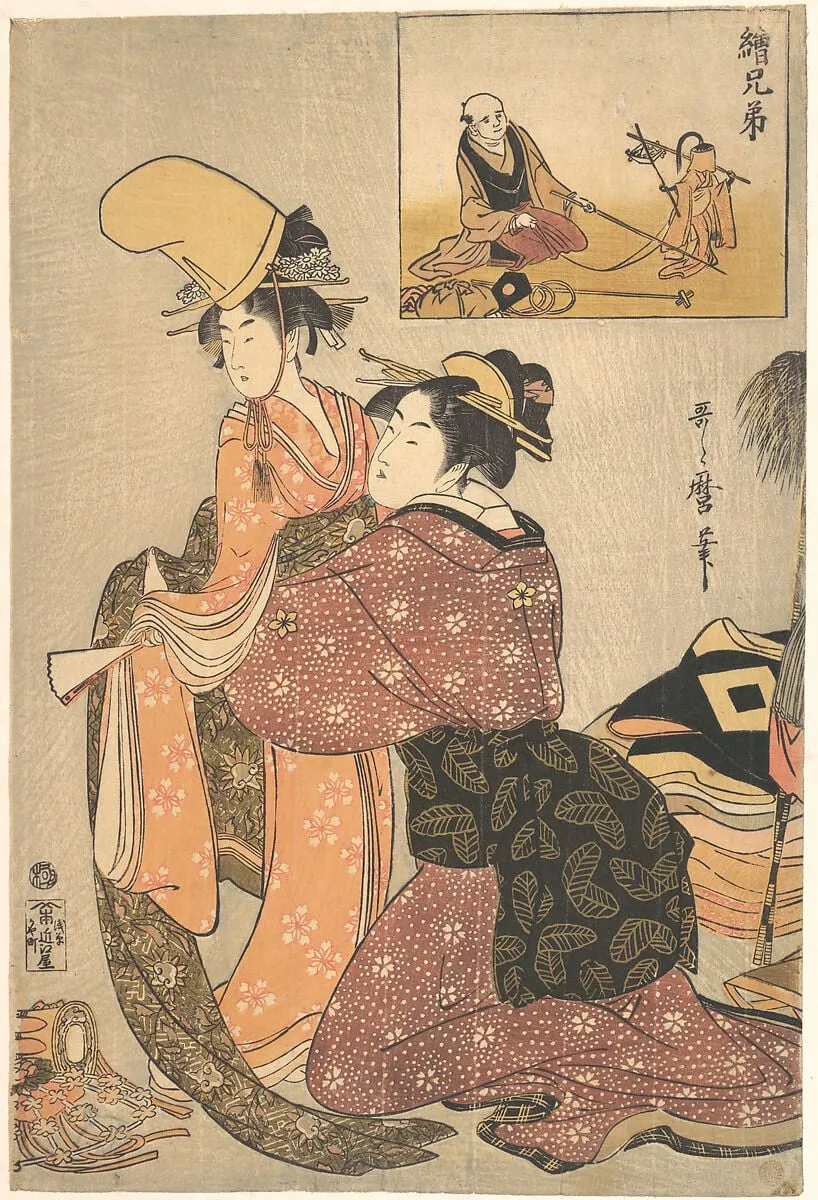
喜多川歌麿画 絵兄弟娘道成寺 見立猿廻し 「絵兄弟」|A Woman Dressing a Girl for a the Kabuki Dance “Musume Dojōji,” with “Brother Picture” (E-kyōdai) of a Monkey Trainer is an ink print by the Romanticist artist Kitagawa Utamaro. It dates from 1796 and is held in the collection of the Metropolitan Museum of Art.
About this work
Overview
Kitagawa Utamaro’s woodblock print, dated around 1796, belongs to the e‑kyōdai format—a double‑panel composition that juxtaposes two related scenes. The work is part of the Metropolitan Museum of Art’s collection and depicts a domestic moment linked to a Kabuki performance titled “Musume Dōjōji.”
Subject & Meaning
The main panel shows a woman assisting a younger girl in dressing for the Kabuki dance, emphasizing the ritual preparation behind theatrical presentation. In the inset, a separate vignette presents a monkey trainer—referred to as the “brother picture”—highlighting the popular “e‑kyōdai” practice of pairing a primary narrative with a humorous or complementary side scene.
Technique & Style
Executed in ink and color on paper, the print employs fine dotting and swirling line work to texture the elaborate kimono patterns. The contrast between the vivid red‑black leaf motif and the softer peach‑green dress demonstrates Utamaro’s skill in rendering fabric and movement within the constraints of woodblock printing.
History & Provenance
Created in the late eighteenth‑century Edo period, the piece reflects the era’s fascination with Kabuki culture and theatrical costuming. It entered the Metropolitan Museum of Art’s collection through acquisition in the twentieth century, where it remains on view as an example of Utamaro’s genre scenes.
Context
The e‑kyōdai format was a popular publishing device in Edo, pairing a principal image with a secondary, often comic, illustration. By linking the dress‑up scene with a monkey trainer, the print offers viewers a glimpse of everyday life intersecting with popular entertainment, a hallmark of Utamaro’s work.
Artist & collection


 Untitled
 Untitled
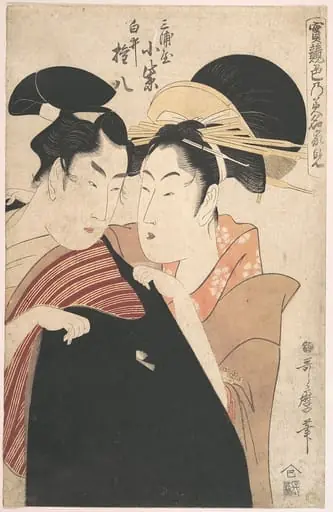 実競色乃美名家見 三浦屋小紫 白井権八|The Lovers Miura-ya Komurasaki and Shirai Gonpachi.
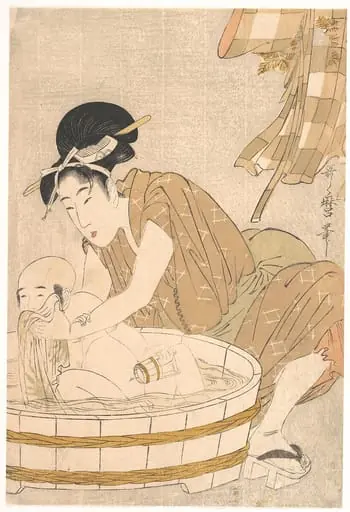 行水|Bathtime (Gyōzui)
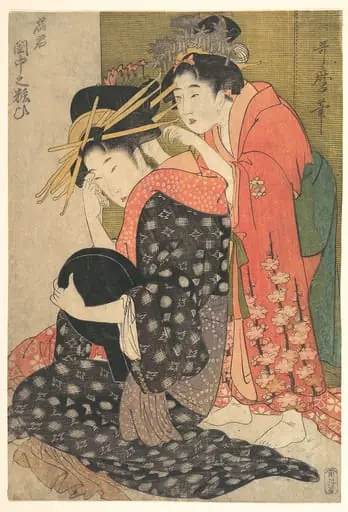 名君 閨中の粧ひ|The Oiran Yoso-oi Seated at Her Toilet
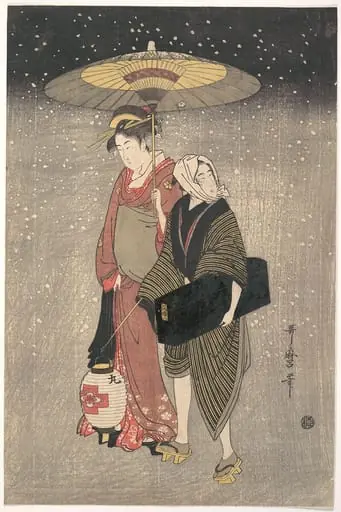 Untitled
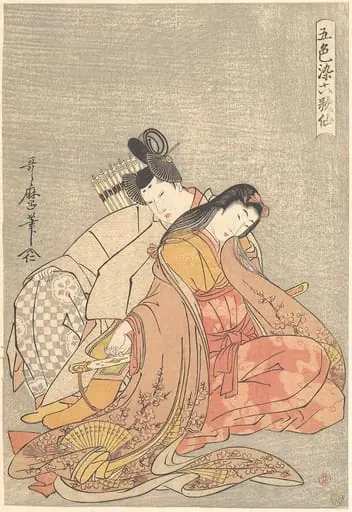 『五色染六歌仙』 在原業平と小野小町|“The Poet Ariwara no Narihira (825–880) and Ono no Komachi,” from the series Five Colors of Love for the Six Poetic Immortals (Goshiki-zome rokkasen)
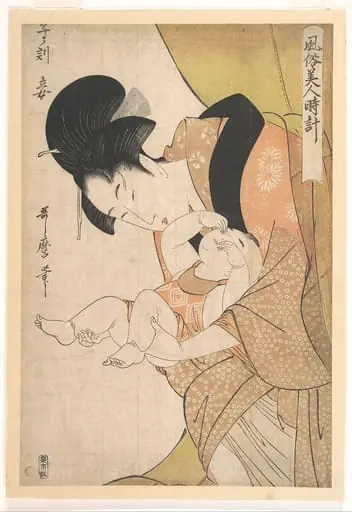 風俗美人時計 子ノ刻 妾|Midnight: Mother and Sleepy Child
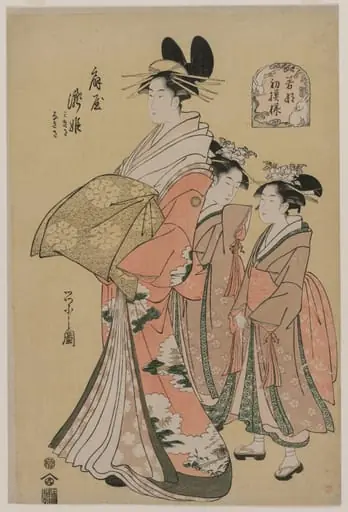 The Courtesan Takihime and Attendants (from the series New Patterns of Young Greens)
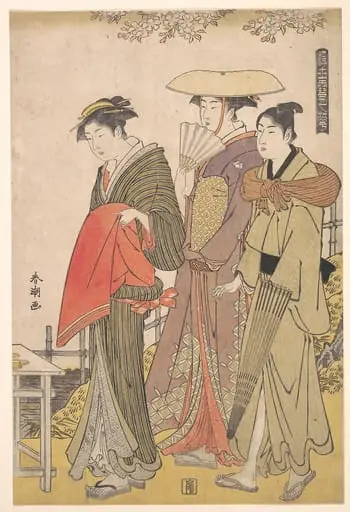 Ukiyoe Ga|The Beauty of the Floating World
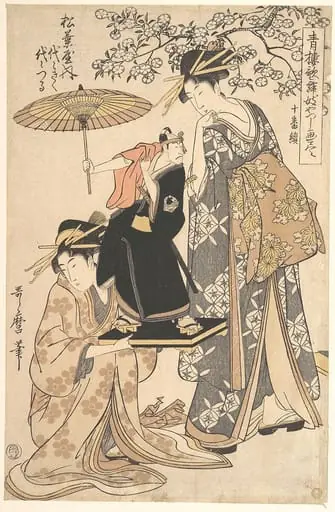 青楼歌舞妓やつし画尽 十番続|The Oiran Yoyogiku of Matsubaya Standing under a Cherry Tree
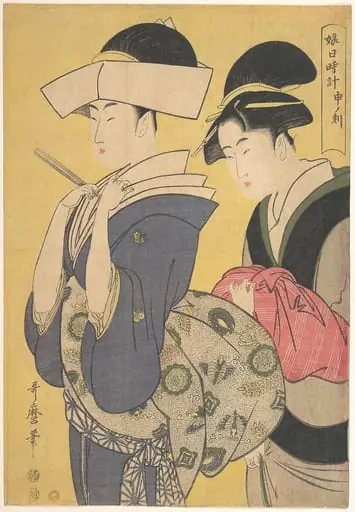 娘日時計 申ノ刻|Seru no Koku
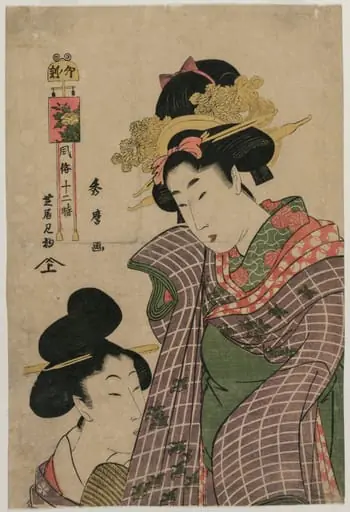 Going to the Kabuki Theater in the Hour of the Hare (From the Series The Twelve Hours with Daily Events)
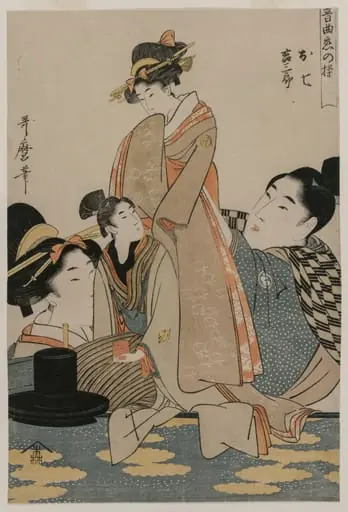 Oshichi and Kichisaburo (from the series Music on the Theme of Constancy in Love)
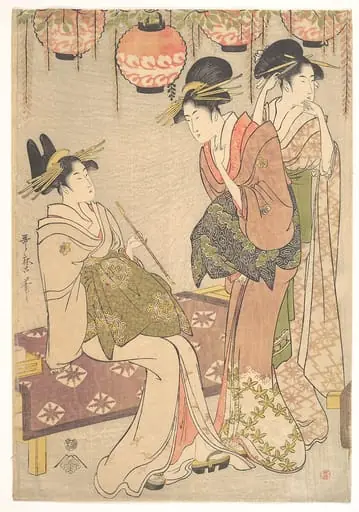 Untitled
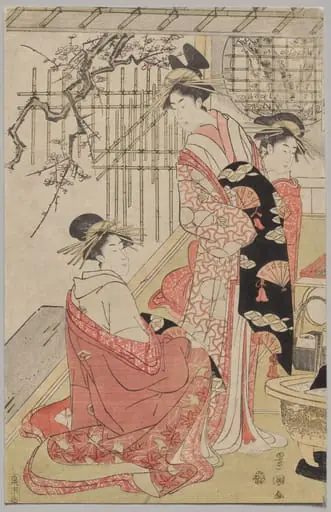 Courtesans of the Ōgiya on a Spring Outing
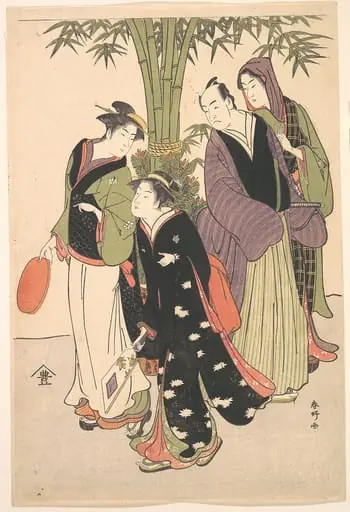 勝川春好画 三代目瀬川菊之丞・二代目市川門之助|Kabuki Actors Segawa Kikunojō III and Ichikawa Monnosuke II and Two Courtesans Celebrating the New Year
 Untitled