Artwork
Leaf 2 from an antiphonal fragment (verso)
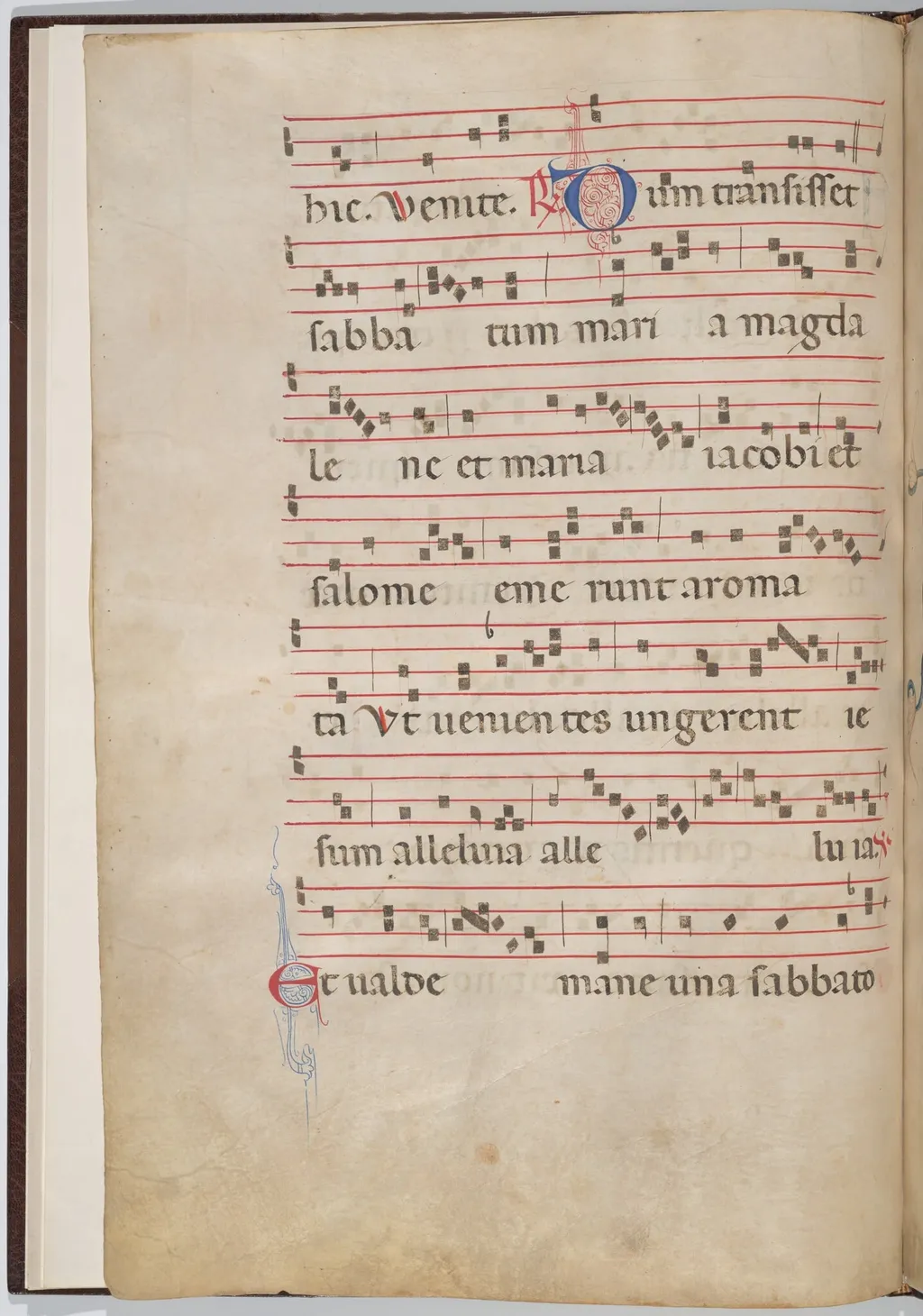
Leaf 2 from an antiphonal fragment (verso) is an ink drawing by Italian 13th Century. It dates from 1275 and is held in the collection of the National Gallery of Art. This fragment comes from a medieval antiphonal, a liturgical book used in monastic chant services.
About this work
Overview
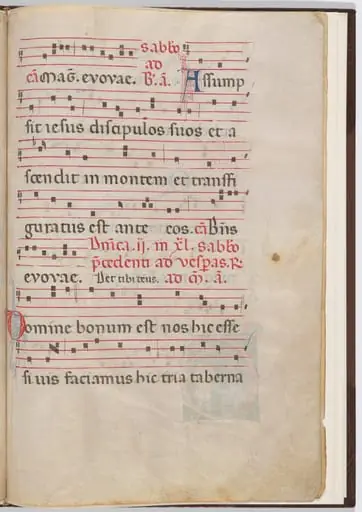
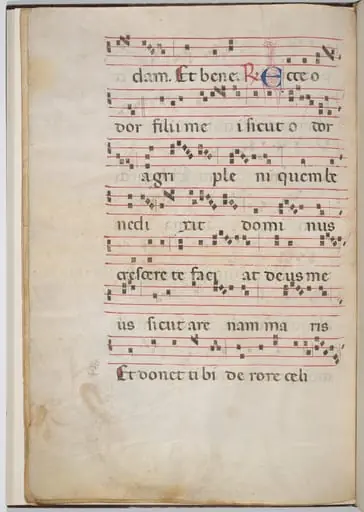
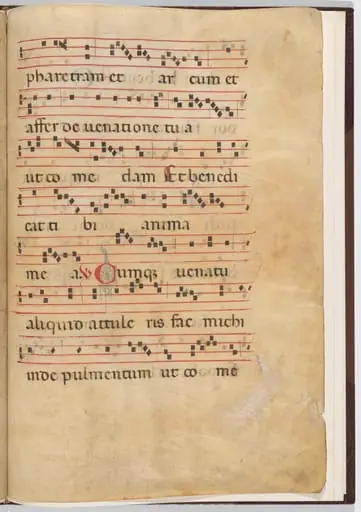
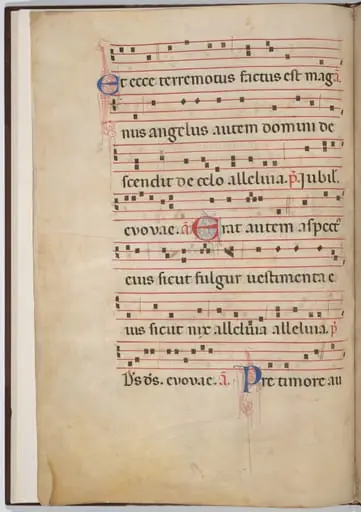
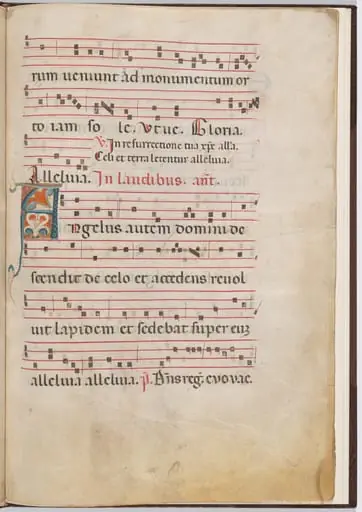
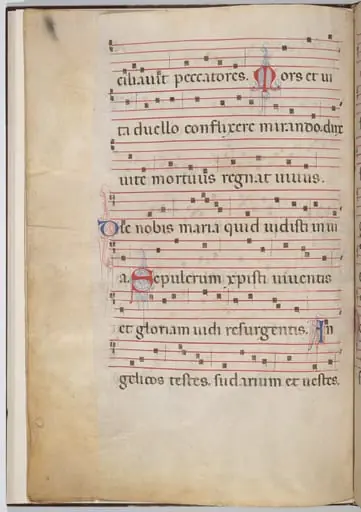
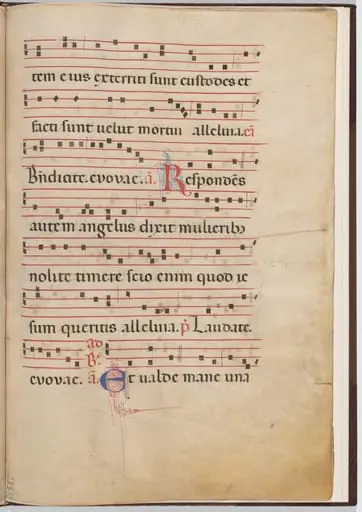
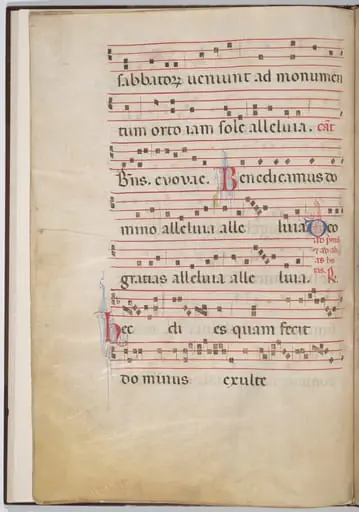
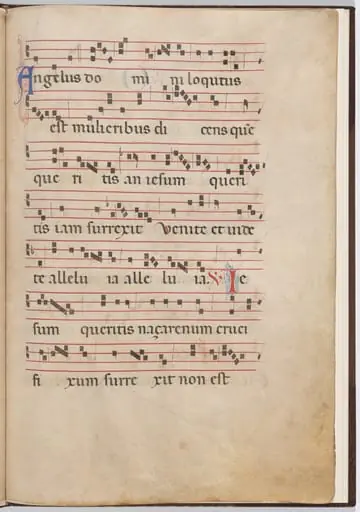
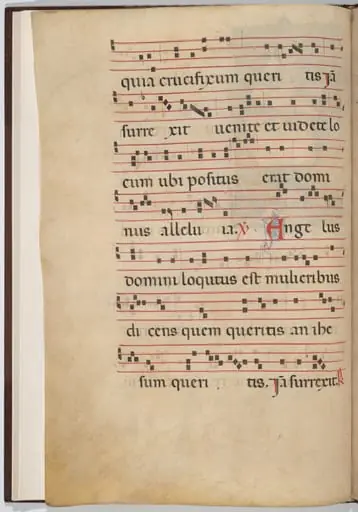
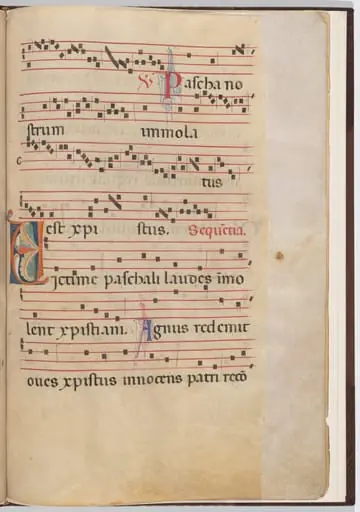
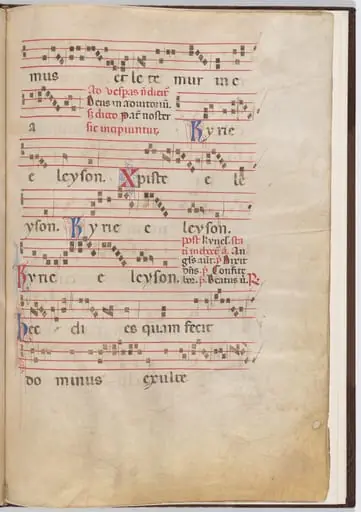
The verso side preserves musical notation and sacred text written in dark ink, with red and blue ink used for ornamental initials and staff lines.
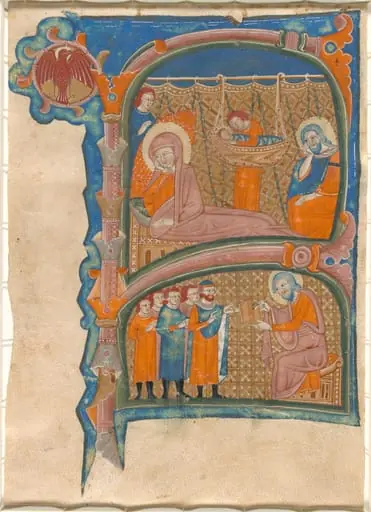
This fragment comes from a medieval antiphonal, a liturgical book used in monastic chant services. The verso side preserves musical notation and sacred text written in dark ink, with red and blue ink used for ornamental initials and staff lines. The parchment is thin and discolored, bearing signs of age and frequent handling. Decorative elements guide the eye through the chant structure, blending utility with artistic care.
Subject & Meaning
The text contains liturgical chants intended for communal singing during religious services. Each line pairs words with neumes—early musical symbols—to indicate pitch and phrasing. The enlarged initials mark the beginning of important phrases or sections, serving both as visual anchors and spiritual signposts. The content reflects the rhythm of daily worship in a monastic setting.
Technique & Style
Scribes used quills to write precise lines of text and neumes, while red and blue pigments were applied for initials and staff lines. The decorations feature stylized flourishes and geometric forms, typical of Romanesque book illumination. Cross-hatching and fine linework define the shapes within the initials, demonstrating a methodical approach to ornamentation that balanced aesthetics with legibility.
History & Provenance
This leaf likely originated in a European monastery between the 11th and 13th centuries, when antiphonals were commonly produced for choir use. Its survival as a fragment suggests it was separated from its original binding, possibly during the Reformation or later dispersals of monastic libraries. The wear on the parchment indicates prolonged use in liturgical practice.
Context
Antiphonals were essential to the Divine Office, containing chants for specific hours of prayer. This page’s layout reflects standardized practices in medieval chant notation, where neumes preceded modern staff notation. The use of colored ink for musical lines and initials was common in high-status liturgical books, signaling both function and reverence for the sacred text.
Legacy
As a surviving example of pre-print liturgical manuscript culture, this fragment illustrates the labor-intensive process of book production before the printing press. It preserves a visual language of music and devotion that influenced later notational systems. Today, such fragments serve as primary evidence for understanding medieval performance practices and scribal traditions.
Artist & collection

Artist
This artist shaped the look of church music between 1250 and 1299, painting bold red-and-blue initials on vellum pages meant for choirs.