Artwork
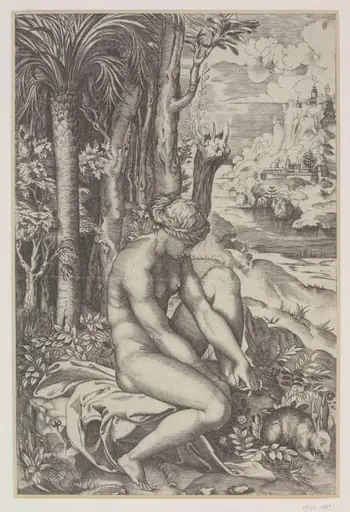
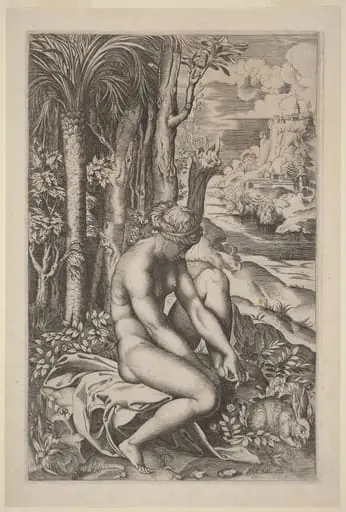
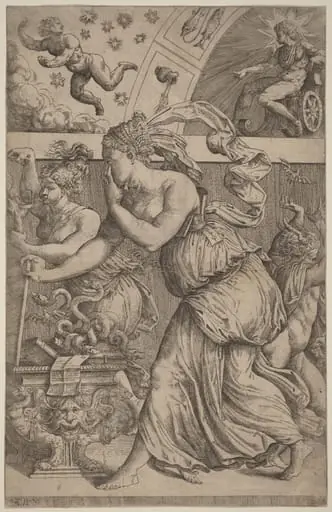
Allegory of Vanity (Death Surprising a Woman)
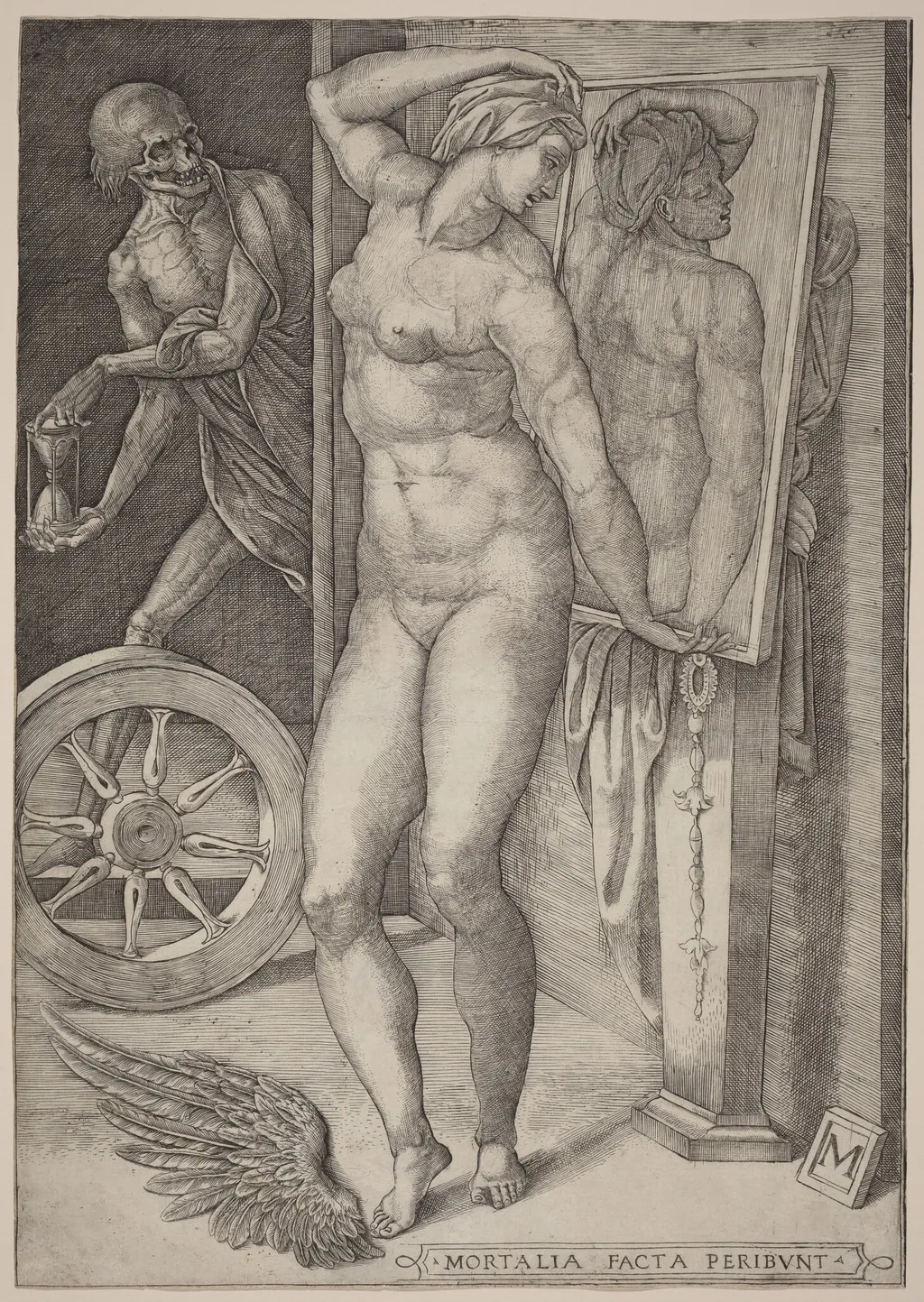
Allegory of Vanity (Death Surprising a Woman) is an ink print by the Renaissance artist Italian 16th Century. It dates from 1501 and is held in the collection of the National Gallery of Art.
About this work
Overview
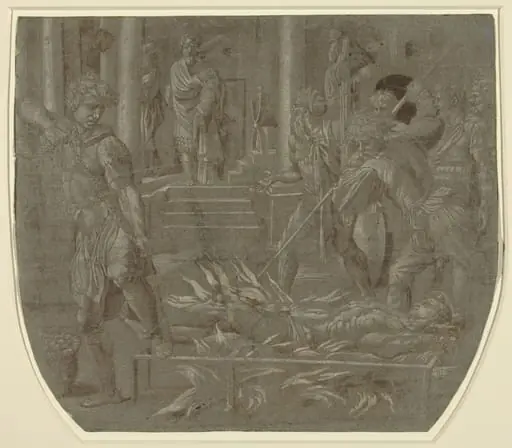
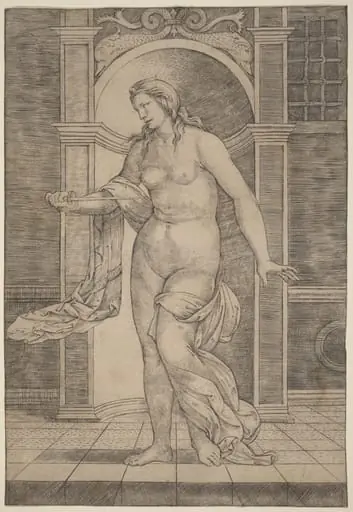
The print, titled *Allegory of Vanity (Death Surprising a Woman)*, is an engraving that presents a stark, monochrome composition. A partially clothed woman stands before a mirror, while a skeletal figure bearing an hourglass leans in from the left. Scattered on the floor are fragments of a broken mirror, feathers, and an open book, all rendered in precise line work.
Subject & Meaning
The scene juxtaposes youthful beauty with the inevitability of death, underscoring the transitory nature of earthly pleasures. The woman’s exposure and the shattered mirror suggest the fragility of self‑image, while the skeleton’s hourglass serves as a reminder that time spares no mortal. A Latin inscription at the bottom, translating to “Mortal things perish,” reinforces the moralizing tone.
Technique & Style
Executed through engraving, the image relies on dense cross‑hatching—parallel lines intersecting at varying angles—to model volume and convey texture. This method creates deep shadows that delineate the folds of the woman's cloth, the skeletal bone, and the reflective surfaces. The crisp, linear quality typical of early modern printmaking enhances the work’s dramatic chiaroscuro effect.
Context
The allegorical motif of vanity confronted by death aligns with a broader European tradition of vanitas imagery that flourished in the 16th and 17th centuries. Such prints were often used as moral instruction, circulating among educated audiences who valued visual reminders of life's fleeting nature. The inclusion of Latin text further situates the work within a learned, didactic framework.
Artist & collection

Artist
A 16th-century Italian sculptor left us small bronze works in dark brown and gold.