Artwork
Flight of Meriones, with Dead Coeranos Being Dragged from the Chariot
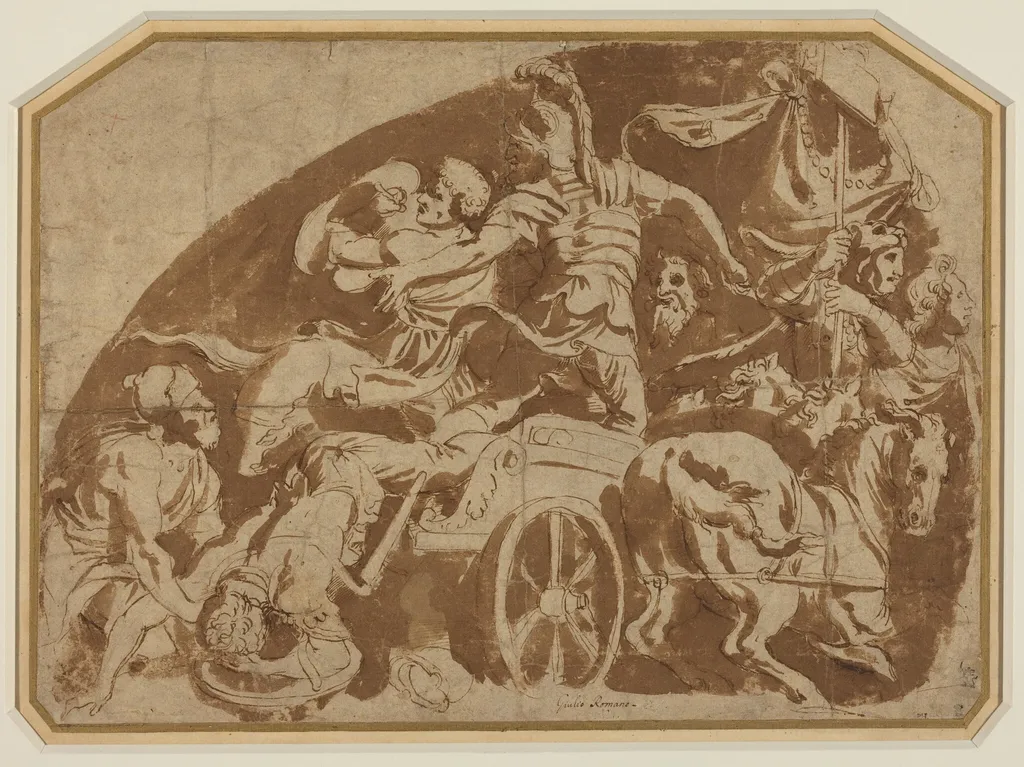
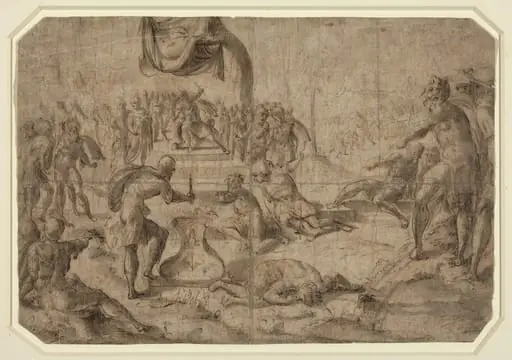
Flight of Meriones, with Dead Coeranos Being Dragged from the Chariot is an ink drawing by the Renaissance artist Italian 16th Century. It dates from 1550 and is held in the collection of the National Gallery of Art.
About this work
You see a chaotic scene with horses and people in a chariot.
The drawing shows a lot of action and movement. It looks like a battle scene from ancient times, with a lot of detail and emotion.
Check out the technique used in this drawing, similar to that of the artist Italian 16th Century, who likely used methods like cross-hatching.
Overview
The work titled *Flight of Meriones, with Dead Coeranos Being Dragged from the Chariot* is a pen drawing executed on laid paper whose corners have been trimmed. The artist employed brown ink, a brown wash, and graphite underdrawing, creating a monochrome composition that captures a moment of intense motion.
Subject & Meaning
The scene depicts a tumultuous episode from mythic warfare: Meriones is shown fleeing while the slain Coeranos is being hauled from a chariot. The arrangement of horses, riders, and fallen bodies conveys the chaos of battle and the stark contrast between escape and defeat.
Technique & Style
The drawing combines fine pen lines with cross‑hatching and a subtle brown wash, techniques reminiscent of Italian draftsmen of the sixteenth century. Graphite underdrawing provides structural guidance, while the ink work builds texture and depth through varied line density and tonal shading.
History & Provenance
Created as a standalone drawing, the piece is catalogued as a work on paper with its edges cut, suggesting it may have been trimmed for framing or conservation. No further ownership details are provided in the available documentation.
Context
The composition reflects the enduring interest of later artists in classical narratives, translating epic literary episodes into dynamic visual studies. By focusing on a fleeting, violent moment, the drawing aligns with the Renaissance fascination with human anatomy, movement, and dramatic storytelling.
Artist & collection

Artist
A 16th-century Italian sculptor left us small bronze works in dark brown and gold.

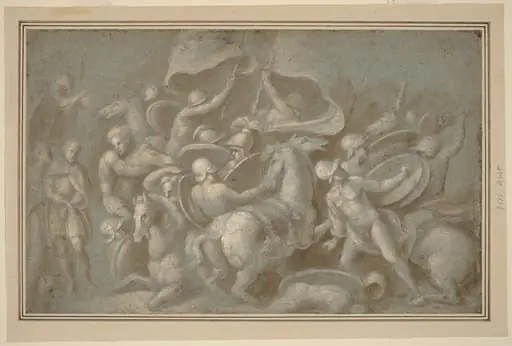 Battle Scene
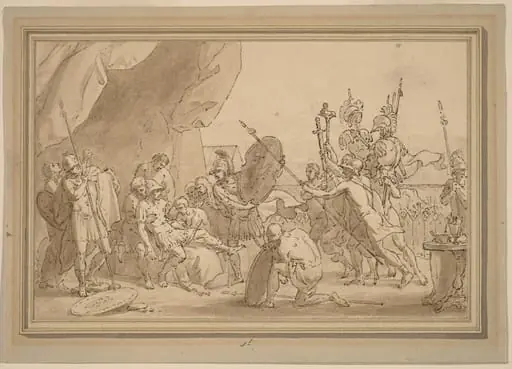 Death of a General
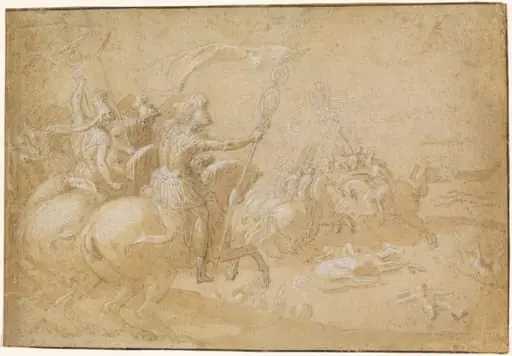 Ancient Roman Warriors Riding into Battle
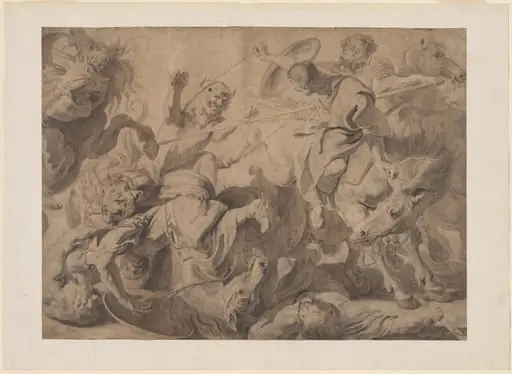 Lion Hunt
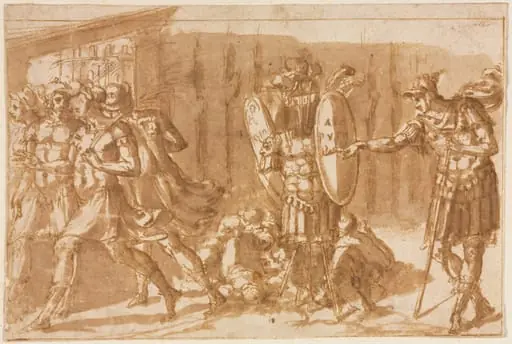 Victorious Soldiers with Trophy
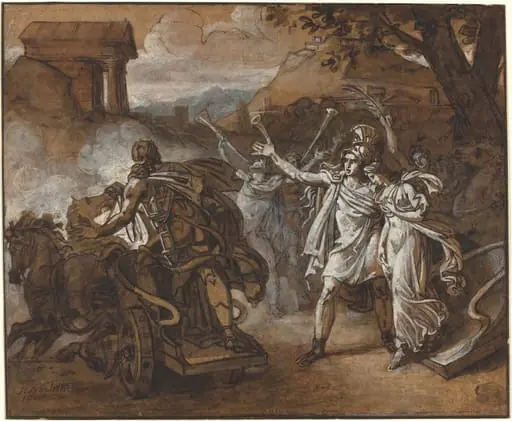 Castor and Pollux Rescuing Helen
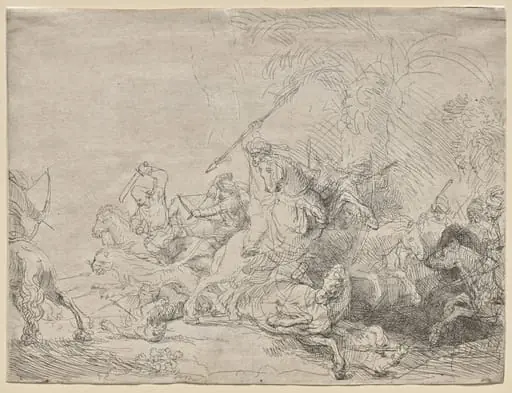 The Large Lion Hunt
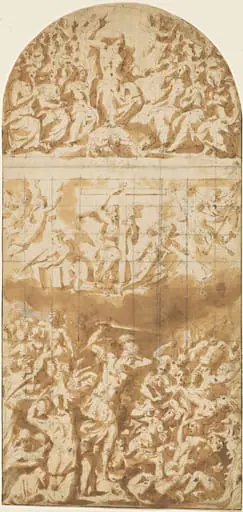 The Last Judgment
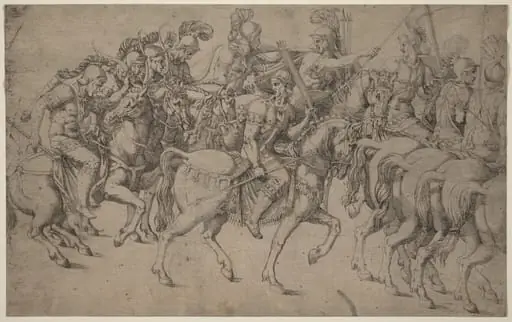 Riders Carrying Bows and Javelins
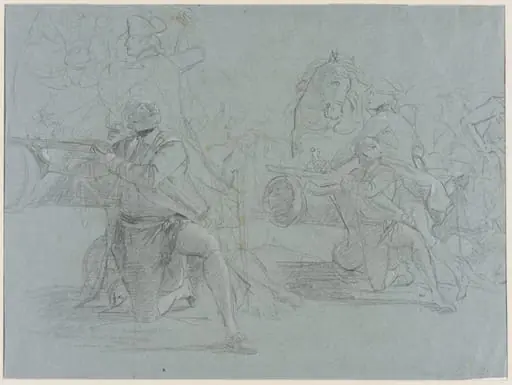 Study for 'The Siege of Gibraltar'
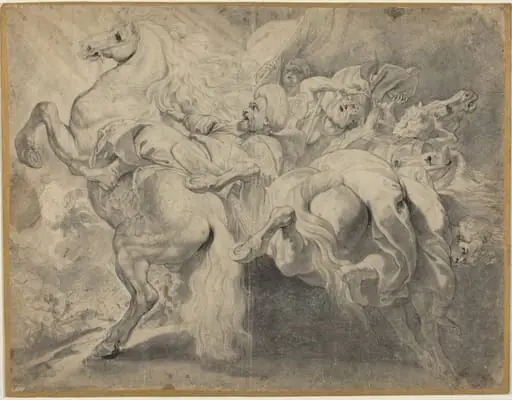 The Defeat of Sennacherib
 Sacrifice Scene (Gaius Mucius Scaevola?)