Artwork
The Last Judgment
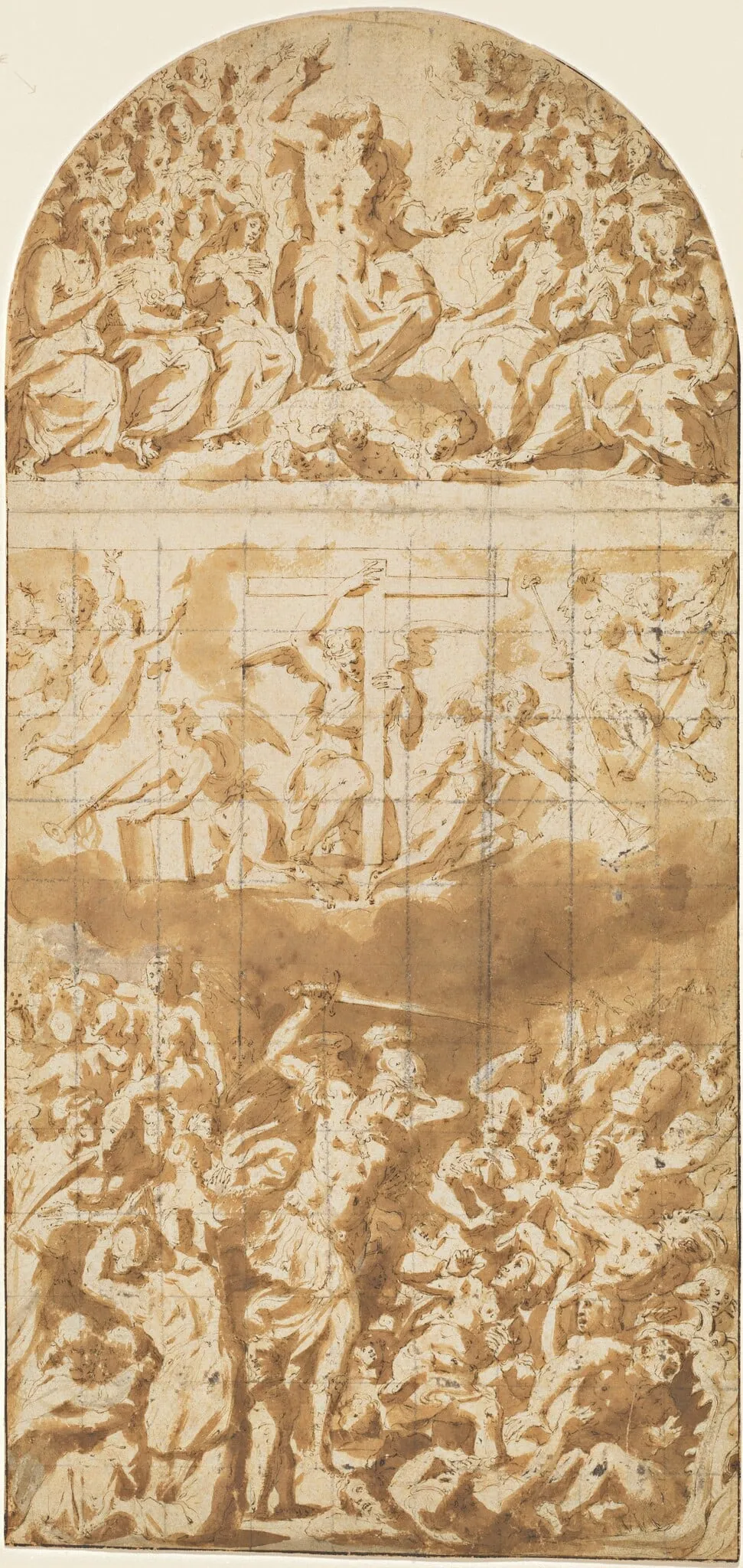
The Last Judgment is an ink drawing by the Renaissance artist Giorgio Vasari. It dates from 1567 and is held in the collection of the National Gallery of Art.
About this work
Overview
The work is attributed to Giorgio Vasari, the Florentine artist and writer whose career spanned painting, architecture, and art historiography.
Created circa 1567, this pen and brown‑ink drawing on cream laid paper presents a densely populated vision of the Last Judgment. The composition is divided into a semi‑circular upper zone and a more rectangular lower area, giving the impression of two adjoining sketches. The work is attributed to Giorgio Vasari, the Florentine artist and writer whose career spanned painting, architecture, and art historiography.
Subject & Meaning
The drawing visualizes the Christian eschatological scene in which souls are weighed and sorted for heaven or hell. Figures surge upward, fall, or reach out, creating a turbulent, almost chaotic atmosphere that emphasizes the drama of divine reckoning. The crowded arrangement reflects the theological urgency of the moment rather than a narrative clarity.
Technique & Style
Vasari employed pen, brown ink, and a brown wash applied over preliminary red and black chalk marks. A faint grid of black chalk lines underlies the image, indicating that the design was intended for transfer to a larger work. The line work is vigorous and layered, with scratchy strokes that build depth through successive washes, characteristic of late‑Renaissance Mannerist experimentation.
History & Provenance
The drawing is documented as a preparatory study by Vasari, likely intended for a larger painted composition that has not survived. Its paper shows signs of age, with ink fading in places, suggesting long-term storage. The work entered scholarly attention through catalogues of Vasari’s oeuvre and remains in a museum collection dedicated to Renaissance drawings.
Context
Produced during the later phase of the Italian Renaissance, the piece reflects the Mannerist shift toward complex, elongated figures and dynamic compositions that move away from High Renaissance balance. Vasari’s dual role as artist and chronicler of his contemporaries situates the drawing within a period of self‑reflection on artistic practice and theological themes.
Legacy
Although not as widely reproduced as Vasari’s written biographies, this drawing offers insight into his preparatory methods and the visual language of Mannerist religious art. It serves as a reference point for scholars studying the transmission of large‑scale compositions from sketch to canvas in the sixteenth century.
Artist & collection
Artist
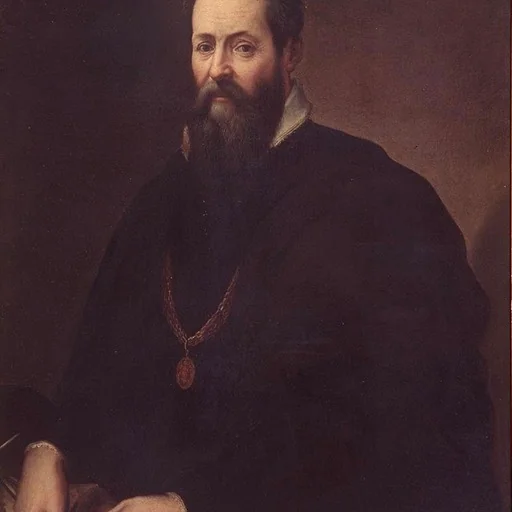
Giorgio Vasari (30 July 1511 – 27 June 1574) was an Italian Renaissance painter, architect, art historian, and biographer known for his work Lives of the Most Excellent Painters, Sculptors, and Architects, considered…

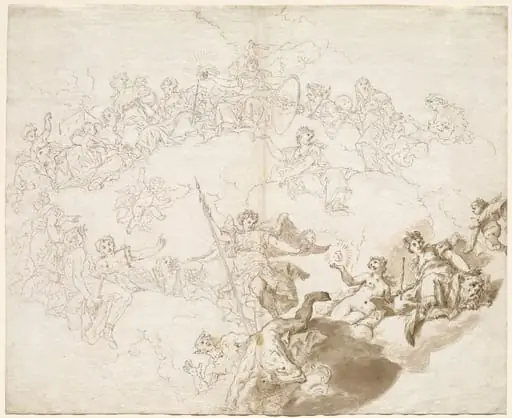 The Triumph of Virtue and Divine Wisdom
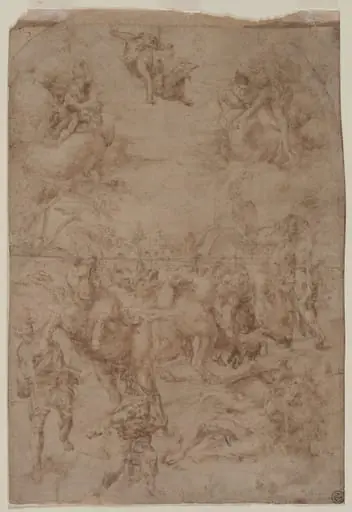 The Conversion of St. Paul
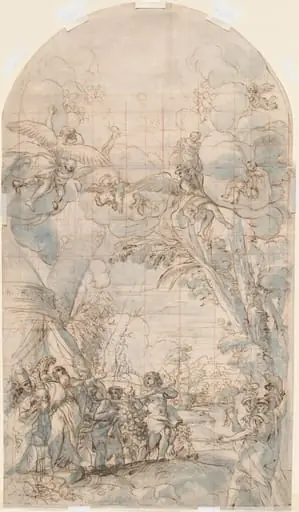 The Spies Returning from Canaan
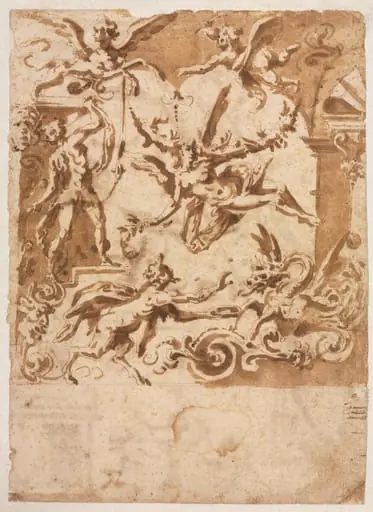 Grotesque with a Satyr Feeding a Dragon (recto)
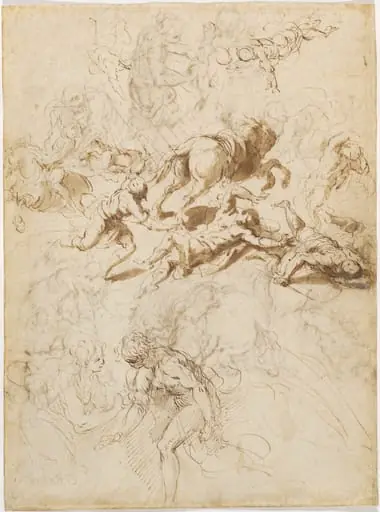 The Conversion of Saint Paul; Adam and Eve
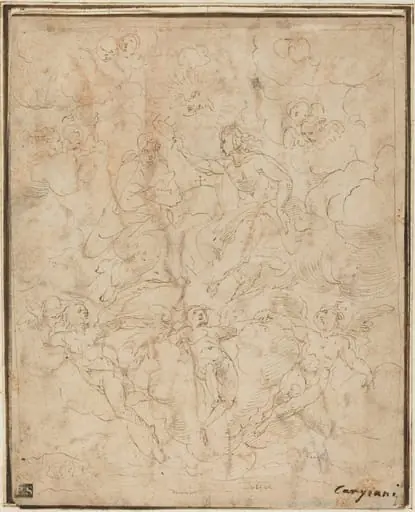 Coronation of the Virgin
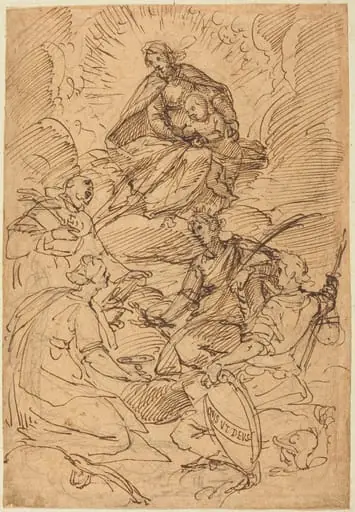 The Madonna and Child in Glory Adored by Saints
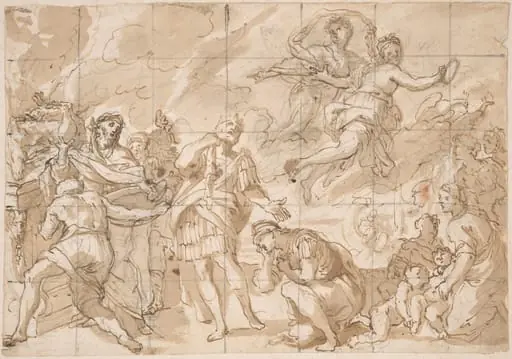 The Sacrifice of Iphigenia
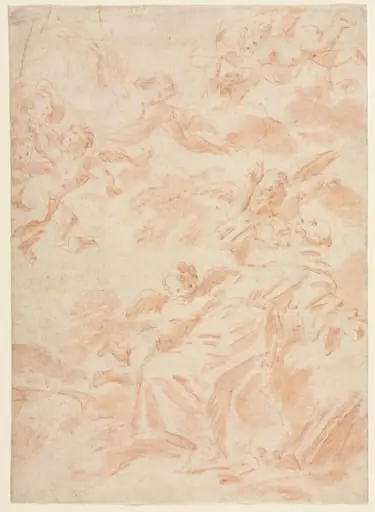 The Stigmatization of Saint Francis
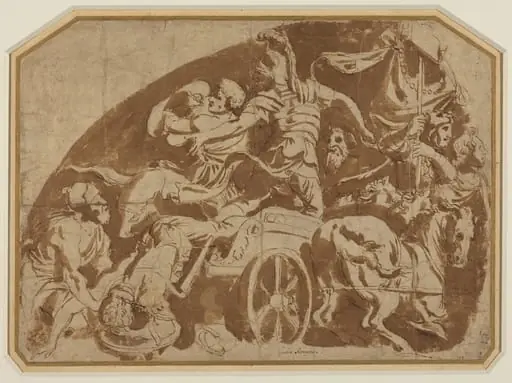 Flight of Meriones, with Dead Coeranos Being Dragged from the Chariot