Artwork
Presentation in the Temple
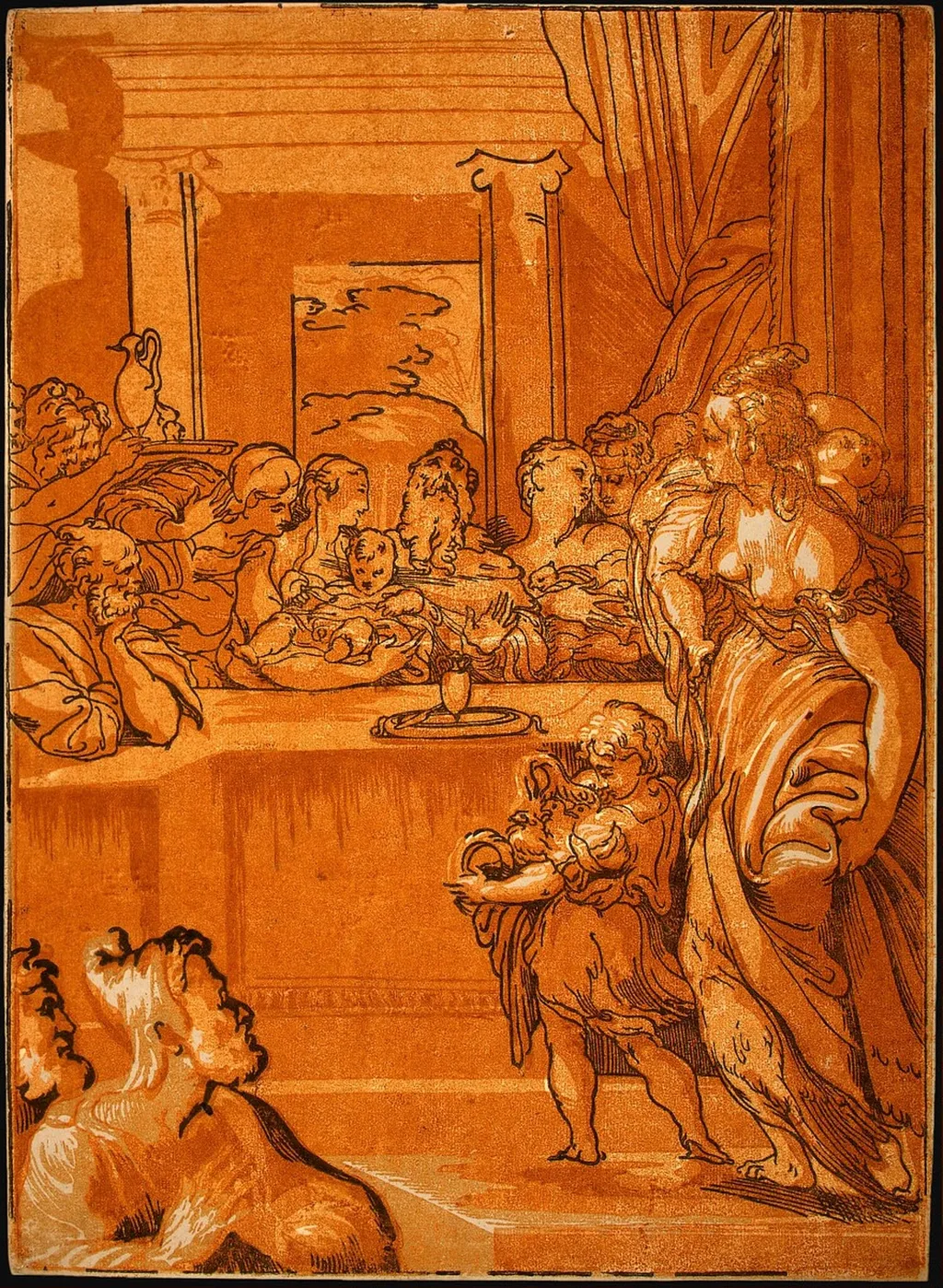
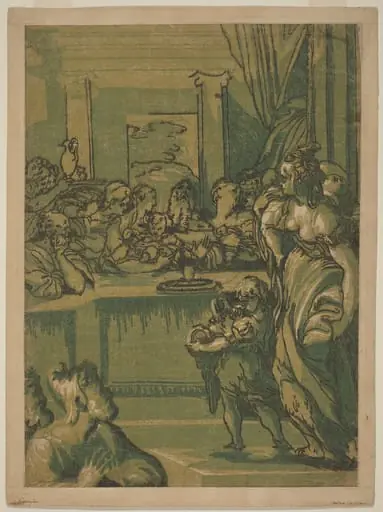
Presentation in the Temple is an ink print by the Renaissance artist Italian 16th Century. It dates from 1540 and is held in the collection of the National Gallery of Art.
About this work
Overview
Printed from four separate blocks—one for black outlines and three for gradations of red-brown ink—it achieves a rich interplay of light and shadow.
This chiaroscuro woodcut depicts the Presentation in the Temple, a biblical event described in the Gospel of Luke. Printed from four separate blocks—one for black outlines and three for gradations of red-brown ink—it achieves a rich interplay of light and shadow. The composition is densely populated, with figures arranged in a dim interior space, suggesting both ritual solemnity and human intimacy.
Subject & Meaning
The scene illustrates Mary and Joseph presenting the infant Jesus at the Temple in Jerusalem, as required by Jewish law. An elderly priest receives the child near a table bearing a vase, while other worshippers observe or kneel. Outside the doorway, a woman holds a child and a man leans against a tree, possibly symbolizing the broader community’s witness to the sacred moment.
Technique & Style
The print employs the chiaroscuro woodcut technique, using multiple carved blocks to layer tones and lines. The black block defines form and detail, while the red-brown blocks build atmospheric depth through subtle gradations. This method mimics the effects of painted chiaroscuro, enhancing the emotional weight of the scene through controlled contrasts and textured shadows.
History & Provenance
Produced in the early 16th century, this print reflects the German Renaissance interest in religious subjects and technical innovation in printmaking. While the exact origin and early ownership are undocumented, similar works circulated among collectors and clergy, valued for their devotional resonance and craftsmanship.
Context
Chiaroscuro woodcuts emerged in Germany and Italy as a way to replicate the tonal richness of drawings and paintings in print form. This work aligns with contemporaneous religious imagery that emphasized human emotion and spatial depth, responding to both liturgical needs and the growing market for devotional art among the educated middle class.
Legacy
Though less widely known than engravings or etchings, chiaroscuro woodcuts like this one influenced later printmakers seeking to convey mood through layered color and light. The technique’s decline in the 17th century did not erase its contribution to the evolution of print as a medium capable of nuanced expression beyond line alone.
Artist & collection

Artist
A 16th-century Italian sculptor left us small bronze works in dark brown and gold.

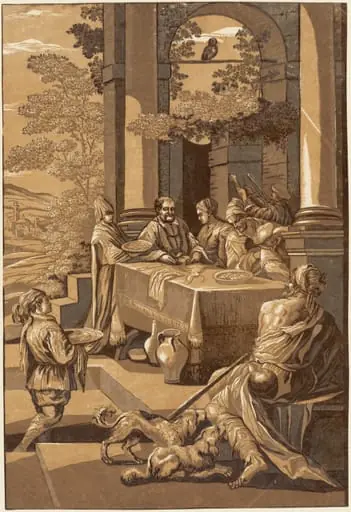 Dives and Lazarus (Right Panel)
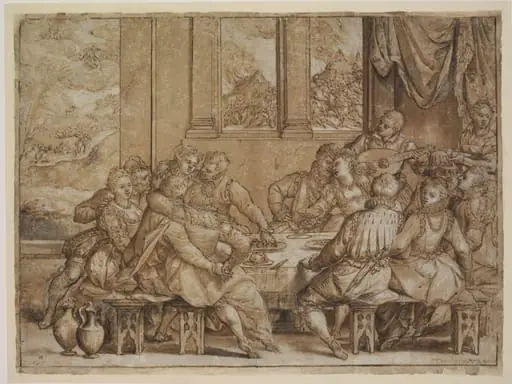 Mankind Feasting and Making Love, Awaiting the Last Judgement (‘the coming of the son of man’) (Matthew 24:37–42)
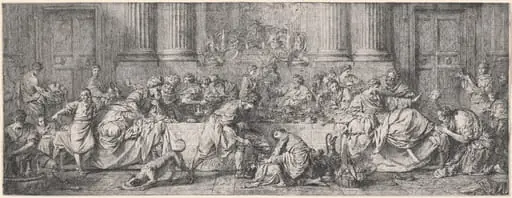 The Feast in the House of Simon
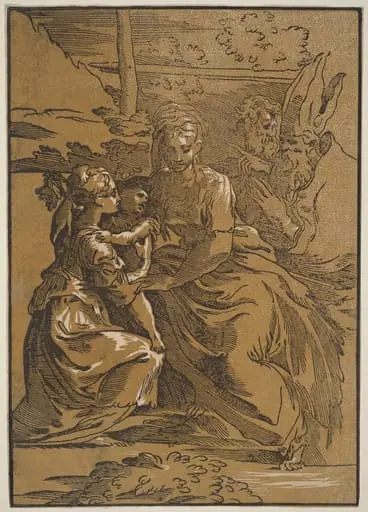 The Holy Family with Two Saints
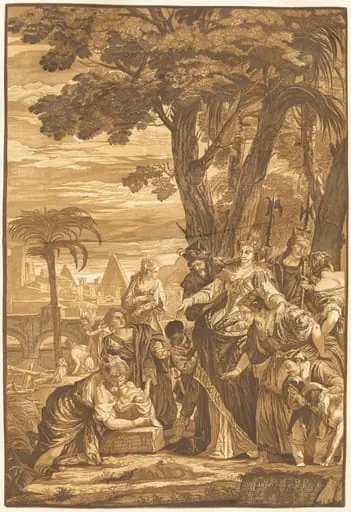 The Finding of Moses
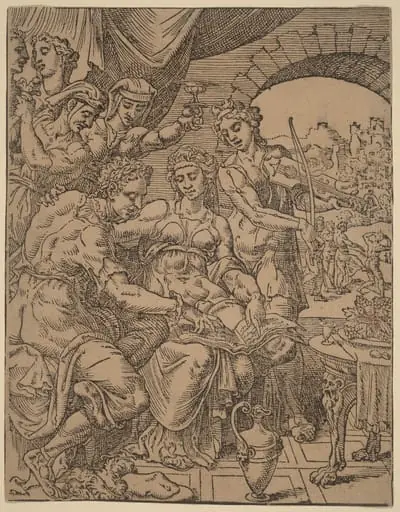 The Prodigal Son Squandering His Inheritance on Harlots
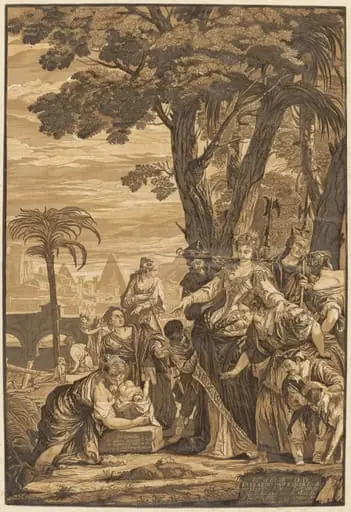 The Finding of Moses
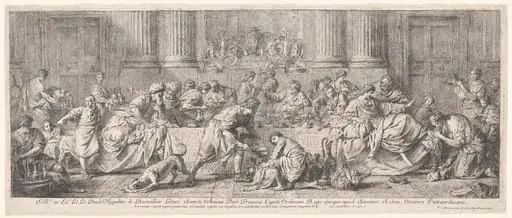 The Banquet in the House of Simon the Pharisee
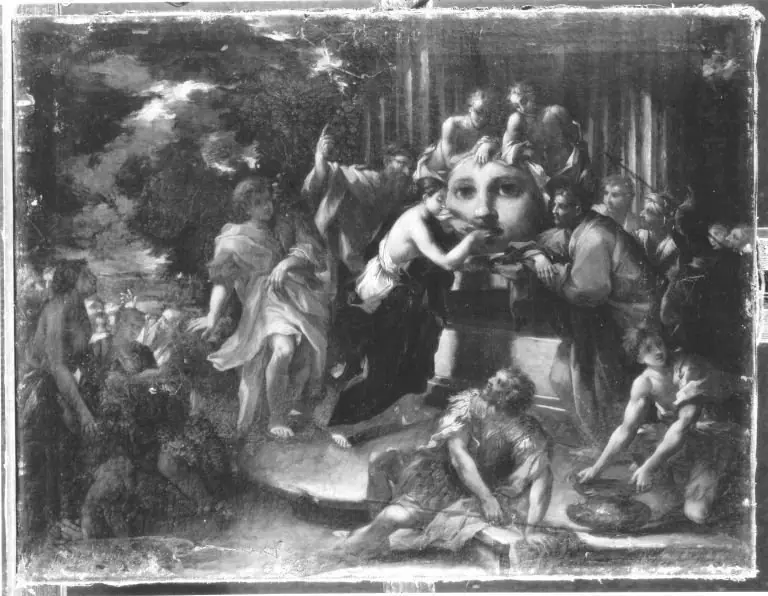 Der Mund der Wahrheit
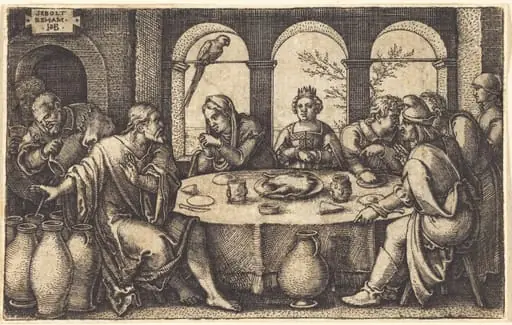 The Wedding at Cana
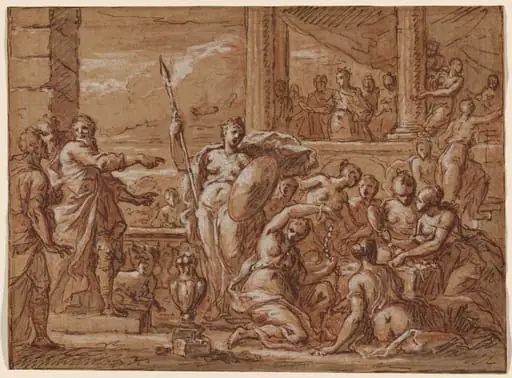 The Discovery of Achilles among the Daughters of Lycomedes
 The Presentation in the Temple