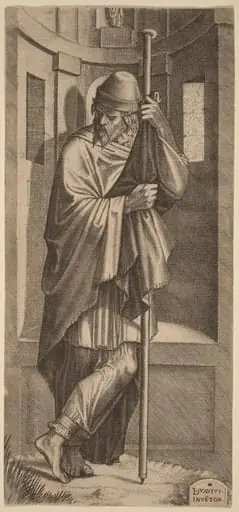
Artwork
Saint James the Elder
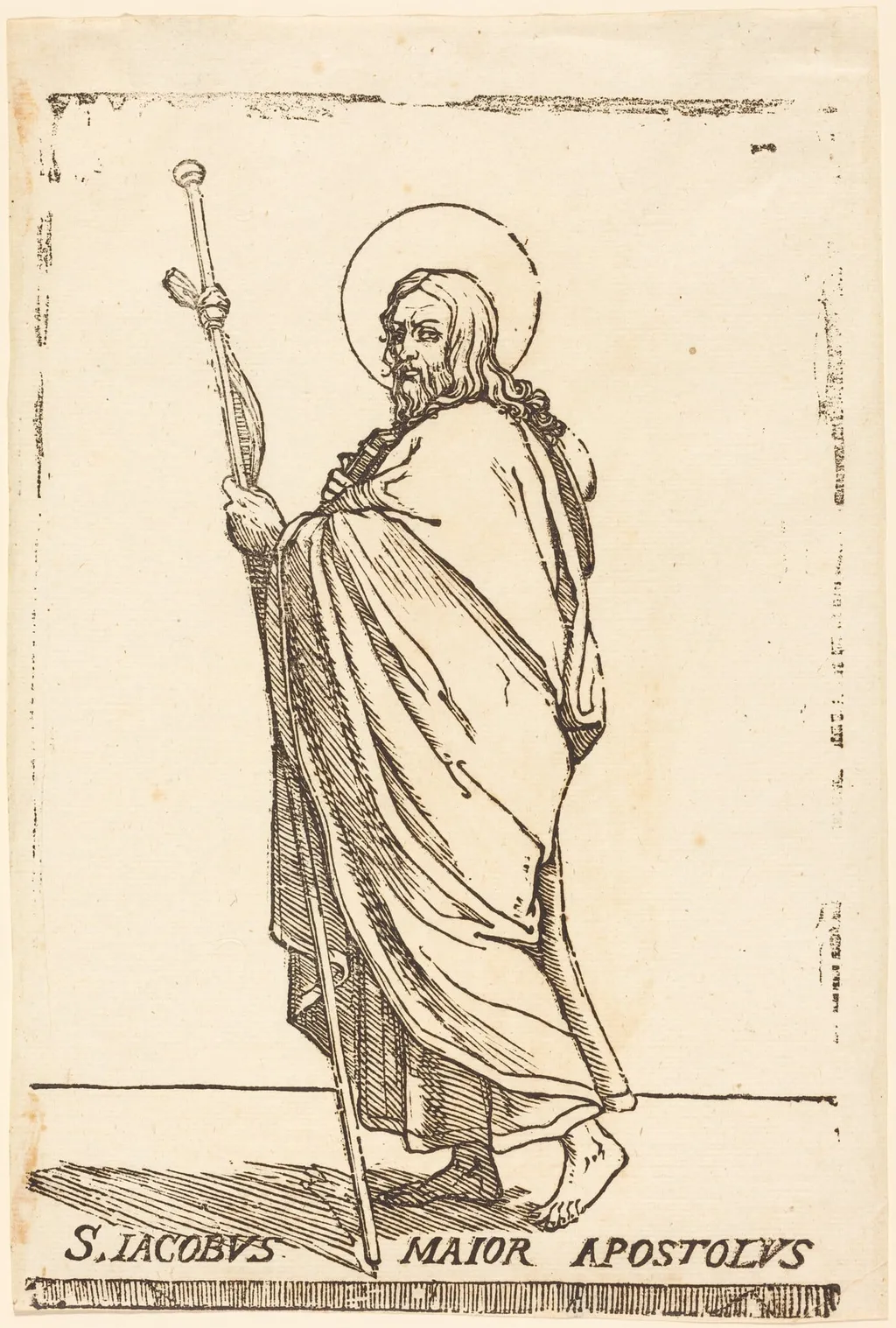
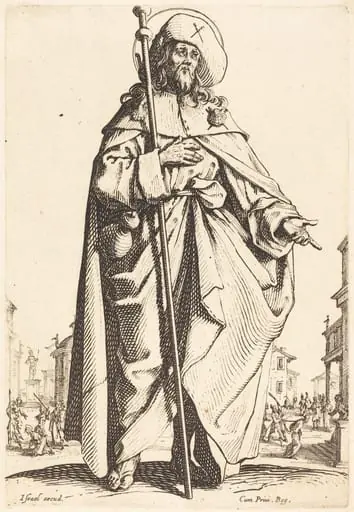
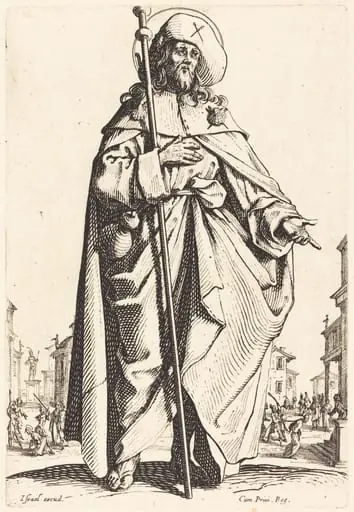
Saint James the Elder is an ink print by the Renaissance artist Italian 16th Century. It dates from 1626 and is held in the collection of the National Gallery of Art.
About this work
Overview
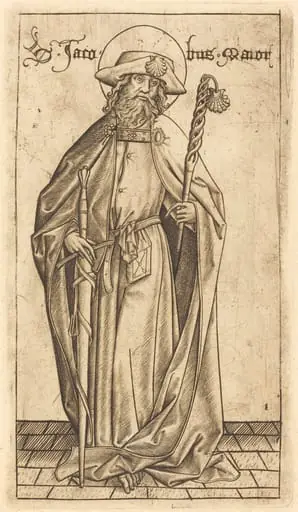
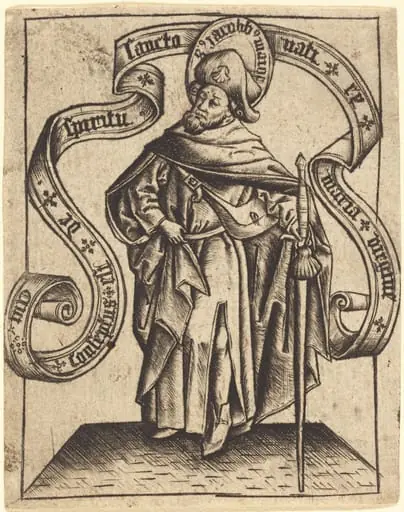
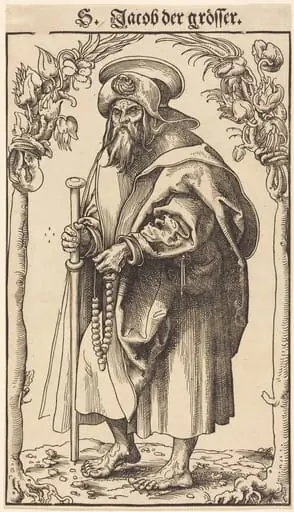
This woodcut portrays a solitary figure identified as Saint James the Elder. Rendered in black ink on laid paper, the image shows the saint in flowing robes, a halo encircling his head, and a staff held in his right hand. The composition is stark, set against an unadorned background that emphasizes the figure’s solemn presence.
Subject & Meaning
The saint is depicted with traditional attributes: a staff, symbolizing pilgrimage, and a halo denoting sanctity. His long hair and beard align with medieval iconography of James, reinforcing his role as a revered apostle and patron of travelers.
Technique & Style
Executed as a woodcut, the image was carved in relief on a wooden block, inked, and pressed onto laid paper. The linear quality and bold contrasts are characteristic of Renaissance printmaking, where the medium allowed for reproducible devotional images.
History & Provenance
Created during the Renaissance, the print reflects the period’s demand for accessible religious imagery. While specific details of its origin, artist, or ownership remain undocumented, its survival on paper indicates it was likely circulated among private devotional contexts.
Artist & collection

Artist
A 16th-century Italian sculptor left us small bronze works in dark brown and gold.