Artwork
Saint James Major
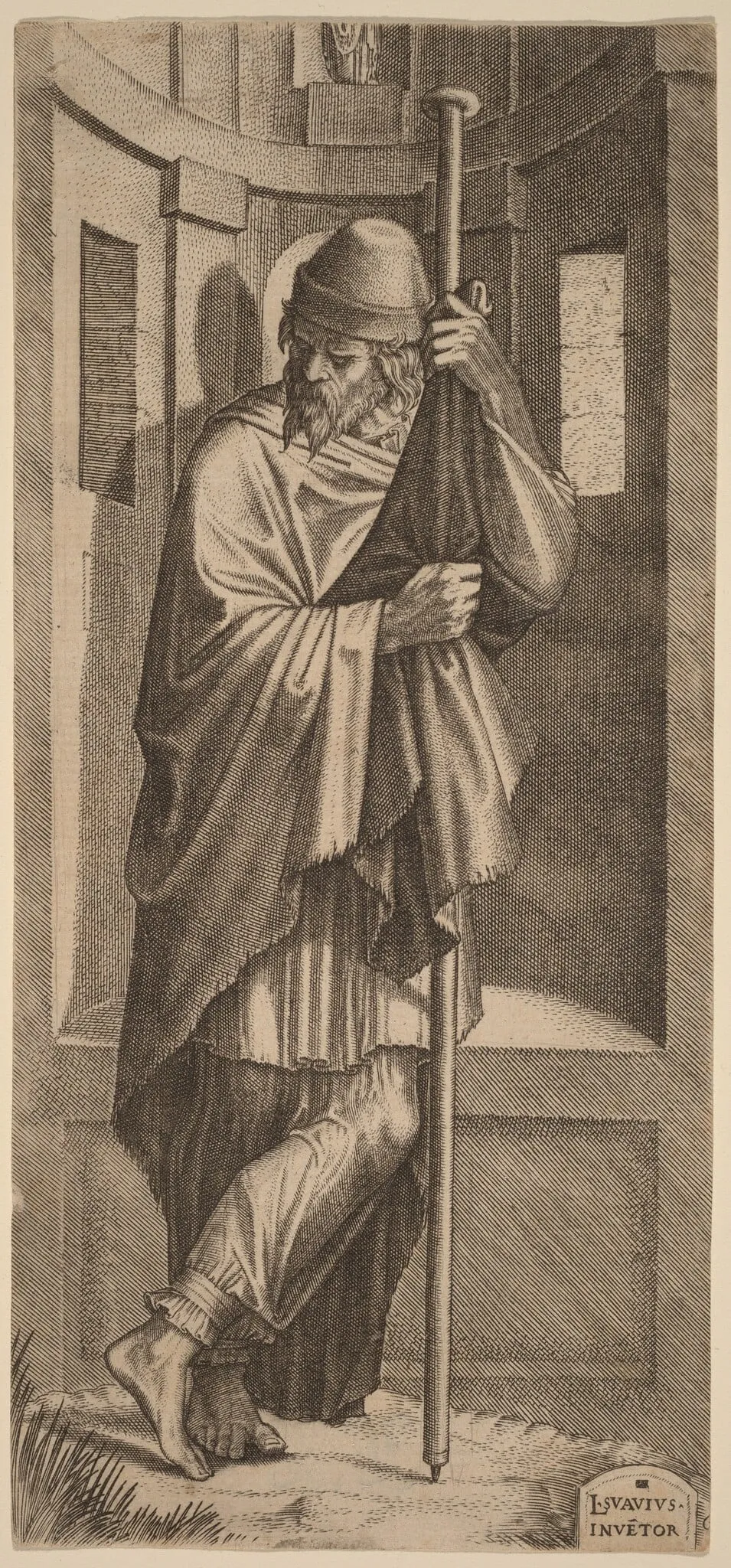
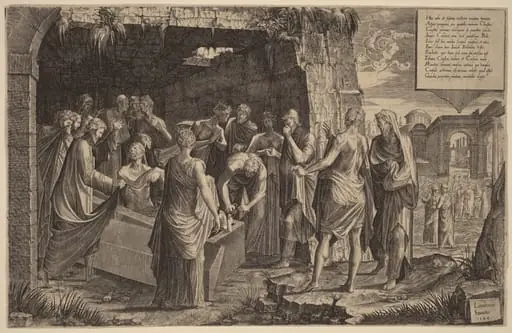
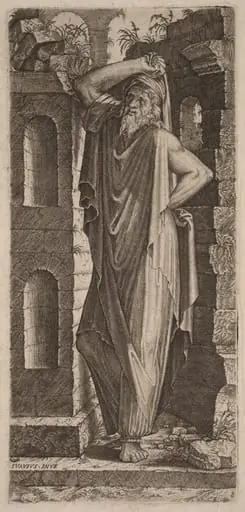
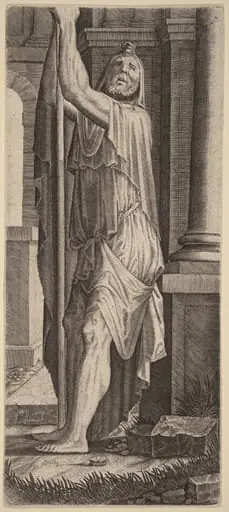
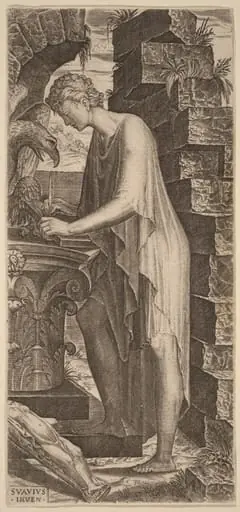
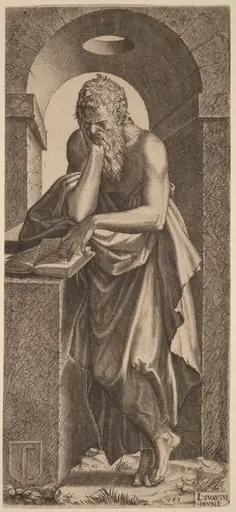
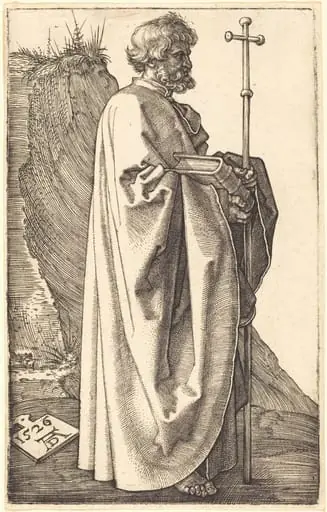
Saint James Major is an ink print by the Renaissance artist Lambert Suavius. It dates from 1545 and is held in the collection of the National Gallery of Art.
About this work
His face has sharp lines, made by cross-hatching—the crisscross lines that shade the image.
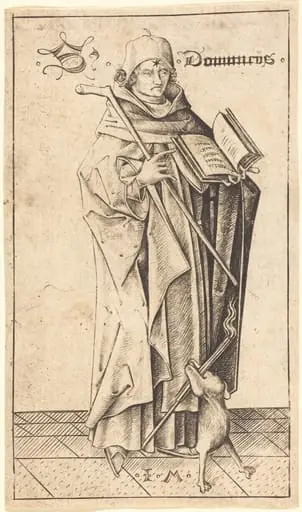
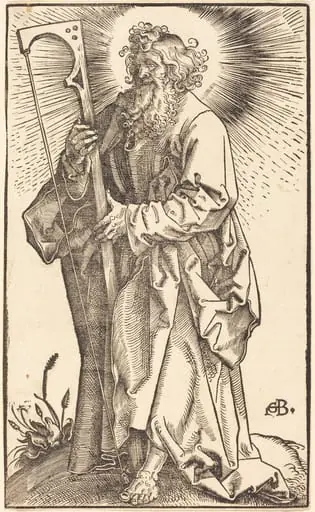
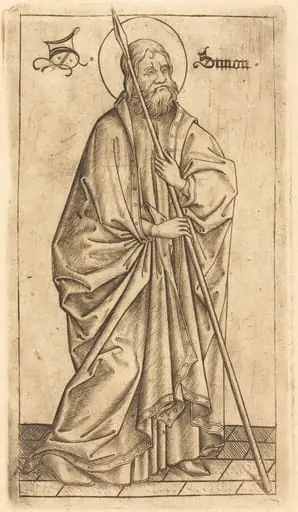
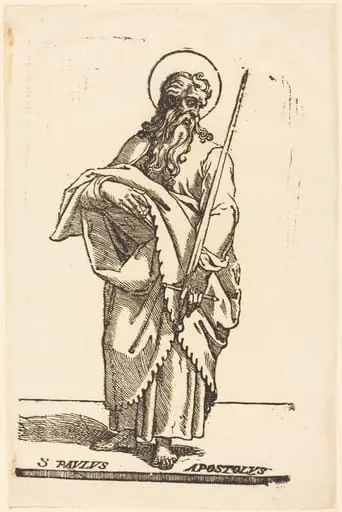
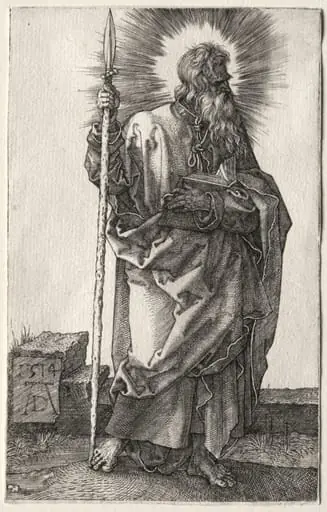
Suavius carved this engraving around 1545. It shows Saint James in flowing robes, holding a staff and a book. His face has sharp lines, made by cross-hatching—the crisscross lines that shade the image. You can almost feel the texture of the paper.
This print was made before cameras. Artists used engravings to share religious scenes widely. Suavius’s work stands out because it blends detail with bold shapes.
Curious? See more engravings by Lambert Suavius.
Overview
This engraving on laid paper, dated 1545, depicts Saint James Major and is attributed to Lambert Suavius. As a print, it served both devotional and reproductive purposes, allowing religious imagery to circulate beyond the confines of painted altarpieces or illuminated manuscripts. The medium’s inherent limitations—working in reverse on a metal plate—demand precision, a quality evident in the composition’s clarity and balance.
Subject & Meaning
The figure of Saint James Major is rendered with iconographic attributes typical of his representation: a pilgrim’s staff and an open book, symbols of his apostolic mission and evangelism. The saint’s solemn expression and frontal posture suggest a direct engagement with the viewer, reinforcing the print’s intended devotional function. Such imagery would have resonated with contemporary audiences familiar with hagiographic narratives.
Technique & Style
Suavius employs cross-hatching—a network of intersecting lines—to model form and create tonal gradations, a hallmark of engraving technique. The fine, controlled incisions convey both texture and volume, from the folds of the saint’s robes to the subtle contours of his face. The composition balances intricate detail with bold, simplified shapes, a stylistic approach that enhances legibility while maintaining visual interest.
History & Provenance
Produced in 1545, this engraving reflects the broader practice of printmaking in the sixteenth century, where artists disseminated religious and secular imagery to a growing audience. Little is documented about its early ownership, but its survival suggests it was preserved within collections that valued graphic works. The print’s condition offers insight into its handling and display over centuries.
Context
Engravings like this one emerged during a period of heightened demand for reproducible religious imagery. Before the advent of photography, prints enabled the widespread distribution of devotional subjects, catering to both private piety and ecclesiastical use. Suavius’s work aligns with the artistic currents of his time, where Northern European printmakers refined techniques to achieve greater realism and expressive depth.
Legacy
The print exemplifies the role of engraving in shaping visual culture during the Renaissance. By merging technical skill with religious subject matter, Suavius contributed to a tradition that influenced later printmakers. Works like this one also underscore the medium’s capacity to preserve iconographic conventions while adapting to the evolving tastes and needs of patrons and viewers.
Artist & collection