Artwork
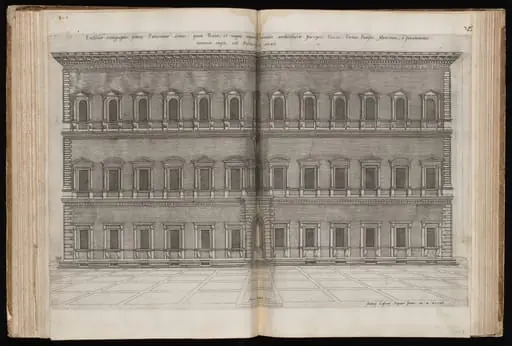
Section of the Courtyard of Palazzo Farnese
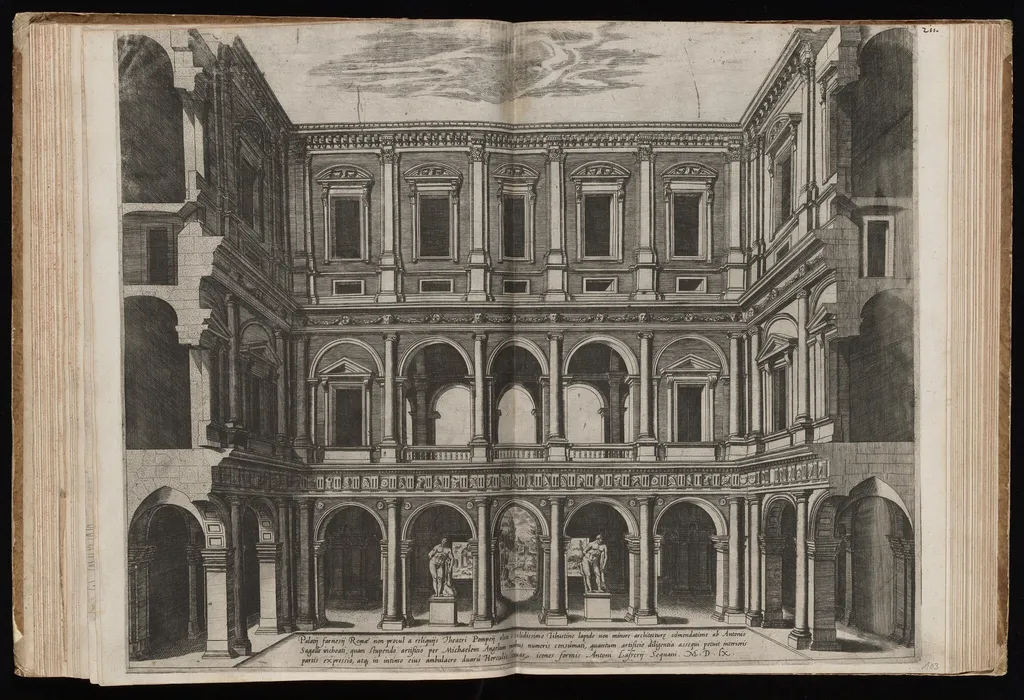
Section of the Courtyard of Palazzo Farnese is an ink print by the Renaissance artist Italian 16th Century. It dates from 1560 and is held in the collection of the National Gallery of Art. Antonio Lafrèri’s 16th‑century engraving presents a measured slice of the Palazzo Farnese courtyard.
About this work
Overview
Antonio Lafrèri’s 16th‑century engraving presents a measured slice of the Palazzo Farnese courtyard. Rendered in fine line work, the print isolates a segment of the space, allowing the viewer to study the architectural ornamentation without the distraction of the surrounding building.
Subject & Meaning
The image concentrates on the courtyard’s decorative program, highlighting the profusion of carved reliefs and sculptural elements that frame the open area. By focusing on a single section, the print underscores the Renaissance emphasis on harmonious detail and the interplay between architecture and sculpture.
Technique & Style
Executed through the engraving process, Lafrèri employed meticulous incising to achieve crisp, controlled lines that delineate the intricate patterns of the stonework. The technique permits a high level of precision, rendering the complex motifs and three‑dimensional qualities of the carvings on a two‑dimensional surface.
History & Provenance
Created in the mid‑1500s, the print was part of a broader circulation of architectural views that catered to collectors and scholars of the period. Lafrèri, a prominent engraver and publisher in Rome, distributed such images to document and disseminate the visual language of contemporary Italian palaces.
Artist & collection

Artist
A 16th-century Italian sculptor left us small bronze works in dark brown and gold.



![Capitolii Sciographia [View of the Roman Capitol], by Étienne Dupérac](https://artifactworldgallery.com/img/etienne-duperac--capitolii-sciographia-view-of-the-roman-capitol--e85f3f07c1ca1e5c-w320.webp) Capitolii Sciographia [View of the Roman Capitol]
Capitolii Sciographia [View of the Roman Capitol]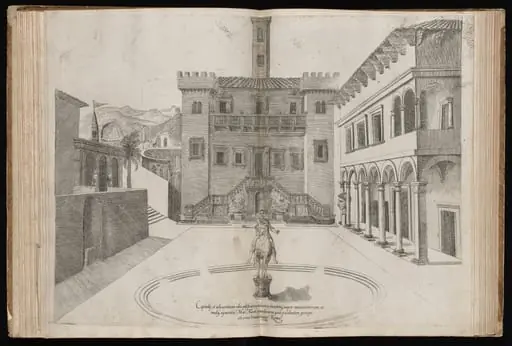 The Roman Capitol
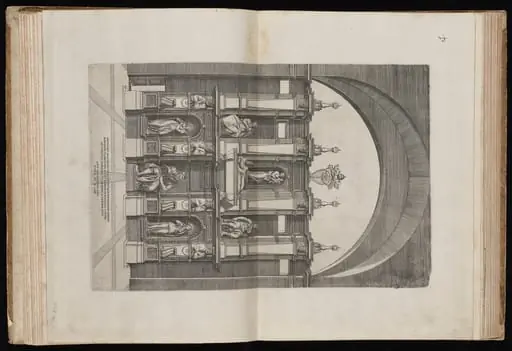 The Tomb of Julius II
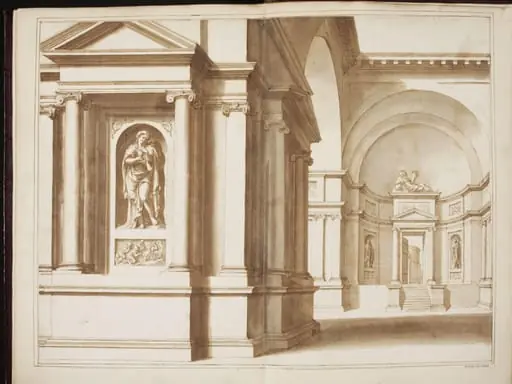 Interior of a Palazzo with Classical Sculptures in Niches and above a Door
![Balnei Laterani [The Lateran Baptistry], by Italian 16th Century](https://artifactworldgallery.com/img/italian-16th-century--balnei-laterani-the-lateran-baptistry--7b73728472928663-w320.webp) Balnei Laterani [The Lateran Baptistry]
Balnei Laterani [The Lateran Baptistry]![Forma Partis Templi Divi Petri [Exterior Section of Saint Peter's Basilica], by Italian 16th Century](https://artifactworldgallery.com/img/italian-16th-century--forma-partis-templi-divi-petri-exterior-section-of-saint-pet--37837cc262581d9e-w320.webp) Forma Partis Templi Divi Petri [Exterior Section of Saint Peter's Basilica]
Forma Partis Templi Divi Petri [Exterior Section of Saint Peter's Basilica]![Orthographia Partis Interioris Templi Divi Petri [Interior View of Saint Peter's Basilica], by Étienne Dupérac](https://artifactworldgallery.com/img/etienne-duperac--orthographia-partis-interioris-templi-divi-petri-interior-vi--59b448ec2f3049cc-w320.webp) Orthographia Partis Interioris Templi Divi Petri [Interior View of Saint Peter's Basilica]
Orthographia Partis Interioris Templi Divi Petri [Interior View of Saint Peter's Basilica]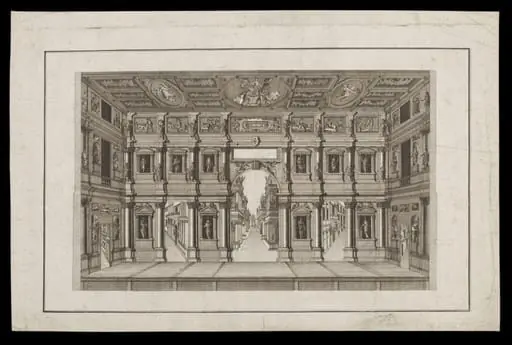 H Beard Print Collection
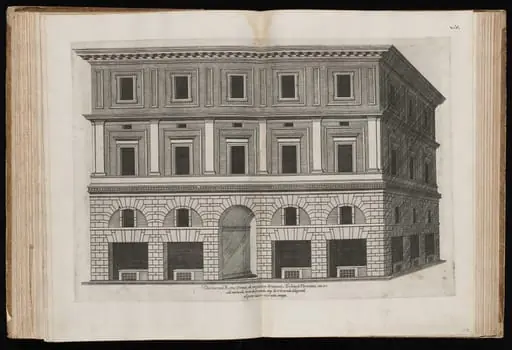 Palazzo Alberini
![Interior of the Minor Church (Interno della chiesa minore) [plate F], by Jacopo Ligozzi](https://artifactworldgallery.com/img/jacopo-ligozzi--interior-of-the-minor-church-interno-della-chiesa-minore-pla--c09c0b35db0c2fbf-w320.webp) Interior of the Minor Church (Interno della chiesa minore) [plate F]
Interior of the Minor Church (Interno della chiesa minore) [plate F]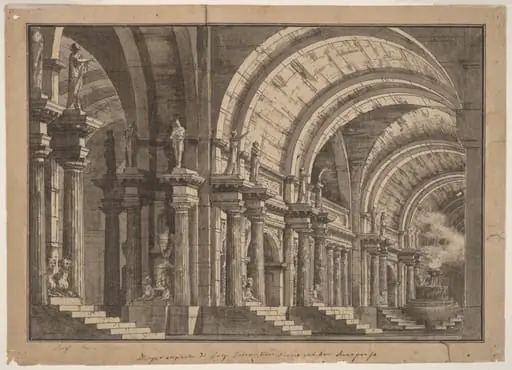 A Monumental Vaulted Hall with a Smoking Altar
 Palazzo Farnese