Artwork
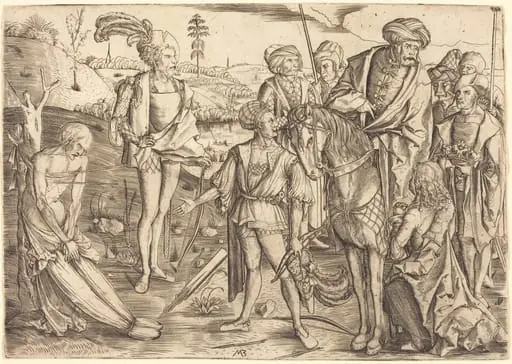
The Death of Virginia
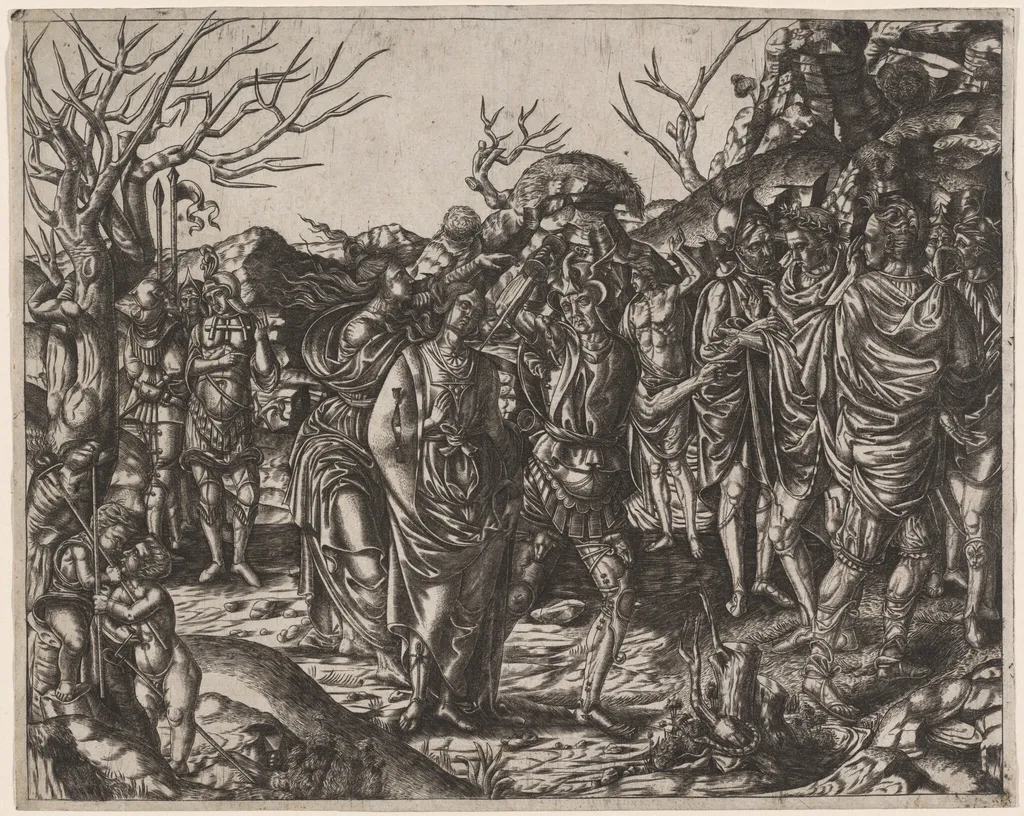
The Death of Virginia is an ink print by the Renaissance artist Italian 16th Century. It dates from 1505 and is held in the collection of the National Gallery of Art.
About this work
The use of cross-hatching in this engraving is reminiscent of the technique used by Italian 16th Century artists.
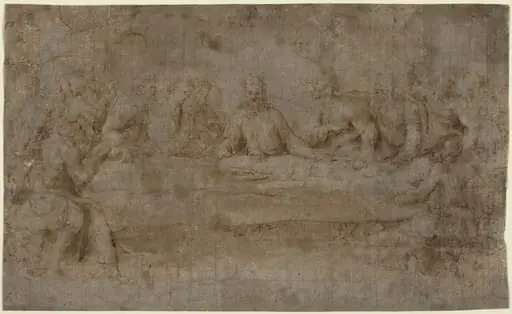
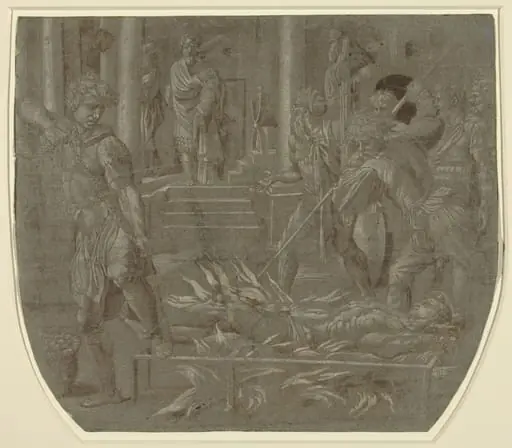
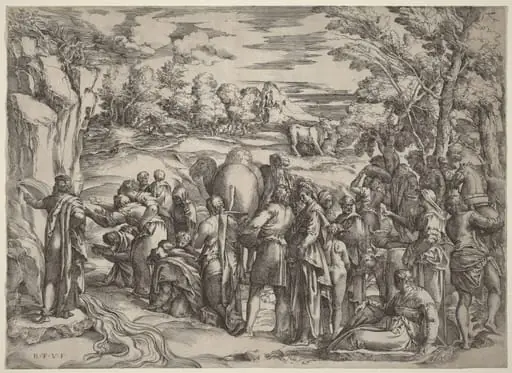
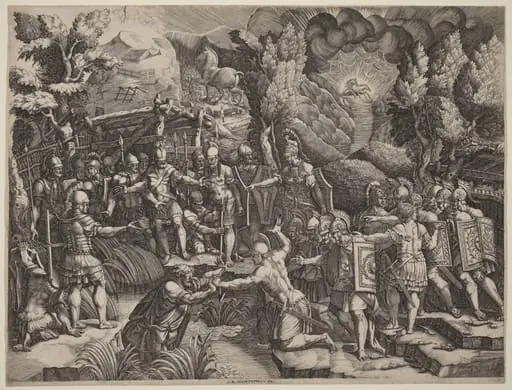
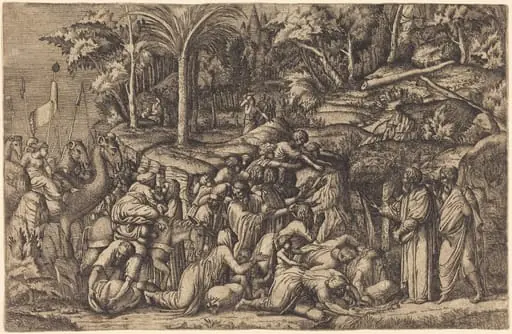
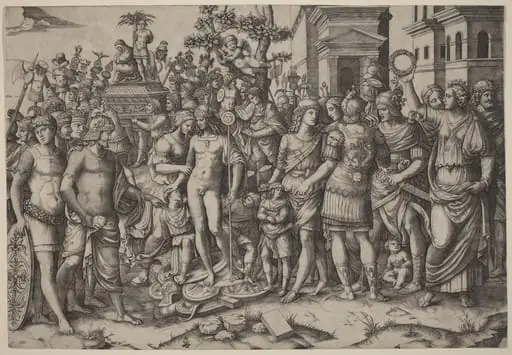
This engraving depicts a dramatic scene of a woman's death, surrounded by a group of people in ancient attire. The woman lies on the ground, while others stand around her, some with their arms raised in distress. The scene is set against a backdrop of trees and hills.
In the foreground, a man is shown holding a sword, while another figure stands behind him, possibly a woman. The engraving features intricate details, with cross-hatching used to create texture and depth.
The use of cross-hatching in this engraving is reminiscent of the technique used by Italian 16th Century artists.
Overview
The Death of Virginia is an engraving that presents a poignant scene of a woman's demise, surrounded by figures in classical attire.
Subject & Meaning
The engraving depicts a dramatic moment: a woman lies on the ground, surrounded by onlookers in ancient dress, some of whom express distress. A man holding a sword is prominent in the foreground, accompanied by another figure.
Technique & Style
The engraving showcases intricate detail and texture achieved through cross-hatching, a technique associated with 16th-century Italian artists. This method creates depth and visual interest in the scene.
Context
The scene is set against a backdrop of trees and hills, establishing a classical or historical setting for the depicted event.
Artist & collection

Artist
A 16th-century Italian sculptor left us small bronze works in dark brown and gold.