Artwork
Sinon Deceiving the Trojans
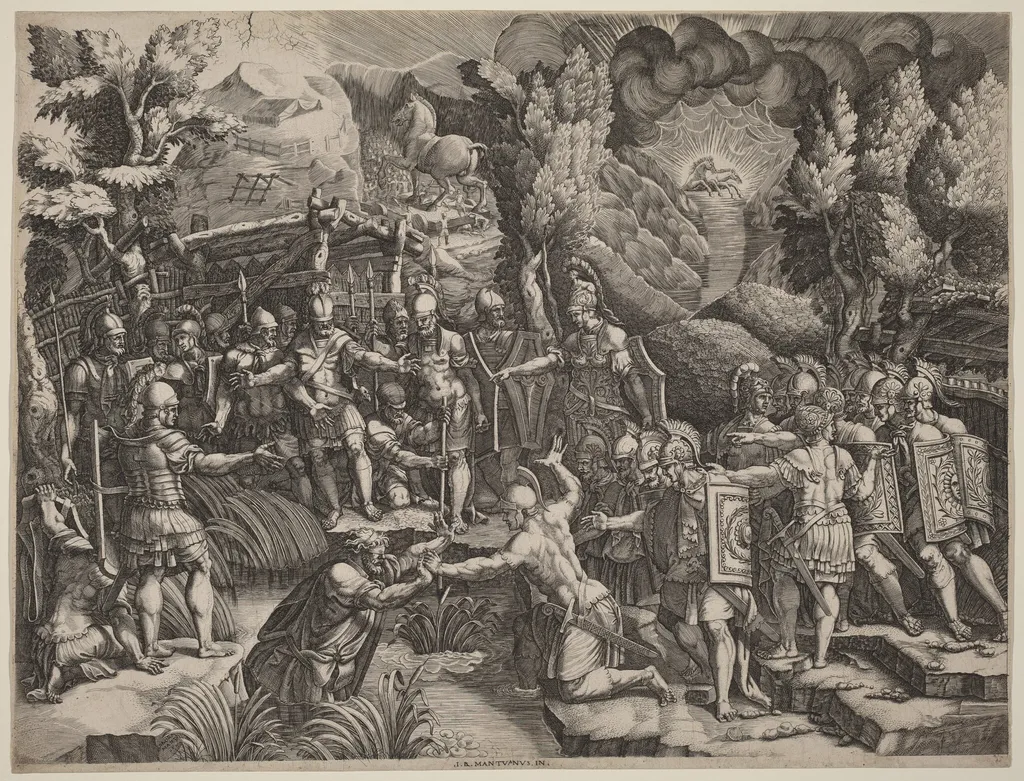
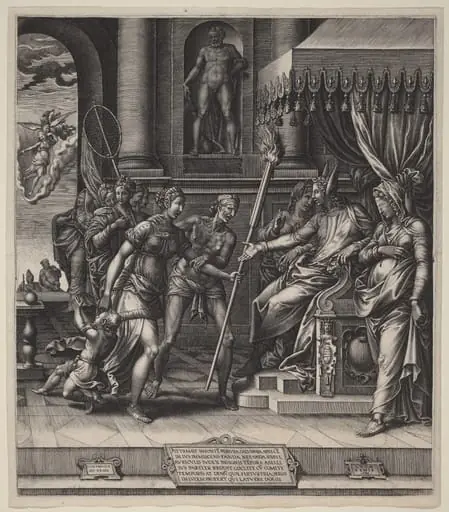
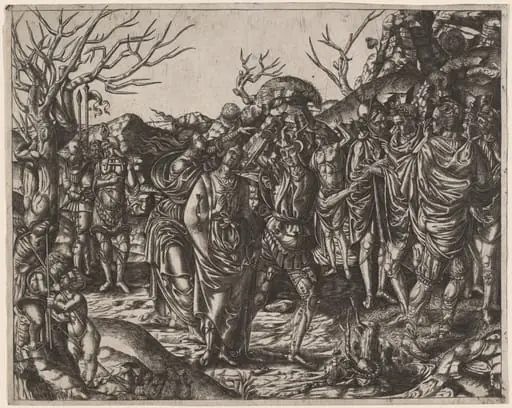
Sinon Deceiving the Trojans is an ink print by the Renaissance artist Giorgio Ghisi. It dates from 1545 and is held in the collection of the National Gallery of Art.
About this work
Overview
Created around 1545 by the Mantuan engraver Giorgio Ghisi, this print presents a densely populated scene rendered in black ink on laid paper.
Created around 1545 by the Mantuan engraver Giorgio Ghisi, this print presents a densely populated scene rendered in black ink on laid paper. The composition captures a pivotal moment from the Trojan narrative, where the Greek envoy Sinon influences the Trojans to admit the wooden horse into their walls. Ghisi’s work exemplifies the intricate, crowded visual storytelling typical of late Mannerist prints.
Subject & Meaning
The image illustrates the moment Sinon, a Greek spy, convinces the Trojan defenders that the massive wooden horse is a sacred offering, prompting them to draw it inside the city. This act, central to the fall of Troy, is rendered with a mixture of confusion, aggression, and curiosity among the soldiers, highlighting the themes of deception and the tragic consequences of misplaced trust.
Technique & Style
Executed through engraving, Ghisi incised fine lines into a copper plate, then transferred the image onto laid paper. The print is distinguished by crisp, intersecting lines and deep cross‑hatching that model muscular forms and armor with dramatic contrast. The crowded arrangement of figures, exaggerated poses, and intricate detailing reflect the late Mannerist penchant for complexity and visual tension.
History & Provenance
Giorgio Ghisi, originally active in Mantua, later pursued his career in Antwerp and France, where he produced prints for a broad European market. While he is also known for a small body of damascened metalwork—only two pieces survive—this engraving remains a key example of his printmaking output and illustrates his mobility across artistic centers of the mid‑16th century.
Context
The print belongs to a broader Renaissance interest in classical antiquity, where artists revisited mythological episodes for moral and decorative purposes. By portraying the Trojan episode, Ghisi engaged with a narrative that had been popularized in literature and visual arts, aligning his work with contemporary humanist interests and the demand for elaborate, story‑driven prints among collectors.
Artist & collection
Artist
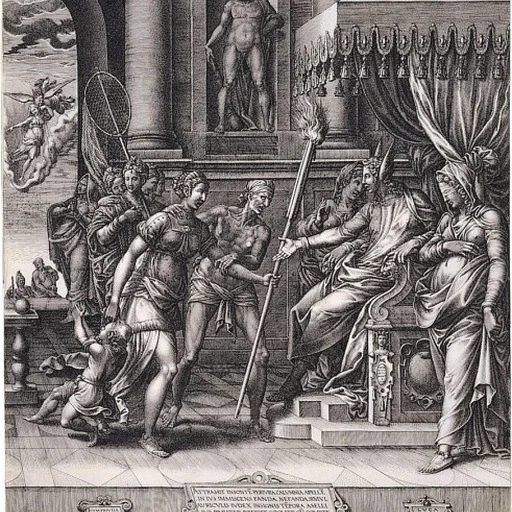
Giorgio Ghisi (1520 — 15 December 1582) was an Italian engraver from Mantua who also worked in Antwerp and in France.

 The Death of Virginia
 The Conversion of Saint Paul
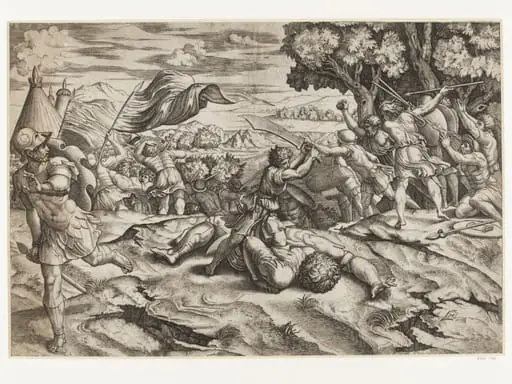 David cutting off the head of Goliath
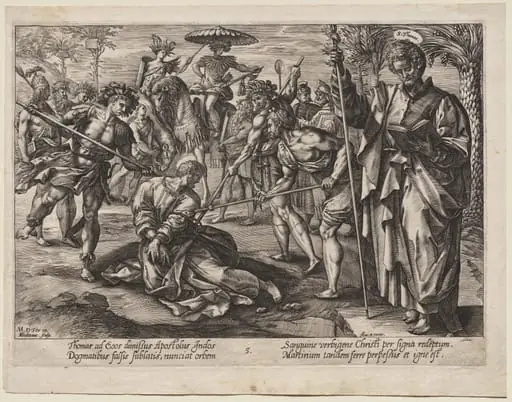 St. Thomas
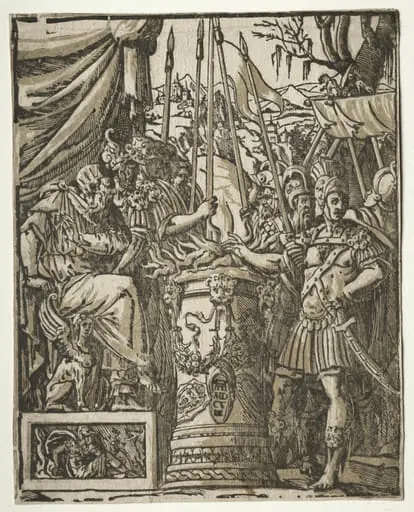 Mucius Scaevola
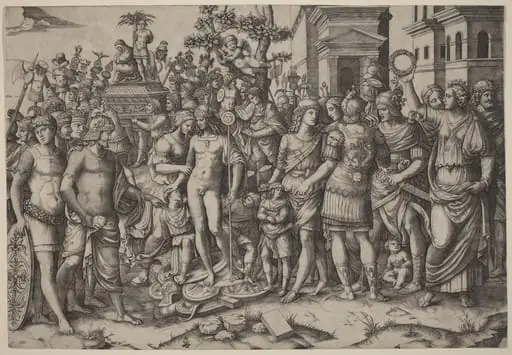 Triumph
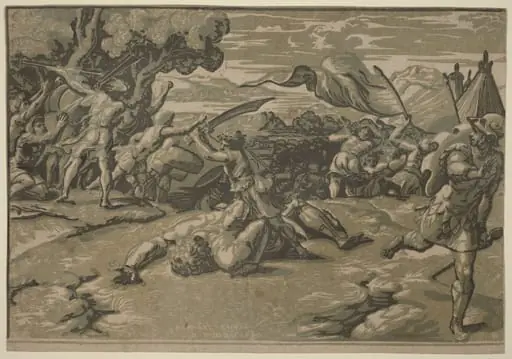 David Slaying Goliath
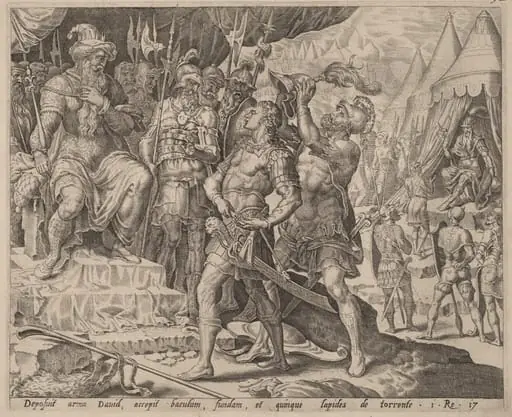 David Armed before Saul
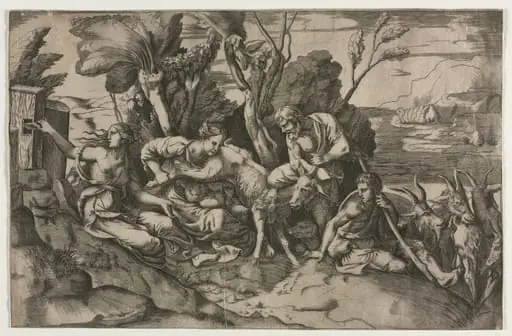 Jupiter Suckled by the Goat Amalthea
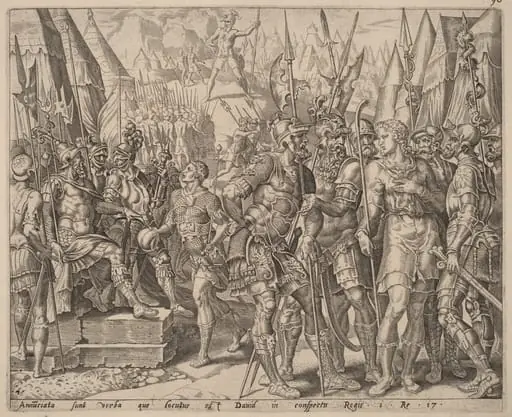 David's Brother Relating to Him Goliath's Challenge
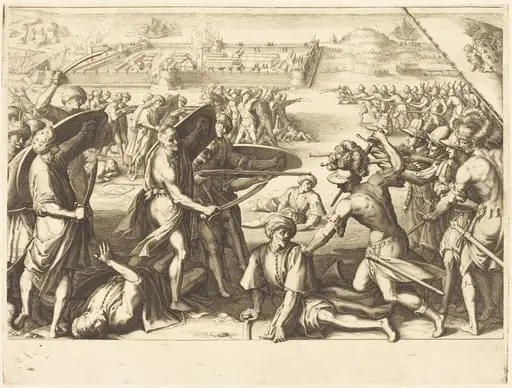 Assault on the Outer Forts of Bone
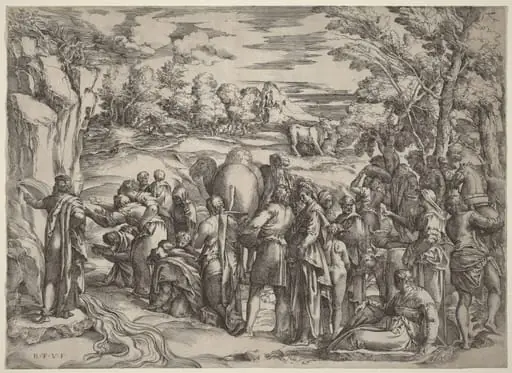 Moses Striking the Rock