Artwork
Triumph
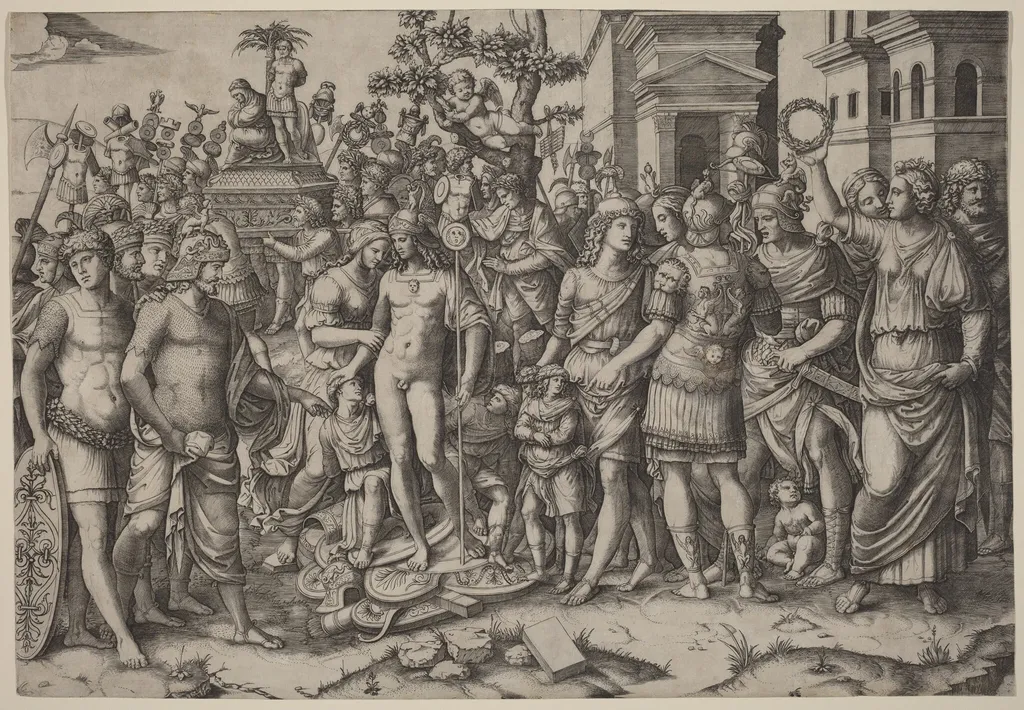
Triumph is an ink print by the Renaissance artist Marcantonio Raimondi. It dates from 1507 and is held in the collection of the National Gallery of Art.
About this work
Overview
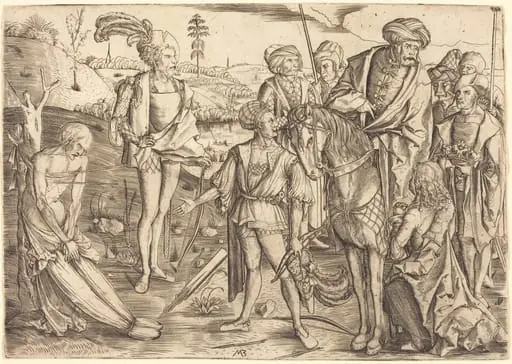
Created in 1507, *Triumph* is an engraving by the Italian printmaker Marcantonio Raimondi. Executed in black line on paper, the work presents a bustling procession populated by figures in classical attire, soldiers, children, and winged putti, set against a landscape of trees and architectural elements.
Subject & Meaning
The central nude figure, brandishing a spear and a banner bearing a shield, appears to preside over a celebratory march. Surrounding participants carry weapons, fruit, and scrolls, suggesting a synthesis of martial victory, abundance, and learned culture within a mythic or allegorical framework.
Technique & Style
Raimondi employs a dense network of fine incised lines to render the folds of garments, musculature, and architectural details. The precision of the hatching and cross‑hatching reflects the Renaissance emphasis on linear clarity and the capacity of engraving to convey texture without color.
History & Provenance
Active in the early sixteenth century, Raimondi was closely linked to Raphael, often reproducing the painter’s compositions for a wider audience. *Triumph* exemplifies his role in disseminating High Renaissance visual language across Europe through the reproducible medium of print.
Context
The engraving belongs to a period when printmaking began to serve as a vehicle for the rapid spread of artistic ideas. By translating complex compositions into portable, affordable sheets, artists like Raimondi facilitated the exchange of stylistic motifs among patrons, collectors, and fellow artists beyond Italy.
Artist & collection

Artist
Marcantonio Raimondi, often called simply Marcantonio (c. 1470/82 – c. 1534), was an Italian engraver, known for being the first important printmaker whose body of work consists largely of prints copying paintings. He…

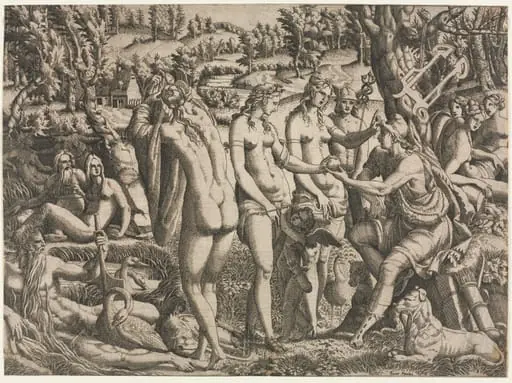 The Judgment of Paris
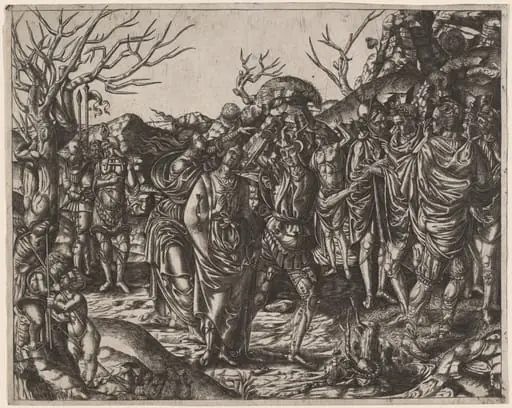 The Death of Virginia
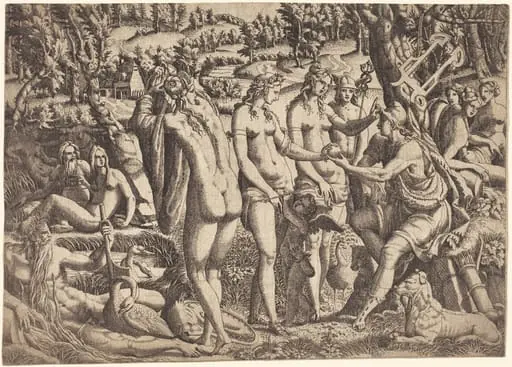 The Judgment of Paris
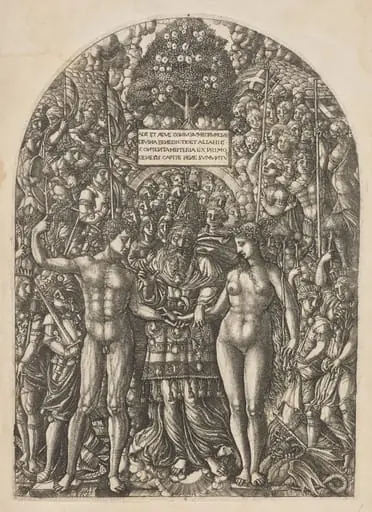 Marriage of Adam and Eve
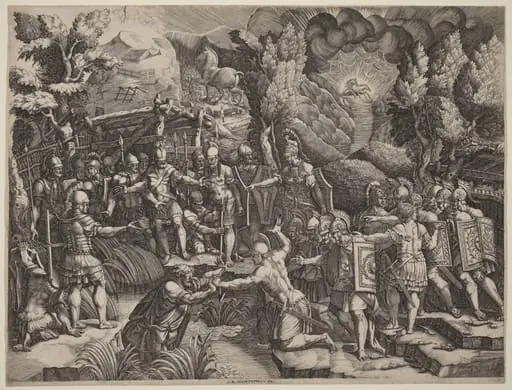 Sinon Deceiving the Trojans
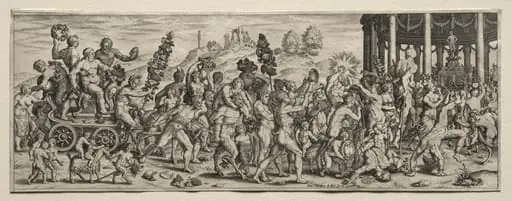 Triumph of Bacchus
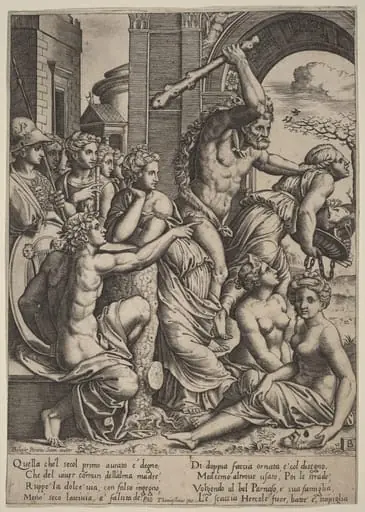 Envy Driven from the Temple of the Muses
 The Triumph of the Unicorn
 The Story of the Dead King and his Three Sons
 The Triumph of Saul and David
 The Death of Procris
 The Testing of the King's Sons