Artwork
The Palace of Raphael (Palazzo Caprini)
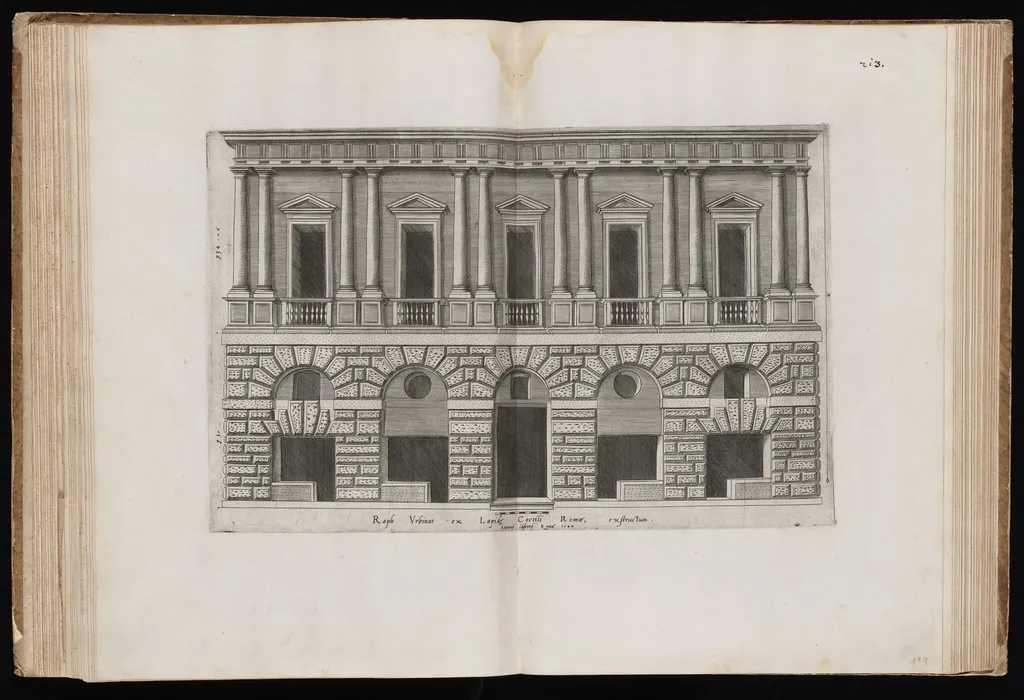
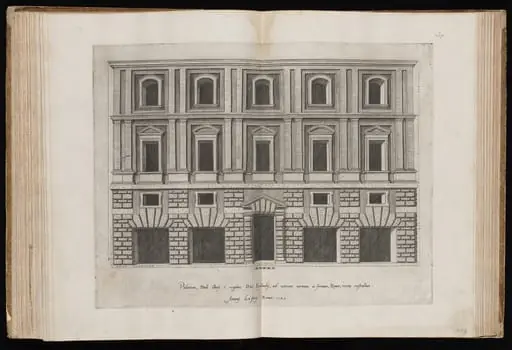
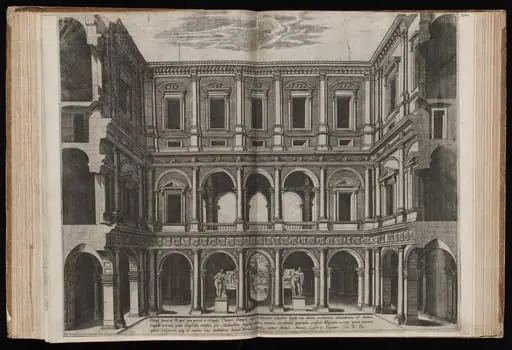
The Palace of Raphael (Palazzo Caprini) is an ink print by the Renaissance artist Italian 16th Century. It dates from 1549 and is held in the collection of the National Gallery of Art.
About this work
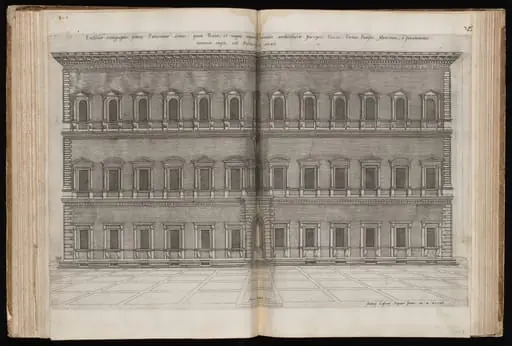
This engraving shows a grand Italian palace from 1549. It’s lined with columns and arches. A man’s carved face appears above the door.
The artist used fine lines to make shadows look deep. This trick is called cross-hatching. It helps the building pop off the page.
This style reminds me of Serlio’s books on buildings. You can see it at the National Gallery of Art, Washington.
Overview
The Palace of Raphael (Palazzo Caprini) is a 16th-century Italian engraving depicting a grand palace. Created in 1549, the print showcases a columned and arched building with a carved male bust above the entrance.
Subject & Meaning
The engraving's central subject is the Palazzo Caprini, highlighting its architectural grandeur. The relief portrait of a man above the door may symbolize the patron or owner, though its specific significance is unclear.
Technique & Style
The artist employed cross-hatching to achieve deep, expressive shadows, enhancing the architectural details. The style bears resemblance to illustrations found in architectural treatises of the time, such as those by Sebastiano Serlio.
History & Provenance
The original palace depicted in the engraving no longer exists. The print itself is now housed at the National Gallery of Art in Washington, D.C., with its current representation featuring a marbled cover.
Context
This engraving reflects the 16th-century Italian fascination with classical architecture. It influenced the design of numerous palaces during the same era, despite the original building's demise.
Artist & collection

Artist
A 16th-century Italian sculptor left us small bronze works in dark brown and gold.