Artwork
Two Nudes
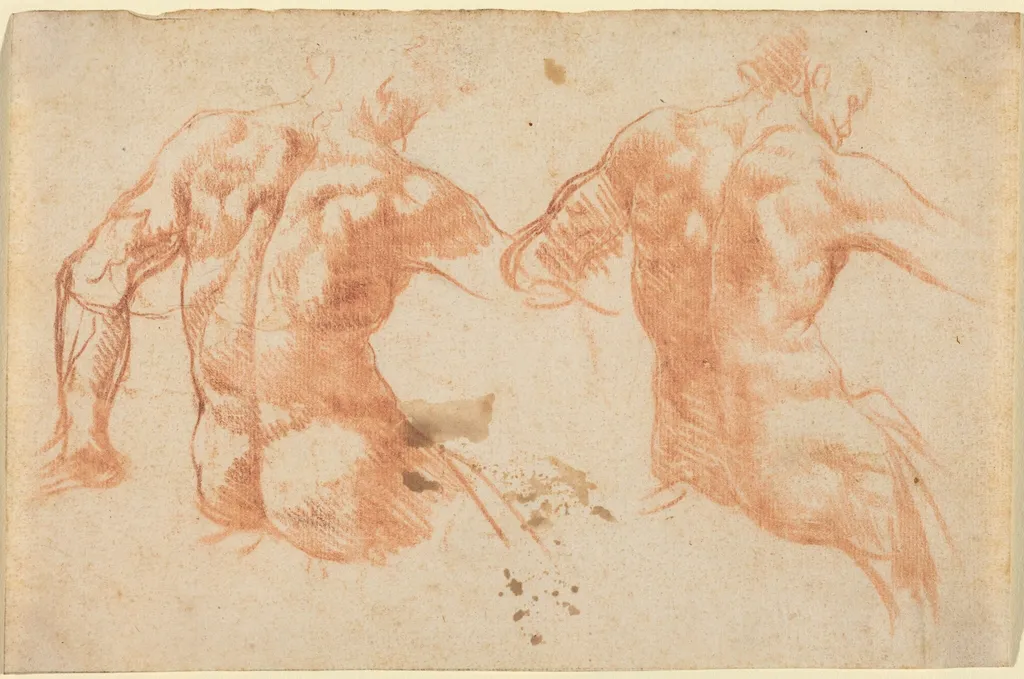
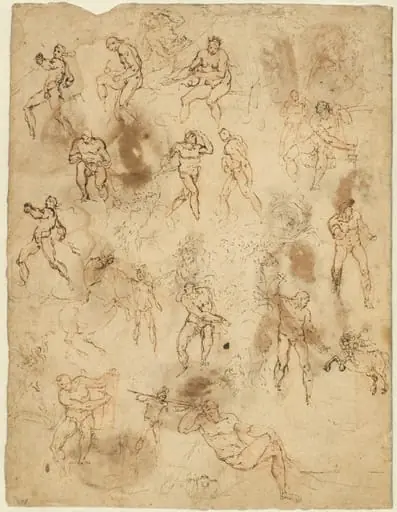
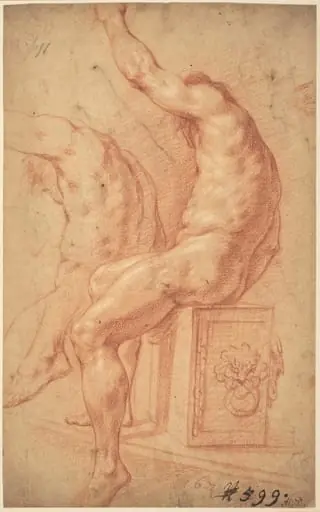
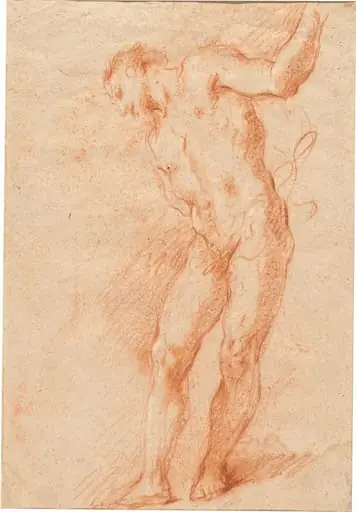
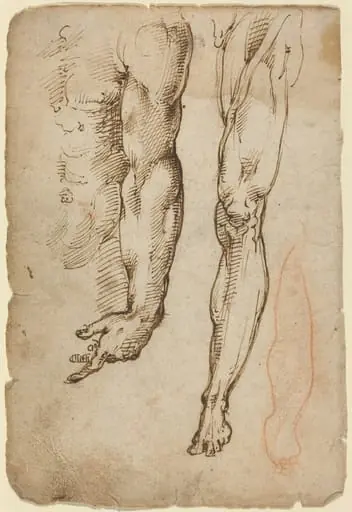
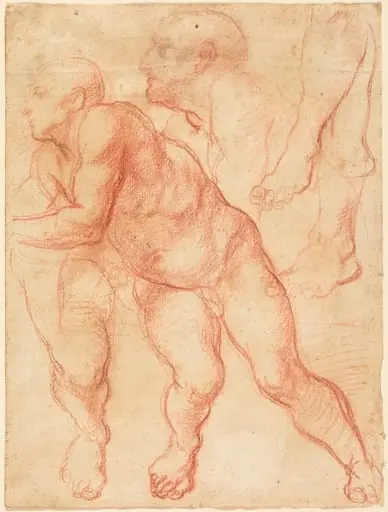
Two Nudes is a chalk drawing by the Baroque artist Italian 17th Century. It dates from 1601 and is held in the collection of the National Gallery of Art. This drawing, executed in red chalk on laid paper, depicts two nude figures in a fluid, interwoven composition.
About this work
Overview
The artist employed rapid, expressive strokes, allowing the paper’s natural texture to contribute to the work’s tactile quality.
This drawing, executed in red chalk on laid paper, depicts two nude figures in a fluid, interwoven composition. The absence of a defined setting focuses attention on their dynamic interaction. The artist employed rapid, expressive strokes, allowing the paper’s natural texture to contribute to the work’s tactile quality. No shading or outline defines form; instead, movement emerges through the rhythm of the lines.
Subject & Meaning
The two figures are entwined in a pose that suggests intimacy or physical exertion, though their relationship remains ambiguous. Neither is identified by gender, clothing, or context, reinforcing the work’s focus on bodily form and motion rather than narrative. The gesture—arms raised, fingers nearly touching—hints at connection or tension, leaving interpretation open to the viewer’s perception.
Technique & Style
Red chalk was used with immediacy, its warm tone contrasting subtly with the pale paper. Lines are loose and unrefined, avoiding precise contours in favor of suggestive sweeps that imply volume and weight. The artist capitalized on the paper’s grain, letting it breathe between strokes. This approach reflects a working method oriented toward observation and gesture rather than polished finish.
History & Provenance
The drawing’s origins are undocumented, with no known record of its commission or early ownership. It survives as a standalone sheet, likely part of an artist’s private study or preparatory sketches. Its condition and medium suggest it was never intended for public display, preserving the rawness of its creation process.
Context
Created during a period when artists increasingly turned to the nude as a subject for exploring anatomy and movement, this work aligns with broader trends in early modern draftsmanship. The emphasis on spontaneous line and physical dynamism echoes practices seen in Mannerist and early Baroque studies, where gesture often preceded formal composition.
Legacy
Though unsigned and unattributed, the drawing exemplifies the value placed on quick studies in artistic training. Its unembellished energy influenced later generations who valued the authenticity of sketching over idealized finish. It remains a quiet testament to the artist’s direct engagement with the human form in motion.
Artist & collection

Artist
This Italian artist worked in the 17th century, making engravings, ink drawings, and oil paintings.

![Nude Male Figure [recto], by Italian 17th Century](https://artifactworldgallery.com/img/italian-17th-century--nude-male-figure-recto--f1cc965df272e72c-w320.webp)