Artwork
The Last Price
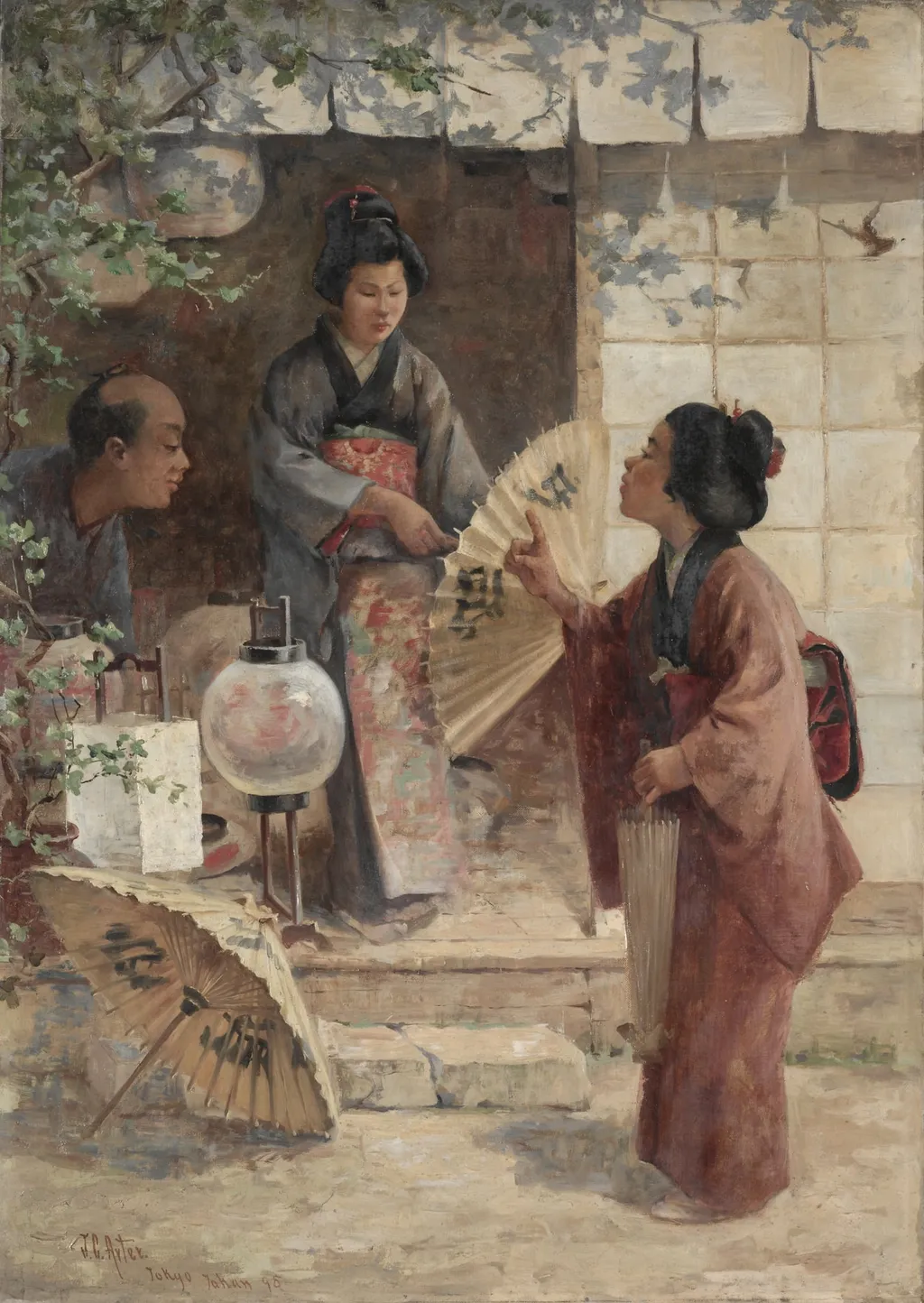
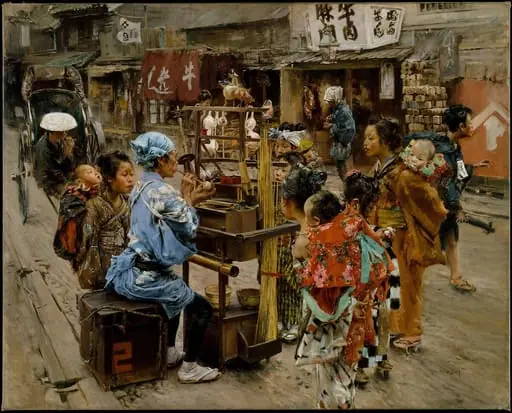
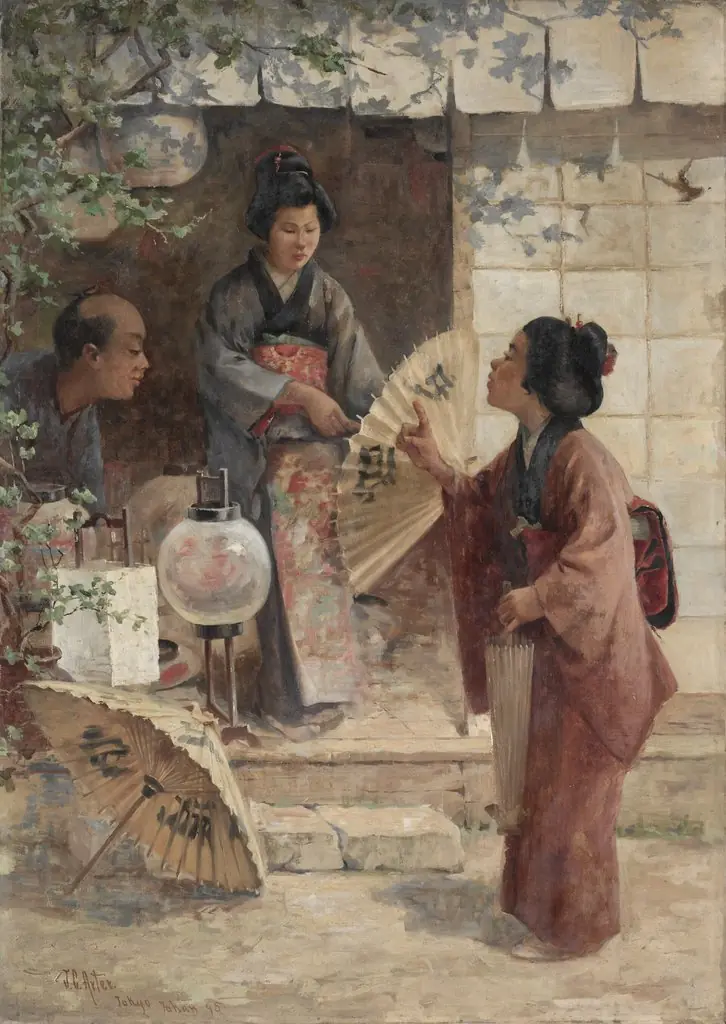
The Last Price is an unspecified painting by the American Impressionist artist J. C. Arter. It dates from 1895 and is held in the collection of the Cleveland Museum of Art. Painted in 1895 by J.
About this work
Overview
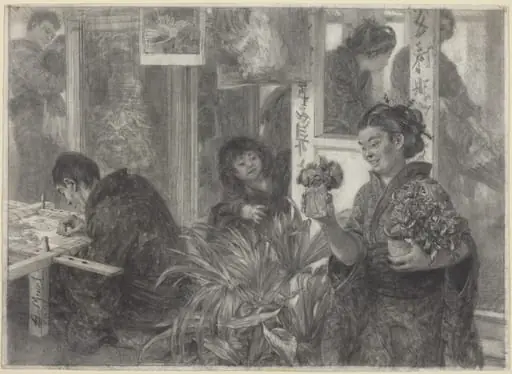
Painted in 1895 by J. C. Arter, The Last Price is a genre scene depicting a quiet moment of interaction among three figures in traditional Japanese attire. The work resides in The Cleveland Museum of Art and reflects the artist’s engagement with Japanese visual culture during a period of heightened Western interest in East Asian aesthetics.
Subject & Meaning
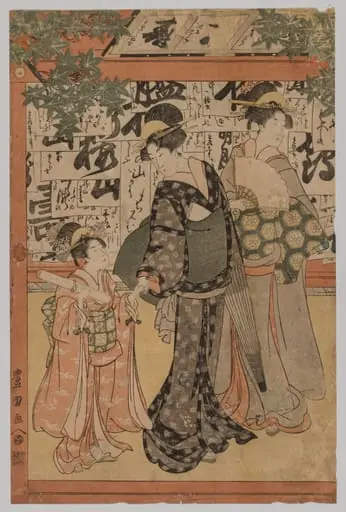
Three figures are arranged in a composed, silent exchange: two women engage in conversation, one holding a fan inscribed with Japanese script, the other carrying a parasol. A third figure, a man, observes from the periphery. The presence of a lantern, a vase with branches, and architectural details suggests an interior space in Japan, possibly a teahouse or private residence, evoking themes of transience and social ritual.
Technique & Style
Arter rendered the scene with precise detail, emphasizing the textures of silk garments, woven baskets, and lacquered surfaces. The palette is restrained, favoring muted earth tones and soft contrasts, while the lighting is even and naturalistic. Brushwork is controlled, avoiding overt impressionistic looseness, aligning more closely with academic realism than contemporary avant-garde trends.
History & Provenance
The painting entered The Cleveland Museum of Art’s collection in the early 20th century, likely acquired during a period when American institutions were expanding their holdings of non-Western-themed works. Its origin in Arter’s studio and early exhibition history remain undocumented, though its subject matter suggests it was painted after the artist’s exposure to Japanese art through prints or travel.
Context
The inclusion of authentic elements—such as the script on the fan—indicates an effort toward cultural accuracy, even if filtered through a foreign lens.
Created during the height of Japonisme in Europe and America, the painting reflects a Western fascination with Japanese domestic life, often idealized or exoticized. Arter’s depiction avoids caricature, instead offering a restrained observation of daily interaction. The inclusion of authentic elements—such as the script on the fan—indicates an effort toward cultural accuracy, even if filtered through a foreign lens.
Legacy
The Last Price remains a modest example of late 19th-century Orientalist genre painting, notable for its quiet dignity and attention to material detail. While not widely exhibited today, it contributes to the broader narrative of cross-cultural artistic exchange, illustrating how Western artists interpreted and absorbed Japanese visual traditions without direct participation in them.
Own this work as a print
Artist & collection