Artwork
The Stray Shuttlecock
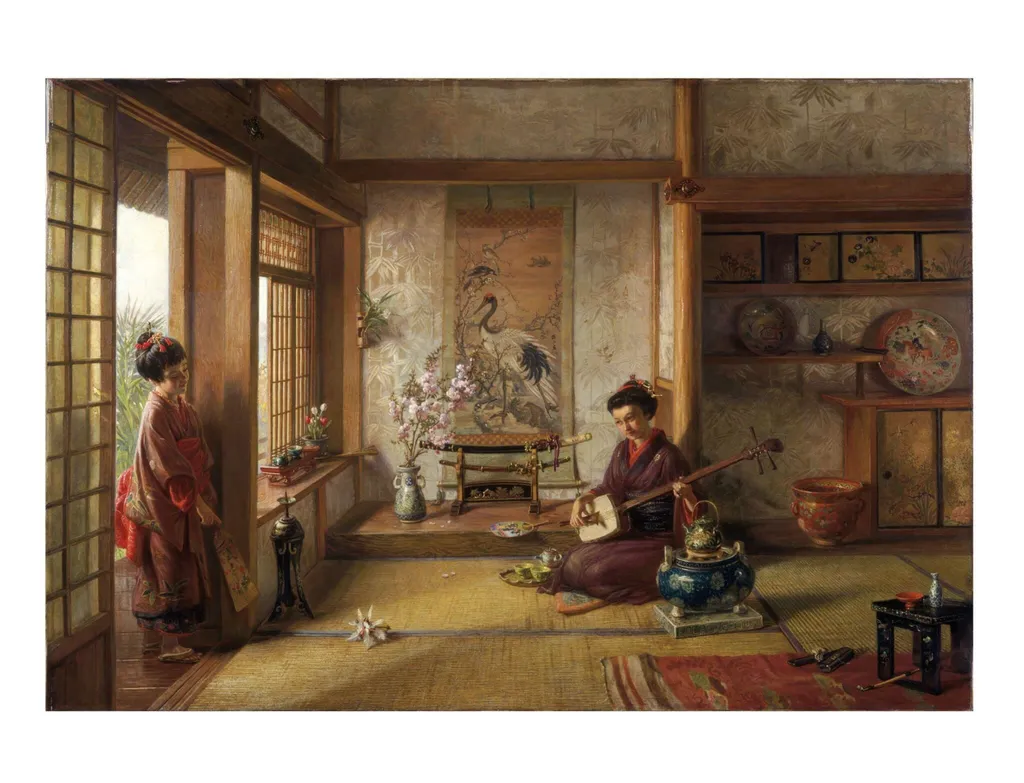
The Stray Shuttlecock is a paint painting by the Impressionist artist Frank Dillon. It dates from 1878 and is held in the collection of the Victoria and Albert Museum.
About this work
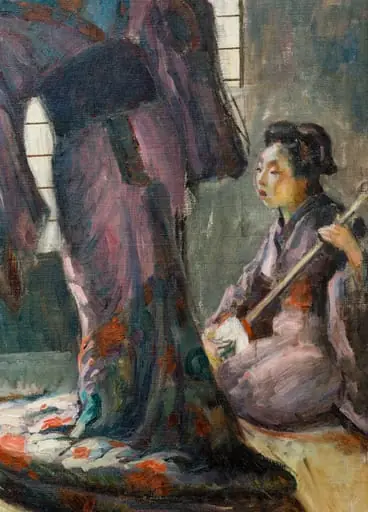
A woman in a dark kimono sits on the floor playing a samisen in a room with tatami mats.
A woman in a dark kimono sits on the floor playing a samisen in a room with tatami mats. The walls are lined with scrolls and a single red lantern hangs above. Brushwork is sharp and detailed—no soft edges here.
Frank Dillon painted this in 1878 after visiting Japan. It was later shown in a London exhibit showcasing objects from his travels. His work blends British realism with Japanese interiors.
See how the lantern’s glow hits the scrolls? It’s like a spotlight on cultural mixing. Look up Frank Dillon (RI) next.
Overview
Painted in 1878 by Frank Dillon, this oil work depicts a quiet interior scene in a Japanese home. Though Dillon was primarily known for landscapes and Islamic architecture, this piece reflects his later interest in Japanese domestic spaces, informed by firsthand observation during a visit to Japan. The painting was exhibited in London alongside artifacts from his travels, framing it as both an artistic and ethnographic document.
Subject & Meaning
The scene centers on a mother playing the samisen, her posture calm and absorbed, while her child gazes toward a stray shuttlecock near the doorway. The moment captures a subtle, unspoken interaction, emphasizing domestic tranquility. Though rendered with care, the composition reflects a Western idealization—objects and spatial arrangements are arranged for aesthetic harmony rather than cultural accuracy, revealing a romanticized view of Japanese life.
Technique & Style
Dillon employed precise, sharp brushwork to render textures: the weave of tatami, the grain of wooden beams, the sheen of lacquered objects. The lighting, particularly the glow from a single red lantern, casts defined highlights on hanging scrolls, creating a theatrical focus. The style merges British realism with Japanese motifs, avoiding softness or impressionistic blur, resulting in a meticulously detailed, almost documentary-like surface.
History & Provenance
Created after Dillon’s travels in Japan, the painting was lent to the Bethnal Green Museum in 1884 for display within a reconstructed Japanese Room containing objects he had collected. This contextual placement reinforced its role as an educational tool, bridging British audiences with unfamiliar cultural environments. Its exhibition history underscores its function as both art and ethnographic artifact within late-Victorian public institutions.
Context
Dillon’s approach to Japanese interiors mirrored his earlier work documenting Egyptian architecture: he populated spaces with figures in authentic attire to lend scale and narrative. His goal was not strict ethnography but to foster appreciation through visual appeal. In this painting, as in his other non-Western subjects, he constructed idealized interiors that aligned with Victorian tastes for the exotic, blending observation with imaginative arrangement.
Legacy
Though not widely known today, Dillon’s Japanese interiors contributed to the Victorian fascination with the East, influencing how such cultures were visually represented in British museums. His method—combining accurate detail with staged composition—reflects a broader trend in 19th-century ethnographic art, where realism served cultural curiosity rather than anthropological precision.
Own this work as a print
Artist & collection

Artist
Frank Edward Dillon, known in later years as Pop Dillon, was an American baseball player and manager.

 Sunset on the Nile
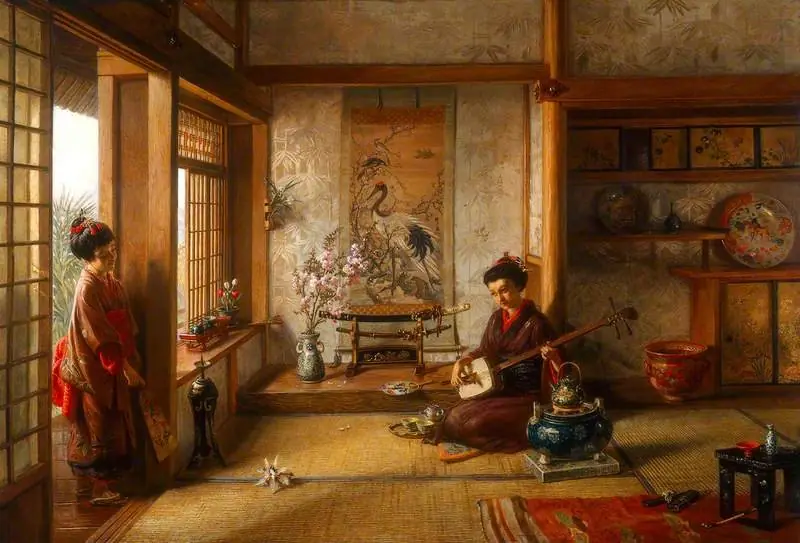 The Stray Shuttlecock
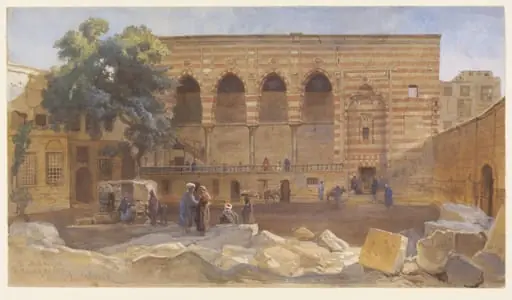 El Mahkemeh or Court of the Cadi Cairo
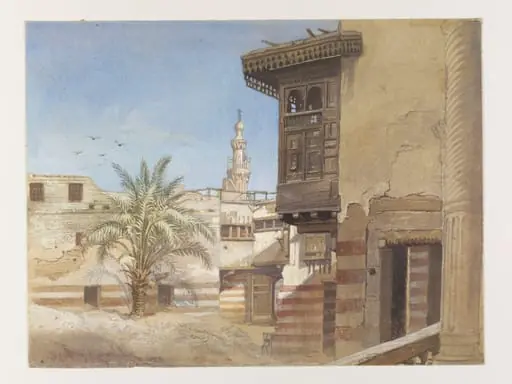 View from the Loggia of the Summer Reception Room (Makad) in the House of the Memluk Raduan Bey, Cairo
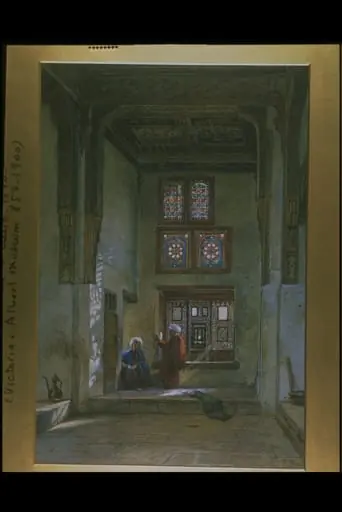 The House of Radwan Bey
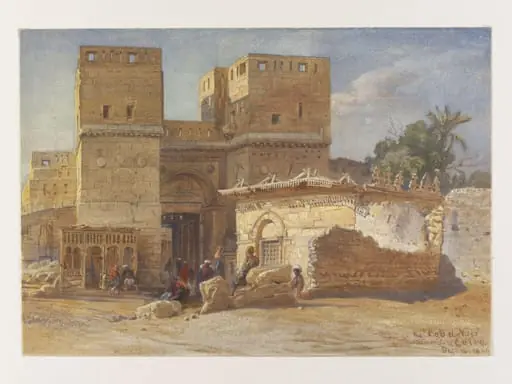 The Bab el Nasr. Cairo
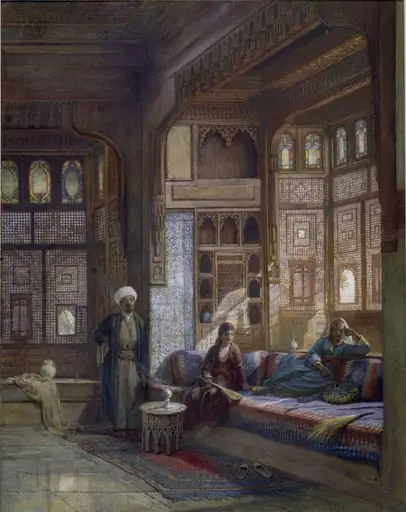 A room in the house of Shayk Sadat, Cairo
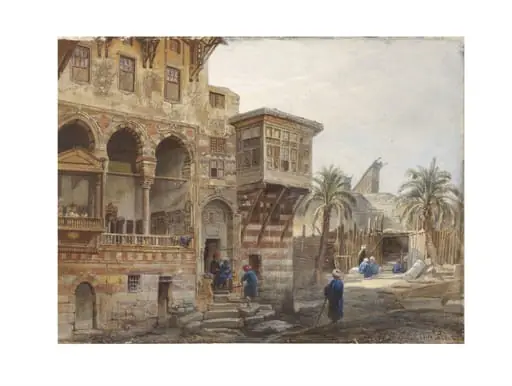 Exterior of the House of the Memluk Raduan Bey, Cairo